Why is my drain still clogged after snaking?
Snaking usually fails because the cable bored a narrow channel through grease, sludge, or root hair instead of clearing the pipe to full diameter, and the weakened opening grabs paper and reseals within days. In Philadelphia rowhouses with old cast iron and jointed clay tile, that half-cleared channel can clog tighter than before once loosened debris resettles downstream.
- Direct answer
- 2 min read
Four snake mistakes explain most worse-after-snaking stories. The wrong head leads the list: a bulb or retrieving head pushed into laminated kitchen grease punches a hole and smears the rest into a smooth dam downstream, where it cools and hardens into a tougher blockage than the original. Running blind without a camera comes next, because the operator cannot tell grease from roots from a belly or a break, and each needs different tooling. Pushing the blockage deeper is the third classic: a wad of wipes, paper, and sludge shoved off its perch in a branch arm travels to a narrower joint or the clay-to-iron transition and lodges where no hand auger can reach it. Finally, spinning a cable too aggressively in scaled cast iron can break loose sheets of scale that tumble downstream and stack at the next joint. Every one of these turns a clearable clog into a bigger job, and every one is avoidable with footage first.
Philadelphia housing stock makes repeat snaking especially unproductive. Rowhouse laterals in South Philadelphia, Fishtown, Kensington, and West Philadelphia run in short jointed clay segments beneath sidewalks and areaways to combined mains, and each joint is a root entry point and a lip where paper snags. Inside the house, century-old cast iron stacks and arms carry rough tuberculated walls that a cable never smooths. When the same kitchen or basement drain needs snaking twice in a season, or when several fixtures gurgle together, the pattern points past a simple clog to coating, roots, scale, or grade trouble. A second snaking without a camera at that point is not maintenance; it is renting the same temporary channel again while the underlying condition keeps maturing.
Treat the second failure as the camera trigger. A proper inspection sends a self-leveling head down the line with a distance counter and a locating sonde, recording material changes, joint offsets, root entries, bellies holding water, and breaks with their depths and positions logged. That file decides the next step cheaply: grease and sludge coatings call for jetting to bare wall, root masses call for cutting plus jetting plus a scheduled interval, and collapse, severe bellies, or Orangeburg redirect the budget from cleaning to repair. Ask to keep the video and the written findings with footage marks, because that record makes every future visit faster and every repair bid comparable. A drain that keeps defeating the snake is not a mystery; it is an unread pipe asking to be seen.
Want the full picture?
Camera Inspection Before Hydro Jetting Guide — Read the full guide: why camera inspection comes before jetting.
Follow-up questions
How many times should I snake the same drain?
Once for a simple clog is reasonable; twice in one season on the same drain means the method is not matching the problem. Spend the next visit on a camera inspection instead of a third channel through the same buildup.
Can snaking damage my pipes?
A careful hand auger rarely harms sound pipe, but aggressive powered cabling can scar soft Orangeburg fiber pipe, punch through paper-thin scaled iron, or separate already-shifted clay joints. Footage first is how pros rule out fragile pipe before spinning steel inside it.
Services behind this answer
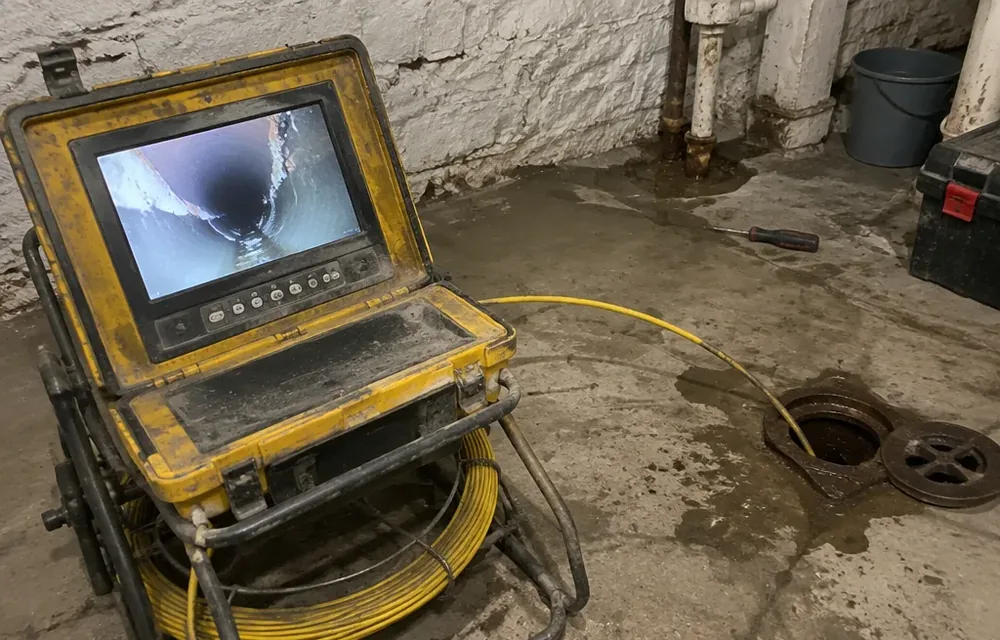
Sewer Camera Inspection
Every expensive sewer decision in Philadelphia — jet, repair, line, replace — depends on one thing: what the pipe actually looks like inside.
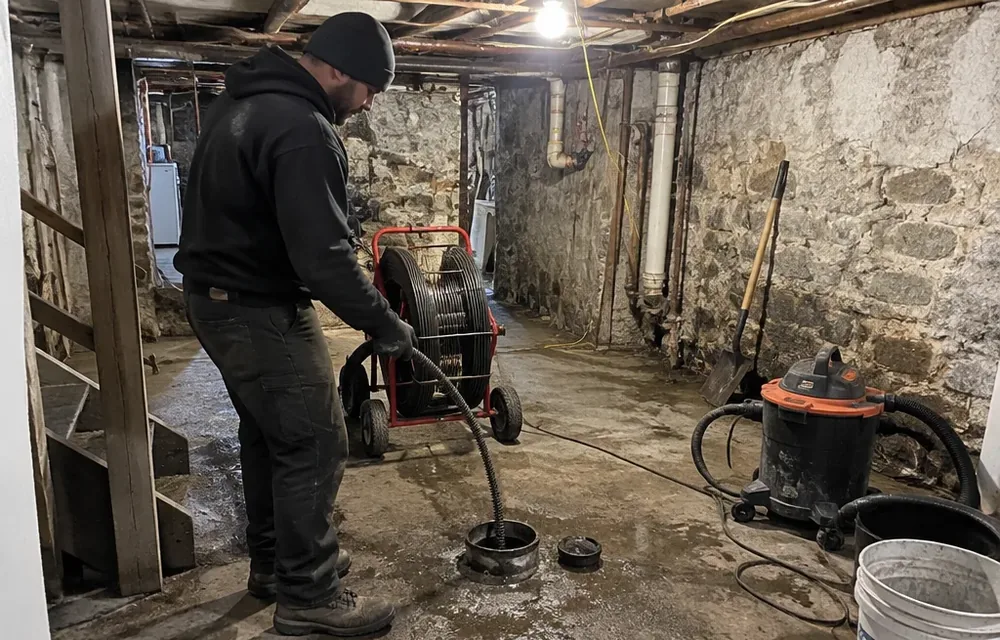
Main Sewer Line Cleaning
The lateral is the most expensive drain you own — a 60-to-100-foot clay run from your rowhouse to the street main, shared with stormwater, hunted by street-tree roots.