Restaurant Food-Service Jetting in Philadelphia — Grease Lines After Hours
A restaurant drain never fails at 2 p.m. on a Tuesday. It fails at 7 p.m. on a Friday, mid-rush, with a full dining room watching. Food-service lines carry fryer grease, starch, food solids and detergent loads that congeal along long runs to the combined main — and a cable only bores a temporary channel through that coating. Jetting strips it to bare pipe, after hours, with footage to prove it.
- 2 to 4 hours, after hours available
- Philadelphia Area
- 7 days a week
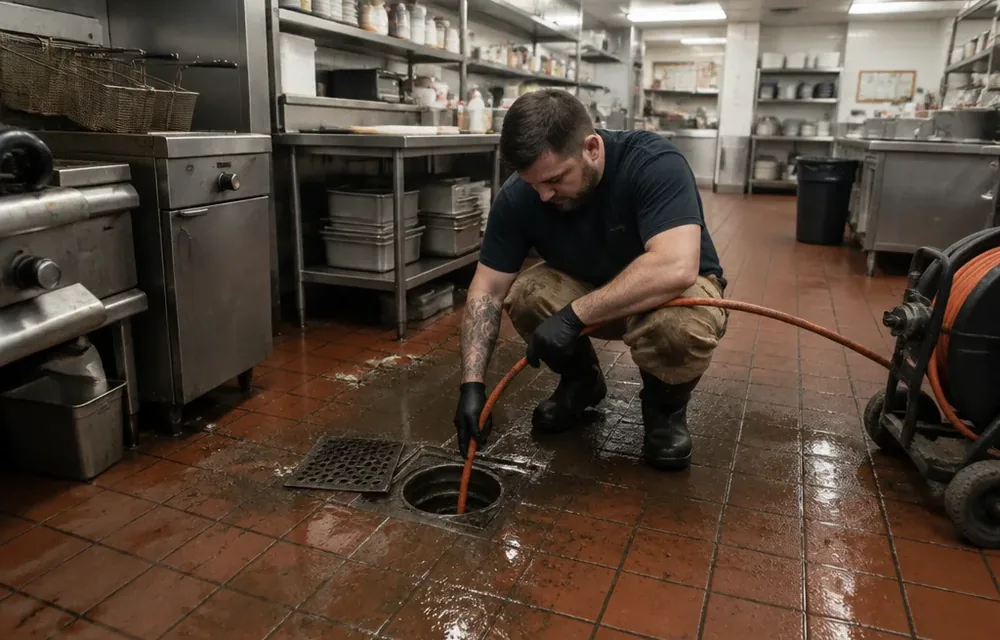
Signs you may need restaurant food-service jetting
Most people arrive here describing a symptom rather than naming a service. These are the three that point this way.
Prep sinks backing up in the middle of dinner rush
Volume-linked kitchen failure at peak covers means the trap-to-main run cannot pass rush flow through its grease-narrowed bore. After-hours jetting coordinated with interceptor pump-outs ends the Friday-night emergency cycle.
Backups returning weeks after every interceptor pump-out
Failure that tracks the pump-out cycle describes grease coating in the line that pumping never touches, not a failing trap. Camera footage by distance locates the coated run so jetting removes what pump-outs cannot reach.
Floor drains spreading odour across the kitchen by close
Foul floor-drain odour late in service signals grease and solids fermenting in branch lines and the trap-to-main run. Scheduled jetting with containment clears the coating that mopping and chemicals only mask.
Why restaurant drains fail differently
Home kitchen lines accumulate grease over years. Restaurant lines accumulate it over weeks. Fryer discharge, wok stations, dish pits and mop sinks push warm liquid grease into piping that cools it within feet, and Philadelphia food-service runs are often long — rear kitchen through basements and alleys to a combined main under the street. Every foot of run is another foot of cooling surface where fats, oils and grease (FOG) plate onto the wall as thermal shock turns liquid fat to candle-wax choke points.
Volume concentrates the failure. A rowhouse kitchen might send a quart of grease down the drain in a week. A working fryer station sends multiples of that in a single service, plus starch from pasta and rice that swells into a binding matrix inside the grease layer. The compound coating narrows the bore steadily until one busy service pushes flow past what the narrowed pipe can pass — and the prep sink backs up at the worst possible hour.
Detergent makes it worse, not better. Hot soapy water carries grease further down the line before it cools, so the coating forms in the trap-to-main run where access is hardest rather than in the fixture arm where a small cable could reach it. That is why food-service blockages so often sit twenty to sixty feet downstream, beyond the reach of a quick daytime cabling.
For the line-level mechanics of how grease layers bond to aging iron, see kitchen grease line jetting. This page covers the food-service program around that cleaning: after-hours staging, trap-to-main scope, and schedules built for working kitchens.
Grease lines, trap-to-main runs and shared laterals
Three distinct zones fail in food service, and each needs its own scope. Fixture arms and branch lines from prep sinks, dish pits and floor drains clog with fresh grease and solids close to the fixture. The trap-to-main run — from the grease interceptor or trap outlet to the building drain and out to the combined main — accumulates cooled, hardened layers over its full length. And on corridors of attached commercial buildings, shared laterals carry the combined load of neighbouring kitchens toward one main connection.
The trap-to-main run is the zone most operators underestimate. Interceptors and traps protect the city main, but the pipe between the fixture and the trap, and between the trap and the street, still coats. A freshly pumped trap connected to a grease-narrowed outlet line buys weeks, not months — which is why backups that return within a pump-out cycle almost always describe line coating rather than trap failure.
Shared laterals add a neighbour variable. On attached blocks along corridors like East Passyunk, South Street, Old City, Fishtown and the Center City food blocks, one kitchen's discharge cools against the same aging iron its neighbours use — including old brick curb traps that catch and hold grease mats. When the shared section narrows, the lowest or slowest-draining kitchen floods first regardless of whose grease dominates. Camera footage by distance settles those arguments fast — and a coordinated cleaning splits the cost where a solo emergency cannot.
Baseline camera work maps all three zones by footage before any pressure is applied. Coated zones get marked distances, structural defects get flagged as no-jet or repair findings, and the program scope follows the evidence instead of guessing at it.
After-hours work that protects service
Schedule around covers, not around us
Nights, early mornings and closed days as standard. The visit is booked against your slowest window so prep, service and cleanup continue without hose runs across a working kitchen.
Stage for a working food space
Hose routing planned to keep walk paths clear, wastewater containment set before pressure starts, and odour control treated as part of the job — not an apology afterward.
Camera the loaded line first
Confirm grease coating versus structural failure and mark coated zones by footage. Channelled cast iron or collapsed Orangeburg changes the plan before any nozzle goes in.
Jet in passes from the far end back
Penetrating heads open the path; rotating and flat-surface heads peel the wall coating. Liquefied grease and solids flush toward the main or interceptor — never packed downstream into the shared lateral.
Camera-verify and file the record
After-footage showing bare wall where coating was, paired with the interceptor pump-out receipt where applicable. The file supports PWD, insurer and lease conversations alike.
What a food-service jetting program includes
A program starts with a baseline survey: every maintained line camera-scoped, footage-marked and graded for interval. Heavy fryer output with a long run to the main typically lands quarterly; moderate volume semi-annual; low-volume cafes and coffee shops often hold annual. The interval comes from footage and fryer load, not from a calendar template.
Interceptor coordination is built in. Jetting is timed with pump-out schedules so freshly cleaned lines do not discharge into full traps, and the jetting footage pairs with interceptor receipts for a complete compliance record. Cleaning one without the other wastes half the visit.
Floor drains, mop sinks and dish-pit branches get scoped as part of the same program. These short, solids-loaded branches fail differently from grease runs — food particles and mop grit rather than fryer coating — and they respond to scheduled jetting passes that keep peak-service flow moving. See commercial hydro jetting for multi-line and multi-site programs.
Interval tuning follows across visits. Footage comparisons show whether the schedule can stretch or must tighten — heavy-menu seasons, expanded hours and fryer changes all move the number. Paying for jetting you no longer need is as wasteful as skipping jetting you do.
Corridor realities: Passyunk, South Street and Center City
Philadelphia's food corridors share a plumbing profile: attached pre-war commercial buildings, long rear-to-street runs through cast iron and clay, and combined mains that accept both sewage and storm flow. East Passyunk's converted rowhouses run kitchens through basement ceilings to alley laterals. South Street's narrow lots push long footage to the main under heavy weekend volume. Center City blocks stack food service above aging verticals shared with upstairs tenants.
Combined-sewer exposure matters on these corridors. During heavy rain the shared main surcharges, and a grease-narrowed lateral that passes flow on a dry Tuesday cannot pass it against a surcharged main on a stormy Friday. Cloudburst-season backups that track weather as well as volume describe this compound failure — grease plus storm flow — and the fix is a clean lateral before the season, not a bigger mop.
Access staging varies block by block. Rear-alley cleanouts, basement ceiling runs, sidewalk vaults and shared-lateral tie-ins each change how hose gets routed and where containment goes. A walkthrough that maps access before quoting beats a phone flat rate that discovers the alley at midnight.
Cost and scheduling, plainly
Food-service jetting typically runs $375 to $1,200 per visit: single-line cafes and small kitchens at the low end, multi-line kitchens with long trap-to-main footage and after-hours staging at the high end. Camera verification is part of the job, and programs are quoted per site after walkthrough — phone flat rates for commercial kitchen work deserve skepticism.
The interval math favors scheduling over rescue. One Friday-night backup costs the emergency dispatch, the lost covers, the wasted prep and the wastewater cleanup — usually several times a year of planned jetting. Kitchens that hold their interval largely stop having grease emergencies; the line simply never gets narrow enough to fail.
What does not substitute for cleaning: enzyme and bacterial additives. They modestly slow re-accumulation on a freshly jetted line and do nothing measurable against established coating. Buy them as maintenance after jetting if you like — never as rescue instead of it.
Frequently asked questions
How much does restaurant drain jetting cost in Philadelphia?
Typically $375 to $1,200 per visit depending on line count, trap-to-main footage, coating severity and after-hours staging. A single-line cafe sits low; a multi-line kitchen with long runs and night work sits high. Programs are quoted per site after walkthrough with baseline camera survey.
How often should our kitchen jet its lines?
Quarterly to semi-annual for most working kitchens, set by fryer volume and run length to the combined main. Heavy fried service with a long run needs quarterly; low-volume cafes often hold annual. We set the interval from baseline footage and tune it across visits.
Can you work without interrupting dinner service?
Yes — nights, early mornings and closed days are standard for food-service work. Hose routing, wastewater containment and odour control are staged for an operating kitchen before pressure starts, so prep and covers continue untouched.
Our backup returns weeks after every pump-out. Is the trap failing?
Usually the opposite: the line is failing, not the trap. Backups that return within a pump-out cycle describe grease coating in the trap-to-main run that pumping never touches. Camera footage by distance confirms it, and jetting the run ends the cycle.
Do you coordinate with our grease interceptor service?
Yes. Jetting is timed with pump-out schedules so cleaned lines do not discharge into full traps, and jetting footage pairs with interceptor receipts for a complete compliance record.
What is different about shared laterals on food corridors?
Attached buildings often share lateral sections toward the main, so one kitchen can flood from a neighbour-loaded restriction. Camera footage by distance identifies whose section is narrowed, and coordinated cleaning splits cost fairly instead of billing one operator for a shared problem.
Related services
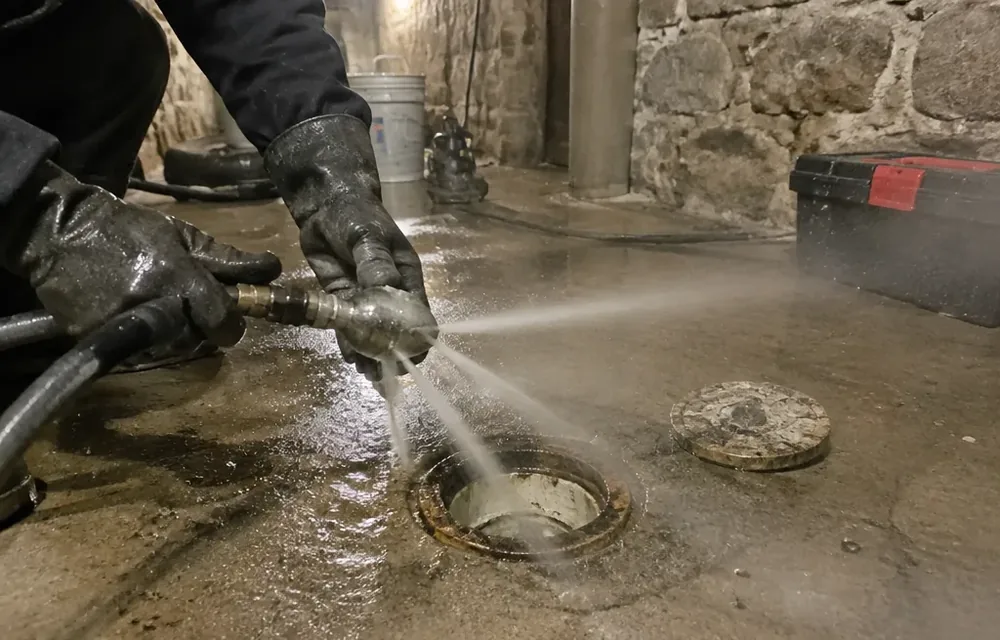
Kitchen Grease Line Jetting
Grease is the one clog material a cable cannot fix.
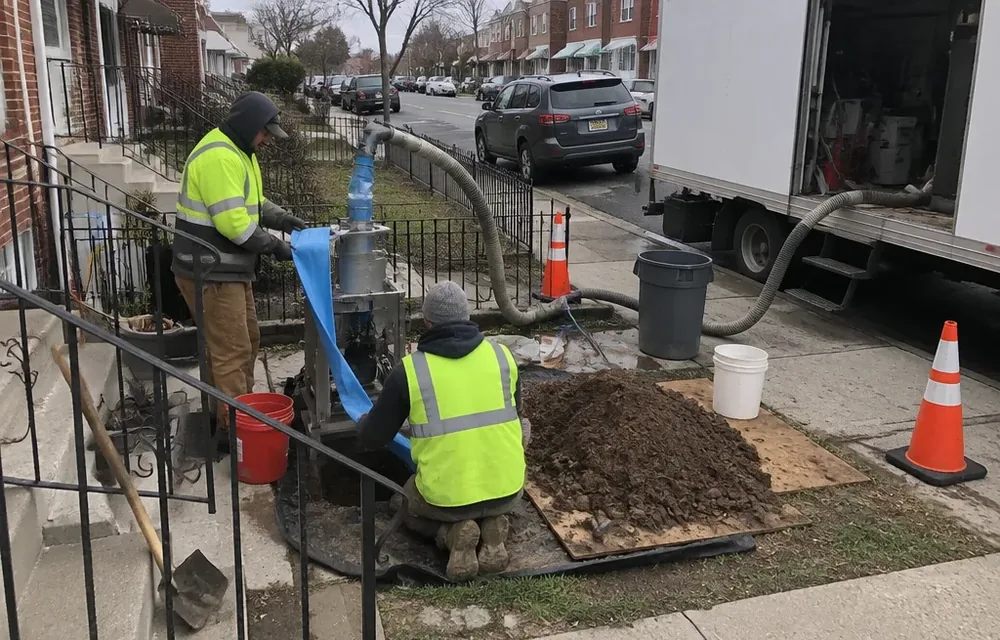
Commercial Hydro Jetting
Commercial drains fail on schedule — fryer volume, tenant count, storm season — so they should be serviced on schedule.
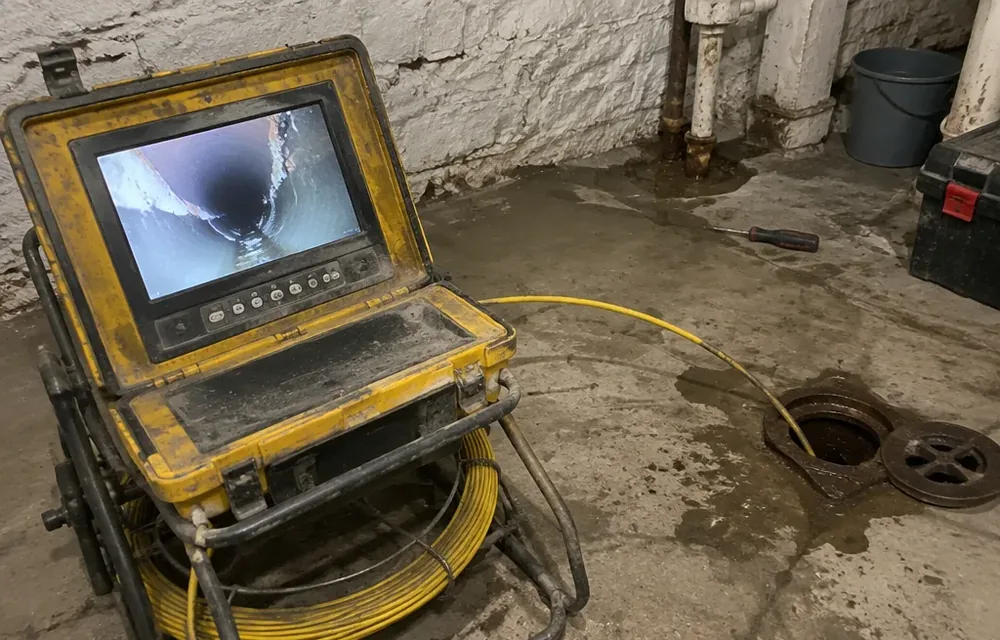
Sewer Camera Inspection
Every expensive sewer decision in Philadelphia — jet, repair, line, replace — depends on one thing: what the pipe actually looks like inside.
Property Manager Multifamily Drains
Nobody treats a rental drain like an owner does.
Restaurant Food-Service Jetting across Philadelphia and its suburbs
We provide restaurant food-service jetting in 32 Philadelphia-area towns. Local pages cover the housing stock and pipe materials specific to each area.
Philadelphia
Delaware County
- Upper Darby
- Media
- Yeadon
- Lansdowne
- Havertown
- Springfield (Delco)
- Chester
- Drexel Hill
- Ridley Park
- Swarthmore
- Darby
Montgomery County
- Norristown
- Abington
- King of Prussia
- Ardmore
- Bala Cynwyd
- Conshohocken
- Plymouth Meeting
- Jenkintown
- Cheltenham
- Willow Grove
- Lansdale
- Pottstown
- Ambler
- Horsham
- Hatboro