Tree Roots in Philadelphia Sewer Lines: Joints, Species, and Fixes
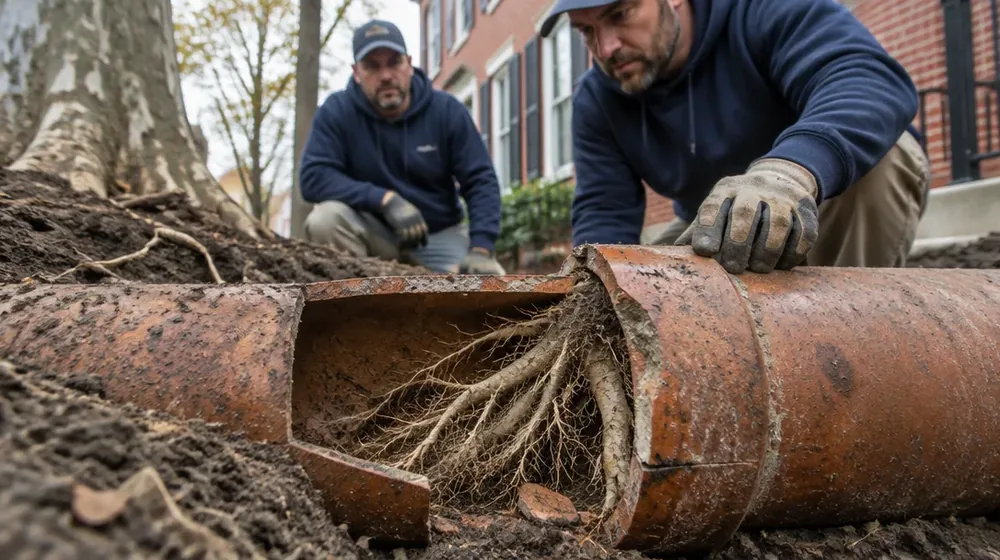
Roots do not break into sound pipe. They find the clay joint that is already leaking, thicken in the flow, and become a dam. That single fact decides whether cutting, jetting, or repair is the honest answer on any Philadelphia block.
Why Philadelphia has the ideal root problem
Philadelphia combines all three ingredients of root intrusion at city scale. Its rowhouse belt, built roughly from the 1880s through the 1950s across South Philadelphia, Fishtown, Kensington, Point Breeze, and West Philadelphia, went into the ground with vitrified clay laterals laid in short jointed segments, and every joint becomes a potential entry once it shifts even slightly. Its streets were then lined generously with vigorous shade trees whose roots preferentially follow the loose backfill of the sewer trench itself. And its combined sewers and aging joints supply a year-round moisture plume that roots follow through dry spells and freeze cycles alike.
The mechanism is worth internalizing because it reframes every sales pitch. A hair root enters through an already-open joint, thickens in the nutrient flow, catches paper and solids, and becomes a living dam that runs fine for months before backing up hard. Cutting the mass restores flow but leaves the joint open; only repair or jointless replacement closes it. Anyone presenting cutting as a cure is selling maintenance under a repair name, and anyone presenting repair as mandatory on a first intrusion in otherwise sound pipe is overselling in the other direction.
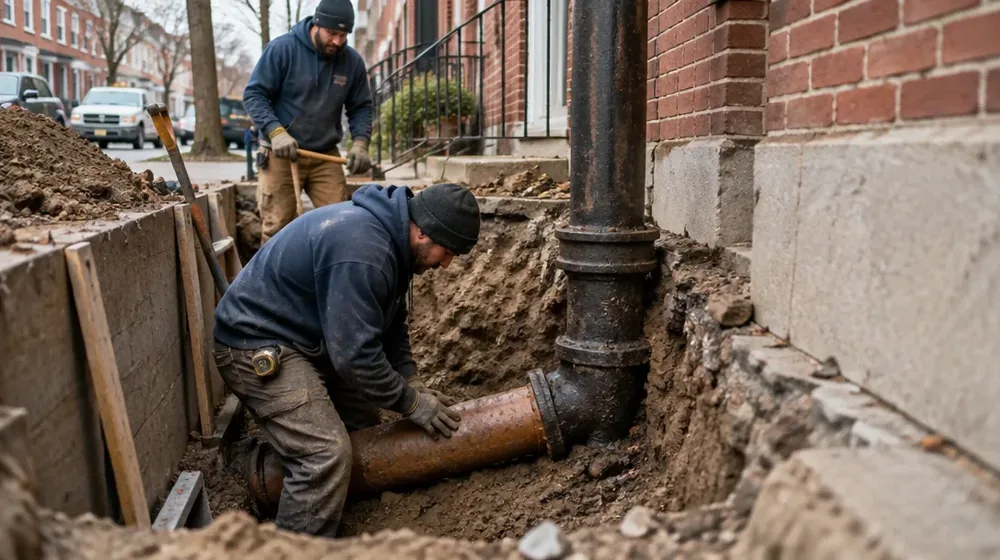
Philadelphia Water Department main-renewal work and private lateral replacements gradually convert individual runs to jointless PVC or HDPE, which roots cannot enter for lack of joints. Until a given run is converted, however, the trench shared by the old clay and the street trees above it remains the highest-probability root corridor in the house. The camera, with a surface locate marking footage and depth on the lawn or sidewalk, is what converts that probability into a specific joint at a specific depth.
Seasonality sharpens the pattern. Root growth pushes hard in late spring and again in early autumn, while summer dry spells make the lateral the most attractive moisture in the soil column and autumn storms add the volume that an already-narrowed line cannot carry. Philadelphia backups that recur roughly annually, often with the first heavy autumn rain, fit roots far better than they fit random clogs.
Which Philadelphia street trees cause the most trouble
| Species | Risk | Why it matters on Philadelphia blocks |
|---|---|---|
| Silver maple | Extreme | Fast, shallow, thirsty; common street tree with roots far past the canopy |
| London plane / sycamore | Extreme | The classic Philadelphia street tree; massive mature spread over laterals |
| Honey locust | High | Vigorous opportunistic roots along curb lawns and tree pits |
| Callery pear | High | Widely planted, dense shallow mass directly over trench backfill |
| Red maple, elm hybrids | Moderate to high | Strong lateral spread where pits confine downward growth |
| Ginkgo, small ornamentals | Low | Slower, compact systems rarely implicated unless joint already failed |
Treat the table as probability rather than verdict, because species matters far less than pipe condition. A silver maple over sound jointless PVC causes no problem at all, while a ginkgo over century-old shifted clay eventually will. The tree is the opportunist and the open joint is the cause, which is why removal alone never repairs the entry and why lining or replacing only the affected segment invites roots to the first unlined joint past the repair.
Two Philadelphia-specific notes qualify the table. First, the suspect tree is often not yours: mature root systems extend two to three times the canopy radius, follow the loose trench preferentially, and cross property lines freely, so the neighbor tree or the city street tree in the curb lawn is a legitimate source. Second, a tree removed years ago can still matter, because a ground stump left to decay creates voids and soil movement around the joint that worsen the opening the next living roots exploit.
How to recognize roots rather than an ordinary clog
Roots announce themselves through recurrence at the same place. The blockage returns roughly annually, often with late-summer dryness or the first heavy autumn rain; it always hangs at the same footage, because roots colonize a specific joint rather than drifting; white fibrous material comes back on the cutter head, which is root rather than debris; and toilets gurgle while fixtures drain slowly, as air forces past a partial living dam. Any one symptom is ambiguous, while three together are close to diagnostic.
The lawn sometimes testifies too. A greener, faster-growing strip tracing the lateral path marks roots being fertilized by the leak, and a persistently soggy or sunken area above the run suggests the joint is also exfiltrating and washing fines from the bedding. In Philadelphia rowhouses with small rear yards or shared driveways, that strip may be only a few feet wide and easy to miss until the camera locate paints the line and the stain aligns exactly.
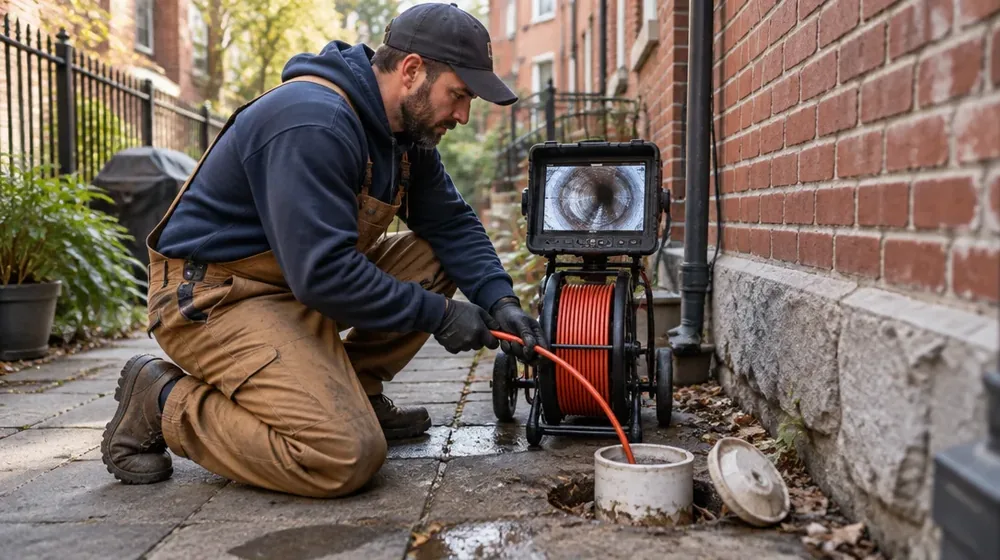
Confirm with footage rather than with another cable pass. A cleared-line camera run shows the entry joint, the footage from the cleanout, the depth at the curb, and the condition of every other joint in sequence. That record also starts the footage log that makes the next visit a maintenance call at a known location instead of a fresh exploration, which is the difference between a scheduled hour and an investigative half day.
One caution about timing: do not camera a fully blocked line and declare the pipe failed. Roots plus trapped paper photograph as a wall of debris that hides the joint behind it. Cut to full diameter, jet the fines out so fragments do not re-lodge downstream, and then scope the cleared line. The order matters, and skipping the clearing step produces footage that frightens without informing.
What actually happens on a competent root job
Confirm it is roots
Symptom pattern plus what returns on the cutter head. Guessing wastes a cutter and a visit.
Cut to full pipe diameter
Head sized to the line, not one head for every job. A partial cut restores flow briefly and shortens the interval.
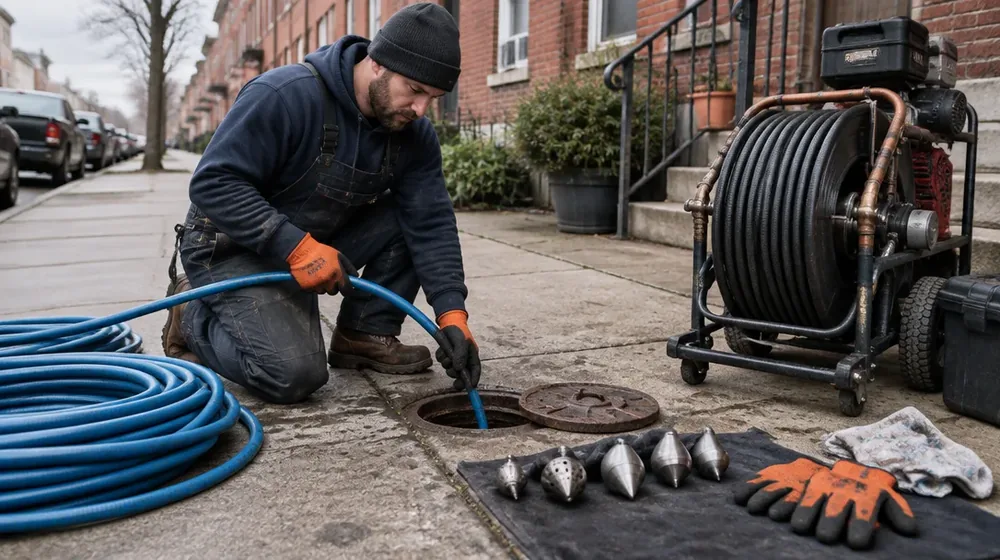
Jet the debris out where pipe allows
Shears remaining hair and flushes paper and sludge toward the cleanout instead of leaving it to re-lodge.
Camera the cleared line
Entry joint, footage, depth, and the condition of every other joint. Footage the homeowner keeps.
Price both paths
A maintenance interval and a repair figure side by side, including the option that costs recurring revenue.
Log the footage
So the next service starts at the right joint instead of rediscovering it.
Philadelphia access shapes the sequence. Work should run from a proper exterior or basement cleanout, and rowhouses lacking one should have the cleanout conversation before the root conversation, because every future cutting and jetting visit depends on it. Opening a cap against a blocked line demands care and a sideways stance, since the cap may be holding back a sewage column, and winter work must end with caps seated and risers protected from frost.
Material screening belongs inside the sequence rather than before it as a separate sale. If the pre-clear camera or the feel of the cable suggests Orangeburg, paper-thin scaled iron, or a collapsed segment, the crew stops cutting and re-scopes rather than forcing through. Pressure and aggressive heads convert marginal pipe into failed pipe, and the Philadelphia housing stock contains enough marginal pipe that restraint is a professional skill rather than timidity.
Cut on schedule, or repair once: honest ten-year math
On pure arithmetic, scheduled cutting wins comfortably when the pipe is otherwise sound. A periodic visit every one to three years totals far less over a decade than a full lateral correction, and it is a perfectly rational choice for a homeowner who may move, whose pipe shows a single entry joint with good remaining joints, and whose basement is unfinished so the consequence of an interval backup stays modest. Presenting repair as the only responsible answer in that situation is overselling.
The math flips at three specific points that Philadelphia cameras reveal regularly. When the footage shows joints cracking and offsetting along the whole run, so maintenance preserves a pipe that is failing structurally regardless of roots. When intervals shorten each cycle, meaning the openings are enlarging and the trend runs against the homeowner. And when one emergency backup plus professional cleanup in a finished basement costs more than the premium of correction, which it comfortably does once flooring, drywall, and contents are counted.
Repair itself has gradations worth pricing separately. A single sound-pipe run with one bad joint may suit a spot repair at that footage; a run of uniformly jointed clay of the same era usually wants full jointless replacement or lining end to end, because lining one segment merely delivers roots to the first unlined joint. Any repair figure should state footage, depth, surface restoration across sidewalk or areaway, and permit handling under the Philadelphia Plumbing Code, since those items move the total more than the pipe material does.
Service-line endorsements deserve a check before either path is chosen. Many homeowner policies offer buried-lateral coverage cheaply as an endorsement, and a surprising number of Philadelphia homeowners already carry it without knowing. Confirming coverage before spending changes the comparison without changing the pipe, and it costs a phone call.
What does not work, however often it is suggested
Removing the tree rarely solves the pipe. Philadelphia protects street trees, removal permits for healthy specimens are frequently denied, and even a successful removal leaves the joint open while decaying roots create voids that worsen settlement around it. The right to trim encroaching roots at the property line is not a right to be compensated for the lateral, and recovering costs from a neighbor normally requires showing negligence rather than mere growth, which is a high bar for a tree doing what trees do.
Chemical root killers containing copper sulfate or dichlobenil slow regrowth when applied after mechanical clearing but clear nothing on their own, repair no joint, and face restrictions on what may enter the sanitary system. Treat them as a delay tactic with a known ceiling. Rock salt down the toilet is worse: it never reaches the joint in effective concentration, corrodes metal components along the way, and burdens treatment processes downstream. Skip it entirely.
Lining only the visibly rooted segment when the rest of the run shares the same jointed clay construction is the most expensive form of delay. Roots simply colonize the first unlined joint past the liner end, and the homeowner has paid capital money for a maintenance outcome. If the whole run is the same era and material, the lining scope should be the whole run or the project should be reframed as scheduled maintenance until full correction is fundable.
Our related pages carry the two halves of the work: rooter service for how cutting is done and sewer camera inspection for how the entry joint is documented before money is committed.
Living with trees and laterals on the same block
Philadelphia will always plant street trees over sewer trenches, because shade, stormwater interception, and livability demand it and the trench is where the soil is loosest. The durable coexistence strategy is jointless pipe below and appropriate species above. Where a lateral has already been converted to PVC or HDPE, the species concern largely evaporates, which is an underrated dividend of doing the correction properly rather than maintaining indefinitely.
Where the clay remains, manage the interval intelligently. Keep the footage log with depths, schedule cutting before the autumn push rather than after the backup, and pair each cutting with jetting where the camera shows the pipe sound enough to take it. Plant new private trees no closer to the lateral than the expected mature canopy radius, favor compact ornamentals near the run, and locate the lateral by camera with a surface trace before digging any new planting pit.
The combined-sewer backdrop raises the stakes of deferral. Federal EPA combined-sewer-overflow background documents describe how wet-weather surcharge stresses older city systems, and a root-narrowed lateral is the first to fail when the main surcharges during the cloudbursts that track up the Schuylkill and Delaware valleys. A maintenance schedule that looks generous in dry weather can prove thin in the first big storm, so capacity planning should assume the wet-weather slug rather than the dry-weather trickle.
Frequently asked questions
How do I know roots are in my sewer line?
Recurrence at the same footage roughly annually, white fibers on the cutter, gurgling toilets, and sometimes a greener lawn strip over the run. Confirmation comes from a cleared-line camera showing the entry joint with footage and depth, not from another blind cable pass.
Will cutting roots fix the problem permanently?
No. Cutting restores flow and, paired with jetting, buys a one-to-three-year interval, but the joint stays open and roots return. Permanent correction means repairing or replacing the pipe with jointless material. Maintenance is rational on sound pipe; correction is rational when joints are failing throughout or intervals keep shortening.
Should I remove the tree causing the roots?
Usually not for the pipe sake. Removal needs permits for street trees, leaves the joint open, and decay voids can worsen settlement. Trimming rights at the property line do not create compensation rights for the lateral. Spend the money on the pipe first and plant future trees clear of the run.
Do chemical root killers work?
They slow regrowth after mechanical clearing but clear no existing blockage and repair no joint, with restrictions on sewer introduction in many jurisdictions. Rock salt is worse, corroding metal without reaching the joint effectively. Treat chemicals as a delay tactic at best.
Does homeowner insurance cover root damage?
Often only with a service-line endorsement that many carriers sell cheaply and many homeowners already hold unknowingly. Check the policy before authorizing repair, since covered lateral work changes the maintenance-versus-correction math without changing the pipe.
Services mentioned in this guide
Rooter Service
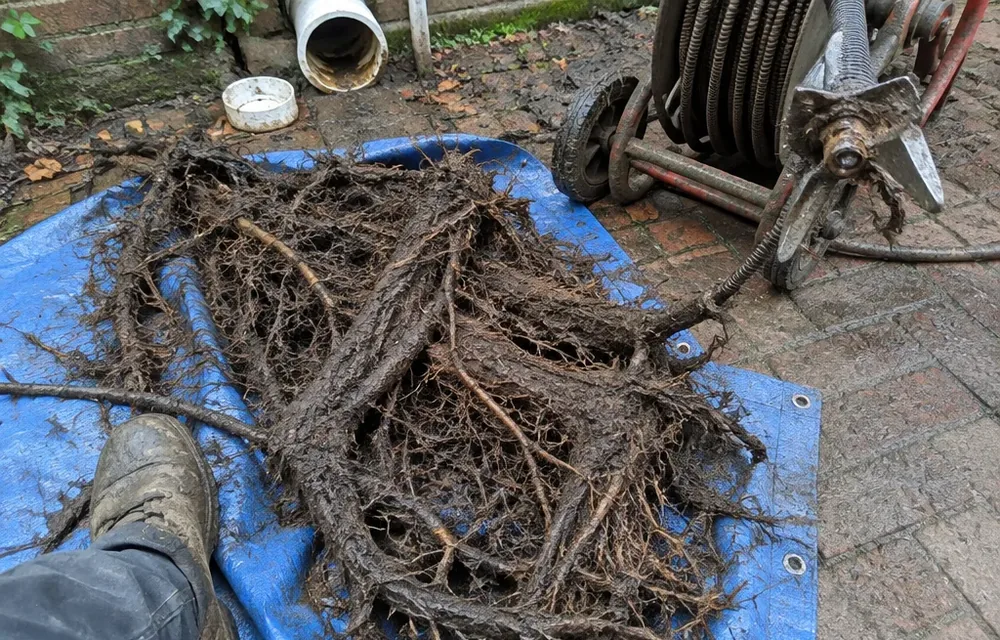
Roots do not break your pipe to get in.
Main Sewer Line Cleaning
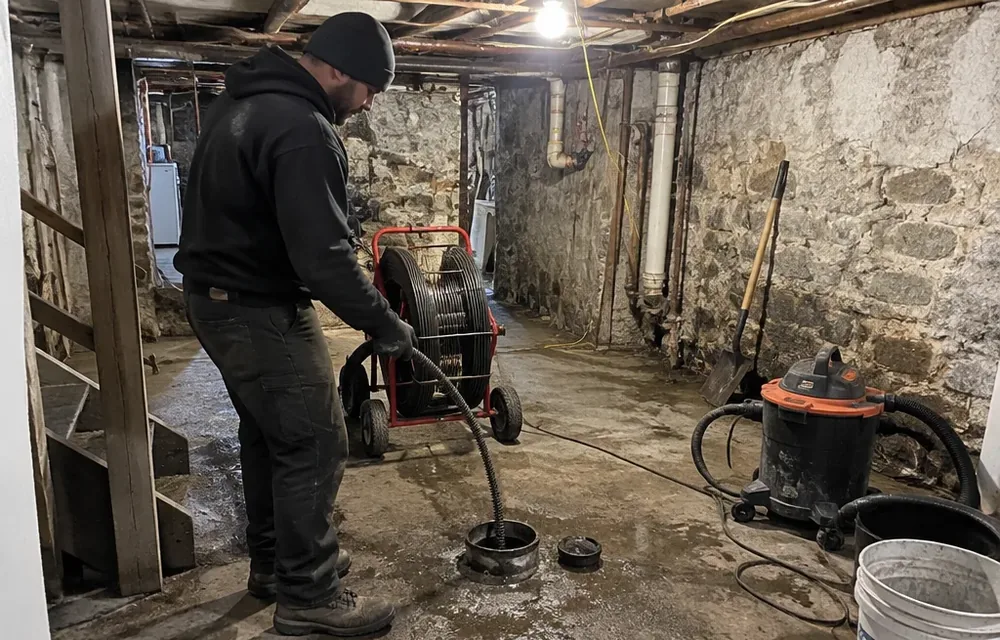
The lateral is the most expensive drain you own — a 60-to-100-foot clay run from your rowhouse to the street main, shared with stormwater, hunted by street-tree roots.
Sewer Camera Inspection
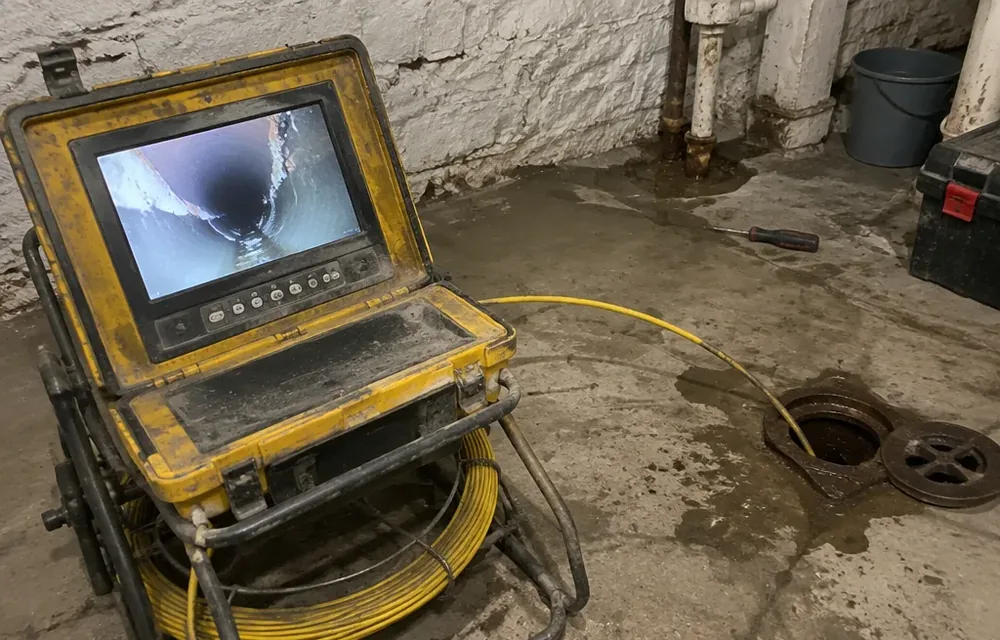
Every expensive sewer decision in Philadelphia — jet, repair, line, replace — depends on one thing: what the pipe actually looks like inside.
Free tools that help with this exact problem
More guides
Hydro Jetting vs Snaking: What Philly Homes Need
A cable bores a hole through the blockage so water moves again. A jetter scours the whole pipe wall back toward bare m…

Hydro Jetting Cost in Philadelphia: 2026 Guide
Most Philadelphia homeowners budget around national jetting ranges, then discover access, lateral length, and root cut…
Philly Rowhouse Laterals: Clay, Iron & More
The year your Philadelphia rowhouse was built predicts what is buried in front of it. Clay joints admit roots, cast ir…
Camera Inspection Before Hydro Jetting Guide
Nobody can price pressure honestly without seeing the pipe first. On Philadelphia laterals of unknown age and material…