Hydro Jetting vs Snaking: What Philadelphia Homes Actually Need
A cable bores a hole through the blockage so water moves again. A jetter scours the whole pipe wall back toward bare material so the blockage is slower to return. That single difference explains almost every jetting-versus-snaking decision in Philadelphia.
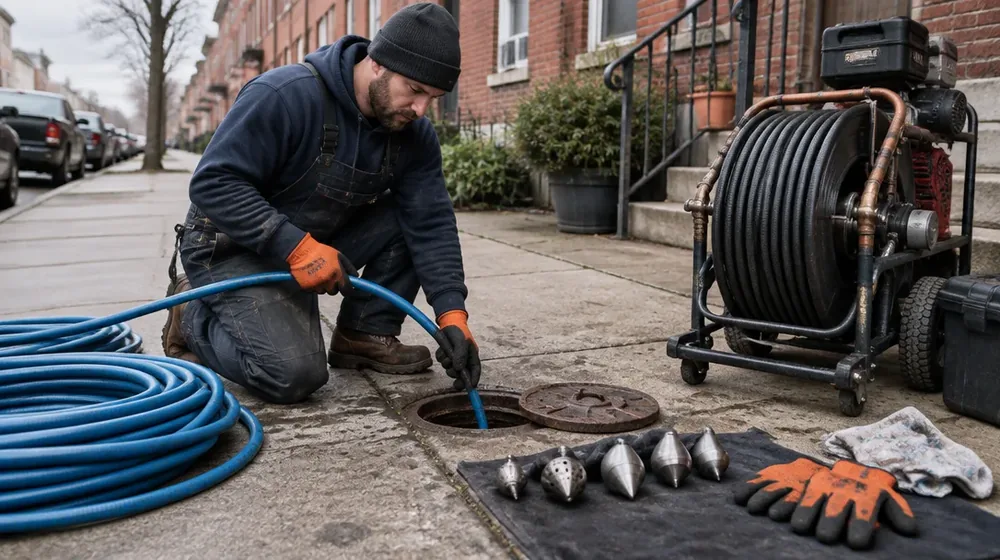
How snaking actually works, and what it leaves behind
Snaking, also called cabling or augering, drives a flexible steel cable with a cutter head through the line until it reaches the obstruction, then rotates to bore through it. For a soft plug of paper, hair, or a small root intrusion, that channel restores flow in minutes, and on a first-time clog in an otherwise healthy line it is frequently all the pipe ever needs. Most Philadelphia kitchen, bath, and laundry branch calls end right here, with the cable withdrawn, the line run under volume to confirm drainage, and the homeowner back in service the same visit.
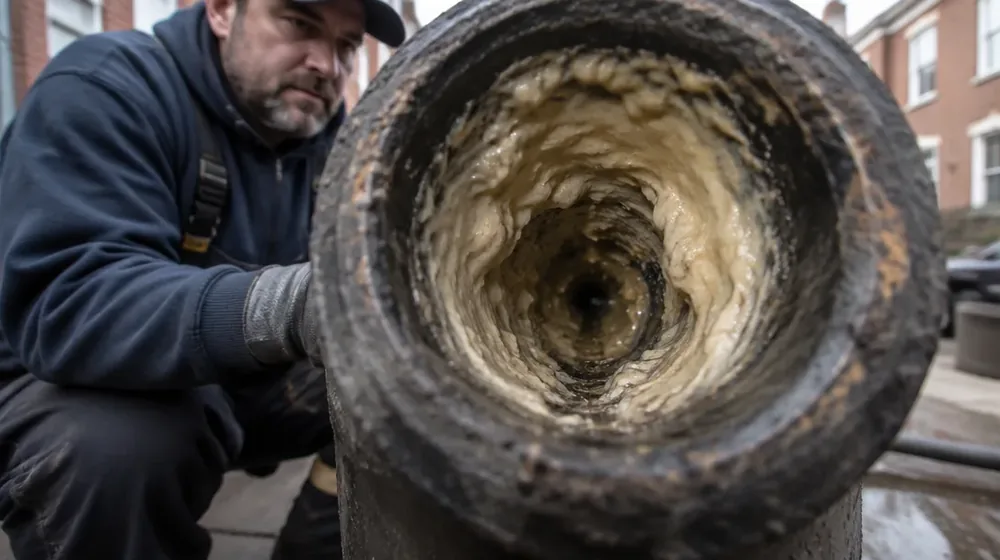
What the cable does not do is clean the wall. Grease congealed on cast iron, soap and biofilm layered inside an old bathroom branch, or scale flaking off century-old iron remains exactly where it was, with a bored channel down the middle. The Philadelphia Water Department sees the municipal version of this same pattern at scale: lines that convey flow but carry a persistent coating that narrows the bore and catches the next load of debris. Inside a house lateral the effect is identical, which is why a line that was snaked six months ago so often needs snaking again.
That recurrence pattern is the diagnostic signal, not a failure of the technician. If the same drain slows again within weeks or a few months, or if the cable comes back coated in black grease or orange iron scale rather than a discrete plug, the pipe is telling you it is coated rather than merely blocked. A second cabling will buy time at a lower immediate outlay, but each pass through heavy scale or hardened grease removes a smaller fraction of the deposit. At that point the honest comparison is not cable versus jetter on one visit, it is the price of repeated visits against one thorough scouring.
Snaking also has a genuine safety advantage on fragile pipe that jetting cannot match. A skilled operator feels the head meet an offset joint, a belly, or crumbling Orangeburg and can stop before forcing through, while pressurized water finds every weakness at once. In pre-1920 Philadelphia rowhouses with original clay or thin-wall iron laterals, that tactile feedback is worth real money, and it is one reason a camera inspection before any high-pressure work is standard practice rather than an upsell.
How hydro jetting actually works, and why pressure is only half of it
Hydro jetting feeds a hose with a specially ported nozzle into the line and discharges water at pressures commonly between 1,500 and 4,000 PSI, with rear-facing jets that pull the hose forward and scour the full circumference while front jets break up the obstruction ahead. Different heads do different jobs: a warthog-style rotary head peels grease off cast iron, a penetrator head opens a fully blocked line so the scouring head can follow, and a root-cutting head pairs with mechanical cutting when Philadelphia street-tree roots have matted inside clay joints. Flow rate matters as much as pressure, because it is the volume that carries the dislodged material back to the cleanout instead of redepositing it downstream.
On grease, the difference against a cable is dramatic and visible on camera. South Philadelphia rowhouses that share party-wall kitchen runs, and the restaurant corridors of Center City, South Street, and East Passyunk, lay down layer after layer of congealed fat that a cable pierces like a straw through butter. Jetting with hot water emulsifies that layer and peels it to the wall, restoring something close to the original diameter. National guides from Angi, Bob Vila, and Forbes describe typical hydro jetting at roughly 350 to 600 dollars with an overall range near 300 to 1,100 dollars depending on access and severity, cited here as national ranges for context rather than any local price.
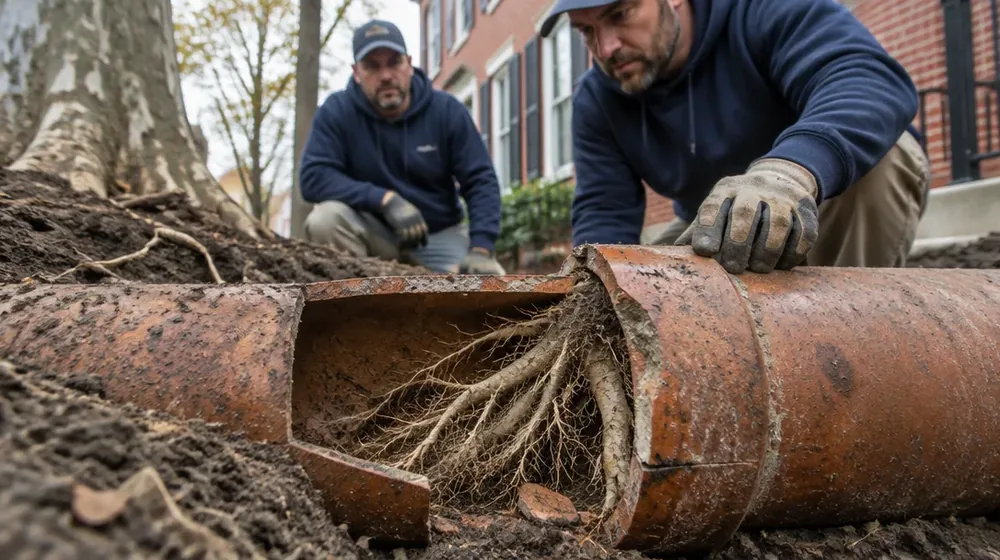
On roots and scale the story is more qualified. Jetting shears fine root hair and flushes the sludge that roots trap, which extends the interval between services on a clay lateral with a known root joint, but it does not close the open joint that admitted the roots. Similarly, it strips loose iron scale beautifully yet cannot restore wall thickness that tuberculation has already consumed. A post-jet camera pass is therefore part of a proper job, not an add-on: it proves the wall is clean, shows whether the underlying pipe is sound enough to hold the result, and gives the homeowner footage with footage marks to keep for the next decision.
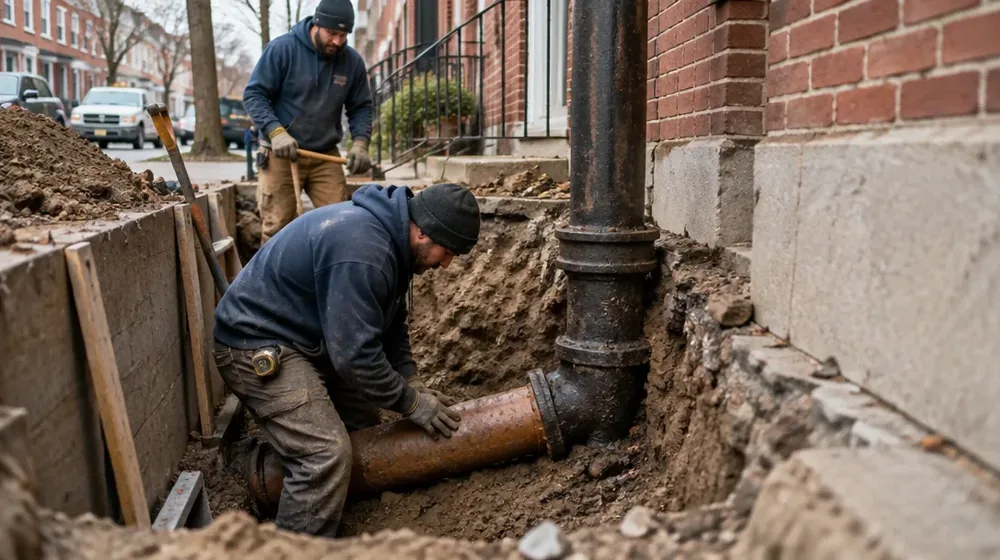
Access determines whether jetting is even practical. The work should be done from a proper exterior or basement cleanout, because running a jetter through a pulled toilet or a roof vent is slower, messier, and harder to control. Many Philadelphia rowhouses built before the Second World War lack a modern two-way cleanout, and installing one is frequently the highest-value money in the whole job: it converts every future service from an excavation-class visit into a routine one.
Side-by-side comparison for Philadelphia conditions
| Factor | Snaking (cabling) | Hydro jetting |
|---|---|---|
| What it removes | A channel through the plug; wall coating stays | Full-circumference scouring back toward bare wall |
| Best Philadelphia use | First-time soft clogs, bathroom hair, paper plugs | Grease-coated kitchen and restaurant lines, repeat backups, pre-lining prep |
| Roots in clay joints | Cuts the mass; hair and sludge remain | Flushes fines after cutting; joint still open either way |
| Fragile pipe risk | Lower; operator feel, easy to stop | Higher on Orangeburg, badly scaled iron, cracked clay |
| Typical national range | Often less per visit than jetting | Roughly 350 to 600 typical, 300 to 1,100 range per Angi, Bob Vila, Forbes |
| How long relief lasts | Months on coated lines; years on one-off plugs | Longer on grease and sludge when pipe is sound |
| Camera needed | Advisable on repeats and main lines | Expected before pressurizing older Philadelphia laterals |
Read the table as a decision aid rather than a scorecard, because neither column wins outright. The left column wins on a first-time fixture clog in a small-diameter branch, where mobilizing a jetter would be disproportionate. The right column wins on the third grease backup in a year in a rowhouse kitchen lateral, where another channel through the same coating is money spent re-proving what the camera already showed.
Philadelphia housing stock tilts the choice in predictable ways. Post-war rowhouses in the Northeast with PVC replacements and good cleanouts jet safely and respond well. Pre-war brick rowhouses in Fishtown, Kensington, Point Breeze, and West Philadelphia with original clay-and-iron laterals and mature street trees demand a camera first, and sometimes the answer that comes back is to cable gently now and plan a spot repair rather than scour a pipe that is already structurally marginal.
Which Philadelphia homes suit which method
Rowhouse kitchens are the clearest jetting case in the city. A century of cooking fat down a 3- or 4-inch cast iron lateral, compounded by modern dishwashers that discharge cooler water that congeals grease faster, builds a coating that no cable removes. If theodo kitchen sink backs up every few months, the cable comes back black, and the house sits in a dense block of similar-era homes from Girard Avenue to Oregon Avenue, the line is coated and jetting from a proper cleanout is the durable answer. Pair it with a grease-discipline change at the sink or the coating begins rebuilding the same week.
Bathroom branches are the clearest snaking case. Hair bound with soap scum within a few feet of the trap is a fixture clog that a hand auger or small drum machine clears completely, because there is no long coated run to scour. Jetting a 1.5-inch bathroom branch is rarely proportionate and risks driving water past old slip joints. The exception is a whole-house cast iron stack in a three-story rowhouse with decades of scale, where a controlled descale under camera supervision earns its keep.
Main laterals with street-tree roots sit in the middle and need both tools in sequence. Silver maple, London plane, and honey locust roots exploit every shifted clay joint from the curb lawn to the foundation, and Philadelphia streets are lined with them. The standard competent sequence is to cut the root mass to full diameter with a properly sized head, jet the hair and trapped paper out so it does not re-lodge downstream, and camera the cleared line to log the entry footage and depth. Either tool alone leaves half the job undone.
The combined sewer context matters too. Much of Philadelphia operates on combined sewers where stormwater and sanitary flow share the same mains, a legacy the federal EPA combined-sewer-overflow background documents describe as a nationwide challenge during heavy rain. When a summer cloudburst surcharges the main, a partially coated lateral that drained fine in dry weather becomes the first to back up. Homes with a history of wet-weather backups should weight the decision toward the thorough cleaning, because the next stress test arrives with the next storm, often from the Schuylkill and Delaware river corridors that funnel the heaviest cells straight over the rowhouse belt.
When neither tool is the right first step
A camera inspection comes before either tool when the pipe itself may be the problem. Orangeburg pipe, the tar-impregnated fiber conduit laid in some mid-century Philadelphia replacements, deforms under pressure and shreds under aggressive cabling; badly tuberculated cast iron can perforate; and a separated clay joint with a void above it can collapse when the supporting sludge is washed out. The Pennsylvania Uniform Construction Code and the Philadelphia Plumbing Code both presume work appropriate to the pipe at hand, and no honest technician pressurizes a line of unknown material and condition. If the building predates 1970 and no footage exists, scoping first is diligence rather than delay.
A belly, meaning a sagged section that holds standing water, also defeats both tools as a cure. The cable passes through the standing water and the jetter washes the sediment out, yet the low spot remains and solids settle there again within months. Camera footage showing water sitting mid-line with debris drifting back after flushing is the signature, common where old trench backfill settled beneath rowhouses or where heavy delivery traffic compacted the soil over the lateral. The durable fix is regrading or replacing that segment, and money spent jetting a belly on a quarterly schedule is better banked toward the repair.
Active basement flooding during rain is a third case where the tool choice is secondary. If the Philadelphia Water Department main is surcharged and water is entering through the floor drain or a foundation crack, clearing the lateral changes nothing until the main recedes, and opening a cleanout cap against a surcharged line can release a column of sewage into the basement. Stop water use, keep people clear of the water, and treat the event as a combined-system backup first and a cleaning decision second.
What a proper job visit looks like, step by step
Confirm fixture versus main
One slow sink is a branch job; multiple fixtures, gurgling across rooms, or sewage at the lowest drain is a main-lateral job. The distinction decides which machine comes off the truck.
Work from a real cleanout
Exterior two-way or basement cleanout with the cap opened carefully and from the side. No cleanout often means installing one before jetting rather than improvising through a fixture.
Camera first on older or repeat lines
Material, diameter, footage to the defect, and depth at the curb. On pre-1970 Philadelphia laterals this step decides whether jetting is safe at all.
Cut, then jet, then verify
Cable sized to the line for roots or hard plugs, jetting to scour and flush toward the cleanout, then a post-clean camera pass proving full bore under volume.
Prove it under load
Run a full tub or laundry discharge while watching the line. A lateral that passes a cable but fails under a real slug of water is not fixed.
Leave footage and a plan
Video file with footage marks, the entry joint for roots or the grease extent logged, and a written note on interval versus repair so the next visit starts informed.
Measure any visit against that sequence and most bad outcomes become visible early. A visit that skips straight to pressure with no camera on a 1910 lateral, or that declares victory without running water under load, has left the two steps that protect the homeowner undone. The sequence costs a little more time on site and saves far more across the life of the line.
Cost, longevity, and how to decide without regret
Think in total cost over three years rather than price per visit. A cable visit costs less each time but on a grease-coated rowhouse lateral it recurs two or three times a year, while one thorough jetting with camera verification on sound pipe can reset the clock for years when paired with changed habits at the sink. National context from Angi, Bob Vila, and Forbes places jetting roughly 350 to 600 dollars typically within a 300 to 1,100 dollar range, with access, diameter, severity, and whether cutting or camera work is bundled moving any individual job within or beyond that band. Treat those figures as orientation for budgeting, not as any contractor commitment.
Longevity depends on what the camera showed. Jetting a sound PVC or solid iron line with a pure grease load is among the highest-return services in drain work, because the cleaned wall stays clean when fat goes in the trash instead of the sink. Jetting a line with an open root joint, a belly, or paper-thin iron buys a shorter interval by the nature of the defect, and the honest recommendation in those cases pairs the cleaning with a repair figure so the homeowner can compare maintenance against correction on paper.
Philadelphia freeze cycles add one more wrinkle to timing. Jetting in a January cold snap leaves a freshly wetted line that must drain fully before a hard freeze, and exterior cleanout caps left loose after service invite frost into the riser. Competent winter work ends with the line proved empty, caps properly seated, and basementlaterals in unheated areas checked for insulation. Schedule the thorough cleaning before the deep-winter and heavy-spring-rain windows, and the line faces both with full diameter available.
The no-regret rule is simple: cable the one-off plug, camera the repeat or the unknown old line, and jet the coated or grease-bound line whose pipe the camera proves sound. Homeowners who follow that order spend the least over time and replace pipe only when footage shows the pipe itself has failed. Anyone advising pressure before pictures on a century-old Philadelphia lateral is asking the homeowner to underwrite a risk the camera would have priced in minutes.
Frequently asked questions
Is hydro jetting better than snaking?
For coated lines it is decisively better, because a cable bores a channel while a jetter scours the full wall. For a one-time soft plug near a fixture, snaking is the proportionate answer and jetting adds nothing. The pipe condition decides: grease and sludge favor jetting, a simple plug favors the cable, and fragile or unknown pipe favors a camera before either.
Can hydro jetting damage old Philadelphia pipes?
It can damage pipe that is already failing, which is exactly why older laterals get a camera first. Sound cast iron, clay, and PVC handle appropriate pressure; Orangeburg, paper-thin scaled iron, and separated joints do not. A proper operator matches pressure, flow, and nozzle to the material the camera showed rather than running one setting for every house.
Why does my drain clog again months after snaking?
Because the line is coated rather than merely plugged. Grease on iron, scale inside an old stack, or root hair trapping paper all narrow the bore permanently, and each cabling reopens a channel through material that remains. Recurrence at a shortening interval is the signature that the next service should be a scoured cleaning with camera verification rather than another channel.
How much does hydro jetting cost in Philadelphia?
Use national ranges for orientation: Angi, Bob Vila, and Forbes describe roughly 350 to 600 dollars typical within about a 300 to 1,100 dollar spread, with access, diameter, roots, and camera work moving individual jobs. Philadelphia specifics that push within that band include cleanout access, rowhouse lateral length to the main, and whether root cutting is bundled. Get the scope in writing before work begins.
Should I jet before a camera inspection or after?
Camera first on any older, repeat-offender, or unknown line, then jet, then camera again to verify. The first pass protects fragile pipe and aims the cleaning; the second pass proves the wall is actually clean and logs what remains. Jetting blind on a pre-war Philadelphia lateral gambles the costliest part of the system to save the cheapest step.
Services mentioned in this guide
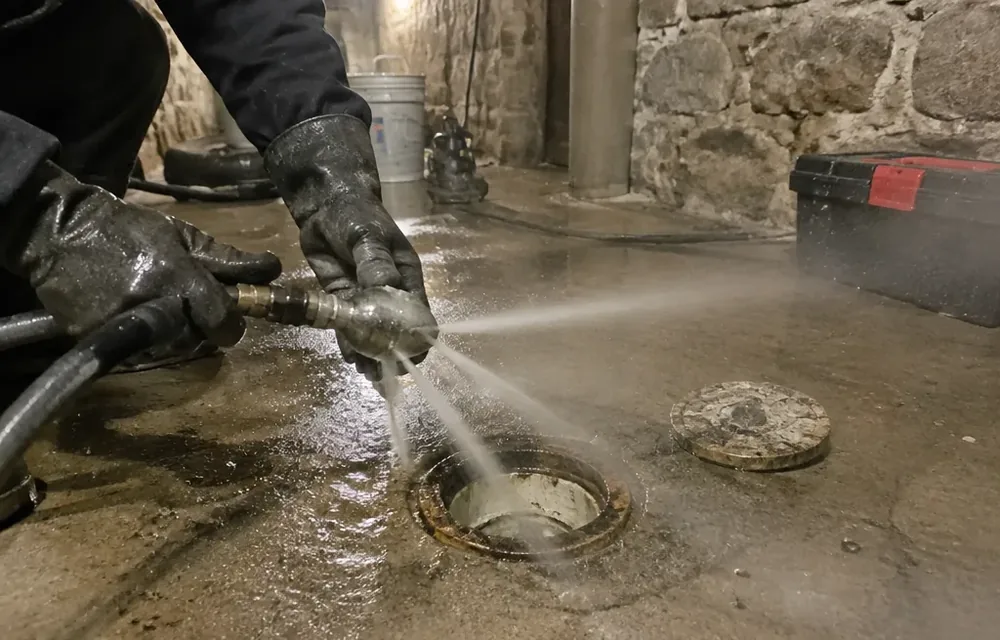
Hydro Jetting
A cable bores a hole through the clog.
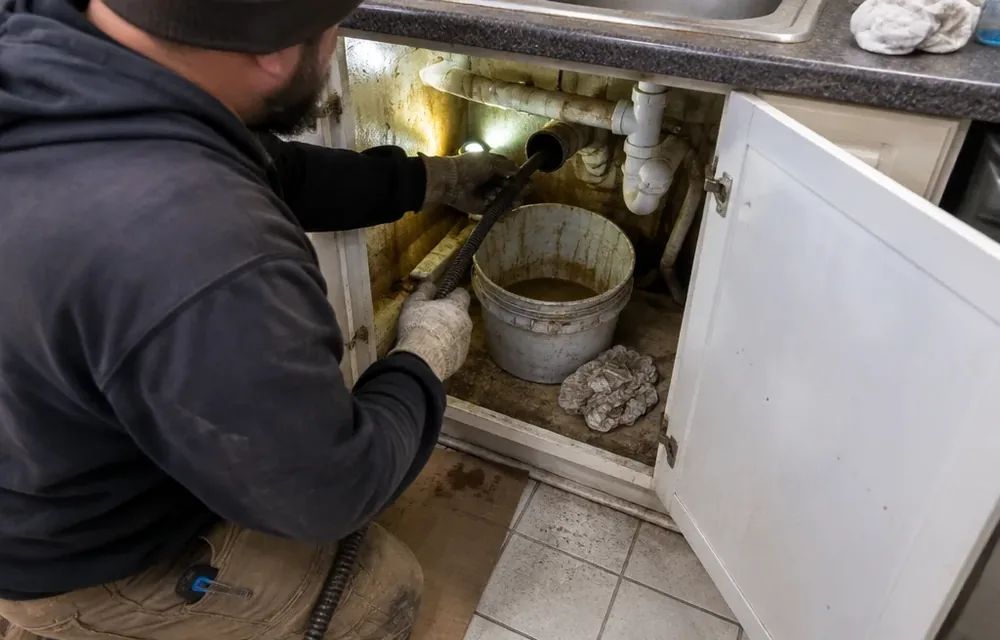
Drain Cleaning
A single slow sink is a nuisance.
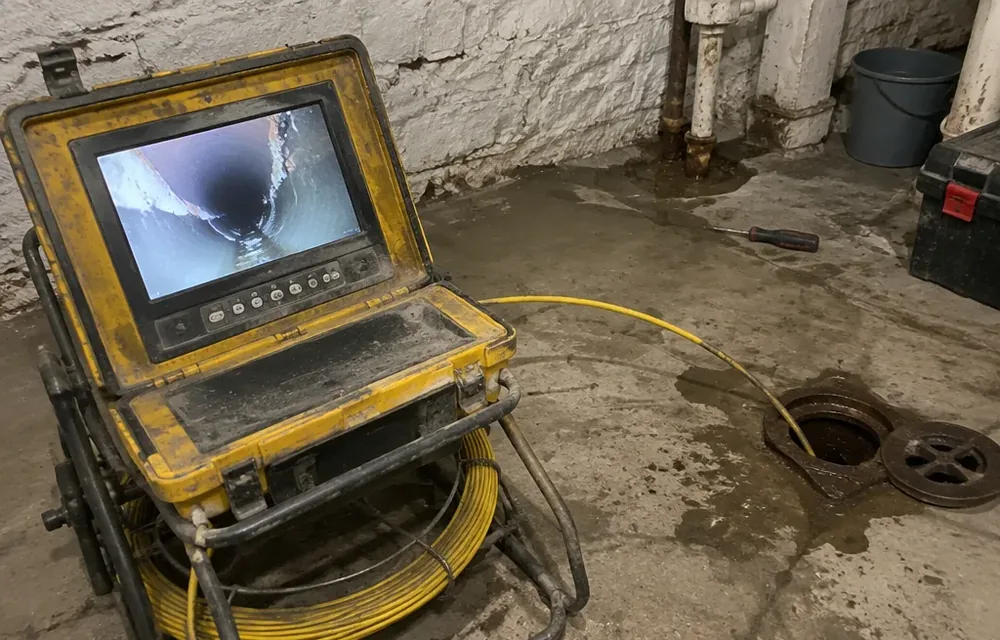
Sewer Camera Inspection
Every expensive sewer decision in Philadelphia — jet, repair, line, replace — depends on one thing: what the pipe actually looks like inside.
Free tools that help with this exact problem
Jetting vs snaking
Snaking costs less and jetting lasts longer, but that is not the real decision.
Clog diagnostic
The difference between a fixture clog and a main line failure is a factor of three in price and the difference between "book it next week" and "stop using water now".
More guides

Hydro Jetting Cost in Philadelphia: 2026 Guide
Most Philadelphia homeowners budget around national jetting ranges, then discover access, lateral length, and root cut…
Tree Roots in Philadelphia Sewer Lines Guide
Roots do not break into sound pipe. They find the clay joint that is already leaking, thicken in the flow, and become …
Grease Lines: Philly Rowhouses & Restaurants
Grease goes down warm and liquid, meets cold iron, and becomes a wall coating rather than a plug. That is why the same…
Philly Rowhouse Laterals: Clay, Iron & More
The year your Philadelphia rowhouse was built predicts what is buried in front of it. Clay joints admit roots, cast ir…