Water Backing Up Into Fixtures: Philadelphia Action Guide
Water rising where it should be leaving means the line downstream is blocked and every gallon you add has to surface somewhere. Stop all water use first, keep people away from the water, and then work out whether the blockage is yours, the street, or both.
- Symptom guide
- Philadelphia area
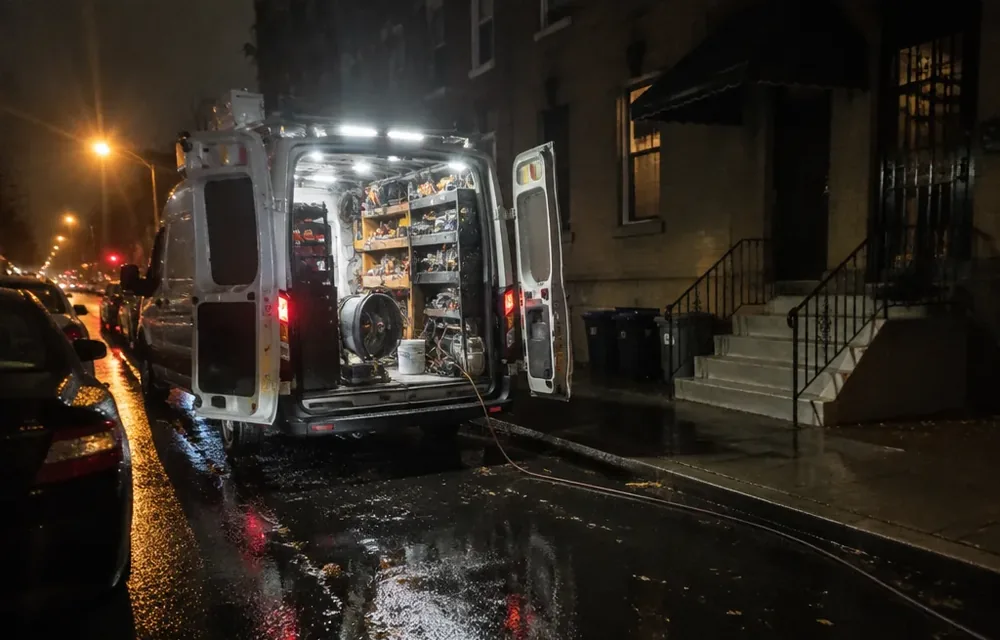
Understanding water backing up into fixtures
What a backup means mechanically
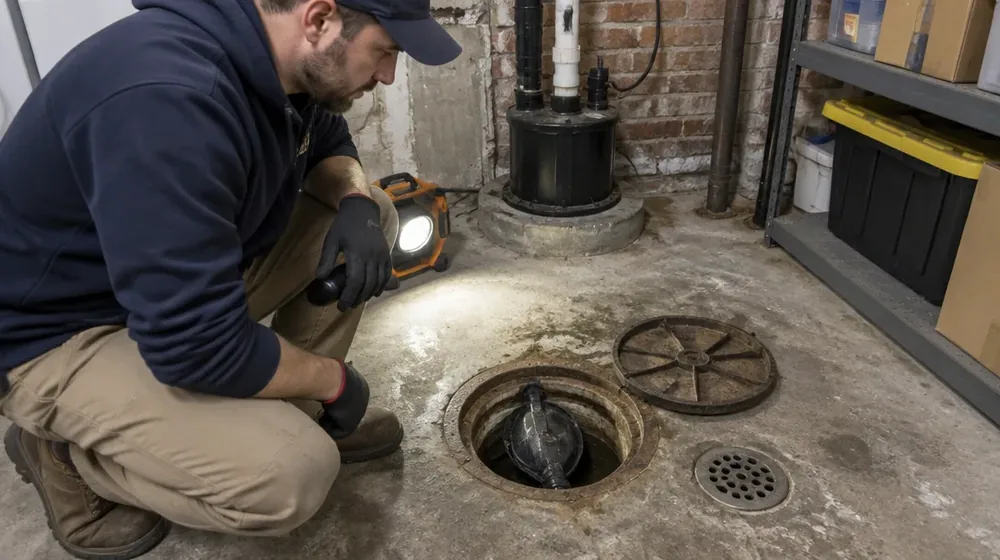
Drainage only works while the downstream path is open. The moment a blockage closes the building drain or lateral, incoming water has exactly one place to go: up and out through the lowest open fixture on the system. In Philadelphia rowhouses that is usually a basement floor drain, a ground-floor shower pan, or a first-floor tub, and the water arriving there is whatever the household most recently sent down: shower water, toilet flushes, washing machine discharge, or sewage from the line itself.
The blockage itself is one of a short list. A main-line clog of roots, grease, wipes, or scale sits in your lateral between the house and the street main. A street-side surcharge means the public combined-sewer main is full from stormwater and pushing back into every lateral on the block, which is why backups cluster on rainy days and strike neighbors simultaneously. The two compound: a lateral already narrowed by roots is the first to overflow when the street main surcharges, so many Philadelphia backups are genuinely both causes at once.
Speed matters because damage compounds. Clean gray water from a single fixture becomes contaminated black water once it mixes with sewer contents, and porous materials such as drywall, carpet, and stored cardboard wick it upward within hours. Shutting off the inflow is therefore not just plumbing triage but damage control: the total volume in the basement at the end equals whatever the house sent down after the blockage closed, minus nothing. Laundry sinks, utility tubs, and basement shower stalls overflow next in sequence, followed by seepage under finished partition walls where laminate flooring buckles and insulation saturates invisibly.
What to do in the first hour, safely
Stop all water use immediately, including the dishwasher, washing machine, and ice maker, and tell everyone in the house not to flush. If water is near outlets, appliances, or the electrical panel, stay out of it and shut power to the affected area from a dry location; energized standing water injures people every year in flooded basements. Keep children and pets out regardless, and treat all backup water as contaminated: gloves and boots for any contact, no bare skin, and no attempt to bail it with household buckets you will later use for anything else.
Document before you clean. Photograph water lines on walls and fixtures, the high-water mark on stored items, and the state of the lowest drain, with timestamps. This record decides insurance outcomes, and cleanup destroys the evidence it needs. Check two quick facts while you wait for help: whether neighbors are backing up too, which points to a street-side surcharge worth reporting to the Philadelphia Water Department, and whether the water rises when nobody is using anything, which points to inflow from outside rather than from your own fixtures.
Do not open cleanouts under pressure, do not pull toilets, and do not pour chemicals into a backed-up line. An opened cleanout below the backup level becomes a fountain, and standing caustic solution behind a blockage is what comes back out when the line is eventually opened. Note instead which fixture filled first and what was running when it started; that timeline is the single most useful thing you can hand the technician. If you want the same triage logic a dispatcher uses, the clog symptom diagnostic starts from exactly this question.
What fixes it, and when to call now versus wait
An active backup is never a wait situation. It needs same-day professional clearing, because the line will not reopen on its own and every hour of household water use adds volume to the lowest room. After-hours dispatch exists for exactly this: sewage entering the living space is the definition of a plumbing emergency. See emergency drain service for how an urgent call runs, including the containment steps that keep wastewater off the rest of the basement.
The clearing itself follows the cause. A private-lateral blockage is opened with the right machine and cutter head, then verified under real volume rather than merely until standing water drops; a line that passes a cable but fails under a full tub is not fixed. When neighbors are affected or the backup arrived with a cloudburst, the street main is implicated alongside your lateral, and the durable answer pairs clearing with backpressure protection. Read basement floor drain cleaning for the lowest-opening work and main sewer line cleaning for the full lateral sequence.
After flow is restored, the second assessment matters as much as the clearing. A backup that arrived through a root-narrowed or bellied lateral will return on the next heavy rain unless the defect is documented and addressed, which is why a sewer camera inspection with footage marks follows most backups. That footage separates a one-off wipes blockage, which needs only habit changes, from a structural narrowing that needs a maintenance interval or a repair. For the street-side half of rain-driven events, basement backups and combined sewers explains surcharge behavior, and how to prevent basement backup orders the lasting protections.
Water Backing Up Into Fixtures: questions
Should I call the city or a plumber first for a backup?
If neighbors are backing up at the same time or the backup arrived with heavy rain, report to the Philadelphia Water Department and call a plumber too, because your lateral still needs clearing and protection. If only your house is affected in dry weather, the blockage is in your line and a plumber is the first and only call.
Is backup water dangerous?
Treat it as contaminated. Once fixture discharge mixes with sewer contents it carries bacteria and viruses, and it wicks into drywall, carpet, and stored goods within hours. Keep people and pets out, wear gloves and boots for any contact, and discard porous materials that soaked it up rather than trying to salvage them.
Will my basement back up again after it is cleared?
It can, if the cause was structural rather than incidental. A line narrowed by roots, scale, or a belly returns to the same state that just failed, usually on the next heavy rain. A camera inspection after clearing shows whether you bought years or merely weeks, and that footage decides between a maintenance interval and a repair.
Services that fix this
Emergency Drain Service
Sewage on the basement floor does not wait for business hours, and neither do we.
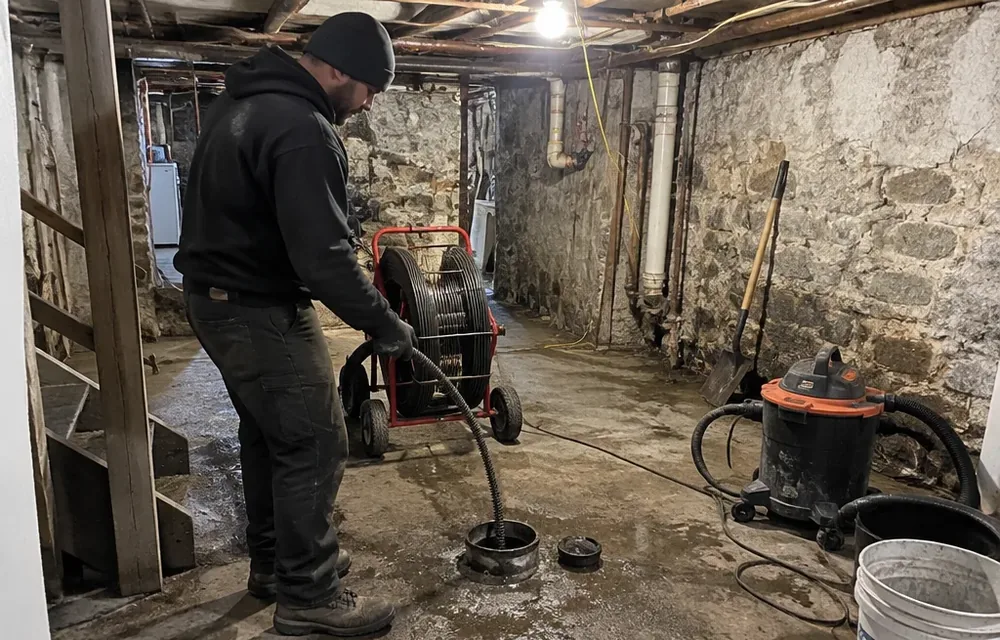
Main Sewer Line Cleaning
The lateral is the most expensive drain you own — a 60-to-100-foot clay run from your rowhouse to the street main, shared with stormwater, hunted by street-tree roots.
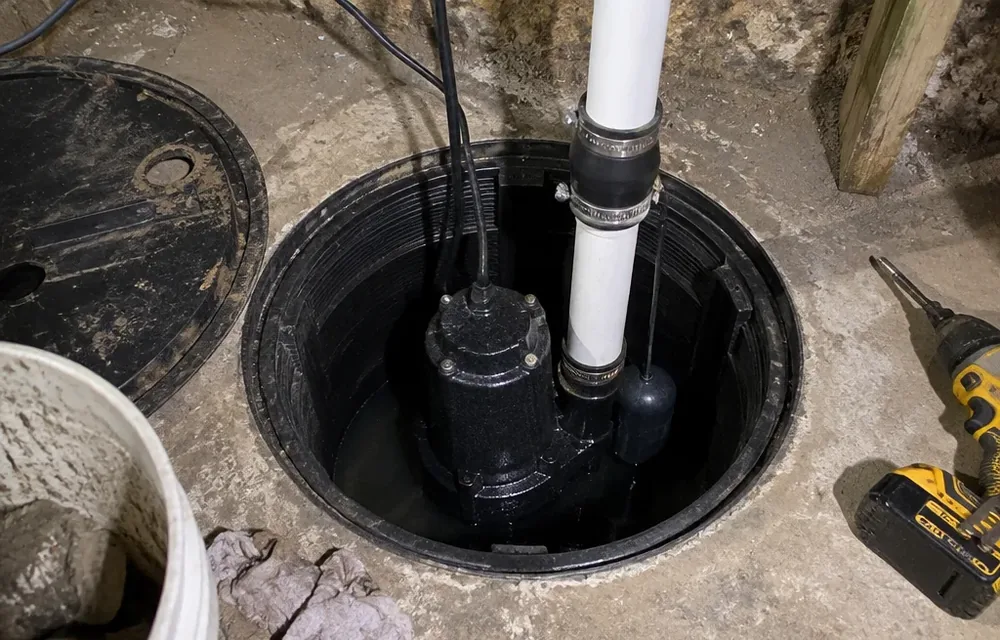
Basement Floor Drain Cleaning
The basement floor drain is the lowest opening in your rowhouse — which makes it the relief valve for every downstream restriction.
Guides on this symptom
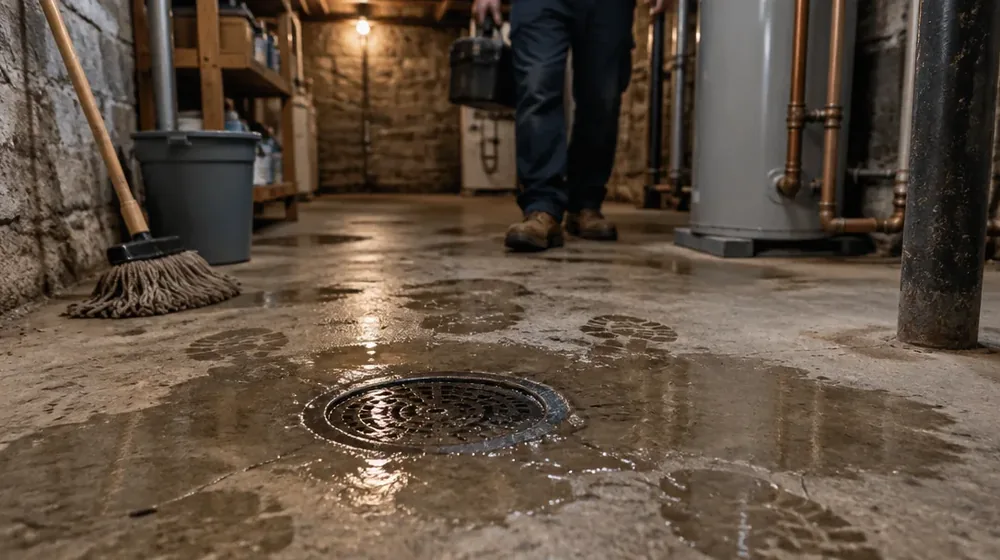
Basement Backup in Philly: Combined Sewers
When rain and sewage share the same Philadelphia main, a cloudburst can push water backward through the lowest drain i…
How to Prevent Basement Backup in Philadelphia
Prevention on a combined-sewer block means giving surcharge water no low opening to use and giving your own discharge …