Hydro Jetting in Philadelphia — Grease, Scale & Roots Scoured Out
A cable bores a hole through the clog. A jetter removes the reason the clog formed. If you are clearing the same Philadelphia line more than once a year, you have been buying the wrong service.
- 2 to 4 hours
- Philadelphia Area
- 7 days a week
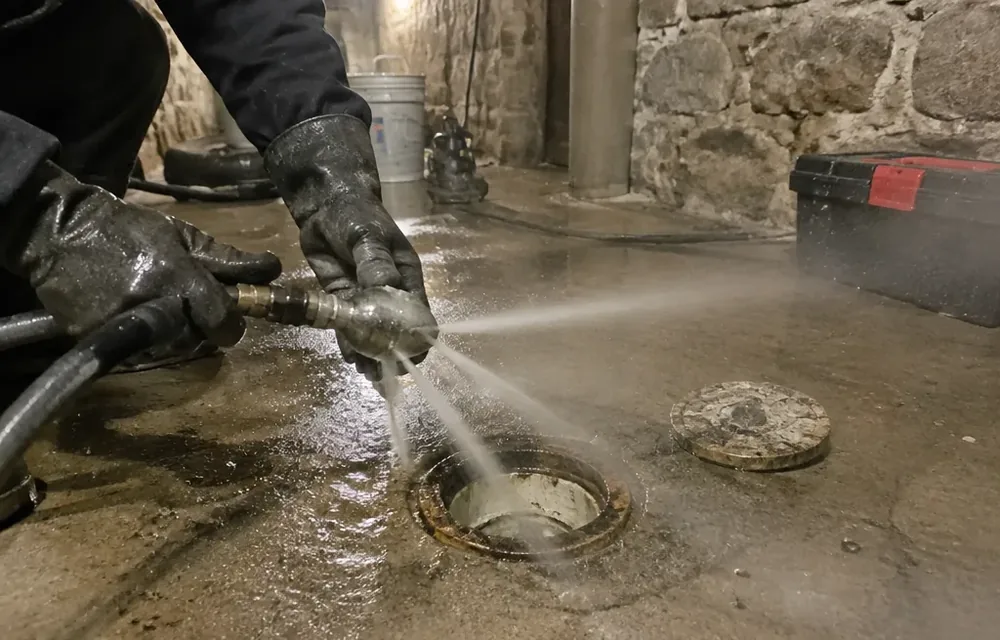
Signs you may need hydro jetting
Most people arrive here describing a symptom rather than naming a service. These are the three that point this way.
Same line clogging twice in eighteen months
Repeat blockages in one line mean the pipe wall is coated with grease, scale or grit that cabling only punches through. Each clearing buys less time until the coating is jetted off.
Cable comes back coated in grease or sludge
Soft brown layers on the retrieved cable describe full-circumference wall coating, not a discrete clog. No cutter head removes coating; only high-pressure jetting scours it back to bare pipe.
Slow drainage across every fixture at once
Whole-house slowing points downstream at the building drain or clay lateral where combined deposits narrow the bore. Jetting with camera verification restores the full diameter.
What hydro jetting actually is
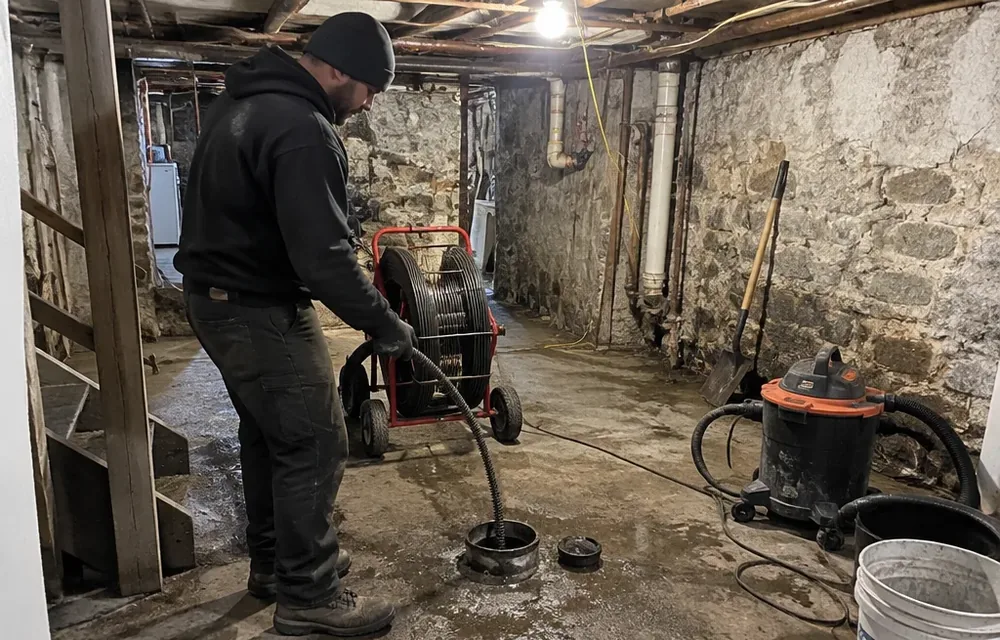
A hydro jetter pushes water through a specialised nozzle at 1,500 to 4,000 PSI. Most jets face backward, which does two useful things at once: the reverse thrust drags the hose up the line under its own power, and the angled streams strip the pipe wall as it travels. A forward-facing jet cuts through the obstruction itself.
The distinction that matters to you: a cable machine is a mechanical tool that removes an obstruction. A jetter is a cleaning tool that removes the accumulated layer the obstruction grew on. After a proper jetting, the camera shows original pipe material — not a narrow channel bored through a tube of grease.
This is the same method municipalities use to maintain public sewer mains, and it is the standard answer for Philadelphia combined-sewer laterals that carry both sanitary flow and stormwater grit. It is not an exotic upsell; it is standard practice scaled down to a rowhouse lateral.
Why Philadelphia lines clog the way they do
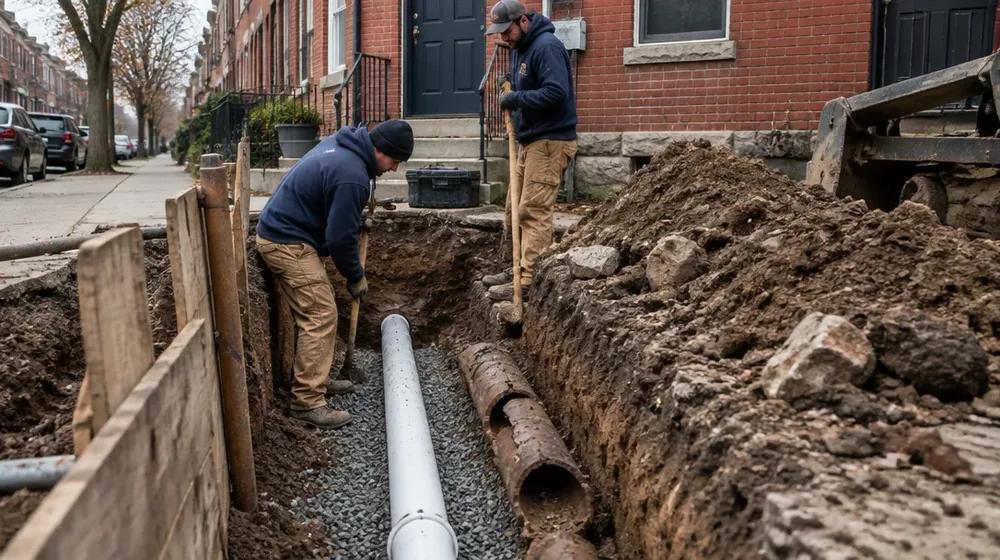
Philadelphia housing stock explains most of what we clear. Center City, South Philly, Fishtown, Kensington and West Philadelphia rowhouses commonly run pre-1920 clay tile laterals to the city main, with cast iron stacks and branch arms inside the building. Clay joints weep vapour, roots find the joints, and cast iron interiors roughen with age so grease grabs faster.
Postwar blocks in the Northeast, parts of Southwest and pockets of South Philly fall in the 1945–1972 Orangeburg window — tar-impregnated wood-fibre pipe that softens and deforms with age. We treat those lines as camera-first, jet-only-if-sound, because pressure finds weakness.
Add the combined sewer system across much of the city: one lateral carrying sanitary flow plus basement, yard and roof drainage. Storm grit settles in any belly or flat spot, grease coats over it, and each heavy rain re-packs the restriction. Restaurant corridors — South Street, East Passyunk, Passyunk Avenue, Frankford Avenue, Baltimore Avenue — load the shared mains with grease that cools and congeals against old iron.
London plane and silver maple roots are the dominant main-line intruders here. Street trees planted decades ago send fine hair roots toward the warm vapour leaking from clay joints. Roots do not break sound pipe; they exploit joints already weeping.
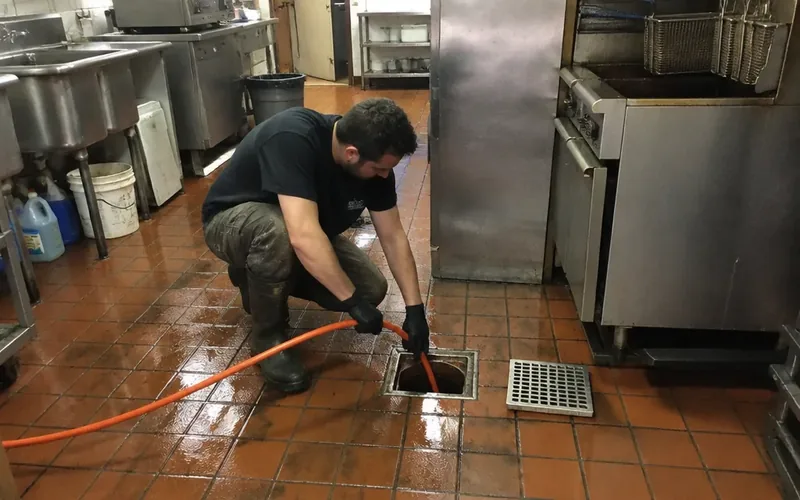
When jetting is the right call
Grease-loaded kitchen and restaurant lines. The flagship use. Grease coats the full circumference of a pipe, and no cable removes a full-circumference coating. Philadelphia kitchens — rowhouses with long runs to the street main, plus restaurants along the food corridors — that hold a scheduled jetting interval largely stop having emergency backups.
Repeat clogs in the same line. Two calls in eighteen months is the signal. The line is progressively narrowing and you are paying to punch through the same restriction over and over.
Root intrusion, combined with mechanical cutting. A jetter with a root-cutting nozzle clears fine root hair thoroughly and flushes debris toward the main rather than leaving it to re-lodge downstream. It does not close the joint the roots entered through — that is a pipe-condition problem, not a cleaning problem.
Sand, silt and scale. Combined-sewer laterals carry storm grit; cast iron interiors build tuberculation scale. Both respond to jetting far better than to cabling.
Before any trenchless lining. A cured-in-place liner needs a genuinely clean host pipe to bond against. Jetting is a prerequisite there, not an add-on.
When we will refuse to jet your line
High-pressure water finds weakness. On a pipe already structurally compromised, jetting can convert a slow leak into a collapse. So we camera the line first and decline to jet when we find:
- Orangeburg pipe that has softened, blistered or deformed. Common in 1945–1972 Northeast and Southwest blocks. Jetting it can turn a service call into an excavation.
- Badly corroded cast iron with channelling along the invert, where the bottom of the stack or lateral has rusted thin from the inside.
- Cracked or offset clay tile where pre-1920 segments have already shifted out of alignment.
- Visible collapse or a severe belly. Cleaning a broken pipe does not produce a working pipe.
In each case the honest path is camera inspection and then a repair plan — not pressure. A contractor who jets without looking first is gambling with your lateral and charging you for the privilege.
Jetting vs. snaking, decided honestly
| Cable / snaking | Hydro jetting | |
|---|---|---|
| What it removes | A discrete obstruction | The full wall coating |
| Best for | Hair, an isolated root mass | Grease, scale, grit, repeat clogs |
| Typical cost | $149–$475 | $375–$950 |
| Interval before recurrence | 6–18 months on a coated line | 2–5 years |
| Safe on fragile pipe | Generally, with care | No — camera clearance required first |
| Adequate prep for relining | No | Yes |
Still unsure which fits? Start with drain cleaning for a one-off clog, or book sewer camera inspection if the same line keeps failing.
Our jetting process
Camera first, always
We inspect before we pressurise. If the pipe cannot take it you are told, and you are not charged for a jetting we did not perform.
Match nozzle to problem
Penetrating nozzles for hard blockages, chain cutters for root and scale, flat-surface nozzles for grease. The wrong nozzle is a wasted trip.
Set pressure to the pipe
PVC, cast iron and clay each tolerate different working pressures. Rowhouse cast iron stacks get a conservative setting; sound clay laterals get what they need.
Work the line in passes
Multiple passes from the far end back, flushing debris toward the cleanout or the city main rather than packing it into a neighbour’s connection.
Camera again
You see the after-footage. That is your proof you paid for cleaning, not merely clearing.
Set a realistic interval
Commercial kitchens usually land on quarterly to semi-annual. Residential grease lines, every two to three years. If you do not need a recurring plan, we say so.
Frequently asked questions
How much does hydro jetting cost in Philadelphia?
Residential jetting typically runs $375 to $950 depending on line length, access and severity — broadly in line with the $359 to $616 Philly average most cost guides cite, with our top end reflecting long rowhouse laterals to the street main and missing cleanouts. Severe root or deep commercial grease loading can push past $1,100, and multi-line commercial work $500 to $2,500+. A camera inspection always precedes jetting and is part of the job.
Can hydro jetting damage my pipes?
It can on pipe that is already failing — which is why we camera first. Orangeburg, badly corroded cast iron and cracked clay are disqualifying. On sound pipe at correctly matched pressure, jetting is safe and is the standard method used on public mains.
How often should a Philadelphia restaurant jet its grease line?
Most kitchens on the busy corridors land on quarterly or semi-annual, driven by fryer volume and the length of the run to the combined main. Heavy fried service with a long run often needs quarterly; a low-volume cafe may go a full year. We set the interval from camera footage, not from your menu.
Does hydro jetting remove tree roots permanently?
No. A cutting nozzle removes the root mass thoroughly, but roots return to the same clay joint because the joint is still open. Permanent resolution means repairing or lining that joint. Anyone promising permanent root removal from jetting alone is overselling.
Is hydro jetting worth it over snaking?
It is when the pipe wall is coated — grease, scale, storm grit — or when you clear the same line repeatedly. It is not for a one-off hair clog in a bathroom sink. Paying jetting prices for a simple fixture clog is waste, and we will tell you that on the phone.
Does PWD require anything before jetting near the city main?
No permit is needed for cleaning your own lateral, but work must not push debris into the public main in a way that blocks neighbours, and any excavation or repair beyond the curb involves PWD coordination. We jet within your lateral and flush toward the main responsibly.
Do you offer sewer line jetting services?
Yes — sewer line jetting services are our core work: residential laterals, kitchen grease lines, restaurant programs, and pre-lining scouring, all camera-verified. Searches for "sewer line jetting cost" land here: the same $375 to $950 residential band as hydro jetting, since it is the same method. See the pricing guide for what moves the number.
What hydro jetting services do you offer?
Residential lateral jetting, kitchen grease-line jetting, restaurant and commercial programs, and jetting passes that prep pipe for lining — our hydro jetting services cover every coated line in a Philadelphia rowhouse or food-service kitchen. Every visit starts with a camera pass; Orangeburg and failed cast iron are refused, never jetted.
Why did baking soda, enzymes, or a rental jetter not fix my drain?
Baking soda and vinegar cannot dissolve grease or roots — at best they deodorize the trap. Enzyme products only slow re-coating on an already-clean line. And a rental or pressure-washer jetter lacks the flow, matched nozzles, and camera verification that make jetting safe on old clay and iron — which is how DIY jetting becomes an excavation. Established coating only comes off under a proper jetting service.
Guides that cover this in more depth
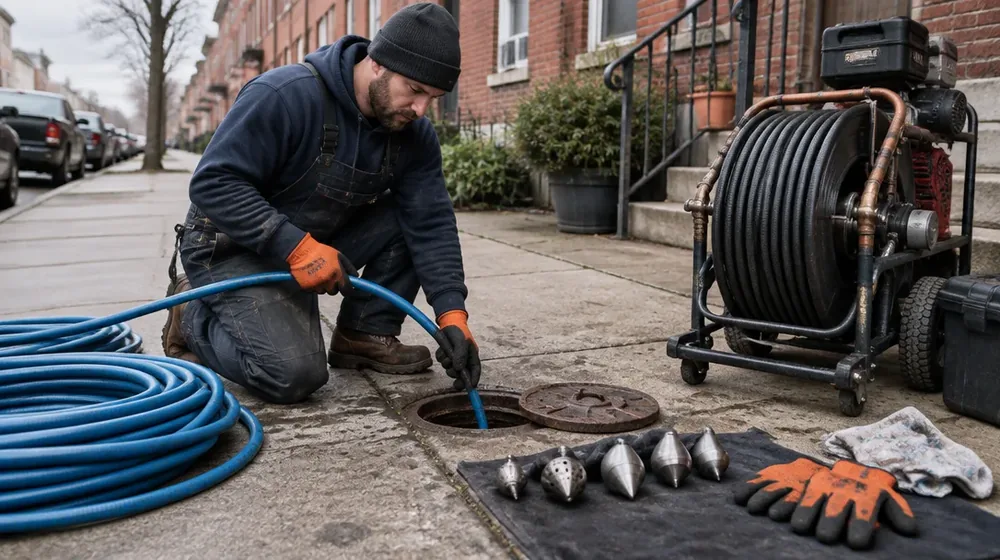
Hydro Jetting vs Snaking: What Philly Homes Need
A cable bores a hole through the blockage so water moves again. A jetter scours the whole pipe wall back toward bare m…

Hydro Jetting Cost in Philadelphia: 2026 Guide
Most Philadelphia homeowners budget around national jetting ranges, then discover access, lateral length, and root cut…
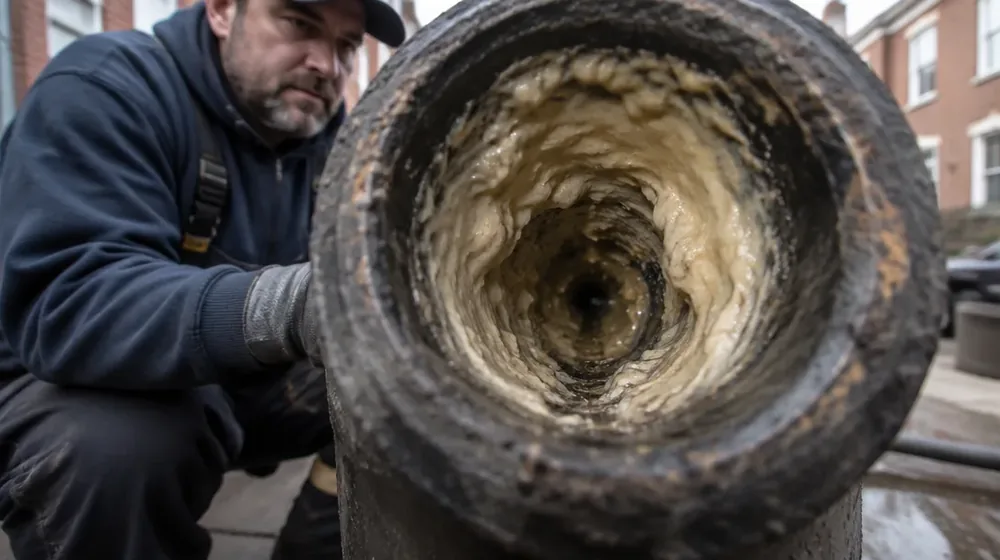
Grease Lines: Philly Rowhouses & Restaurants
Grease goes down warm and liquid, meets cold iron, and becomes a wall coating rather than a plug. That is why the same…
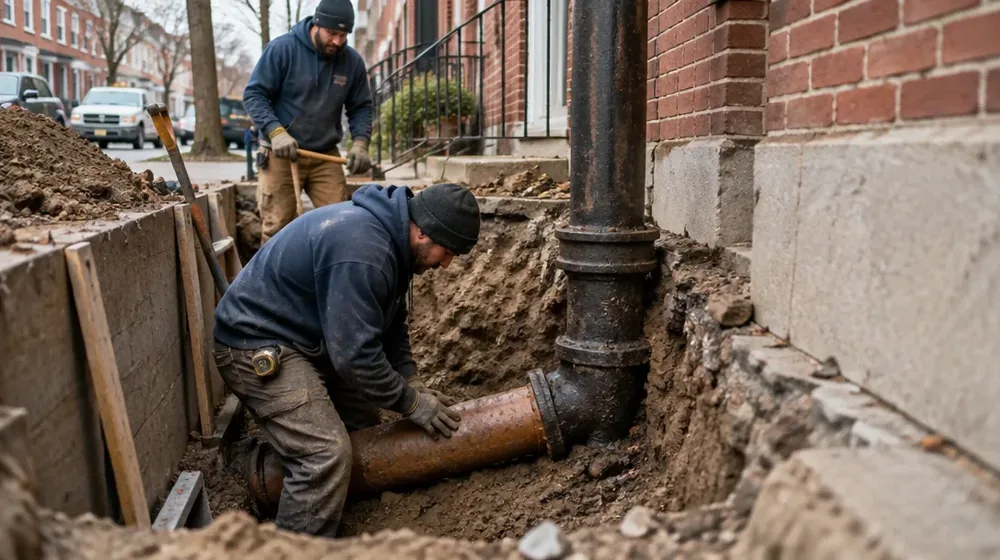
Philly Rowhouse Laterals: Clay, Iron & More
The year your Philadelphia rowhouse was built predicts what is buried in front of it. Clay joints admit roots, cast ir…
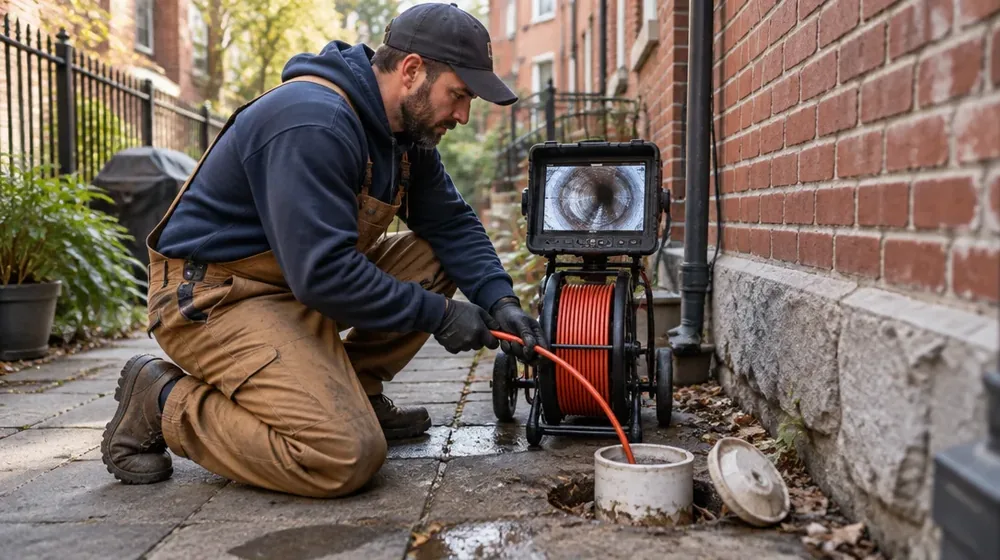
Camera Inspection Before Hydro Jetting Guide
Nobody can price pressure honestly without seeing the pipe first. On Philadelphia laterals of unknown age and material…
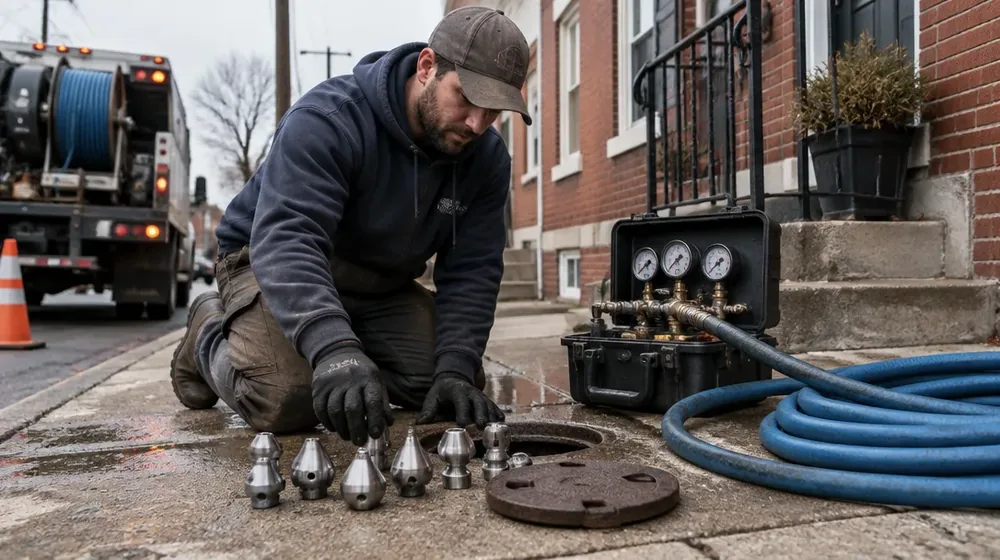
How Hydro Jetting Works: PSI, GPM & Nozzles
A hydro jetter is a pump, a hose, and a nozzle working as one system. The pump builds pressure, the hose delivers it i…
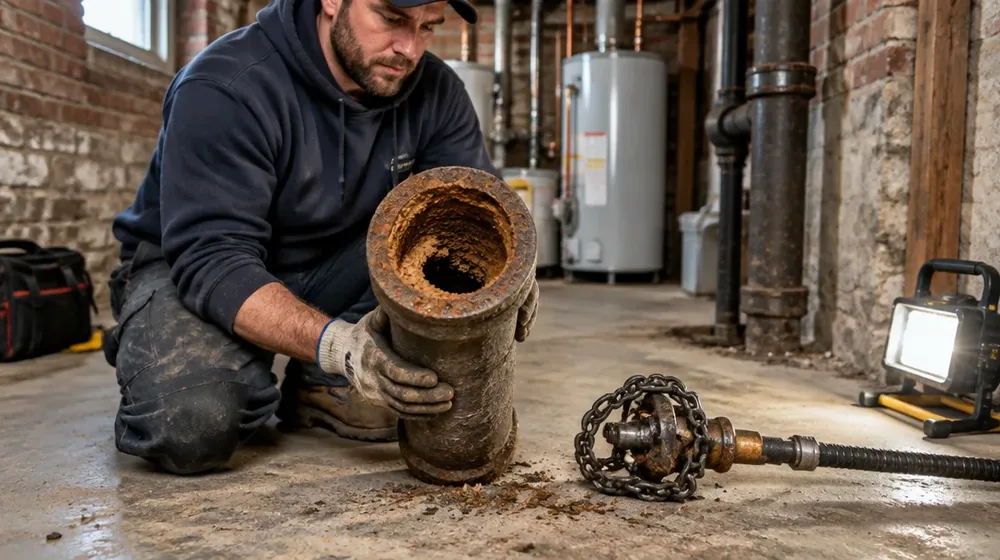
Cast Iron Descaling vs Jetting: Philly Homes
Inside every aging cast iron stack two processes run at once: scale builds inward and corrosion eats outward. Jetting …
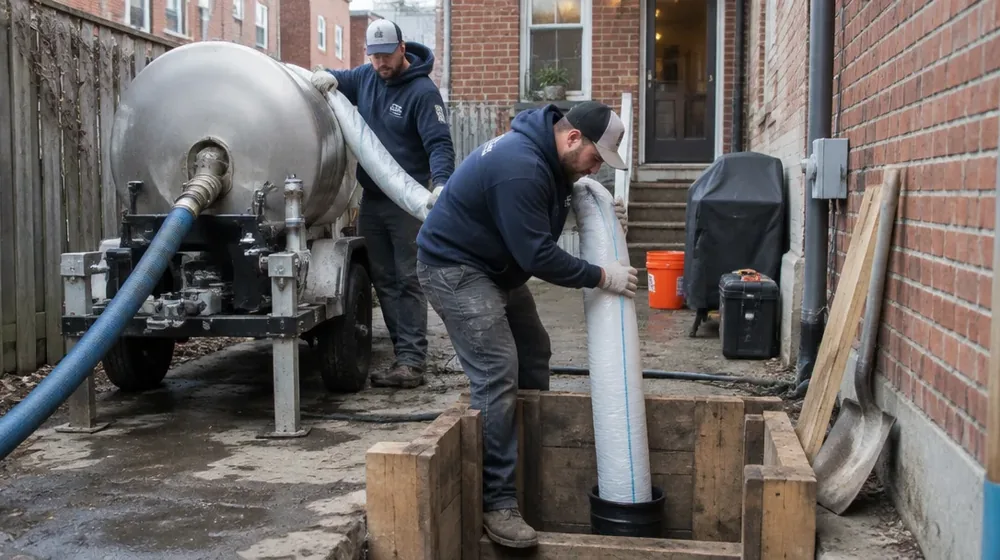
Trenchless Sewer Repair After Jetting Guide
Trenchless repair fixes the pipe without opening the whole street, but the liner or bursting head can only work with a…
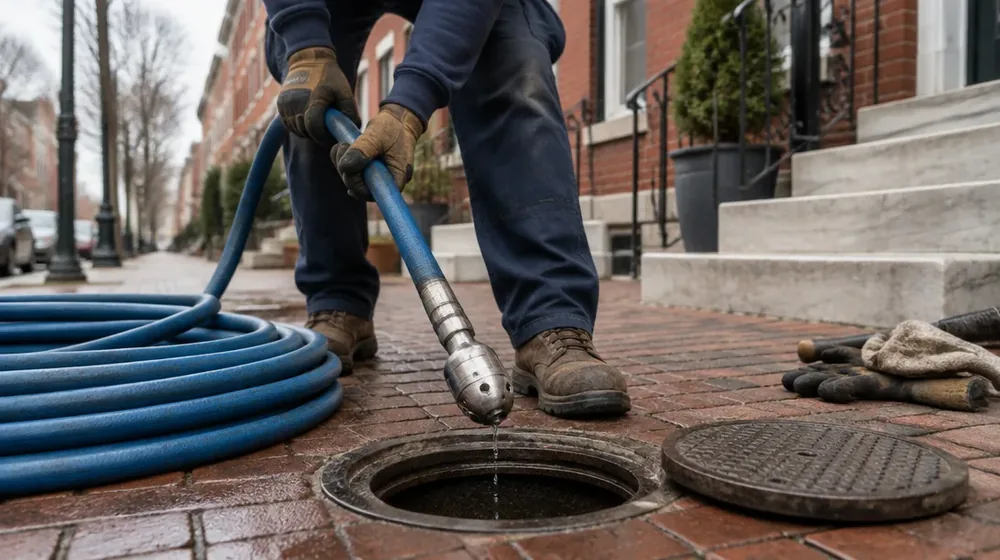
What Is Hydro Jetting? Philly Homeowner Guide
Hydro jetting is a drain cleaning method that uses high-pressure water, sent through a hose and a specially drilled no…
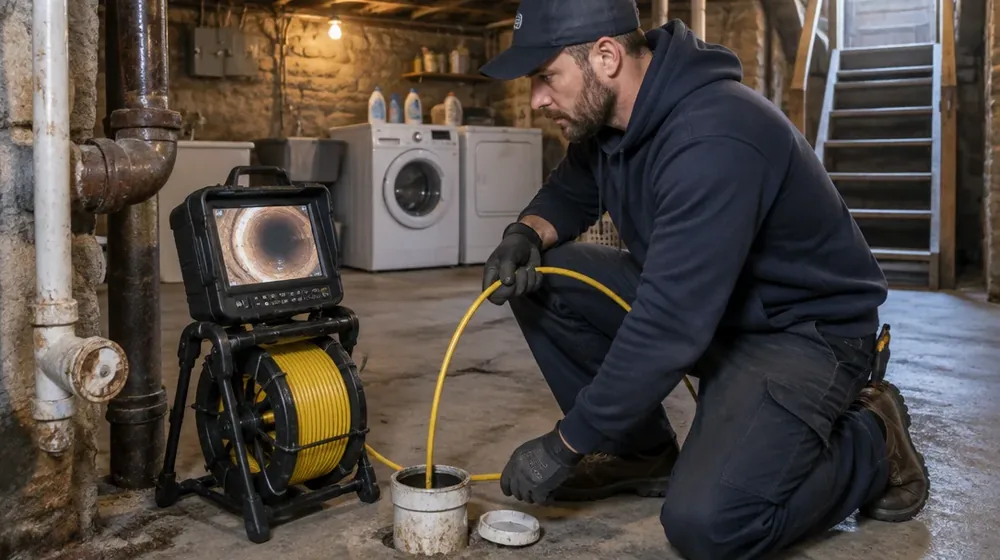
What Is Sewer Camera Inspection? Philly Guide
A sewer camera inspection sends a small waterproof camera through a drain or sewer line on a push rod or crawler, reco…
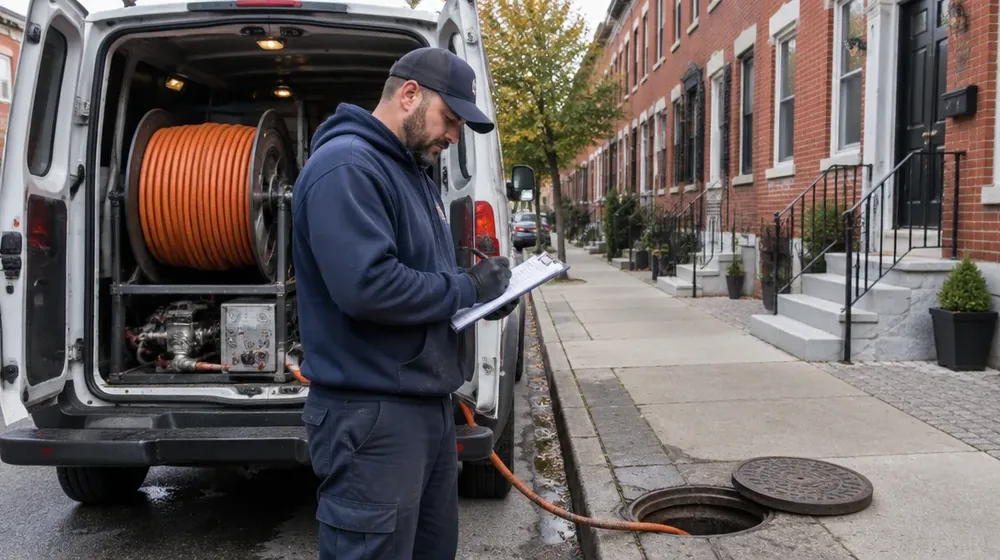
How Often Should You Hydro Jet? Philly Schedule
Most Philadelphia homes never need scheduled jetting, while grease-heavy kitchens, root-active clay laterals, and comm…
Sewer Repair Cost in Philadelphia: 2026 Guide
A Philadelphia sewer figure means nothing until camera footage and a locate map define the defect, the depth, and the …
Symptoms this service fixes
Related services
Drain Cleaning
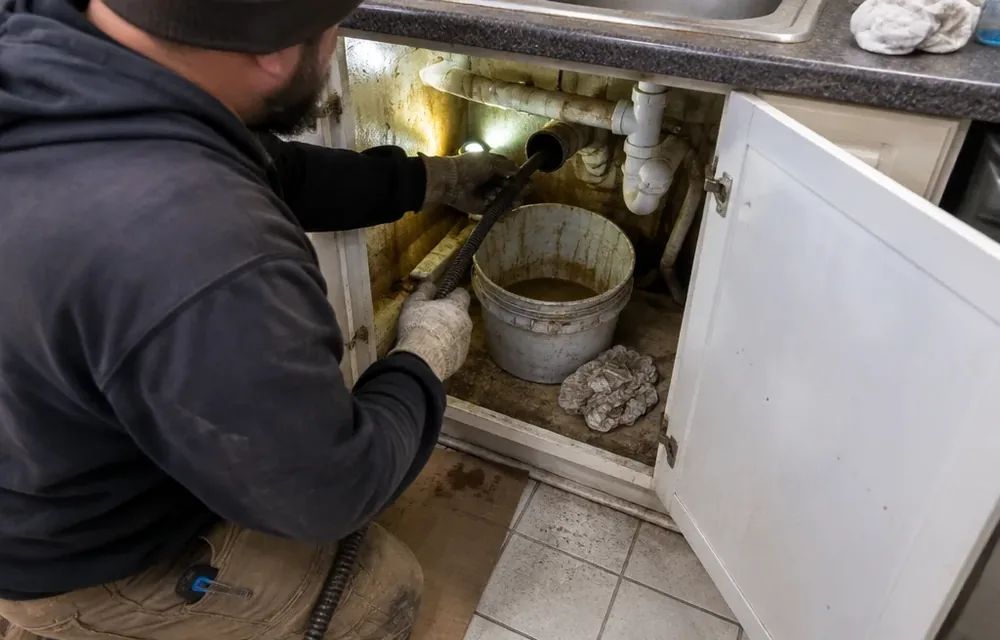
A single slow sink is a nuisance.
Sewer Camera Inspection
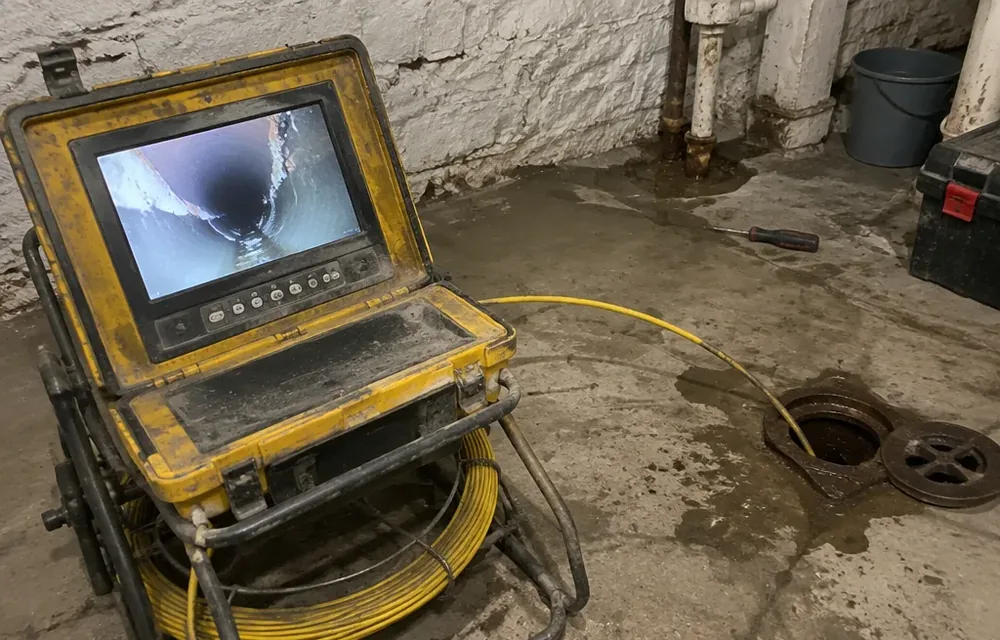
Every expensive sewer decision in Philadelphia — jet, repair, line, replace — depends on one thing: what the pipe actually looks like inside.
Rooter Service
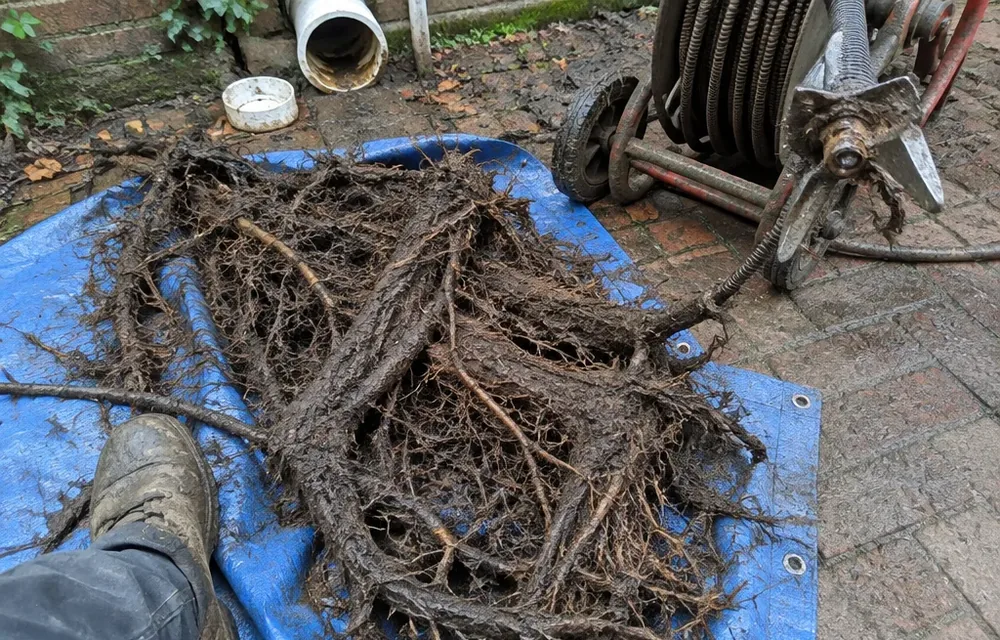
Roots do not break your pipe to get in.
Main Sewer Line Cleaning
The lateral is the most expensive drain you own — a 60-to-100-foot clay run from your rowhouse to the street main, shared with stormwater, hunted by street-tree roots.
Hydro Jetting across Philadelphia and its suburbs
We provide hydro jetting in 32 Philadelphia-area towns. Local pages cover the housing stock and pipe materials specific to each area.
Hydro Jetting by town
- Hydro Jetting in Philadelphia
- Hydro Jetting in Upper Darby
- Hydro Jetting in Norristown
- Hydro Jetting in Abington
- Hydro Jetting in Media
- Hydro Jetting in King of Prussia
- Hydro Jetting in Cheltenham
- Hydro Jetting in Havertown
- Hydro Jetting in Bensalem
- Hydro Jetting in Ardmore
- Hydro Jetting in Lansdale
- Hydro Jetting in Phoenixville
- Hydro Jetting in Pottstown
- Hydro Jetting in Ambler
- Hydro Jetting in Horsham
- Hydro Jetting in Hatboro
Philadelphia
Delaware County
- Upper Darby
- Media
- Yeadon
- Lansdowne
- Havertown
- Springfield (Delco)
- Chester
- Drexel Hill
- Ridley Park
- Swarthmore
- Darby
Montgomery County
- Norristown
- Abington
- King of Prussia
- Ardmore
- Bala Cynwyd
- Conshohocken
- Plymouth Meeting
- Jenkintown
- Cheltenham
- Willow Grove
- Lansdale
- Pottstown
- Ambler
- Horsham
- Hatboro