Drain cleaning and sewer service in King of Prussia, Pennsylvania
King of Prussia — Upper Merion Township around the mall, the Route 202 and Route 422 interchange, and the Valley Forge edge — is Montgomery County’s great postwar build-out, and its drains split by decade rather than by neighborhood. The 1950s tracts off Henderson Road, Beidler Road, and the Gulph Road corridor sit on clay tile and early cast iron with some Orangeburg in the 1955–1965 window. The 1970s–1990s subdivisions toward Valley Forge, Swedeland, and the Chesterbrook line run cast iron transitioning to ABS and PVC. Limestone-derived soils in parts of Upper Merion shift and settle laterals unevenly, producing bellies that pond solids, while the enormous commercial and restaurant load around the mall puts grease constriction into lines that residential King of Prussia never sees.
- Montgomery County
- Montgomery County
- Same-day and 24/7
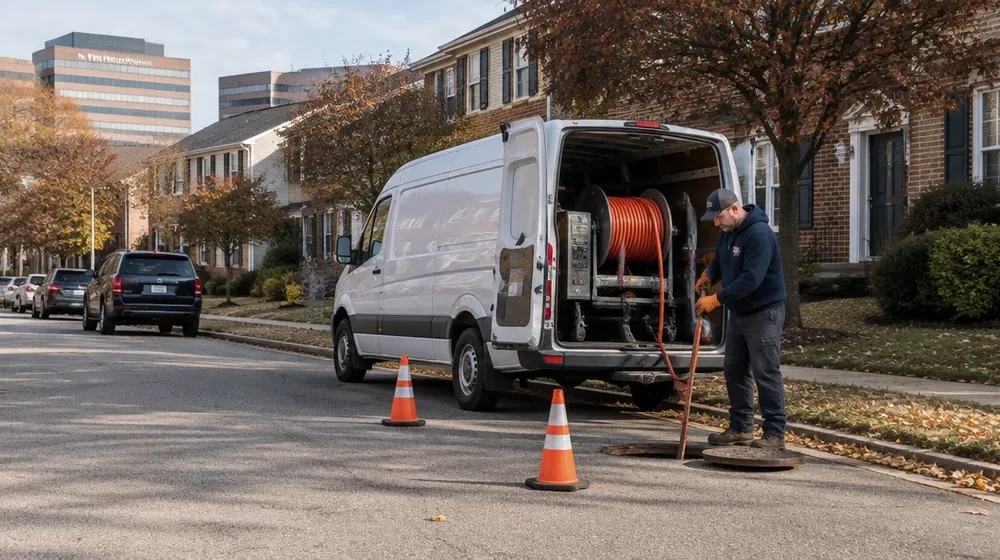
King of Prussia at a glance
County: Montgomery County · Area: Montgomery County · Neighborhoods covered: 9 · Response: same-day visits usual; 24/7 for backups
Pipes you will find here: Clay tile and cast iron on 1950s stock, Orangeburg in pockets of 1955–1965 tracts, cast iron plus early ABS on 1970s homes, PVC on 1980s-onward construction and replacements.
What goes wrong with King of Prussia plumbing
Decade-split pipe materials street by street
One King of Prussia street can be 1953 clay while the next is 1978 ABS, because Upper Merion built out in waves around the mall and the highway corridors. Diagnosis without knowing the build year wastes effort: the 1950s street needs a root-and-Orangeburg inspection, the 1970s street needs a cast-iron condition check, and the 1990s street almost certainly has a soft clog. Build-year lookup before dispatch is standard practice here.
Limestone-soil settlement and bellies
Portions of Upper Merion sit on limestone-derived ground that settles differentially, and King of Prussia laterals develop bellies — sags that hold water and solids. A belly presents as steadily worsening drainage that clearing barely touches, and lining cannot fix it because a liner follows existing grade. Camera with grade readings separates a belly (open repair, re-grade) from a rough-wall line (jetting or lining).
Mall-corridor grease loading
Restaurant rows along the mall, the 202 corridor, and Henderson Road send fats, oils, and grease into small commercial laterals tied to aging cast iron. Grease plates onto scaled walls into a hard constriction that cabling pierces and that reseals within weeks. High-pressure jetting with a grease head is what actually restores the bore, followed by a maintenance rhythm the kitchen block must keep.
Housing stock and pipe materials
Housing: Primarily 1950s onward: Cape Cods and ranches in the earliest tracts, 1960s–1970s splits and colonials through the middle belt, and 1980s–2000s subdivisions and townhouse communities toward Valley Forge and Chesterbrook.
Likely pipe materials: Clay tile and cast iron on 1950s stock, Orangeburg in pockets of 1955–1965 tracts, cast iron plus early ABS on 1970s homes, PVC on 1980s-onward construction and replacements.
Who is responsible for the pipe in King of Prussia
In most Philadelphia-area jurisdictions the property owner is responsible for the sewer lateral from the building to the connection at the public main — including the portion running under the street. The exact split differs by city, so confirm yours with King of Prussia's public works or wastewater department before assuming any of it is theirs.
Two things worth checking before you pay for anything: whether the city runs a lateral repair assistance or low-interest loan program, and whether your homeowner's policy carries a service line endorsement.
A closer look at King of Prussia
Build-year lookup before dispatch is mandatory here
Nowhere in Montgomery County does pipe material change faster street by street than in Upper Merion. The 1950s tracts off Henderson Road, Beidler Road, and the Gulph Road corridor run clay tile with early cast iron and scattered Orangeburg; the 1970s–1990s subdivisions toward Valley Forge and the Chesterbrook line run cast iron transitioning to ABS and PVC.
Sending a root crew to a 1990s PVC street or a soft-clog crew to a 1955 clay-and-Orangeburg street wastes the visit. King of Prussia scopes start with the house year, then confirm with camera: roots and wall condition on the old streets, constriction and soft blockage on the newer ones.
Limestone soils and the belly problem
Portions of Upper Merion sit on limestone-derived ground that settles differentially, shifting King of Prussia laterals out of grade into bellies — sags that pond water and solids. The symptom is steadily worsening drainage that clearing barely touches, because the sag refills as soon as the cable is withdrawn.
Camera with grade readings separates the two scopes that look identical from above: a belly needs open excavation and re-grading since a liner follows existing slope, while a rough-but-graded line suits jetting or lining. Streets with known movement deserve periodic grade checks while lining is still an option.
The mall corridor’s grease economy
The restaurant density around the mall, the 202 corridor, and Henderson Road loads fats, oils, and grease into small commercial laterals at a volume no residential King of Prussia street produces. Tied to aging cast iron, that grease plates onto scale into bore constrictions that cabling pierces and that close again within weeks.
The scope that holds is scouring jetting with a grease head back to full diameter, then a maintenance interval the block actually keeps — pumping frequency plus scheduled jetting — rather than emergency clearing on failure. Commercial King of Prussia is a maintenance contract market; residential King of Prussia is an inspection-and-lining market, and confusing the two is where money is lost.
Where we work in and around King of Prussia
Within King of Prussia we cover Mall and 202 corridor, Gulph Road, Henderson Road tracts, Beidler Road area, Valley Forge edge, Swedeland, Chesterbrook line, Croton Road neighborhoods, Upper Merion riverfront and the surrounding area. Same-day drain cleaning and rooter service is usually available across King of Prussia, and dispatch runs around the clock for an active backup.
Nearby cities we also serve
What we do in King of Prussia
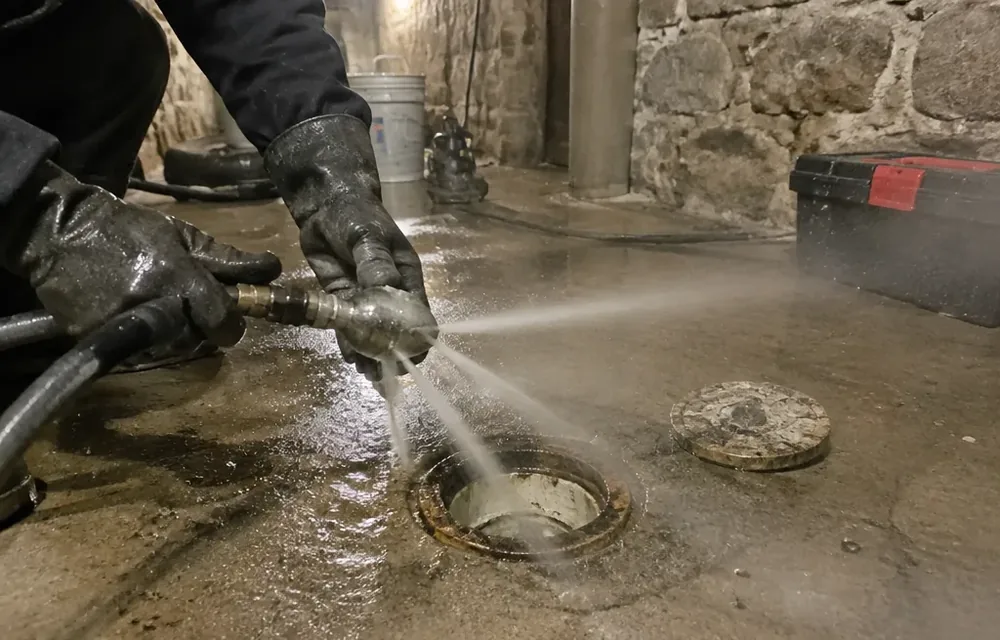
Hydro Jetting
A cable bores a hole through the clog.
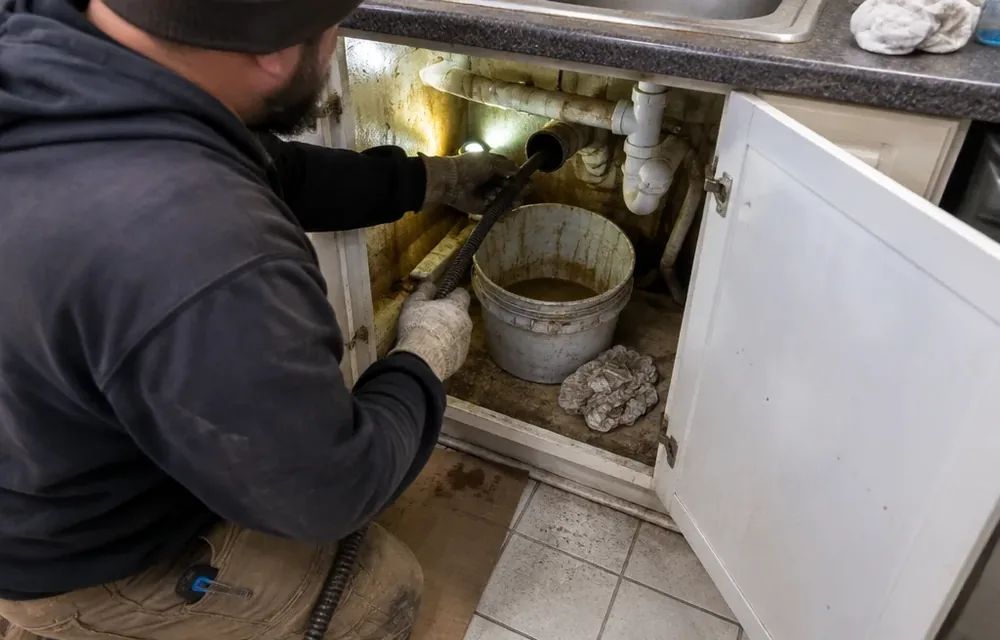
Drain Cleaning
A single slow sink is a nuisance.
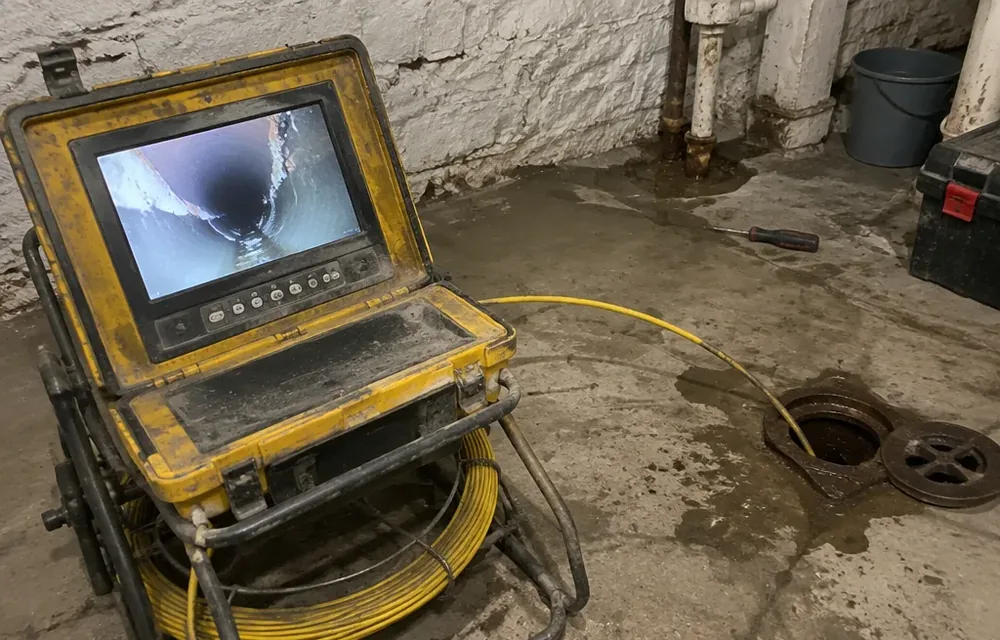
Sewer Camera Inspection
Every expensive sewer decision in Philadelphia — jet, repair, line, replace — depends on one thing: what the pipe actually looks like inside.
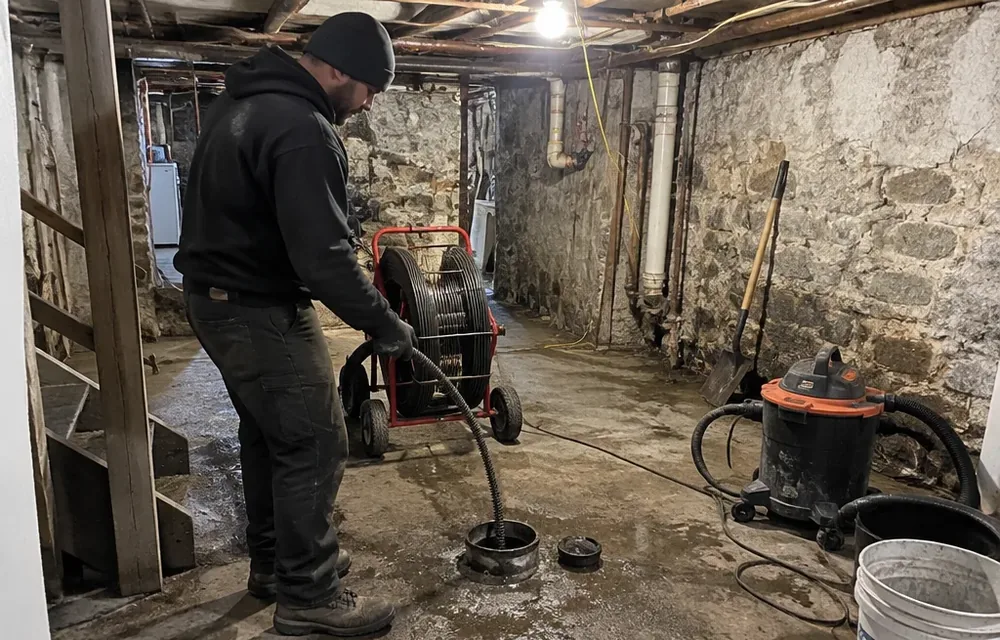
Main Sewer Line Cleaning
The lateral is the most expensive drain you own — a 60-to-100-foot clay run from your rowhouse to the street main, shared with stormwater, hunted by street-tree roots.
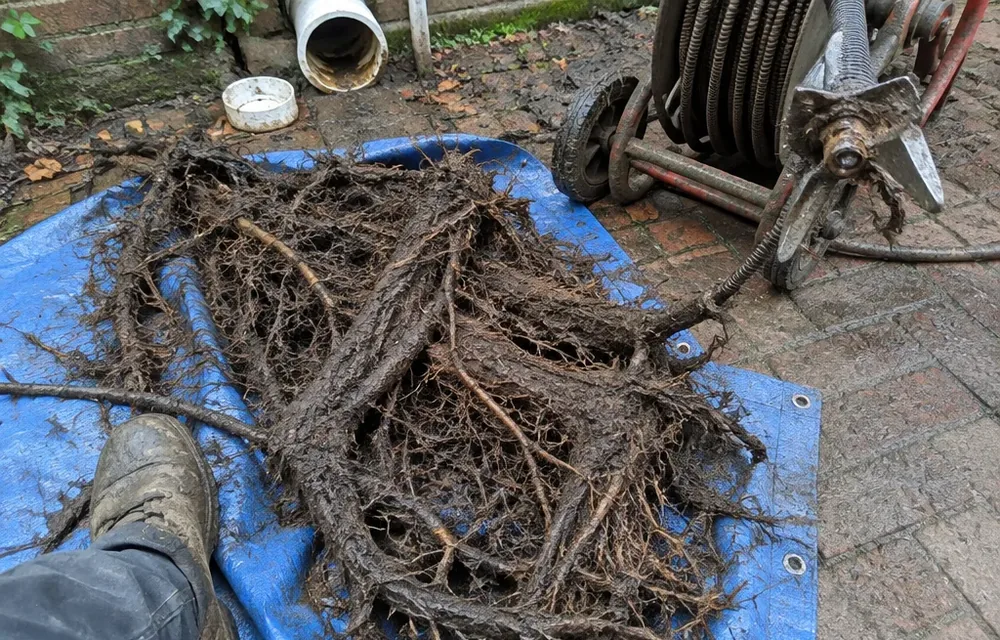
Rooter Service
Roots do not break your pipe to get in.
Kitchen Grease Line Jetting
Grease is the one clog material a cable cannot fix.
Bathroom Drain Cleaning
Bathroom clogs are almost never mysterious: hair, soap scum and toothpaste solids, wrapping around cast iron scale in a century-old branch arm.
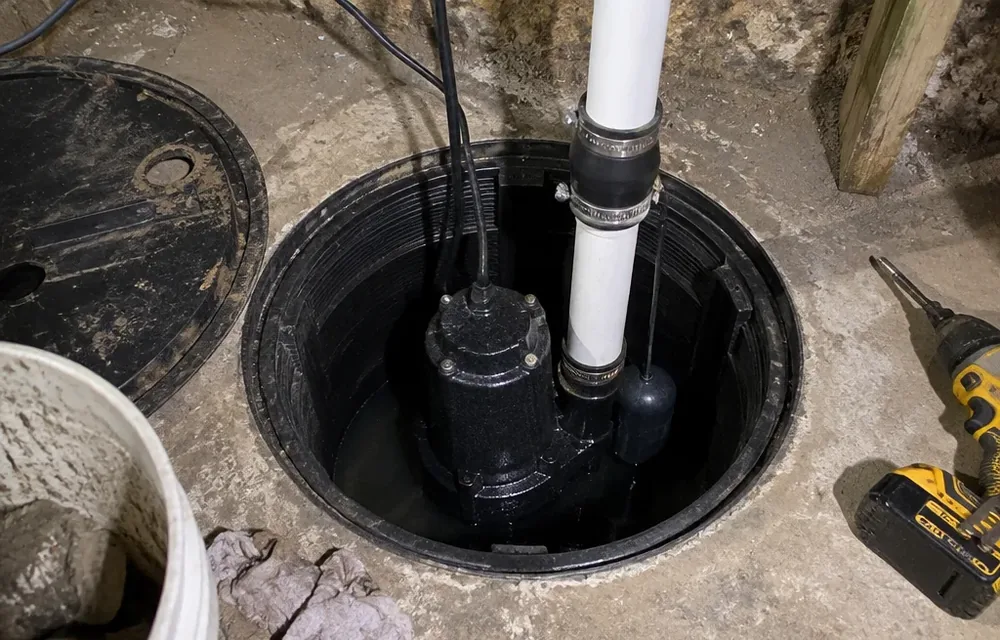
Basement Floor Drain Cleaning
The basement floor drain is the lowest opening in your rowhouse — which makes it the relief valve for every downstream restriction.
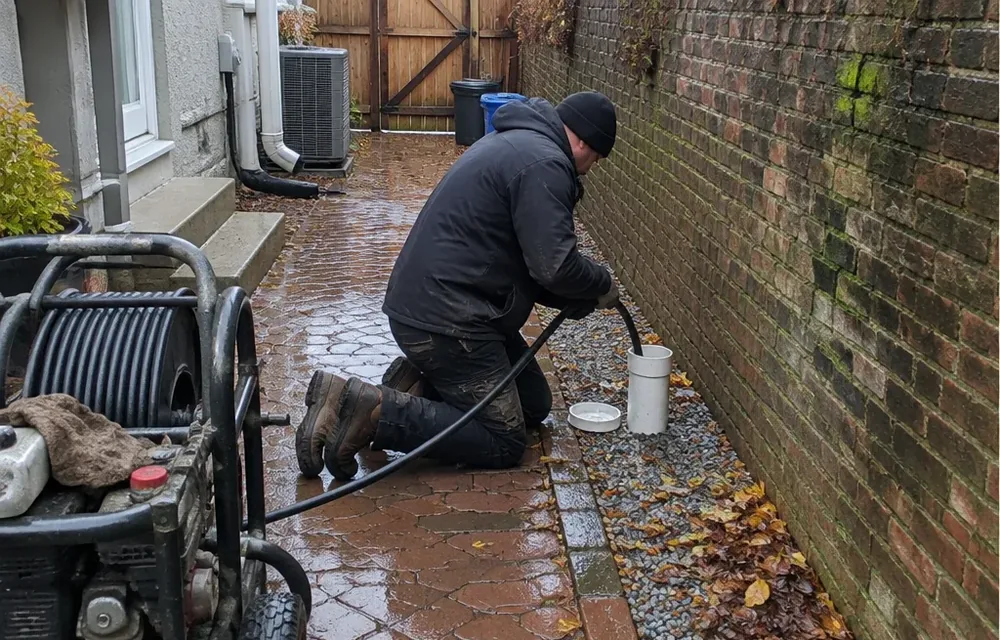
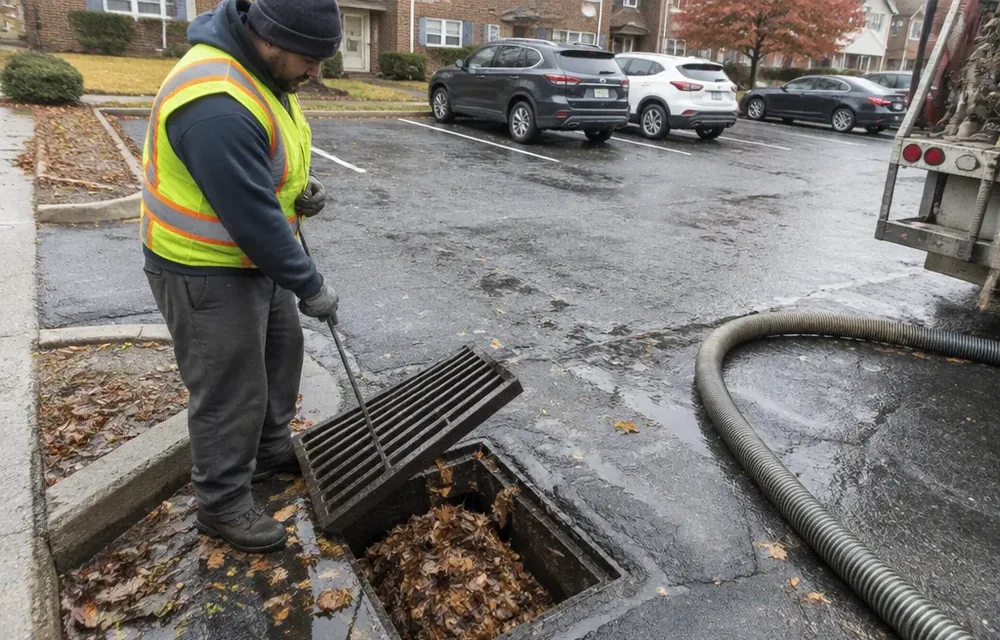
Storm Drain & Catch Basin Cleaning
A flooded loading dock or parking lot is rarely a rain problem.
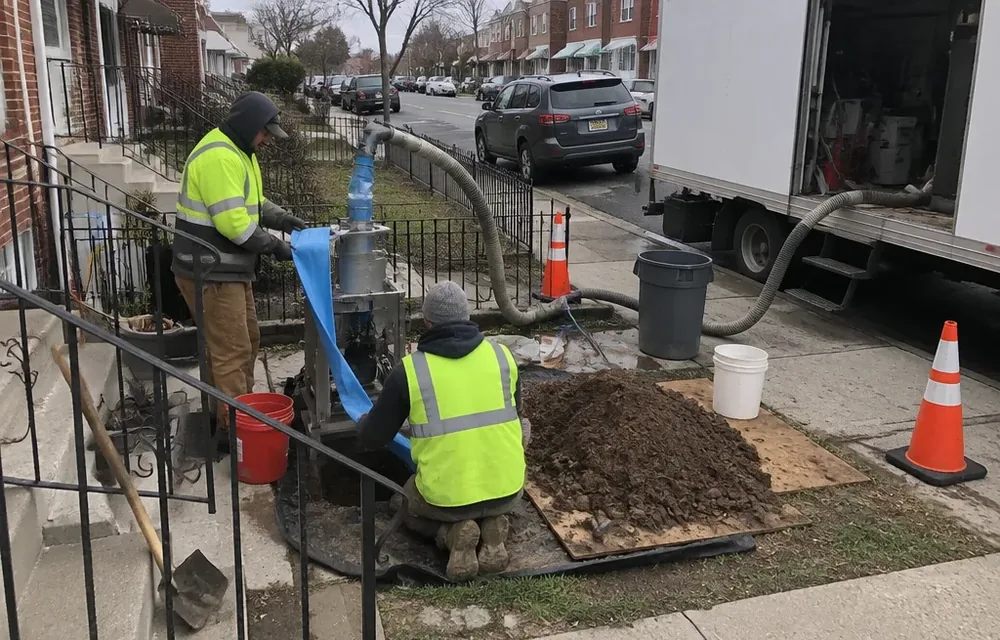
Commercial Hydro Jetting
Commercial drains fail on schedule — fryer volume, tenant count, storm season — so they should be serviced on schedule.
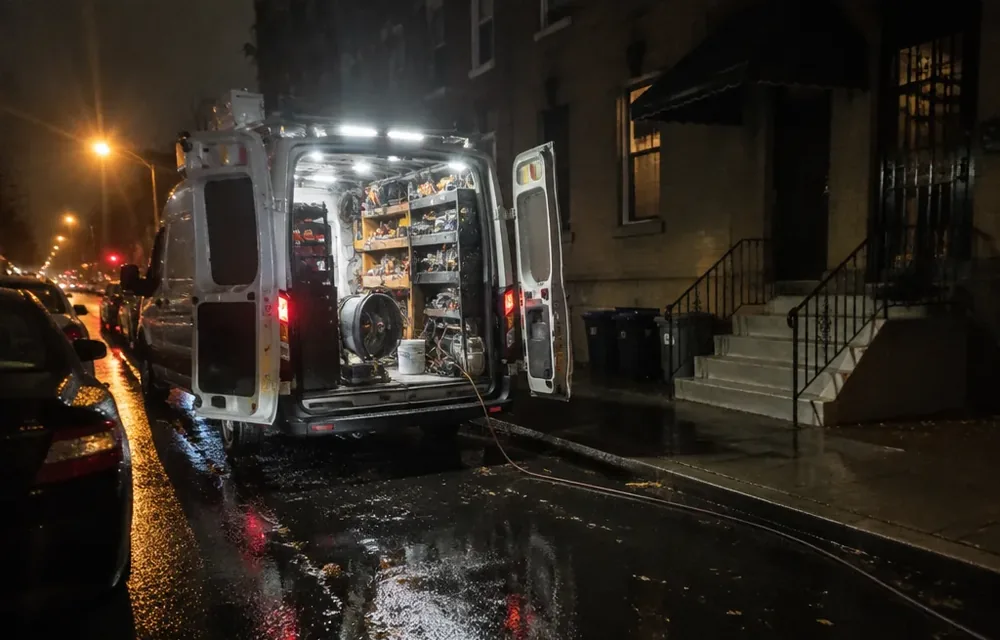
Emergency Drain Service
Sewage on the basement floor does not wait for business hours, and neither do we.
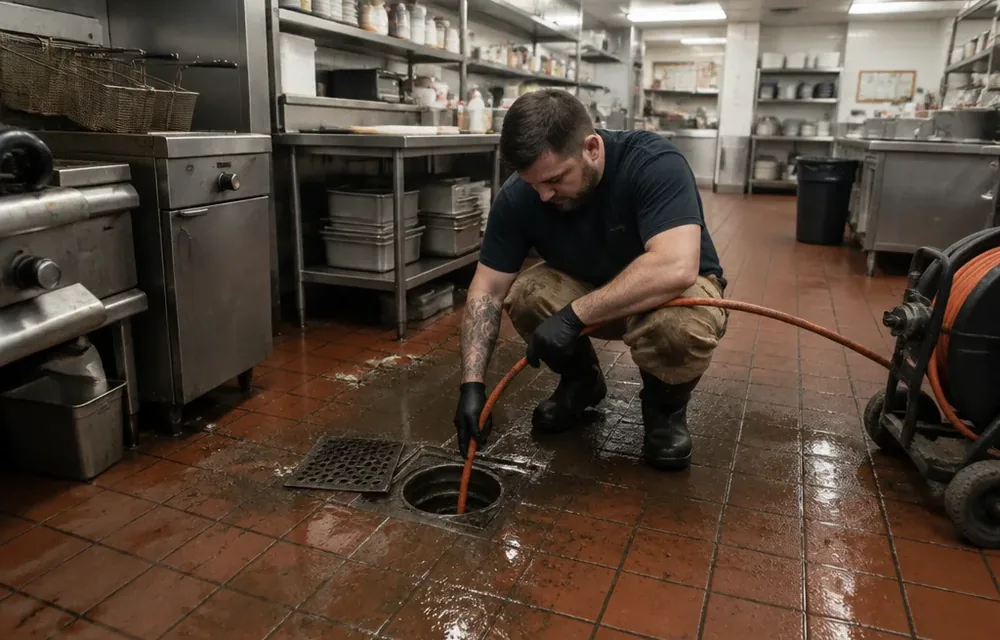
Restaurant Food-Service Jetting
A restaurant drain never fails at 2 p.
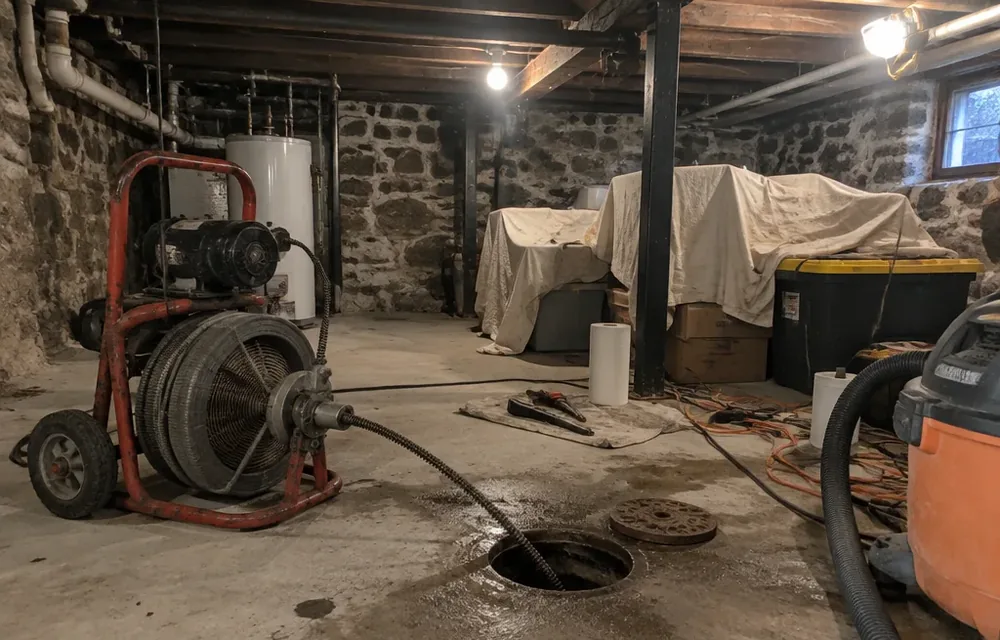
Property Manager Multifamily Drains
Nobody treats a rental drain like an owner does.
HOA Community Drains
HOA drain problems are never one owner's problem.
Guides and symptom checks matched to King of Prussia's housing
Guides for this housing stock
- Tree Roots in Philadelphia Sewer Lines Guide — why clay joints open and what the camera should log
- Grease Lines: Philly Rowhouses & Restaurants — why grease constrictions need scouring, not cabling
- Restaurant Grease Trap Maintenance in Philadelphia — trap logs and jetting intervals that keep kitchens open
Symptoms we trace in King of Prussia
- Same Clog Keeps Returning — repeat clogs mean coating or defect, not bad luck
- All Drains Slow — whole-house slowness means main line, not fixture
- Drain Gurgling — what gurgling says about vents and mains
King of Prussia plumbing questions
My King of Prussia street is 1958 but the next street is 1978. Does it matter?
Enormously. The 1958 Upper Merion tract likely runs clay tile with cast iron and possibly Orangeburg, needing a root-and-wall-condition inspection, while the 1978 street runs cast iron transitioning to ABS where soft clogs dominate. Build-year lookup before dispatch changes both the diagnosis and the price, which is why King of Prussia work starts with the house year.
What causes bellies in King of Prussia laterals?
Limestone-derived Upper Merion soils settling differentially. The sag ponds water and solids and presents as steadily worsening drainage that clearing barely touches. Because a liner follows existing grade, bellies need open excavation and re-grading — camera with grade readings is what separates a belly from a rough-wall line that suits jetting or lining.
Why do mall-corridor lines clog so often?
Restaurant rows along the mall, the 202 corridor, and Henderson Road send fats, oils, and grease into small commercial laterals tied to aging cast iron. Grease plates onto scale into a hard bore constriction. Cabling bores a hole that reseals; high-pressure jetting with a grease head scours the wall and restores diameter, followed by a maintenance rhythm the block must keep.
Is Orangeburg a concern in King of Prussia?
In the 1955–1965 tract pockets off Henderson Road, Beidler Road, and the Gulph Road corridor, yes. Fiber pipe of that era is now 60-plus years old in wet ground, deforms oval, and generally cannot be lined. Camera identification of the actual wall decides between lining (sound clay or iron) and replacement (failed Orangeburg).
Do I need a camera before buying a 1950s King of Prussia ranch?
It is the highest-value inspection on that purchase. A 1950s Upper Merion lateral may combine clay joints, root intrusion, Orangeburg segments, and cast iron at end of life — a stacked scope worth five figures. A mapped camera pass with depths turns that unknown into a negotiation line item before closing.