Drain cleaning and sewer service in Bensalem, Pennsylvania
Bensalem — Bucks County’s Street Road, Bristol Pike, and Neshaminy corridors — is substantially 1950s–1960s suburbia including early Levittown-influenced tracts, and its drains are defined by slab-on-grade construction, aging cast iron, and a high water table. Ranches and Capes on slabs route drains shallow beneath or just outside the slab where settlement cracks joints, cast iron waste lines from the 1950s and 1960s are now 60-plus years old and scaling shut, and ground toward the Neshaminy Creek and the Delaware River holds winter water near lateral depth for months. Street Road and Bristol Pike commercial strips add grease loading the residential tracts never see.
- Bucks County
- Bucks County
- Answered 24/7
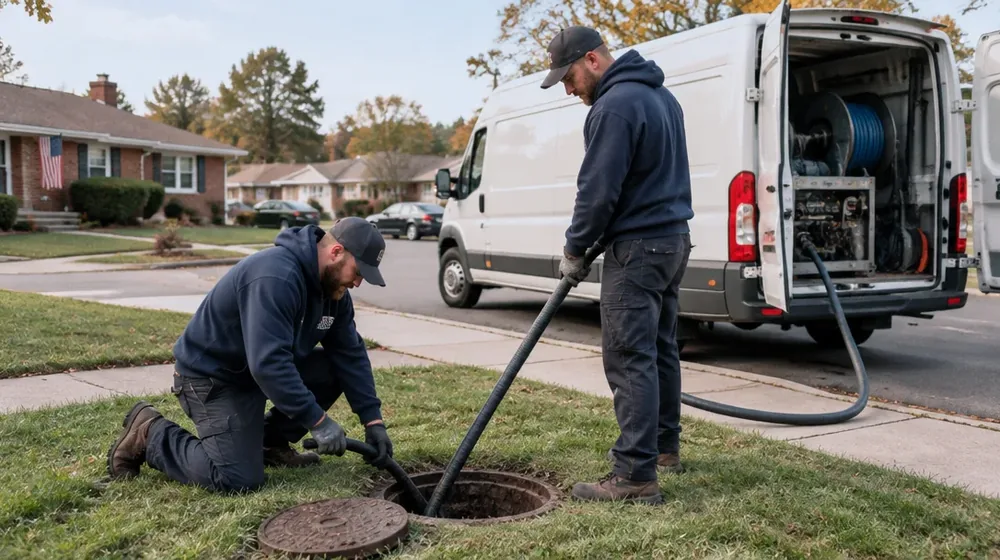
Bensalem at a glance
County: Bucks County · Area: Bucks County · Neighborhoods covered: 8
What goes wrong with Bensalem plumbing
Slab-era settlement and shallow joints
Bensalem slab ranches and Capes carry drains at shallow depth where minor settlement opens hubs and creates bellies that pond solids. The symptom is chronic slow drainage that clearing barely improves, and camera with grade readings separates a re-grade excavation from a maintainable rough-wall line. Lining cannot correct a belly because it follows existing slope.
1960s cast iron scaling shut
Bensalem’s 1950s–1960s tract cast iron is now at or past typical service life, corroding along the invert into a rough scaled bore that catches paper. Whole-house slow drains returning weeks after cabling is the signature from Eddington to Trevose, and camera grading of wall loss decides between jetting maintenance and lining or replacement.
Neshaminy and river-plain water table
Ground toward Neshaminy Creek and the Delaware River plain sits high all winter, infiltrating every open joint and keeping slab-adjacent soils saturated. Laterals run with infiltration load for months, so wet-season backups with no discrete clog are common and sealing the line is what restores headroom.
Housing stock and pipe materials
Housing: Dominant 1950s–1960s ranches, Capes, and slab neighborhoods off Street Road, Bristol Pike, and Hulmeville Road, with garden apartments, townhouse communities, and newer subdivisions toward the Neshaminy and Eddington edges.
Likely pipe materials: Cast iron waste lines plus clay tile building sewers on 1950s–1960s stock, Orangeburg in scattered mid-century pockets, PVC/ABS on post-1970 builds and replacements.
Who owns the sewer pipe under the street in Bensalem? Usually the homeowner, all the way to the public main. Bensalem's public works office can confirm where your part ends; the guide to laterals explains the rest.
Neighborhoods in and around Bensalem
Street Road corridor, Bristol Pike corridor, Eddington, Trevose edge, Neshaminy vicinity, Hulmeville Road, Cornwells Heights, Andalusia edge.
Towns near Bensalem
Guides and symptom checks matched to Bensalem's housing
Guides for homes like these
- Grease Lines: Philly Rowhouses & Restaurants — why grease constrictions need scouring, not cabling
- Restaurant Grease Trap Maintenance in Philadelphia — trap logs and jetting intervals that keep kitchens open
- Philly Rowhouse Laterals: Clay, Iron & More — which pipe your build era used and what each needs
Symptoms common in Bensalem
- All Drains Slow — whole-house slowness means main line, not fixture
- Water Backing Up Into Fixtures — when one fixture fills another, act fast
- Same Clog Keeps Returning — repeat clogs mean coating or defect, not bad luck
Bensalem plumbing questions
Why does my Bensalem slab ranch drain slowly everywhere?
Slab-era construction plus end-of-life cast iron. Bensalem ranches and Capes on slabs route drains shallow where settlement opens hubs into bellies, and 1950s–1960s cast iron waste lines are now 60-plus years old and scaling shut along the invert. Chronic slow drainage that clearing barely improves is the signature from Eddington to Trevose.
Does the Neshaminy water table affect my lateral?
Directly. Ground toward Neshaminy Creek and the Delaware River plain sits high all winter and infiltrates every open joint while saturating slab-adjacent soils. Laterals carry infiltration load for months, so wet-season backups with no discrete clog are common — sealing the line restores the headroom clearing cannot.
What pipe does a 1958 Bensalem Cape have?
Typically cast iron waste lines with a clay tile building sewer, possibly with Orangeburg in scattered mid-century pockets. The cast iron invert is the usual failure — rough, scaled, catching paper — while the clay joints admit roots and infiltration outside. Camera both materials before choosing a scope.
Should Bensalem buyers scope 1950s–1960s tracts?
Yes. Slab settlement bellies plus 60-year-old cast iron plus a high water table stack into five-figure scope quickly on Street Road and Bristol Pike tracts. A camera pass with grade readings before closing is the cheap insurance against inheriting it.