Drain cleaning and sewer service in Ridley Park, Pennsylvania
Ridley Park is Delaware County’s 1871 railroad suburb — platted by the Pennsylvania Railroad around the Ridley Park lake and station, with Sellers Avenue, Ward Street, and the Hinckley Avenue grid filling first in balloon-frame Victorians and later in 1920s brick rows and twins. That two-wave history defines its drains: the oldest Delaware County laterals in the borough are vitrified clay tile with cast iron inside, now 100-plus years old, joined by interwar clay runs under a mature oak and maple canopy. Low ground draining toward Ridley Creek and its lake tributaries holds winter groundwater high from the774-acre watershed slopes, so infiltration through open clay hubs arrives together with root intrusion every wet season, and the creek’s flash-flood record saturates soils that settle joints along the bottom streets.
- Delaware County
- Delaware County
- Same-day and 24/7
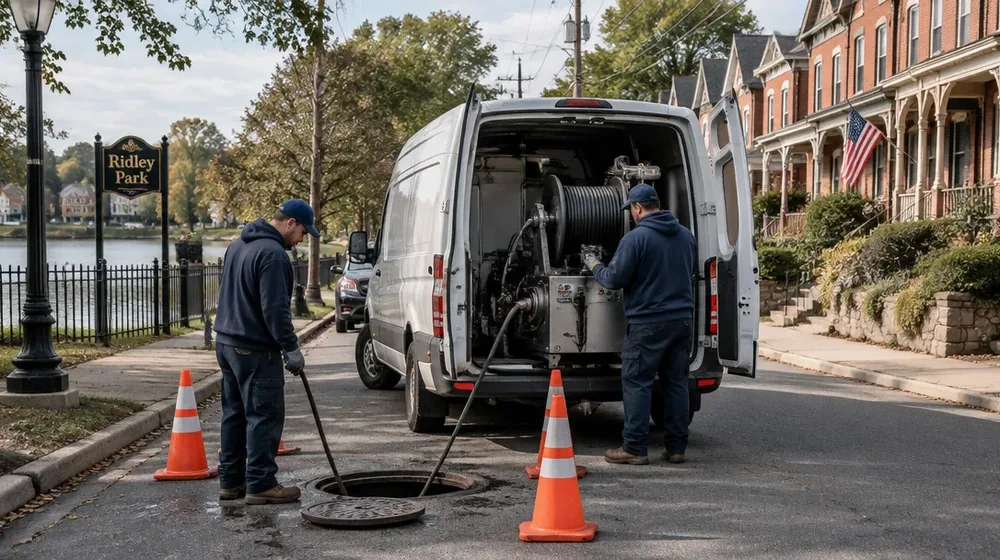
Ridley Park at a glance
County: Delaware County · Area: Delaware County · Neighborhoods covered: 9 · Response: scheduled visits; 24/7 for active backups
Pipes you will find here: Vitrified clay tile on most pre-1940 Ridley Park laterals, cast iron soil stacks and interior drains in the Victorian through mid-century stock, scattered Orangeburg on late-1940s infill, PVC/ABS only on replacements and newer work.
What goes wrong with Ridley Park plumbing
Railroad-era clay under Victorian canopy
Ridley Park’s balloon-frame Victorians went up when clay tile was laid in short mortared segments, and the borough’s mature oaks and maples have had a century to colonize every hub from Sellers Avenue to Ward Street. Multi-joint intrusion on a single camera run is standard, and isolated spot repairs fail in rotation while full-run lining seals the whole lateral with the streetscape trees standing.
Ridley Creek flooding and groundwater load
Streets falling toward Ridley Creek and the lake tributaries carry a seasonally high water table that enters cracked clay joints for months, and flash-flood saturation settles hubs out of grade along the low blocks. Winter backups that track sustained Delaware County rain rather than fixture use are infiltration-capacity failures, and sealing the joints restores the headroom clearing cannot.
Balloon-frame access and deep-run offsets
Ridley Park Victorians with fieldstone foundations and narrow side yards route laterals deep beneath additions and porches that postdate the original run, and a century of settlement has offset hubs into paper-snagging lips. Camera mapping with depths decides between lining for offset-but-graded joints and open repair where a belly ponds water, since a liner follows existing grade.
Housing stock and pipe materials
Housing: Balloon-frame Victorians and frame colonials from the 1870s–1900s railroad era around the lake and station, with 1920s brick rows, twins, and porch-front streets toward the Prospect Park and Eddystone lines.
Likely pipe materials: Vitrified clay tile on most pre-1940 Ridley Park laterals, cast iron soil stacks and interior drains in the Victorian through mid-century stock, scattered Orangeburg on late-1940s infill, PVC/ABS only on replacements and newer work.
Who is responsible for the pipe in Ridley Park
In most Philadelphia-area jurisdictions the property owner is responsible for the sewer lateral from the building to the connection at the public main — including the portion running under the street. The exact split differs by city, so confirm yours with Ridley Park's public works or wastewater department before assuming any of it is theirs.
Two things worth checking before you pay for anything: whether the city runs a lateral repair assistance or low-interest loan program, and whether your homeowner's policy carries a service line endorsement.
Where we work in and around Ridley Park
Within Ridley Park we cover Ridley Park lake district, Sellers Avenue, Ward Street grid, Hinckley Avenue corridor, Station district, Chester Pike edge, Prospect Park line, Eddystone line, Ridley Creek vicinity and the surrounding area. Same-day drain cleaning and rooter service is usually available across Ridley Park, and dispatch runs around the clock for an active backup.
Nearby cities we also serve
What we do in Ridley Park
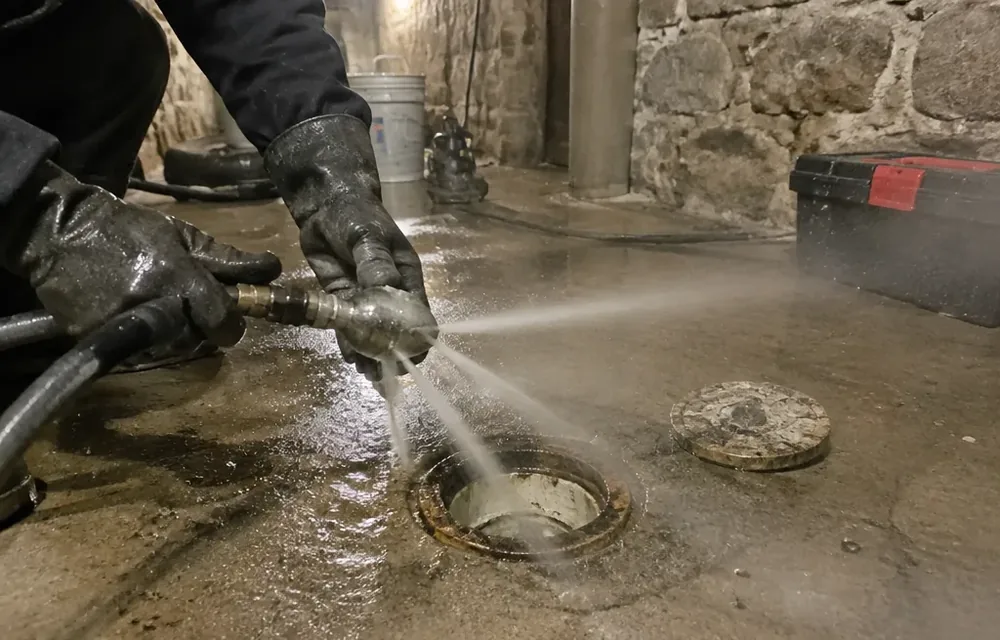
Hydro Jetting
A cable bores a hole through the clog.
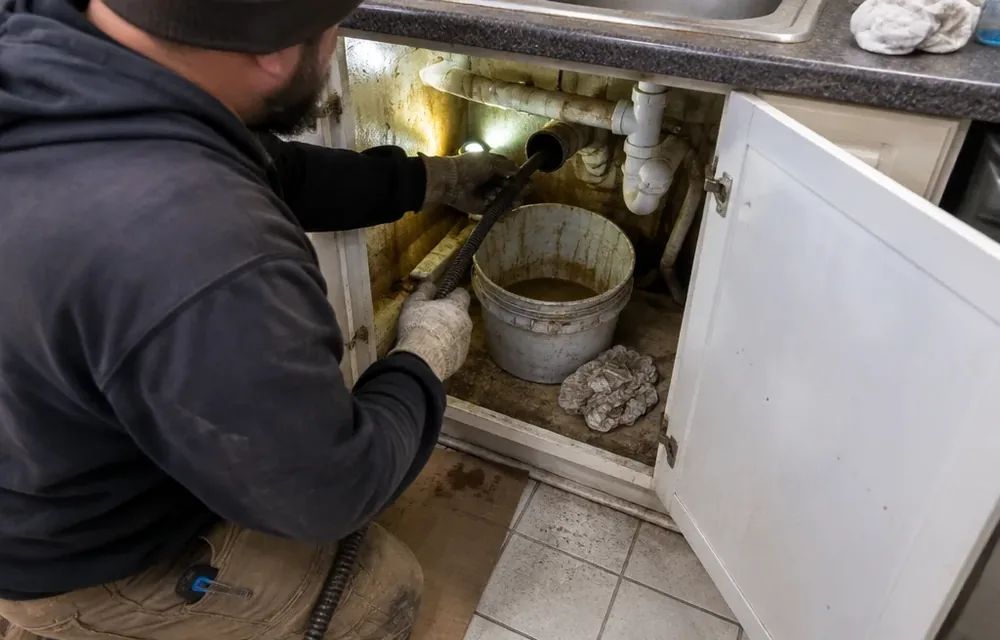
Drain Cleaning
A single slow sink is a nuisance.
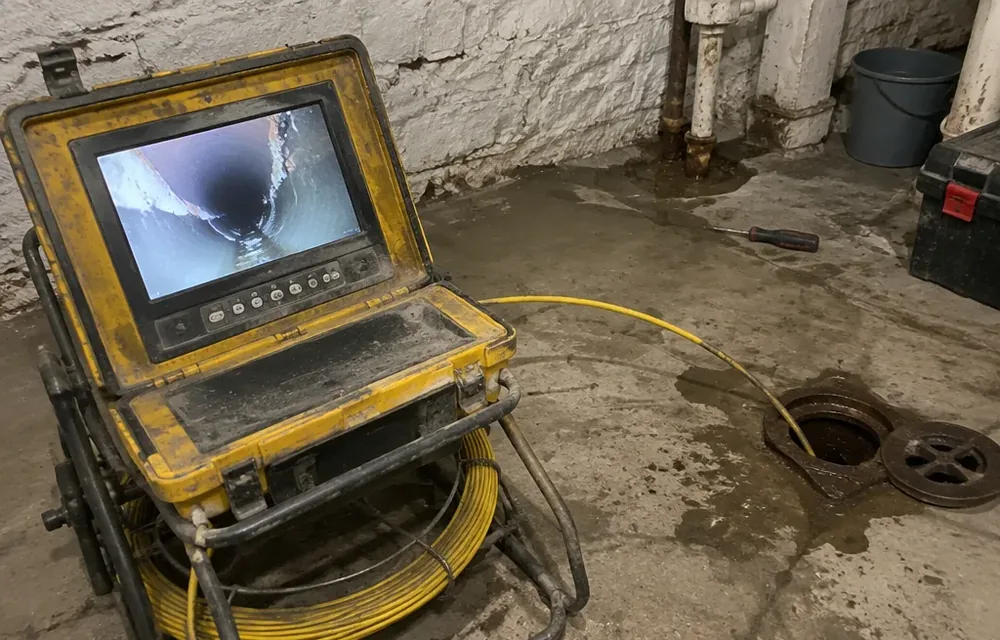
Sewer Camera Inspection
Every expensive sewer decision in Philadelphia — jet, repair, line, replace — depends on one thing: what the pipe actually looks like inside.
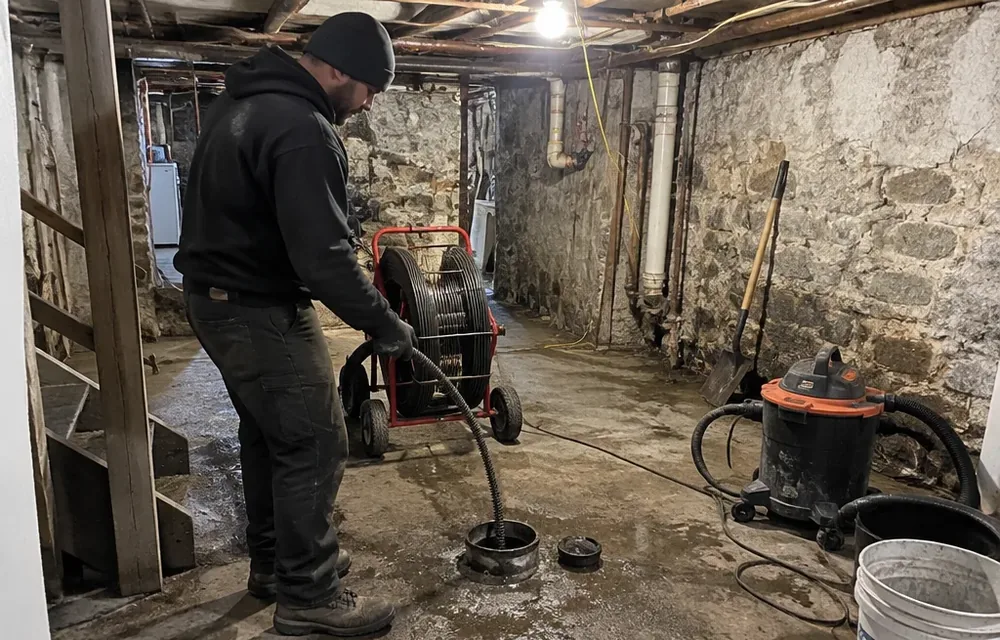
Main Sewer Line Cleaning
The lateral is the most expensive drain you own — a 60-to-100-foot clay run from your rowhouse to the street main, shared with stormwater, hunted by street-tree roots.
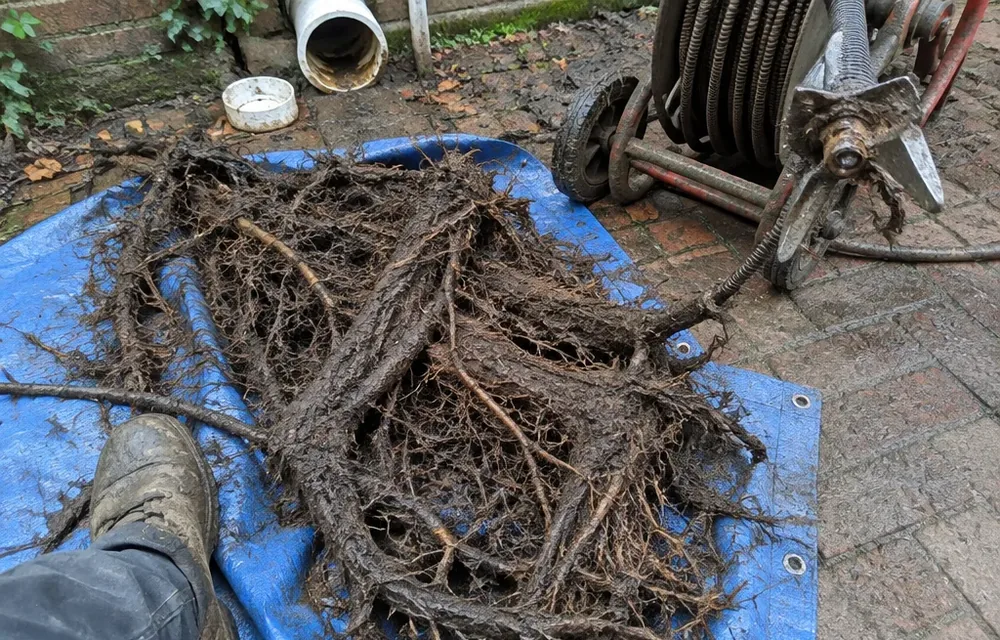
Rooter Service
Roots do not break your pipe to get in.
Kitchen Grease Line Jetting
Grease is the one clog material a cable cannot fix.
Bathroom Drain Cleaning
Bathroom clogs are almost never mysterious: hair, soap scum and toothpaste solids, wrapping around cast iron scale in a century-old branch arm.
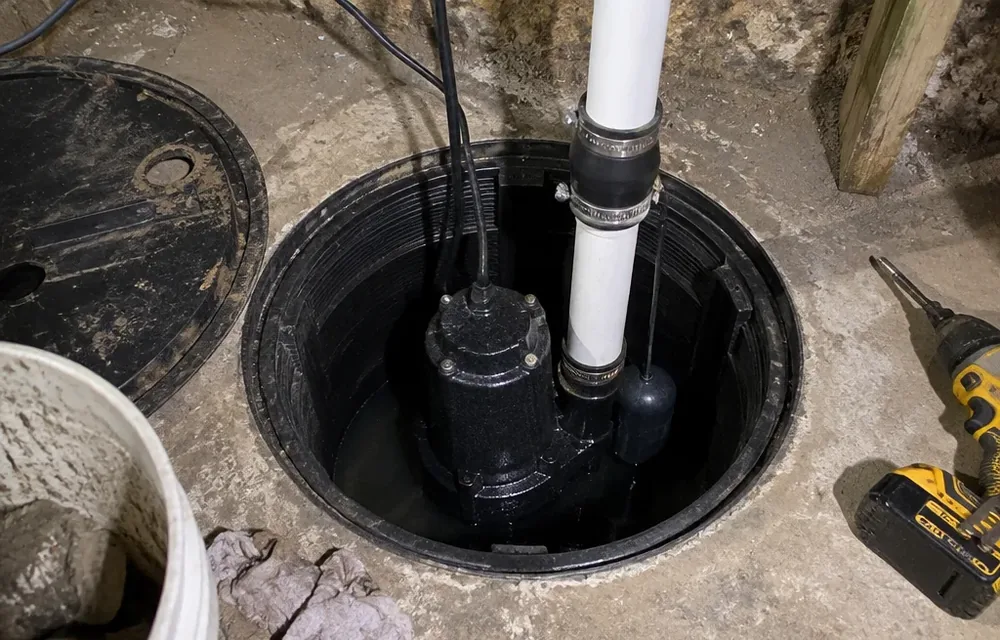
Basement Floor Drain Cleaning
The basement floor drain is the lowest opening in your rowhouse — which makes it the relief valve for every downstream restriction.
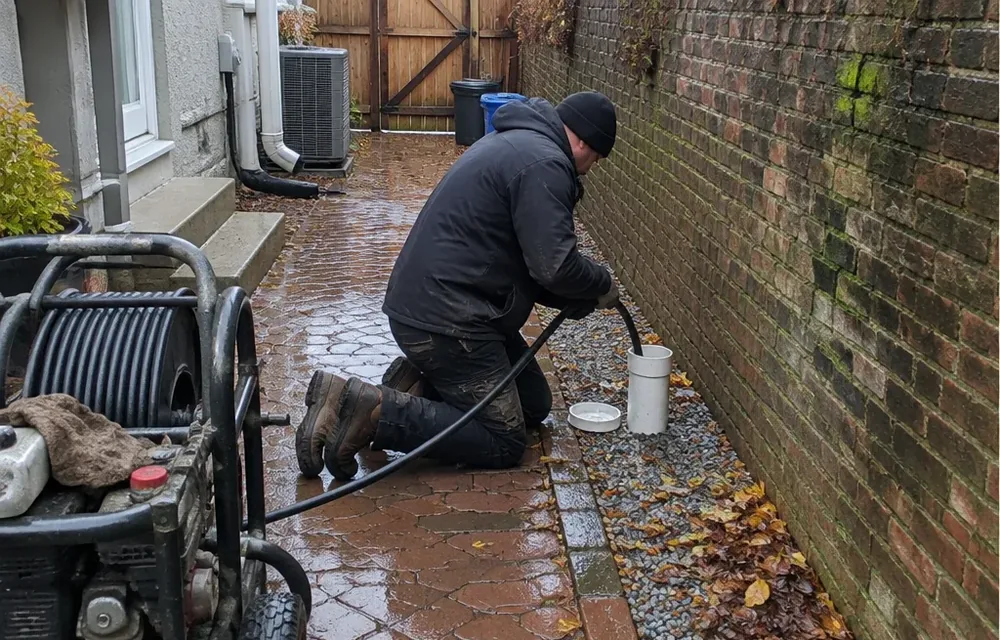
Storm Drain & Catch Basin Cleaning
A flooded loading dock or parking lot is rarely a rain problem.
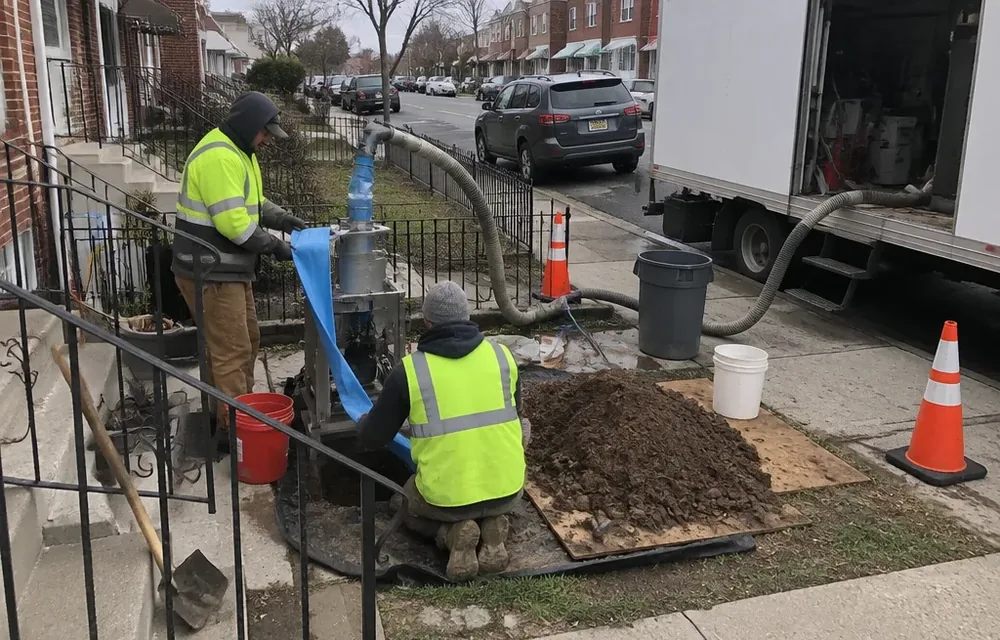
Commercial Hydro Jetting
Commercial drains fail on schedule — fryer volume, tenant count, storm season — so they should be serviced on schedule.
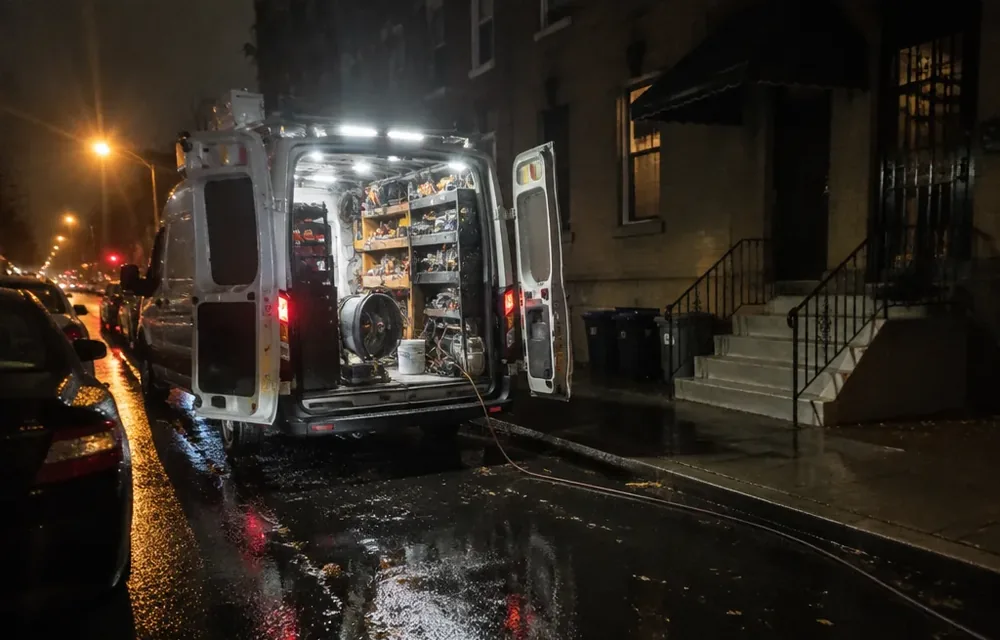
Emergency Drain Service
Sewage on the basement floor does not wait for business hours, and neither do we.

Restaurant Food-Service Jetting
A restaurant drain never fails at 2 p.
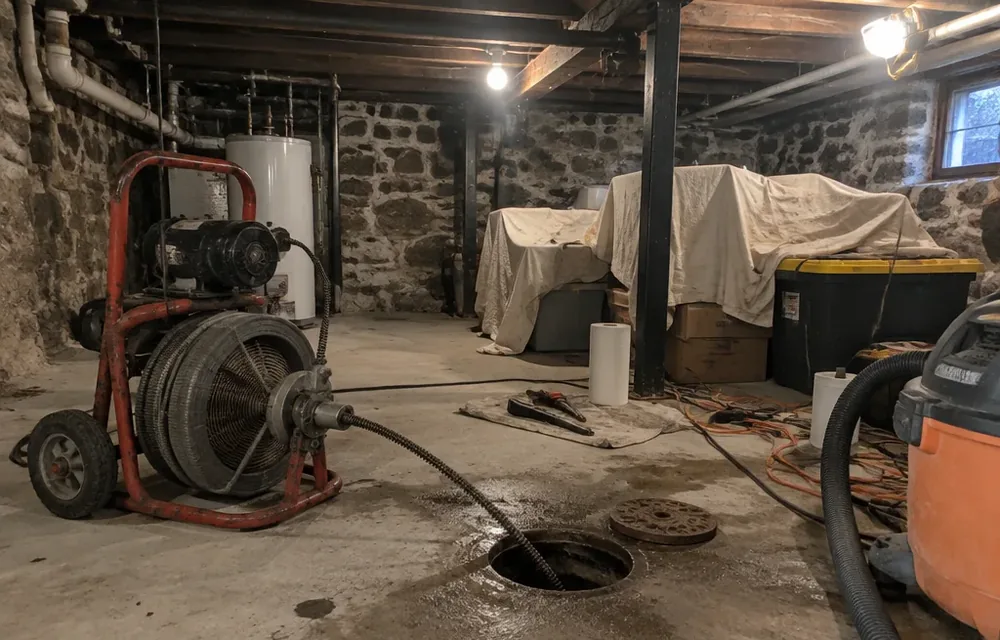
Property Manager Multifamily Drains
Nobody treats a rental drain like an owner does.
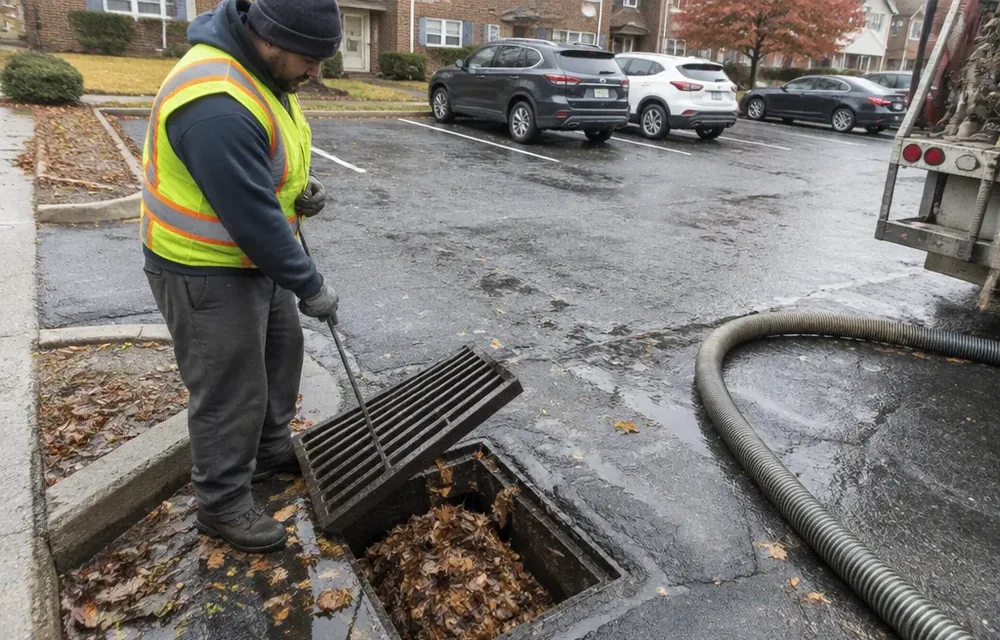
HOA Community Drains
HOA drain problems are never one owner's problem.
Guides and symptom checks matched to Ridley Park's housing
Guides for this housing stock
- Basement Backup in Philly: Combined Sewers — how shared mains back up basements in sustained rain
- Tree Roots in Philadelphia Sewer Lines Guide — why clay joints open and what the camera should log
- Philly Rowhouse Laterals: Clay, Iron & More — which pipe your build era used and what each needs
Symptoms we trace in Ridley Park
- Water Backing Up Into Fixtures — when one fixture fills another, act fast
- Same Clog Keeps Returning — repeat clogs mean coating or defect, not bad luck
- All Drains Slow — whole-house slowness means main line, not fixture
Ridley Park plumbing questions
My Ridley Park Victorian is 1890s. What pipe do I have?
Vitrified clay tile outside with cast iron inside, laid when the 1871 railroad suburb built out around the lake and station — now 100-plus years old. Balloon-frame Victorians around Sellers Avenue and Ward Street show multi-joint root intrusion with offset hubs on camera, which pushes the scope toward full-run lining rather than a single-break repair.
Why do low Ridley Park streets back up after heavy rain?
Streets falling toward Ridley Creek and the lake tributaries carry a high water table that enters cracked clay joints for months, and flash-flood saturation settles hubs out of grade along the bottom blocks. Backups tracking sustained Delaware County rain are infiltration-capacity failures, and sealing the joints restores headroom clearing cannot.
Can the mature trees over my Ridley Park lateral stay?
Yes, and lining assumes they do. The borough oaks and maples over century-old clay hubs define the railroad-suburb streetscape, and removal neither suits the block nor repairs joints roots already opened. A jointless liner seals every entry from inside while the canopy stands.
Should Ridley Park buyers scope the lateral before closing?
On any pre-war Victorian, row, or twin, yes. Century-old clay with multi-joint intrusion plus cast iron at end of life is a five-figure scope item hiding beneath an 1870s–1920s exterior. A mapped camera inspection with depths belongs in the negotiation before closing.