Sewer Camera Inspection in Philadelphia — See Inside Before You Pay
Every expensive sewer decision in Philadelphia — jet, repair, line, replace — depends on one thing: what the pipe actually looks like inside. A camera turns guessing into footage.
- 1 to 2 hours
- Philadelphia Area
- 7 days a week
Signs you may need sewer camera inspection
Most people arrive here describing a symptom rather than naming a service. These are the three that point this way.
Second clog in the same line within a year
Recurring failure at one location means the cause is structural or material — offsets, bellies, scale — and only footage identifies it. Clearing again without scoping repeats the same expense.
Buying a Philadelphia rowhouse, especially pre-1920
Century-old clay laterals and cast iron stacks hide five-figure problems behind finished basement walls. A pre-purchase scope costs a few hundred and travels with you as video evidence.
Cable stops hard at the same footage every time
A repeatable hard stop at one distance is a joint, belly or partial collapse announcing itself. Footage-marked camera inspection converts that guess into a located, priced repair plan.
What a camera inspection gives you
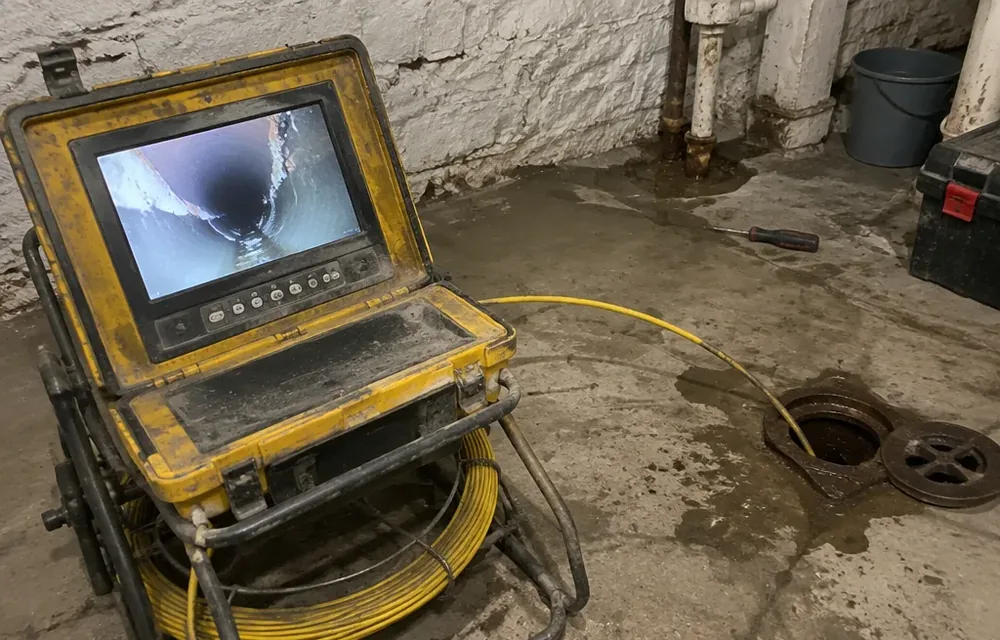
A self-levelling camera head on a push rod travels the lateral from an accessible cleanout to the city main, recording distance-stamped video. You see joints, cracks, offsets, bellies, intrusions and deposits in sequence — with footage counts telling you exactly how far from the access each defect sits.
The deliverable is recorded video plus a written findings summary: pipe material by segment, defect locations by footage, and a plain-language recommendation. That recording is yours. If you later get a second opinion on a repair, the footage travels with you.
For Philadelphia buyers, this is the highest-value service on this site. A pre-purchase scope of a pre-1920 clay lateral costs a few hundred; an unscoped collapsed lateral costs five figures. The math is not close.
What we find in Philadelphia pipes
Offset and cracked clay tile. Pre-1920 segments shift with a century of freeze-thaw and street vibration. The camera shows stair-step joints and the root hair entering each gap.
Cast iron scale and channelling. Interior tuberculation narrows stacks and laterals; advanced corrosion channels the invert until the bottom runs thin. The camera distinguishes cleanable scale from pipe that has lost its wall.
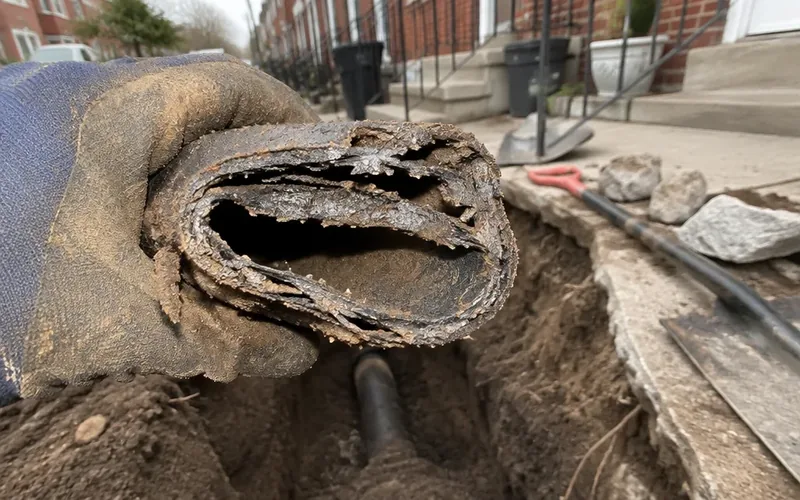
Orangeburg deformation. 1945–1972 fibre pipe blisters inward, ovals, and delaminates. On camera it looks unmistakable — wavy, flaking walls closing the bore. Jetting blistered Orangeburg is how service calls become excavations.
Bellies. Low spots holding standing water, common where rowhouses settled or trench backfill compacted unevenly. Debris and grit settle in the belly; the camera shows waterline marks and sediment fans.
Combined-sewer grit and grease. Laterals carrying stormwater show sediment deltas at every flat spot, often capped with grease layers from kitchen flow.
When to scope instead of clearing blind
Second clog in the same line inside eighteen months. Clearing again without looking is paying twice for the same lesson.
Any rain-linked basement backup pattern — the signature of combined-sewer laterals with bellies or partial restrictions that only fail under storm flow.
Before buying any Philadelphia rowhouse, especially pre-1920 or with a finished basement. Finished walls hide the cleanout and the history alike.
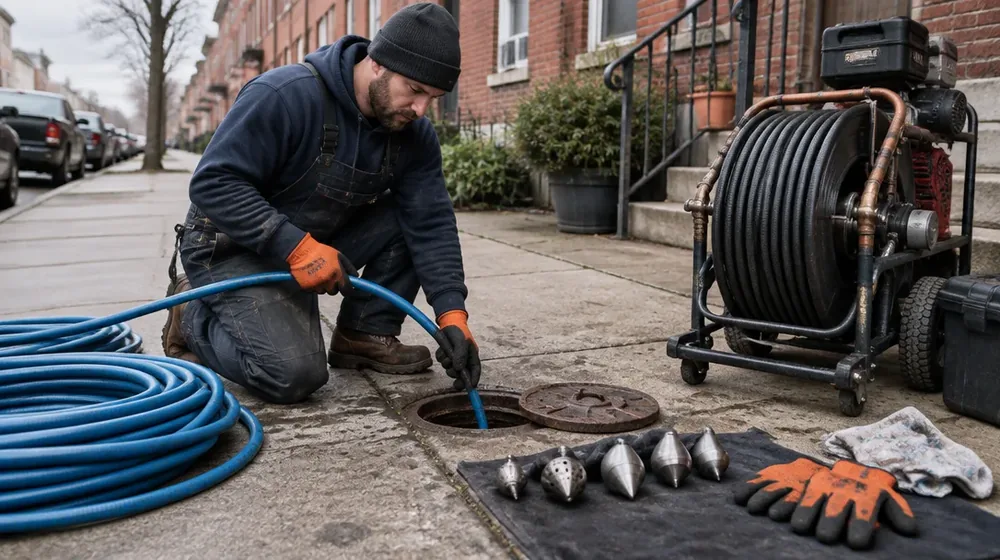
Before hydro jetting — our mandatory pre-jetting pass — and before any lining or repair quote, so the scope of work matches reality.
When a cable stops hard at the same footage every time. That repeatable hard stop is a joint, belly or collapse, and only footage tells you which.
How the appointment works
Establish access
Basement or exterior cleanout is ideal. Without one we may pull a toilet or use a vent access and will tell you the added cost before starting.
Run the camera to the main
Full lateral traverse with footage counter, noting material changes, joints, and every defect with its distance.
Locate from above where needed
A sonde transmitter in the camera head lets us trace the lateral path and depth from the surface — essential for marking dig points or confirming which tree owns the intrusion.
Review footage with you
You watch the defects on screen, not a summary. We pause, rewind and explain what each finding means for cleaning vs. repair.
Deliver video and findings
Recorded video plus written defect log with footage marks and recommendation: clear, jet, maintain on interval, or repair.
What inspection costs, and what it saves
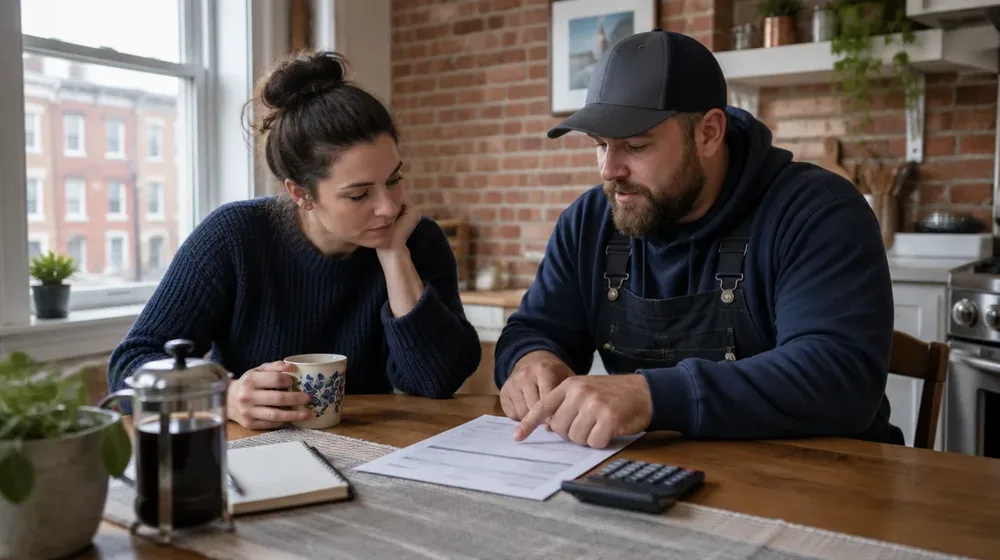
Residential scoping in Philadelphia typically runs $175 to $550 depending on access and lateral length. Bundled with a home inspection during a purchase it often lands $175 to $350; as a standalone diagnostic $250 to $550. Rowhouses with no accessible cleanout — where we must pull and reset a toilet to enter the line — run $450 to $750 for the added labour.
What it saves is the wrong service. Jetting a collapsed Orangeburg section, cabling a belly for the fourth time, or buying a rowhouse with a failed lateral all cost multiples of the inspection. A camera that reveals a collapsed lateral under the street can save you a $3,000 to $12,000+ excavation with city permits and street restoration. The camera is the cheapest part of any sewer decision and the part most often skipped.
If inspection leads to cleaning or repair with us, the findings carry straight into the work plan — the footage marks become the jetting passes in main sewer line cleaning or the dig points for repair.
Frequently asked questions
How much does sewer camera inspection cost in Philadelphia?
Typically $250 to $550 standalone for a residential lateral, $175 to $350 when bundled with a home inspection during a purchase, and $450 to $750 when there is no cleanout and we must pull and reset a toilet to enter. You receive recorded video plus a written findings summary.
Should I scope the sewer before buying a Philadelphia rowhouse?
Yes — it is the single highest-value inspection on an older home. Pre-1920 clay laterals, cast iron stacks and finished basements hide expensive problems, and you own the lateral all the way to the city main under the street. A few hundred for a scope against $3,000 to $12,000+ for a surprise collapse-and-replace under permits and street restoration is straightforward arithmetic.
Can the camera find where my line is broken?
Yes, with the footage counter plus a surface locator. The camera records how far the defect sits from the access, and the sonde transmitter lets us mark the spot and depth from above — so any repair digs in the right place.
Will the camera fit through my old cast iron pipes?
In most cases, yes. Heavy scale can stop the head, which is itself diagnostic — it tells us the line needs descaling or repair before anything else. We will not force the head through a restriction that risks sticking it.
Do I need PWD approval for a camera inspection?
No. Inspection is non-invasive work entirely within your lateral. PWD coordination only enters if the findings lead to excavation or repair beyond the curb.
How often should I re-scope my line?
After any repair or lining, once to confirm. For lines on a maintenance interval — roots or grease — every two to three years, or whenever the symptom pattern changes. A stable line with no symptoms needs no schedule.
What is a sewer scope, and do I need one when buying?
A sewer scope is a camera run through the lateral during your home-inspection window — usually $175 to $350 bundled with the general inspection. For any pre-1980 Philadelphia rowhouse it is the cheapest insurance in the transaction; an unscoped collapse under the street runs $3,000 to $12,000+.
Guides that cover this in more depth
Hydro Jetting vs Snaking: What Philly Homes Need
A cable bores a hole through the blockage so water moves again. A jetter scours the whole pipe wall back toward bare m…
Hydro Jetting Cost in Philadelphia: 2026 Guide
Most Philadelphia homeowners budget around national jetting ranges, then discover access, lateral length, and root cut…
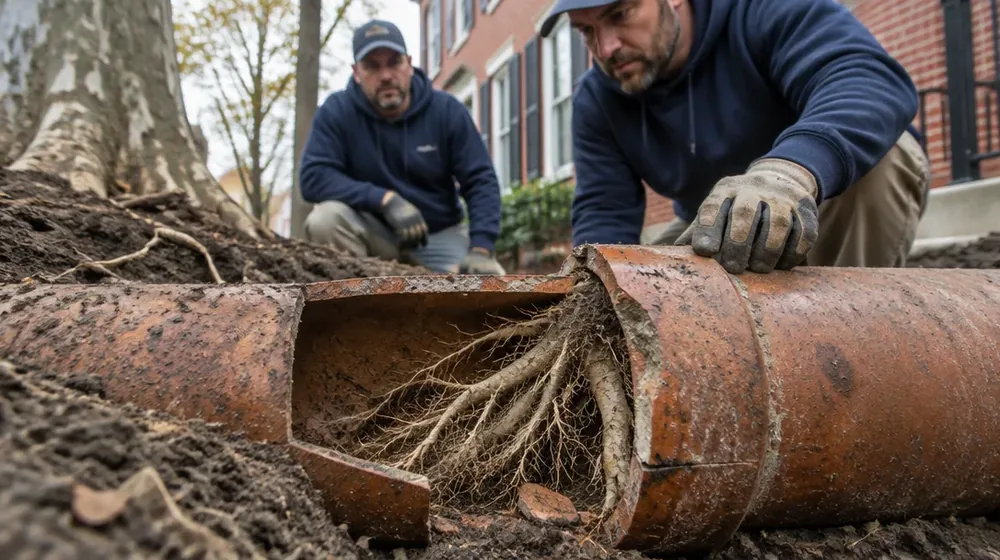
Tree Roots in Philadelphia Sewer Lines Guide
Roots do not break into sound pipe. They find the clay joint that is already leaking, thicken in the flow, and become …
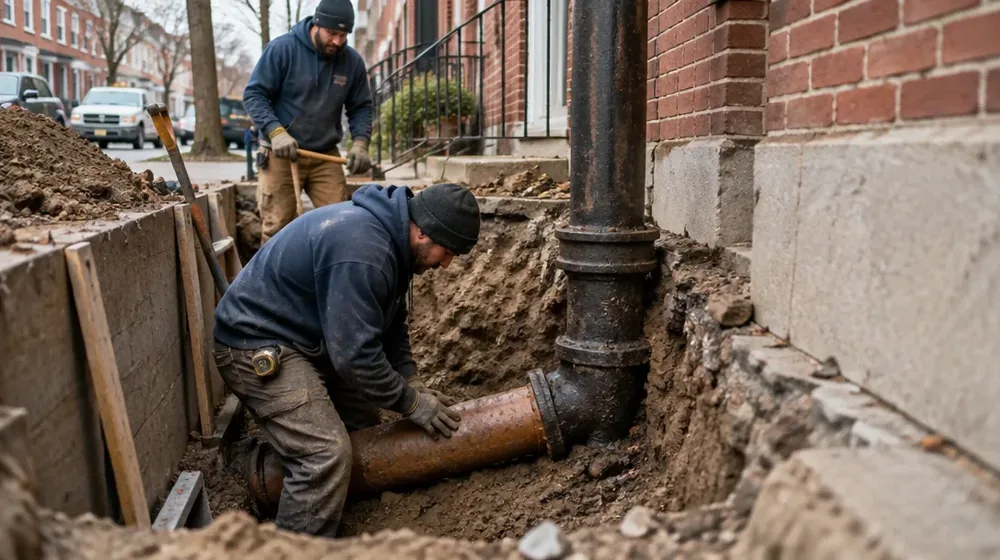
Philly Rowhouse Laterals: Clay, Iron & More
The year your Philadelphia rowhouse was built predicts what is buried in front of it. Clay joints admit roots, cast ir…
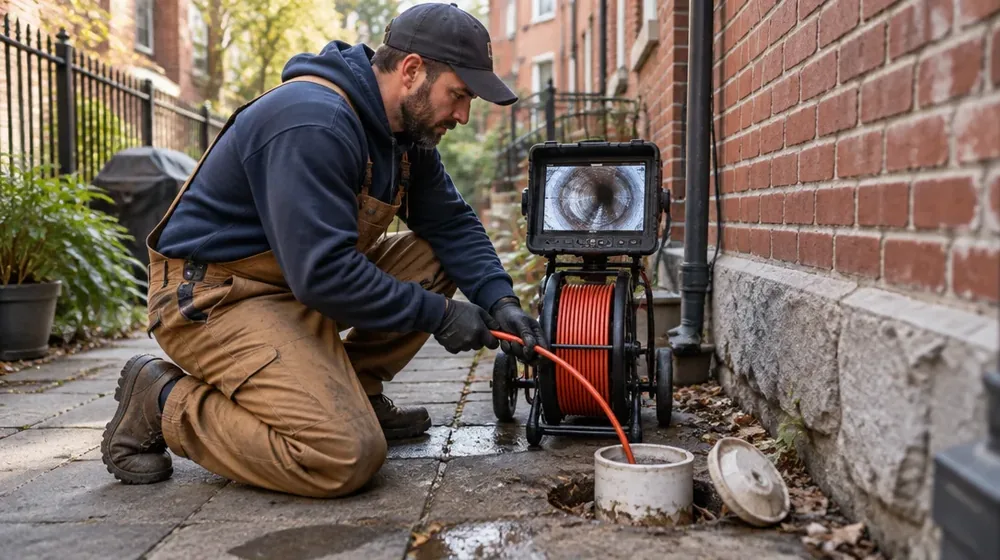
Camera Inspection Before Hydro Jetting Guide
Nobody can price pressure honestly without seeing the pipe first. On Philadelphia laterals of unknown age and material…
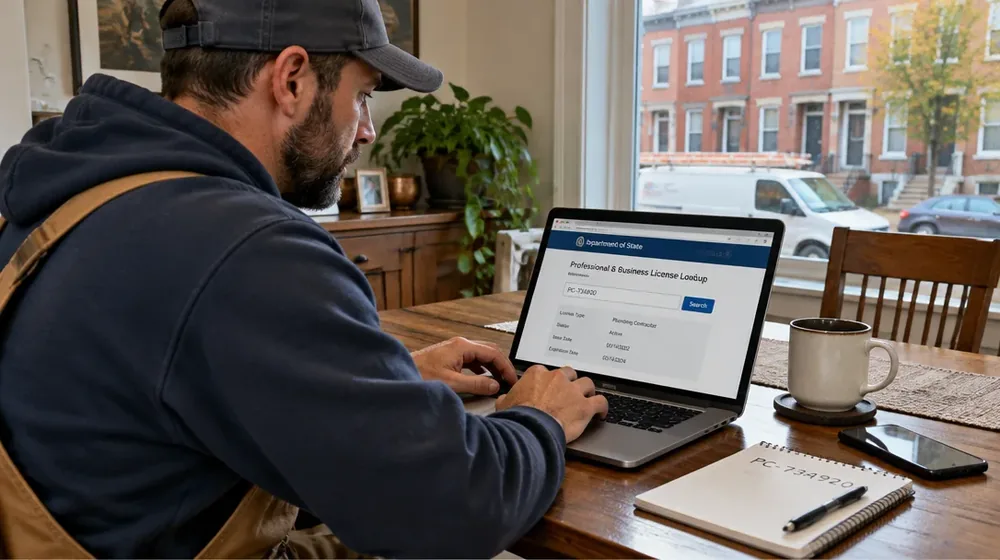
How to Check a PA Plumber License in Philly
Verifying license and insurance before work begins takes minutes and is the homeowner responsibility that protects eve…
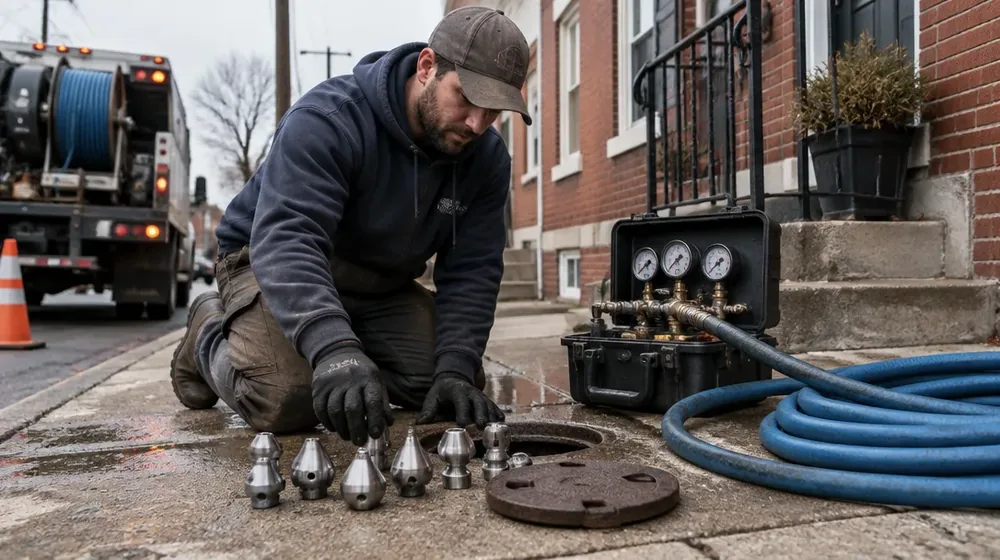
How Hydro Jetting Works: PSI, GPM & Nozzles
A hydro jetter is a pump, a hose, and a nozzle working as one system. The pump builds pressure, the hose delivers it i…
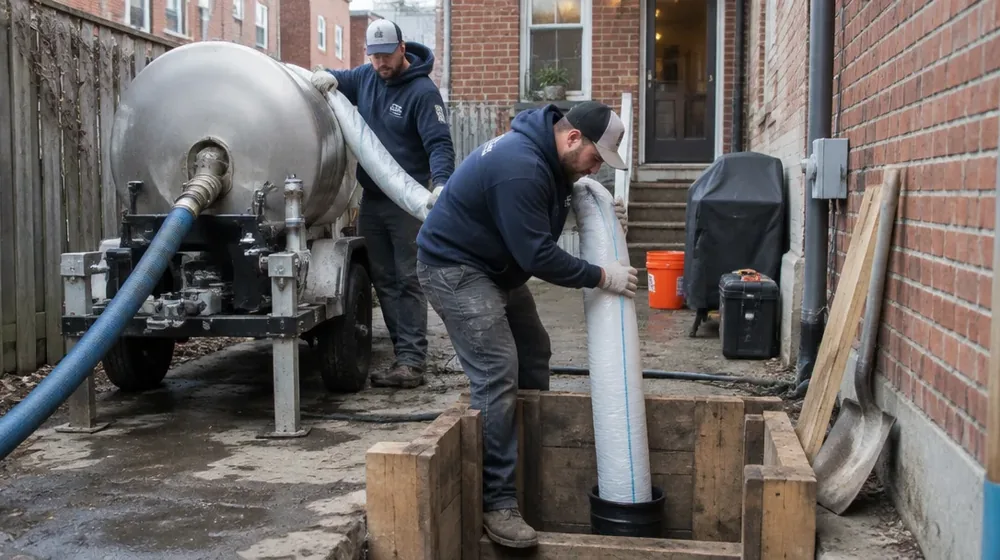
Trenchless Sewer Repair After Jetting Guide
Trenchless repair fixes the pipe without opening the whole street, but the liner or bursting head can only work with a…
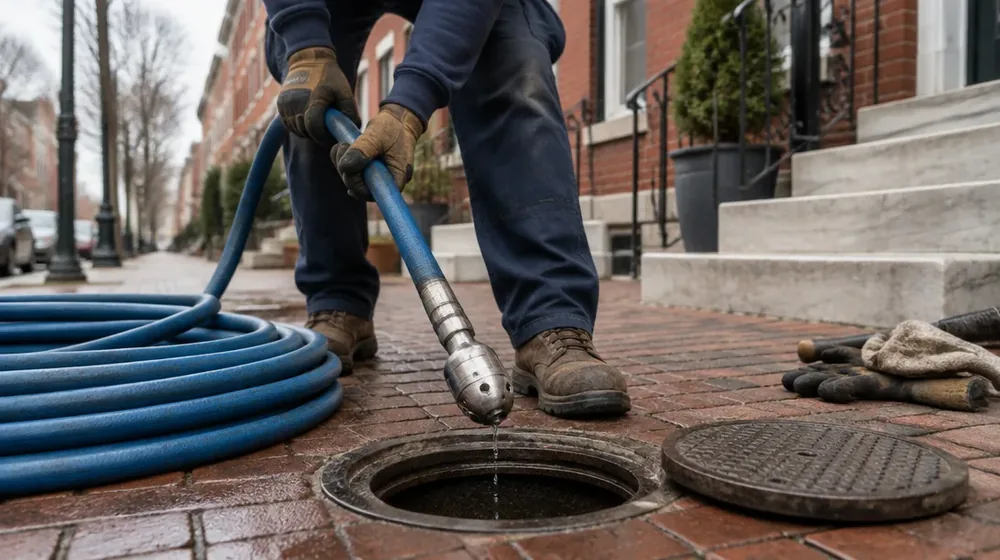
What Is Hydro Jetting? Philly Homeowner Guide
Hydro jetting is a drain cleaning method that uses high-pressure water, sent through a hose and a specially drilled no…
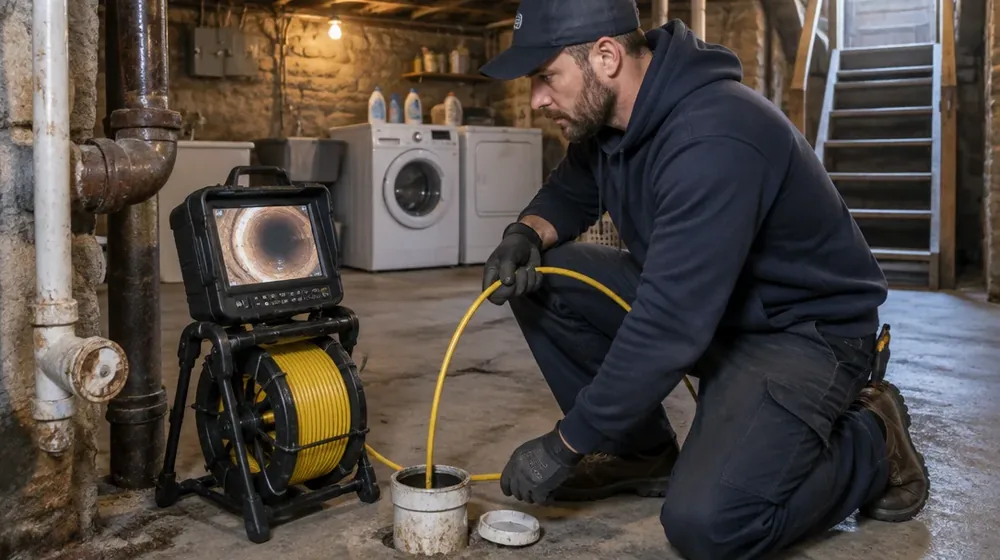
What Is Sewer Camera Inspection? Philly Guide
A sewer camera inspection sends a small waterproof camera through a drain or sewer line on a push rod or crawler, reco…
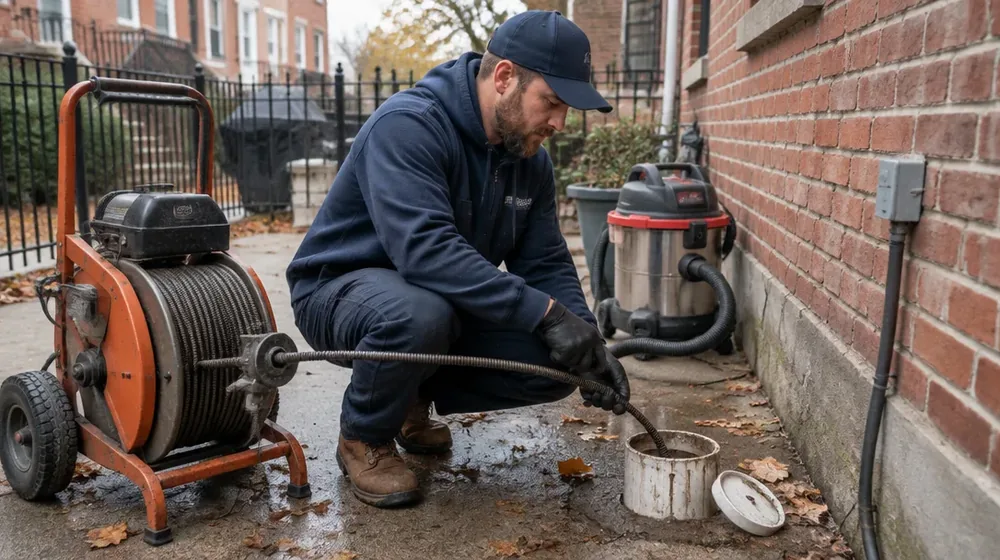
How to Unclog a Main Sewer Line Safely in Philly
When a main sewer line blocks, every drain in the house shares one failing exit. Safe homeowner triage means stopping …
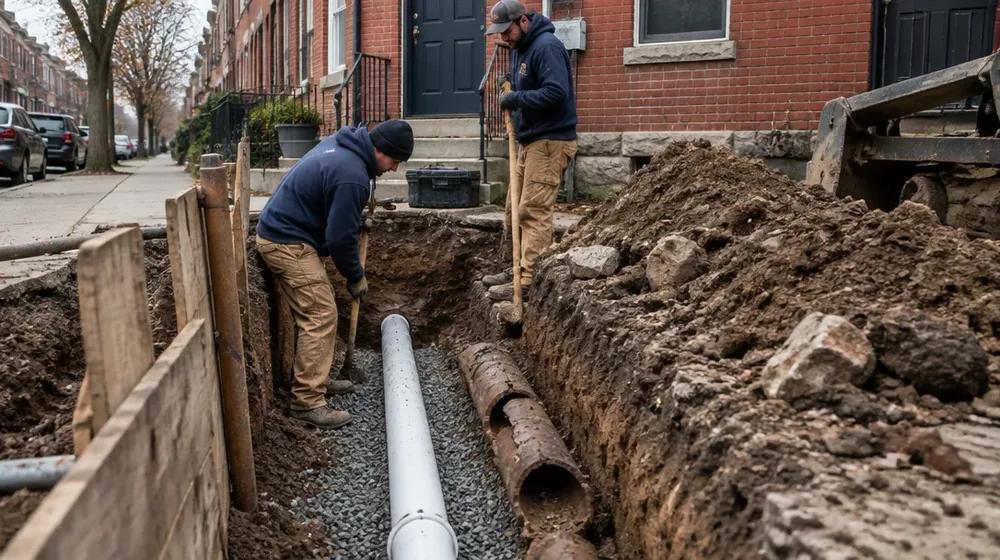
Sewer Repair Cost in Philadelphia: 2026 Guide
A Philadelphia sewer figure means nothing until camera footage and a locate map define the defect, the depth, and the …
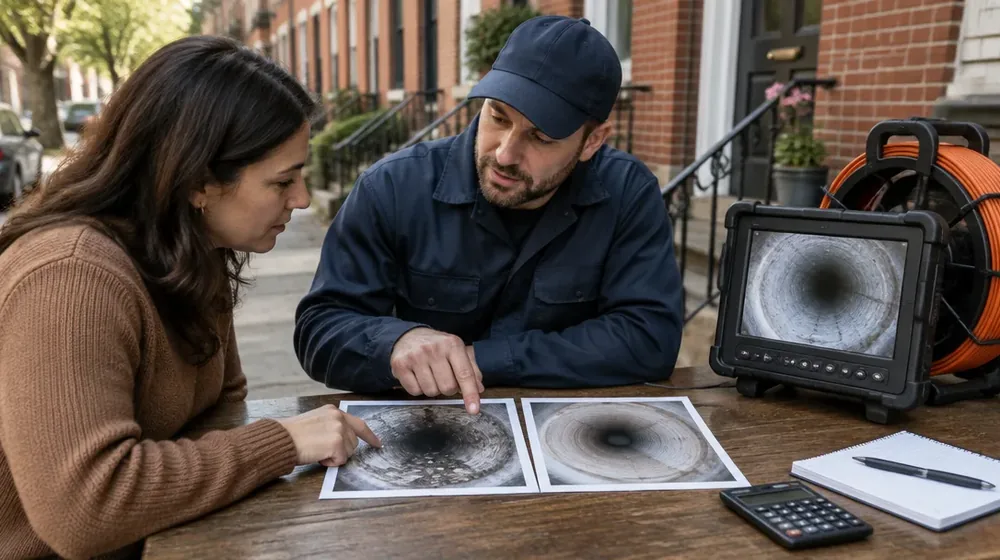
How to Choose a Drain Cleaning Company in Philly
The right drain hire is a verifiable company, a camera-led diagnosis, and a written scope with a load-tested proof. Ev…
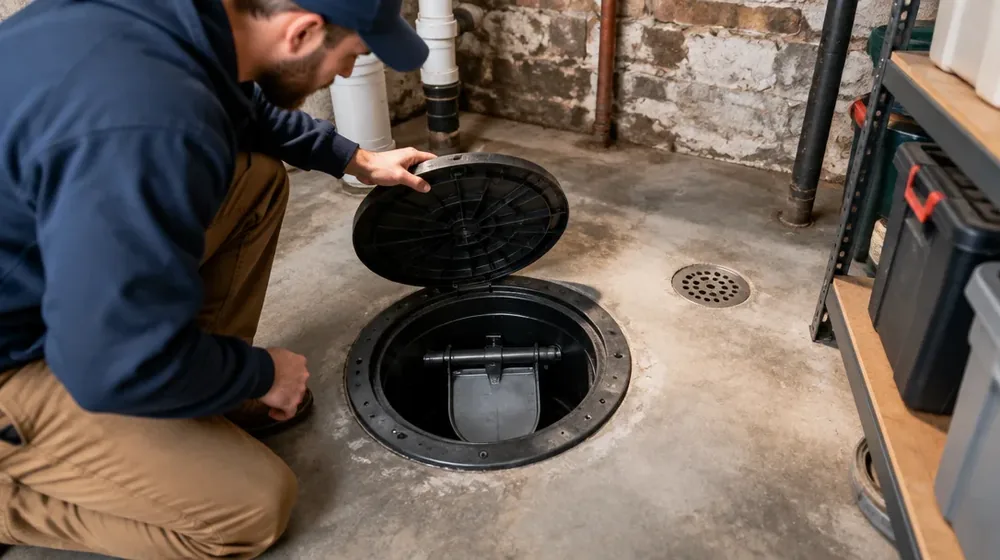
PWD Backwater Valve Program: Free Valve Guide
Philadelphia will install a backwater valve in a qualifying home at no charge to the owner through its Basement Backup…
Lead Service Line Replacement in Philadelphia 2026
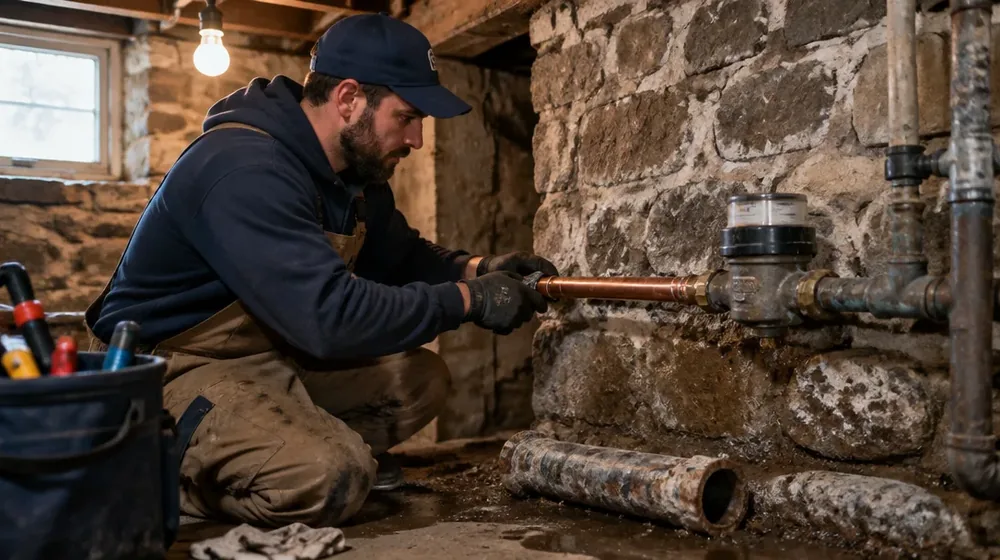
Philadelphia will replace a qualifying home’s lead drinking-water service line at no charge to the owner — during plan…
Call 811 Before Digging in Philadelphia: PA Guide
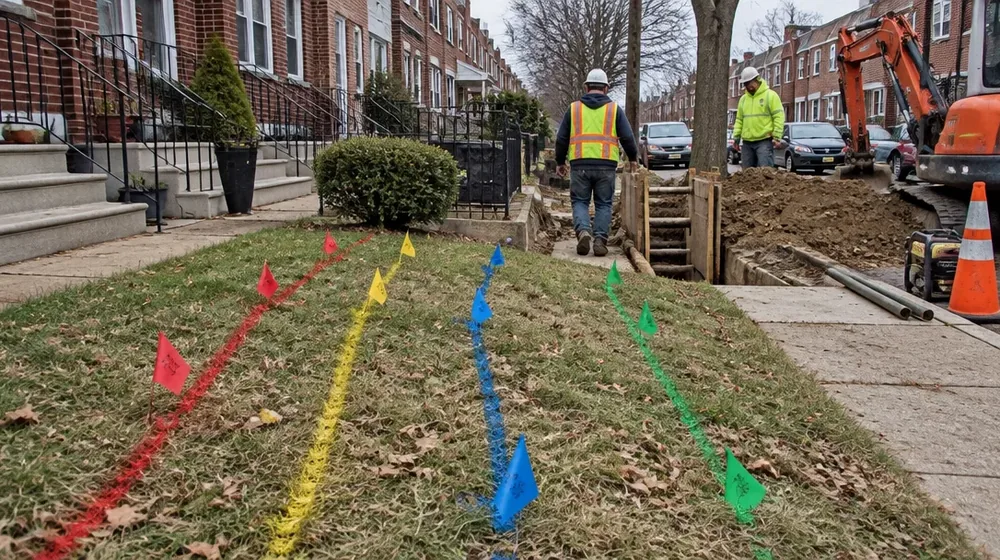
Any digging for sewer or drain work in Philadelphia, from a full lateral replacement to a small cleanout excavation, l…
Sewer Cleanout Guide for Philadelphia Rowhouses
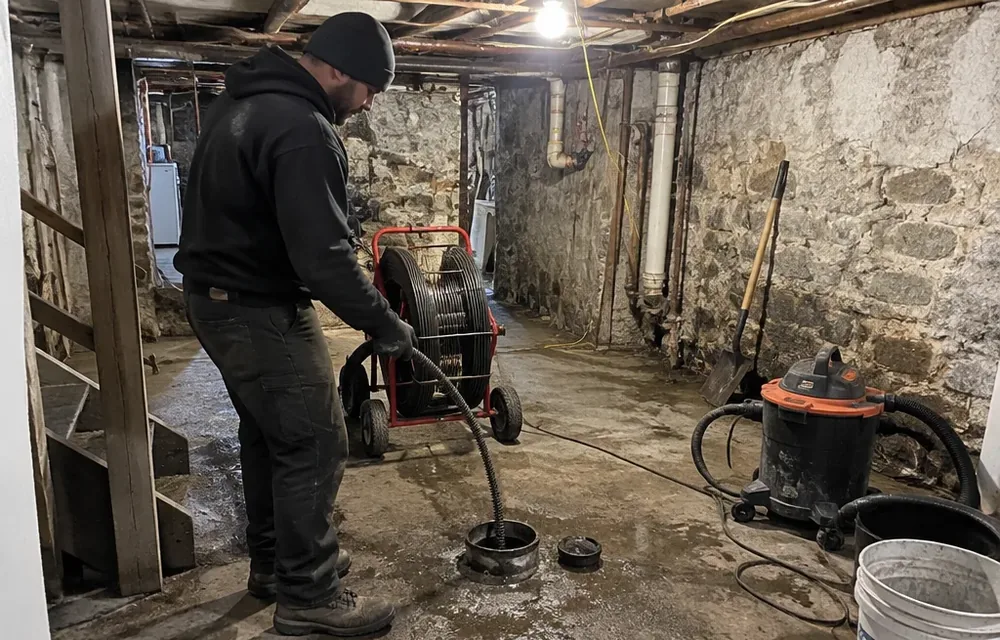
The sewer cleanout is the capped access riser through which every drain machine, jetter hose, and camera enters your l…
Symptoms this service fixes
Drain Gurgling
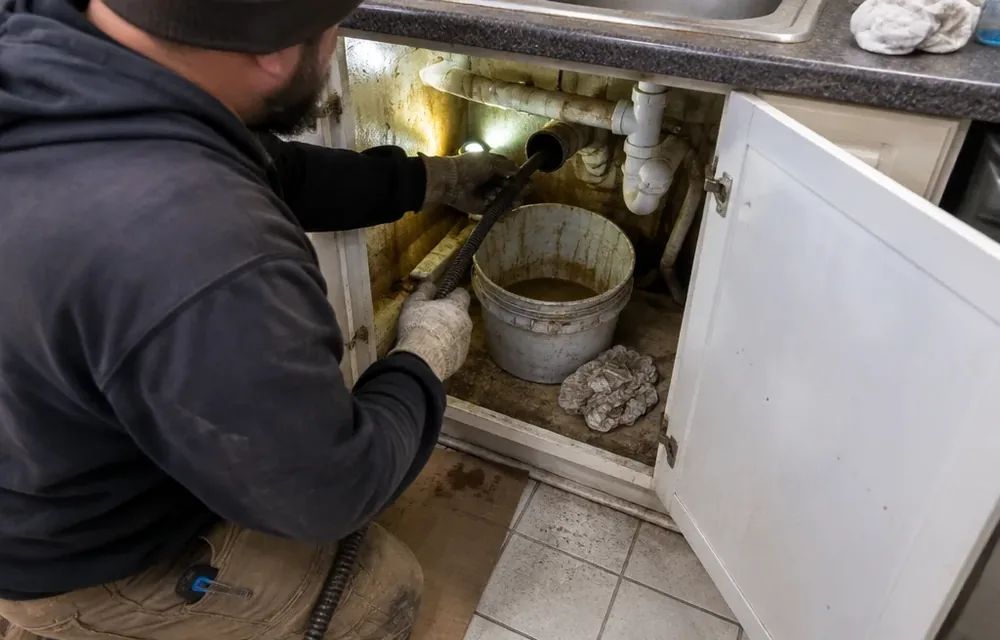
Gurgling is air being forced through water it should not have to move through.
Sewage Smell in the Basement
Most basement sewage odor in Philadelphia comes from a dry floor-drain trap or a failed seal, both cheap fixes.
All Drains Slow
One slow drain is a fixture problem, but every drain slowing together means the restriction sits where all branches meet: the building drain or the lateral to the street.
Toilet Bubbling
A toilet that bubbles when another fixture drains is reporting air displaced past a downstream restriction.
Soggy Strip in the Yard
A persistently soggy or suspiciously lush strip of ground between your house and the street usually marks where a sewer lateral is leaking underground.
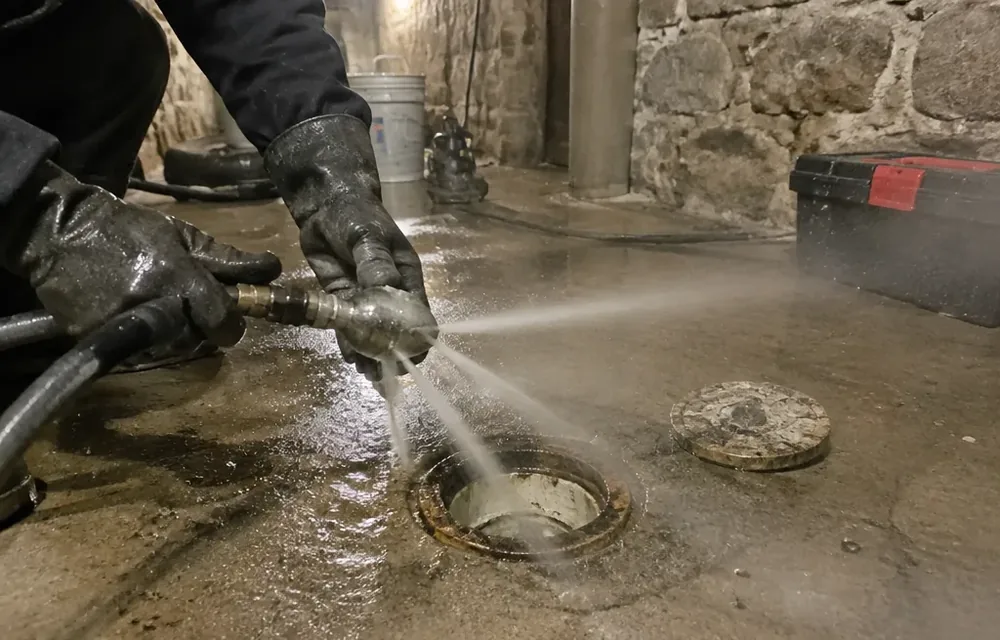
Same Clog Keeps Returning
A clog that returns to the same line within months was never fully removed; a channel was bored through it and the coating or defect closed back in.
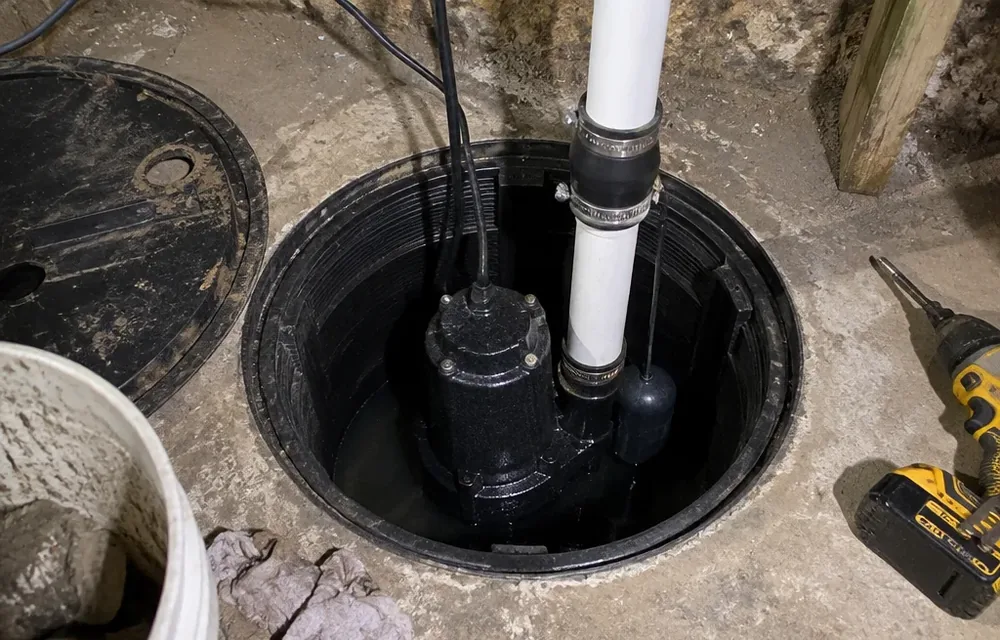
Water in the Basement Floor Drain
The basement floor drain is the lowest opening on your drainage system, so it is where every downstream restriction shows itself first.
Related services
Hydro Jetting
A cable bores a hole through the clog.
Drain Cleaning
A single slow sink is a nuisance.
Main Sewer Line Cleaning
The lateral is the most expensive drain you own — a 60-to-100-foot clay run from your rowhouse to the street main, shared with stormwater, hunted by street-tree roots.
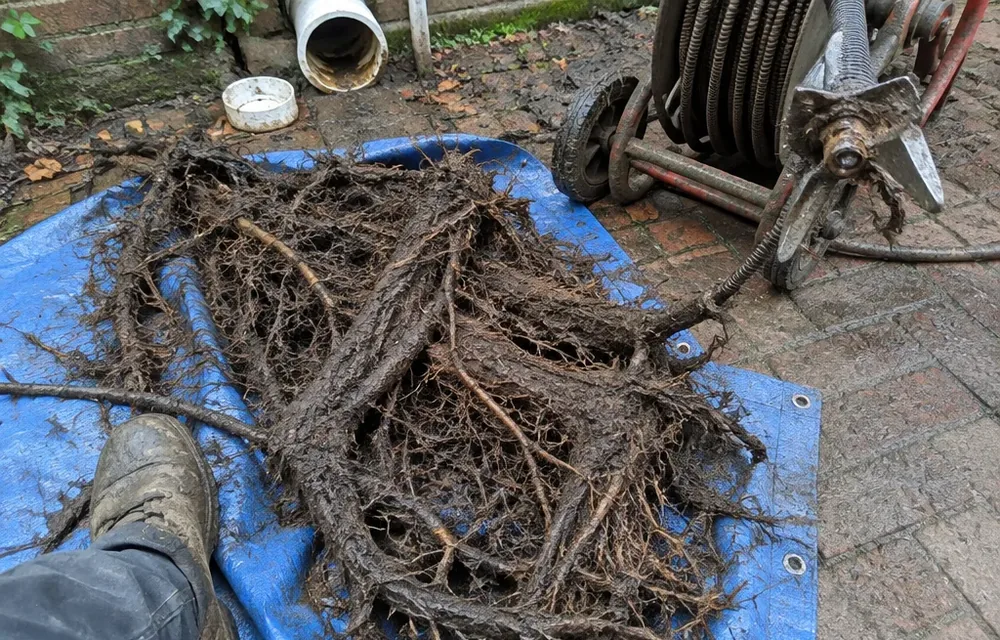
Rooter Service
Roots do not break your pipe to get in.
Sewer Camera Inspection across Philadelphia and its suburbs
We provide sewer camera inspection in 32 Philadelphia-area towns. Local pages cover the housing stock and pipe materials specific to each area.
Philadelphia
Delaware County
- Upper Darby
- Media
- Yeadon
- Lansdowne
- Havertown
- Springfield (Delco)
- Chester
- Drexel Hill
- Ridley Park
- Swarthmore
- Darby
Montgomery County
- Norristown
- Abington
- King of Prussia
- Ardmore
- Bala Cynwyd
- Conshohocken
- Plymouth Meeting
- Jenkintown
- Cheltenham
- Willow Grove
- Lansdale
- Pottstown
- Ambler
- Horsham
- Hatboro