Rooter Service in Philadelphia — Tree Roots Cut & Flushed Out
Roots do not break your pipe to get in. They find the clay joint already weeping warm vapour and move in. Cutting them out is straightforward — knowing whether the joint behind them is still sound is the actual service.
- 2 to 3 hours
- Philadelphia Area
- 7 days a week
Signs you may need rooter service
Most people arrive here describing a symptom rather than naming a service. These are the three that point this way.
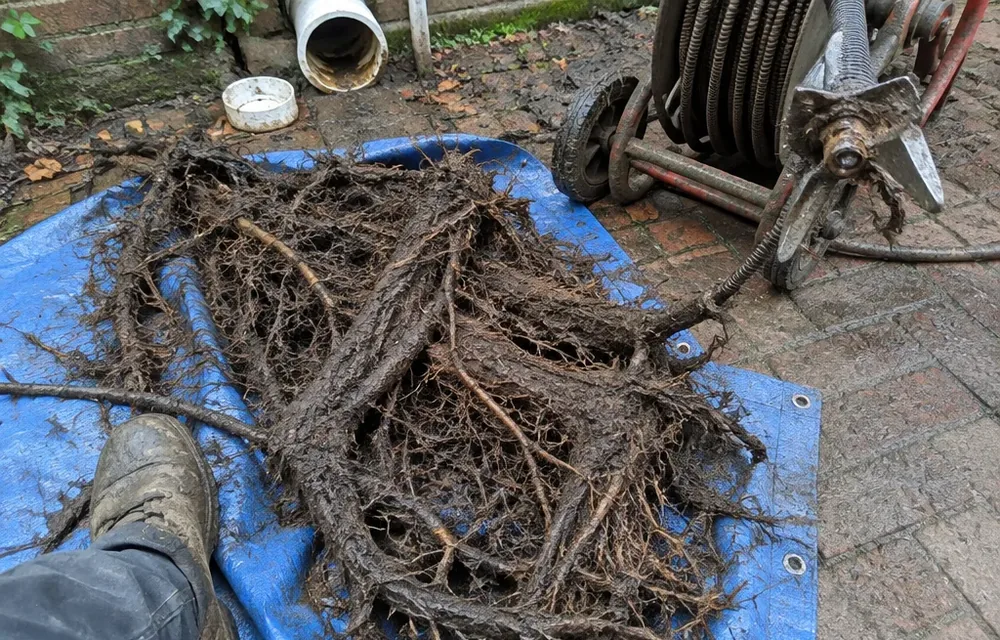
Cable retrieval wrapped in fine root hair
Hair-like roots on the cutter head confirm clay-joint intrusion, usually from street London planes or backyard silver maples. Scheduled cutting keeps the joint-managed lateral working for years.
Lateral slows every spring and autumn
Seasonal slowing tracks root growth flushes seeking joint moisture. A one-to-two-year cutting interval matched to species and distance converts emergency backups into planned visits.
Gurgling floor drain near mature street trees
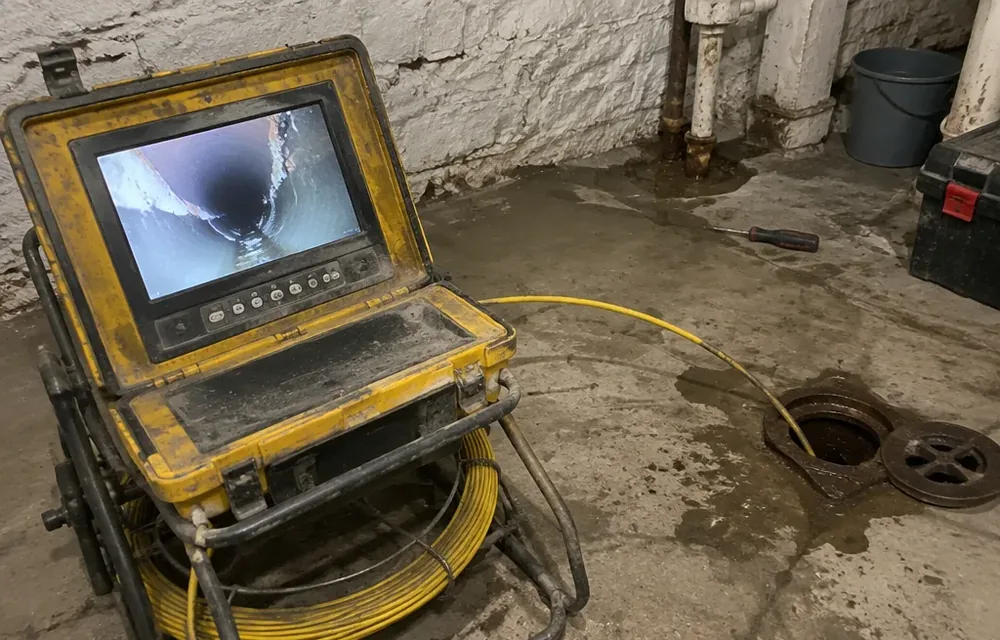
Properties within twenty feet of mature street trees with original clay tile are prime intrusion candidates. Camera-verified cutting documents each joint by footage for the maintenance record.
How roots get into Philadelphia laterals
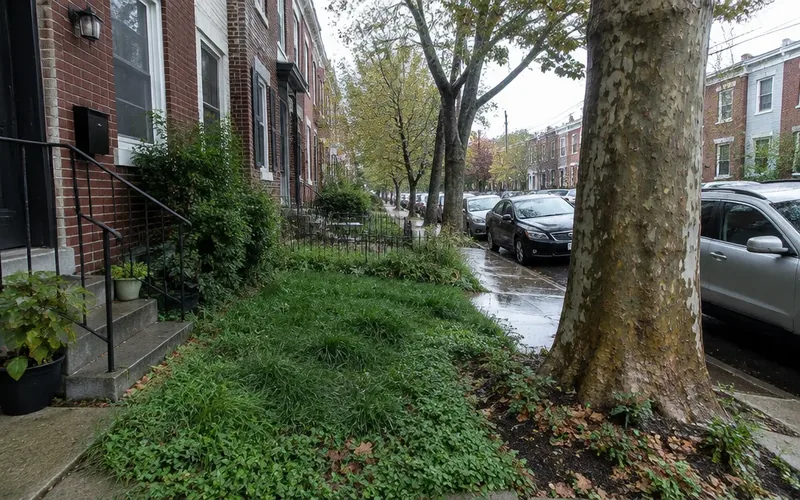
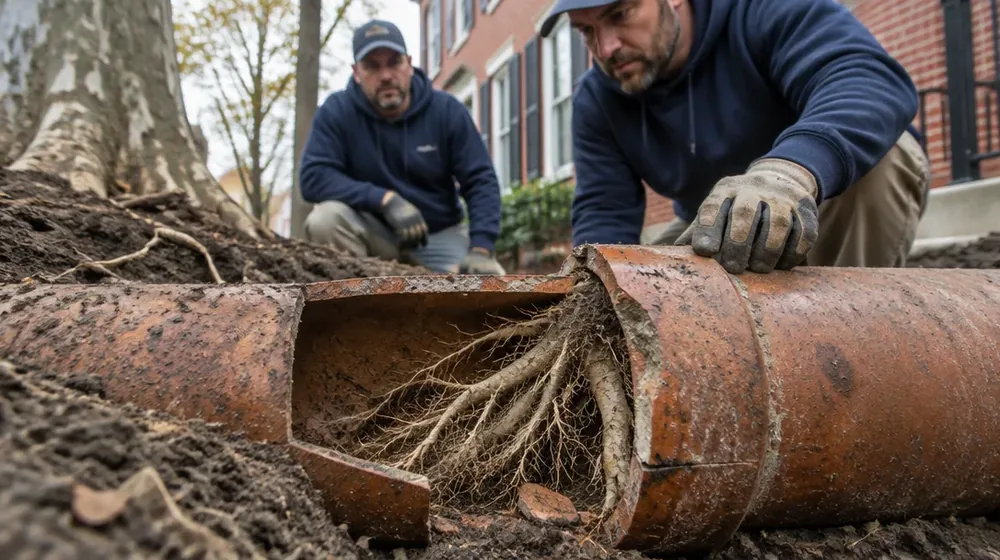
Pre-1920 clay tile laterals are jointed every few feet, and a century of ground movement opens those joints into vapour leaks. London plane street trees and backyard silver maples — the two most aggressive intruders in the city — send fine hair roots toward that moisture around the clock.
Once inside, roots thicken into a living strainer: they catch paper, grease and grit, the mass slows flow, slower flow deposits more material, and the line chokes. The pipe did not fail when roots arrived; it was already weeping. Roots are the symptom that announces the joint.
Cast iron transitions and Orangeburg sections fail differently — corrosion gaps and soft-wall separations — but the entry logic is identical: moisture escapes, roots follow it in.
What rooter service actually does
A rooter machine drives a rotating cable with a cutting head — blades, chains or saws sized to the pipe diameter — through the root mass, shredding it while water flow carries the cuttings toward the city main. That cable-and-cutter work is what a drain snaking service is at main-line scale: same method as a fixture snake, with heads and torque sized for 4-inch clay and root mass instead of hair.
Good rooter work is a cutting-plus-flushing operation, not cutting alone. Shredded root left in a belly re-lodges downstream and becomes next season’s blockage. We run water with the cutting passes and verify flow under volume before calling it done.
Where fine hair spans many joints or grease binds the mass, a jetter with a root-cutting nozzle finishes what the cable starts — cutting plus wall-washing in one pass. See hydro jetting for when that upgrade pays.
Cutting vs. permanent fix, honestly separated
Cutting restores flow. It does not close the joint — it is mowing the lawn, not killing the plant. Fine roots return to the same gap, typically within 6 to 12 months on aggressive London planes close by, and on a one-to-three-year cycle generally depending on tree species, distance and joint width.
A sound-but-gappy clay lateral can live on scheduled cutting indefinitely. Many Philadelphia rowhouses do exactly that: documented footage marks, a one-to-two-year interval, no drama.
The pattern that ends maintenance and starts repair: shortening intervals, the cable hanging at the same footage with increasing resistance, camera footage showing offset segments or widening gaps. At that point the joint is deteriorating and each cutting buys less time. The honest recommendation becomes repair or lining — and the footage proves it.
Our rooter visit, step by step
Confirm roots before cutting
Fixture pattern plus cable feel, confirmed by camera where history is unclear. You pay rooter prices for actual roots.
Size the cutter to the pipe
Undersized heads polish the mass; oversized heads scar sound clay. Four-inch laterals get four-inch discipline.
Cut in passes, flush between
Multiple passes with water flow carrying cuttings to the main — not packed into the next joint downstream.
Camera-verify the joints
Post-cutting footage: which joints, what footage, how wide. This becomes your maintenance record.
Set the interval in writing
Species, distance and joint condition converted into a one-to-three-year plan with footage marks any contractor can follow.
What rooter service costs in Philadelphia
Root cutting typically runs $249 to $650 depending on lateral length, access, mass severity and whether jetting finishes the job. Long runs to the street main, narrow basement layouts with complex pipe runs, missing cleanouts and after-hours calls move the number — disclosed before work, never after. Local hourly labour for this work generally falls $75 to $175 per hour.
Chemical root killers deserve a plain word: copper sulfate and foaming products like RootX prune fine hair and root tips temporarily and do nothing for the joint. They also sit in combined-sewer flow heading for treatment works. Some technicians apply them after cutting to slow tip regrowth; scheduled mechanical cutting plus camera tracking still beats chemistry on every axis that matters.
If your block lacks a cleanout, installing one converts every future rooter visit from a toilet-pull into a fast cleanout job. Ask for the price; on root-prone streets it pays back within two visits.
Frequently asked questions
How much does rooter service cost in Philadelphia?
Typically $249 to $650 depending on lateral footage, cleanout access, mass severity and whether jetting is needed to finish. After-hours dispatch adds a premium. The first visit sometimes includes camera verification, which becomes your maintenance record.
Will roots grow back after rooter service?
Yes — fine roots return to the same open joint on a one-to-three-year cycle. Cutting restores flow; it does not close the gap. A sound-but-gappy lateral lives on scheduled cutting; a widening joint eventually needs repair. Camera footage tells you which case you have.
What trees cause the worst sewer root problems here?
London plane street trees and silver maples are the most aggressive intruders in Philadelphia clay laterals. Proximity matters more than species, though — any mature tree within twenty feet of a weeping clay joint will find it.
Do chemical root killers work?
Temporarily on fine hair, not at all on the joint. They prune what they touch and leave the entry open, so regrowth follows. Mechanical cutting plus camera tracking is the maintenance approach that actually manages a root-prone lateral.
Is root intrusion covered by homeowners insurance?
Usually not as maintenance — insurers treat root cutting as upkeep. Sudden backup damage to finishes may fall under water-backup endorsements, which many rowhouse policies lack or cap low. Check your backup endorsement before you need it.
When do roots mean I need repair instead of cutting?
Shortening intervals between cuttings, the cable hanging harder at the same footage, or camera footage showing offset segments and widening gaps. Any of those means the joint is deteriorating and maintenance is buying less time with each visit.
Guides that cover this in more depth
Symptoms this service fixes
Soggy Strip in the Yard
A persistently soggy or suspiciously lush strip of ground between your house and the street usually marks where a sewer lateral is leaking underground.
Same Clog Keeps Returning
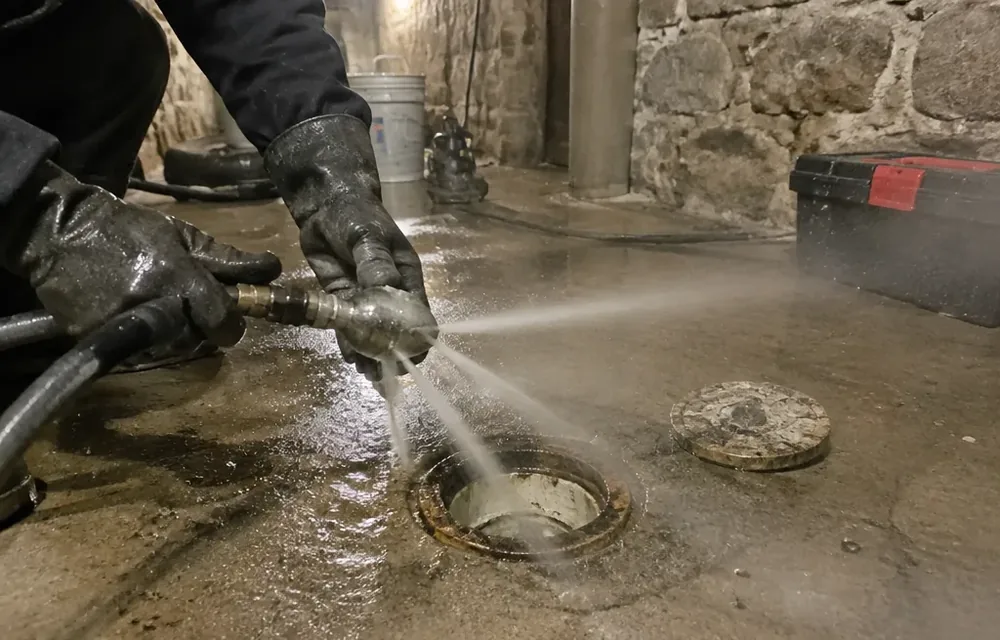
A clog that returns to the same line within months was never fully removed; a channel was bored through it and the coating or defect closed back in.
Related services
Main Sewer Line Cleaning
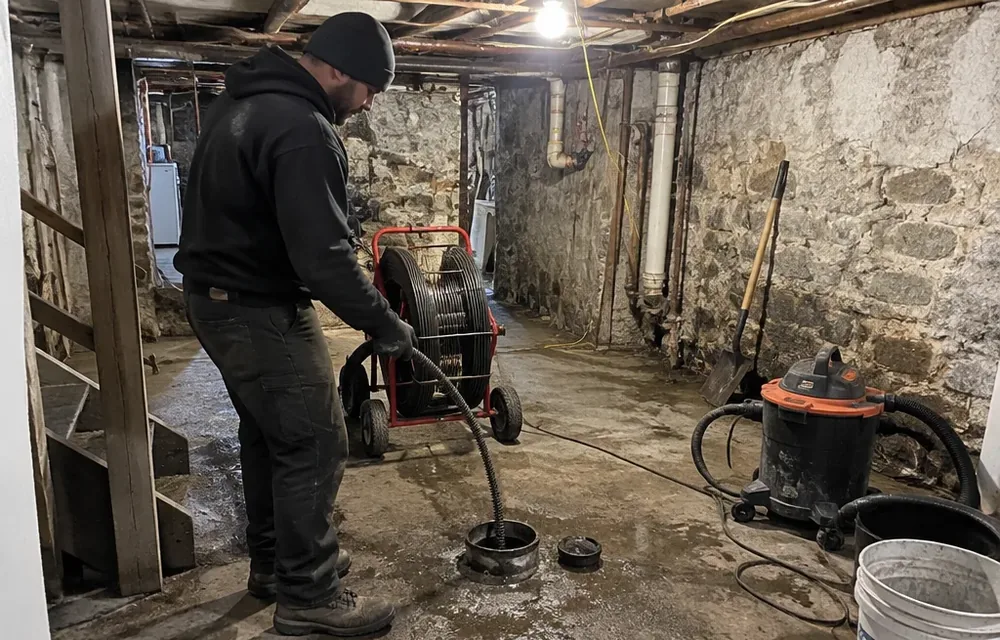
The lateral is the most expensive drain you own — a 60-to-100-foot clay run from your rowhouse to the street main, shared with stormwater, hunted by street-tree roots.
Sewer Camera Inspection
Every expensive sewer decision in Philadelphia — jet, repair, line, replace — depends on one thing: what the pipe actually looks like inside.
Hydro Jetting
A cable bores a hole through the clog.
Emergency Drain Service
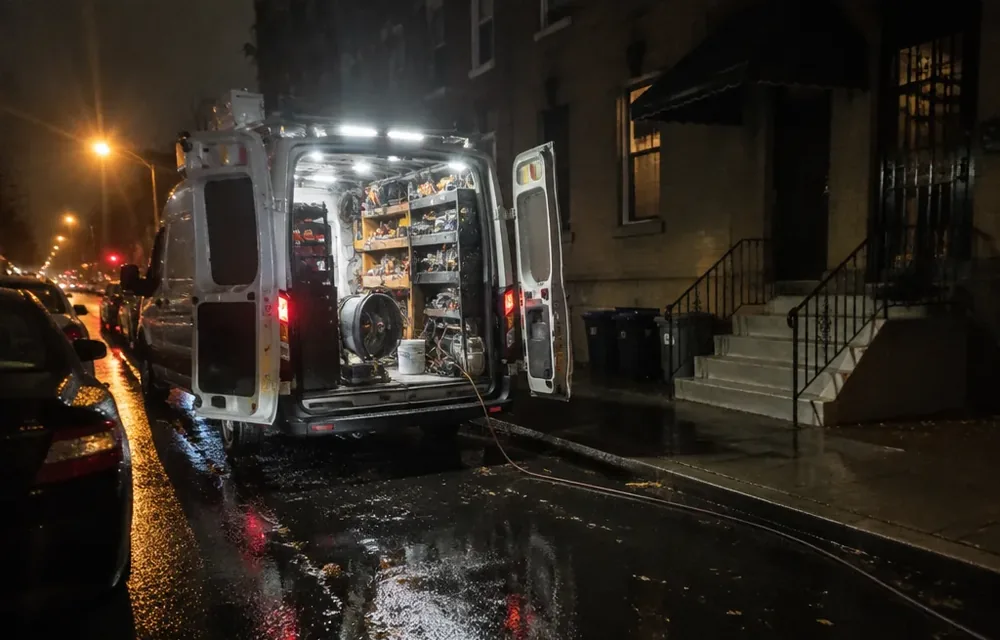
Sewage on the basement floor does not wait for business hours, and neither do we.
Rooter Service across Philadelphia and its suburbs
We provide rooter service in 32 Philadelphia-area towns. Local pages cover the housing stock and pipe materials specific to each area.
Philadelphia
Delaware County
- Upper Darby
- Media
- Yeadon
- Lansdowne
- Havertown
- Springfield (Delco)
- Chester
- Drexel Hill
- Ridley Park
- Swarthmore
- Darby
Montgomery County
- Norristown
- Abington
- King of Prussia
- Ardmore
- Bala Cynwyd
- Conshohocken
- Plymouth Meeting
- Jenkintown
- Cheltenham
- Willow Grove
- Lansdale
- Pottstown
- Ambler
- Horsham
- Hatboro