Drain cleaning and sewer service in Abington, Pennsylvania
Abington Township — Glenside, Abington proper, Ardsley, Roslyn, and Rydal — is the classic Montgomery County interwar suburb, built out hardest from the 1920s through the 1950s along Old York Road, Easton Road, and Susquehanna Road. That build window is the whole drain story. Pre-war streets sit on vitrified clay tile with mortared joints under a now-towering canopy of oaks and maples, while the big postwar tracts from roughly 1945 to 1960 fall squarely in the Orangeburg window: bituminized fiber pipe rated for 30 to 50 years and now decades past it. Abington’s heavy Montgomery County clay-loam holds winter water against foundations, so infiltration through open clay joints and deformed Orangeburg runs together with root intrusion as the dual winter failure mode from Crestmont to Meadowbrook.
- Montgomery County
- Montgomery County
- Same-day and 24/7
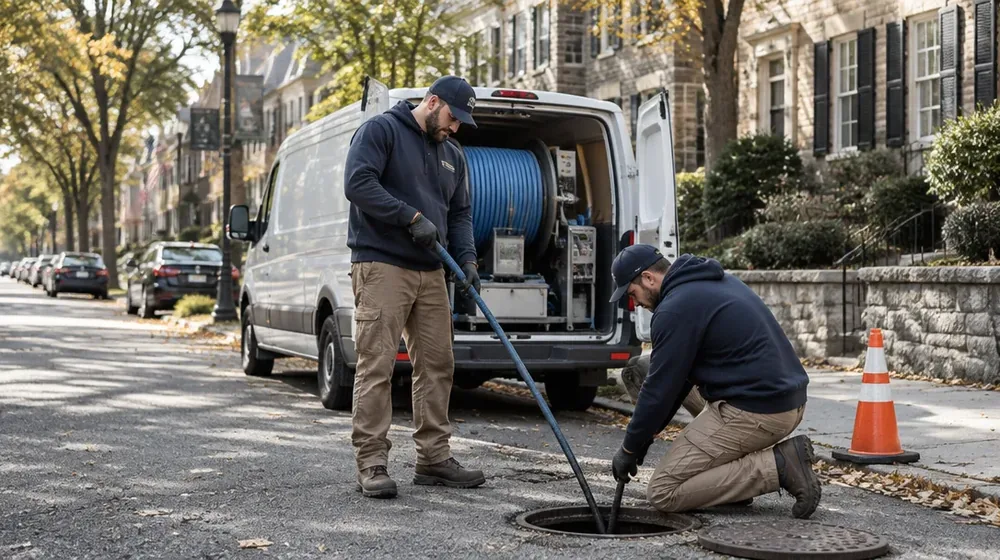
Abington at a glance
County: Montgomery County · Area: Montgomery County · Neighborhoods covered: 9 · Response: same-day visits usual; 24/7 for backups
Pipes you will find here: Vitrified clay tile on pre-1945 laterals, Orangeburg fiber pipe common on 1945–1960 tract laterals, cast iron interior drains in most homes built before 1975, PVC/ABS on post-1970 builds and replacements.
What goes wrong with Abington plumbing
Orangeburg tract laterals past design life
Abington’s postwar building surge coincides exactly with the Orangeburg era. The pipe blisters, delaminates, and goes oval in Montgomery County’s wet clay-loam, and it generally cannot be lined because a liner needs a round host. Discovery on a 1950s Abington ranch or Cape usually means budgeting a replacement rather than a repair, which is why a camera inspection before purchase in Ardsley or Roslyn carries outsized value.
Interwar clay under mature canopy
Glenside, Abington proper, and Rydal streets carry some of the heaviest mature oak and maple cover in Montgomery County, planted directly over 1920s–1930s clay-tile laterals. Root intrusion is chronic and multi-joint, so isolated spot repairs fail while neighboring joints keep growing. Full-run lining that seals every joint at once is the durable answer where the trees stay.
Clay-loam infiltration and sump load
Abington’s clay-loam sheds water slowly, and winter groundwater enters every open clay joint while sump basins in finished basements from Noble to Crestmont cycle hard. Laterals running half full of infiltration have no headroom left for household flow, producing the January backup that never appears in August.
Housing stock and pipe materials
Housing: Concentrated 1920s–1950s stock: stone and brick colonials, Cape Cods, and twins in Glenside, Ardsley, and Roslyn, with 1950s ranches and splits toward Rydal, Meadowbrook, and the Willow Grove line.
Likely pipe materials: Vitrified clay tile on pre-1945 laterals, Orangeburg fiber pipe common on 1945–1960 tract laterals, cast iron interior drains in most homes built before 1975, PVC/ABS on post-1970 builds and replacements.
Who is responsible for the pipe in Abington
In most Philadelphia-area jurisdictions the property owner is responsible for the sewer lateral from the building to the connection at the public main — including the portion running under the street. The exact split differs by city, so confirm yours with Abington's public works or wastewater department before assuming any of it is theirs.
Two things worth checking before you pay for anything: whether the city runs a lateral repair assistance or low-interest loan program, and whether your homeowner's policy carries a service line endorsement.
A closer look at Abington
The Orangeburg streets hiding inside a clay township
Abington Township reads as clay-and-roots country — Glenside, Abington proper, and Rydal with 1920s–1930s clay under tower oaks — but the postwar tracts of Ardsley, Roslyn, and parts of Meadowbrook fall squarely in the 1945–1960 Orangeburg window. Fiber pipe rated for 30 to 50 years is now 65-plus years old in Montgomery County clay-loam, blistered and oval.
The two materials need opposite answers: sound clay suits lining while failed Orangeburg needs replacement and generally cannot be lined. Camera identification of the actual pipe wall — not build year alone — decides the scope, and on Orangeburg streets the finding belongs in the purchase negotiation rather than discovered after closing.
Interwar canopy over mortared joints
The oaks and maples along Old York Road, Easton Road, and Susquehanna Road were planted over clay-tile laterals laid in short mortared segments, and eighty years of growth has colonized hub after hub. Multi-joint intrusion on a single camera run is the norm from Crestmont to Noble.
Because that canopy defines Abington’s streetcar-suburb streetscape, lining that seals every joint from inside while the trees stand is the standard durable answer. Sequential spot repairs fail in rotation as the next joint over keeps growing, at a multiple of one trenchless run.
Clay-loam infiltration and the January backup
Abington’s clay-loam sheds water slowly, holding winter groundwater against foundations and inside every open joint from autumn through spring. Sump basins in finished basements cycle hard while laterals run partially full of infiltration for months.
Household flow that clears fine in August then backs up in January with no new clog is the classic capacity presentation. Clearing cannot create headroom that infiltration has consumed — sealing sound clay joints or replacing failed Orangeburg is what restores it.
Where we work in and around Abington
Within Abington we cover Glenside, Abington proper (Old York Road), Ardsley, Roslyn, Rydal and Meadowbrook, Crestmont, Noble, North Hills, Willow Grove edge and the surrounding area. Same-day drain cleaning and rooter service is usually available across Abington, and dispatch runs around the clock for an active backup.
Nearby cities we also serve
What we do in Abington
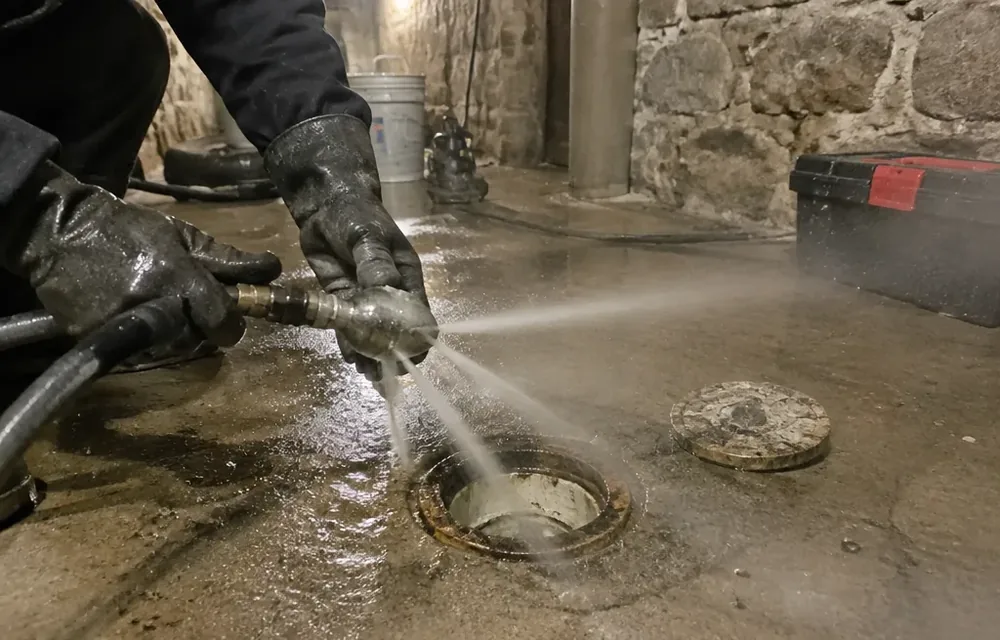
Hydro Jetting
A cable bores a hole through the clog.
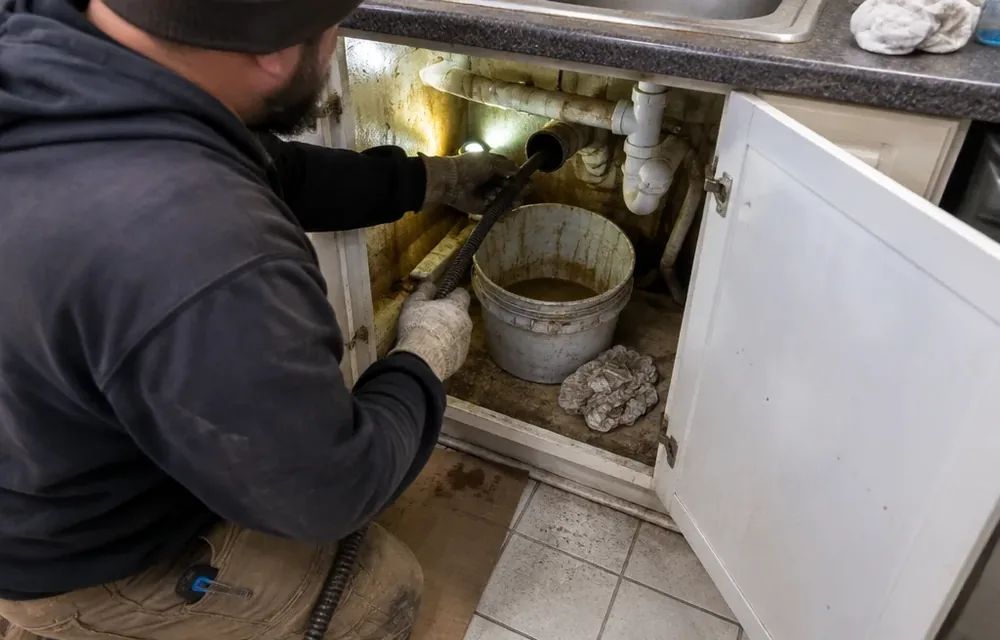
Drain Cleaning
A single slow sink is a nuisance.
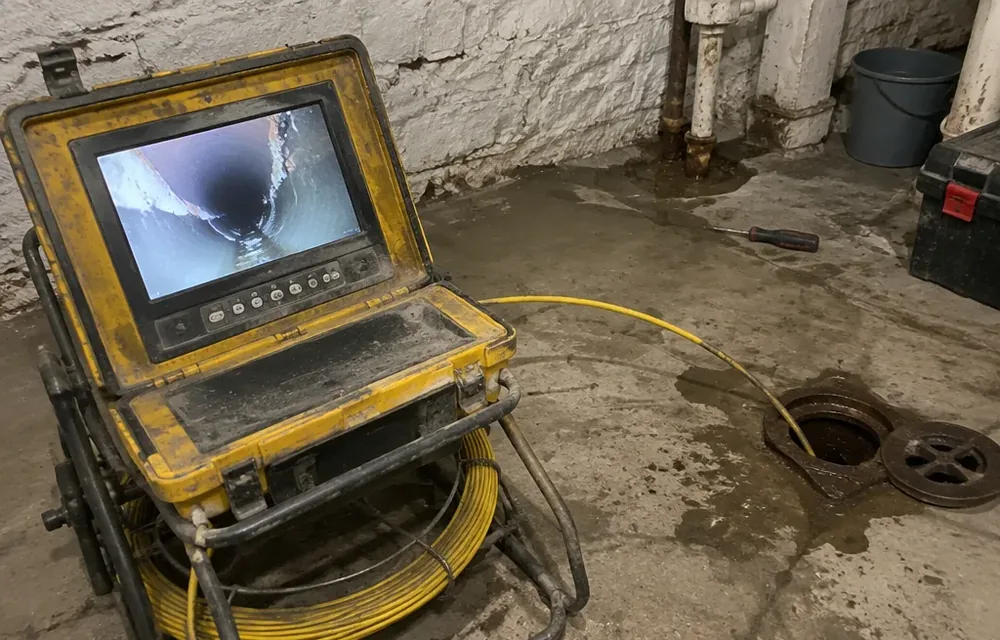
Sewer Camera Inspection
Every expensive sewer decision in Philadelphia — jet, repair, line, replace — depends on one thing: what the pipe actually looks like inside.
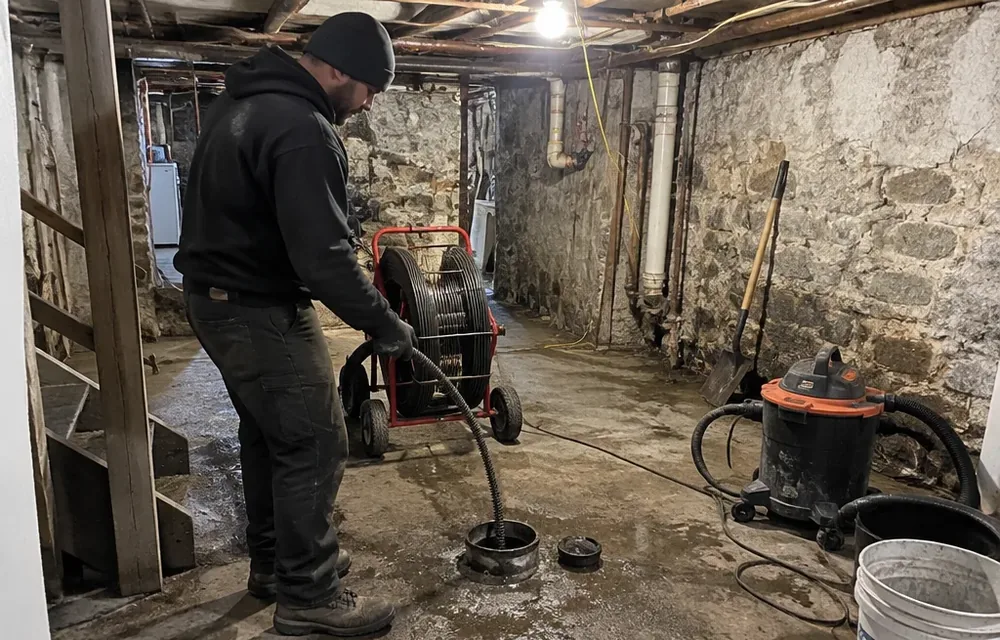
Main Sewer Line Cleaning
The lateral is the most expensive drain you own — a 60-to-100-foot clay run from your rowhouse to the street main, shared with stormwater, hunted by street-tree roots.
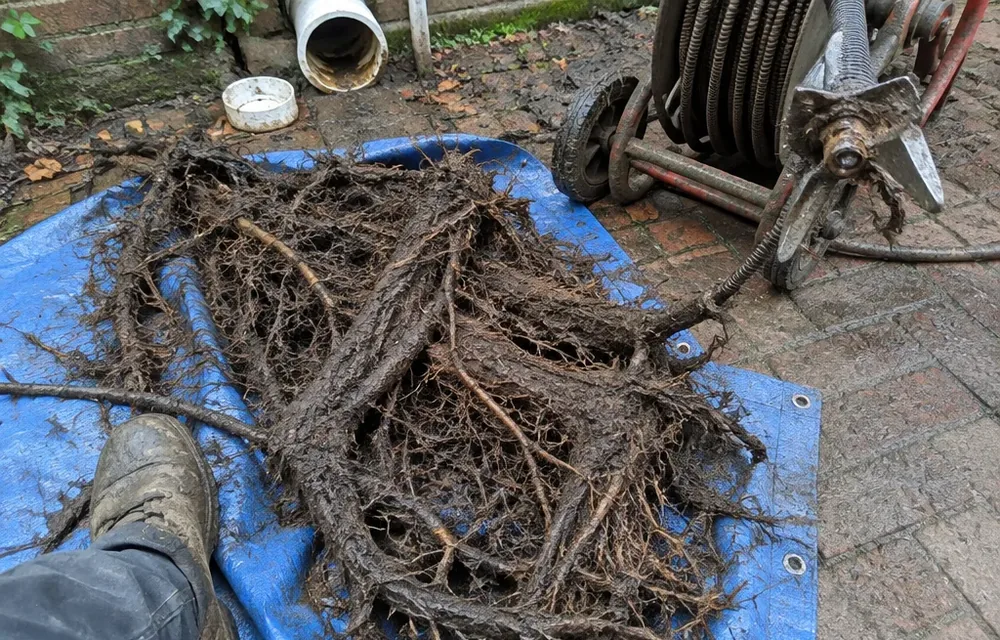
Rooter Service
Roots do not break your pipe to get in.
Kitchen Grease Line Jetting
Grease is the one clog material a cable cannot fix.
Bathroom Drain Cleaning
Bathroom clogs are almost never mysterious: hair, soap scum and toothpaste solids, wrapping around cast iron scale in a century-old branch arm.
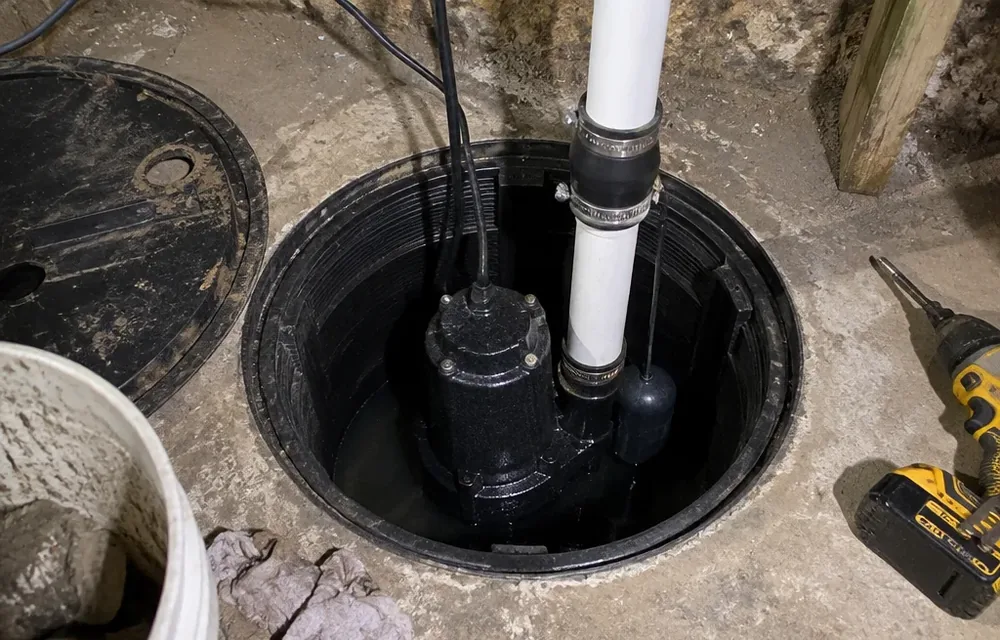
Basement Floor Drain Cleaning
The basement floor drain is the lowest opening in your rowhouse — which makes it the relief valve for every downstream restriction.
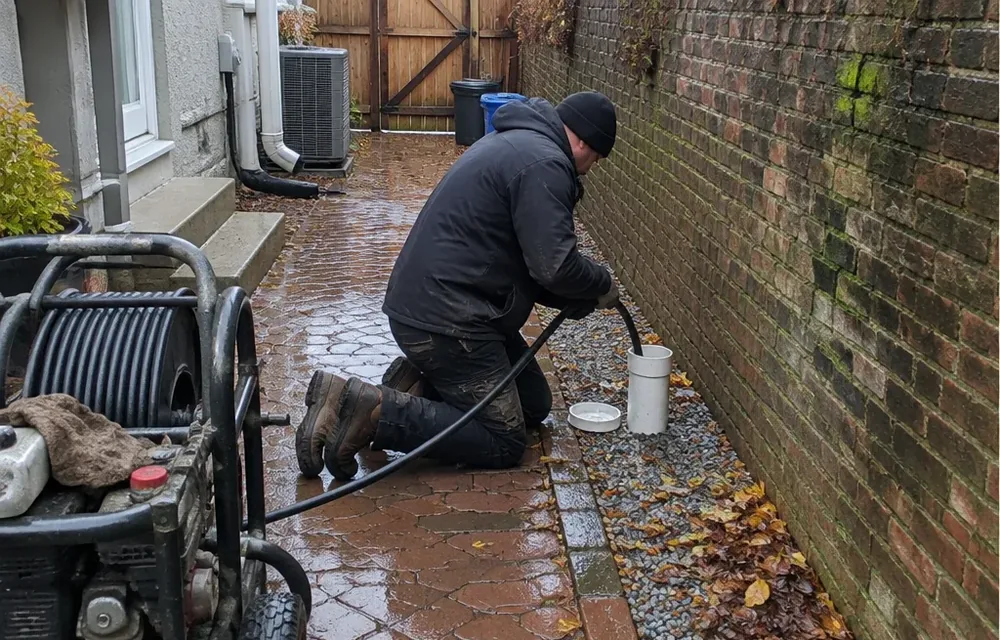
Storm Drain & Catch Basin Cleaning
A flooded loading dock or parking lot is rarely a rain problem.
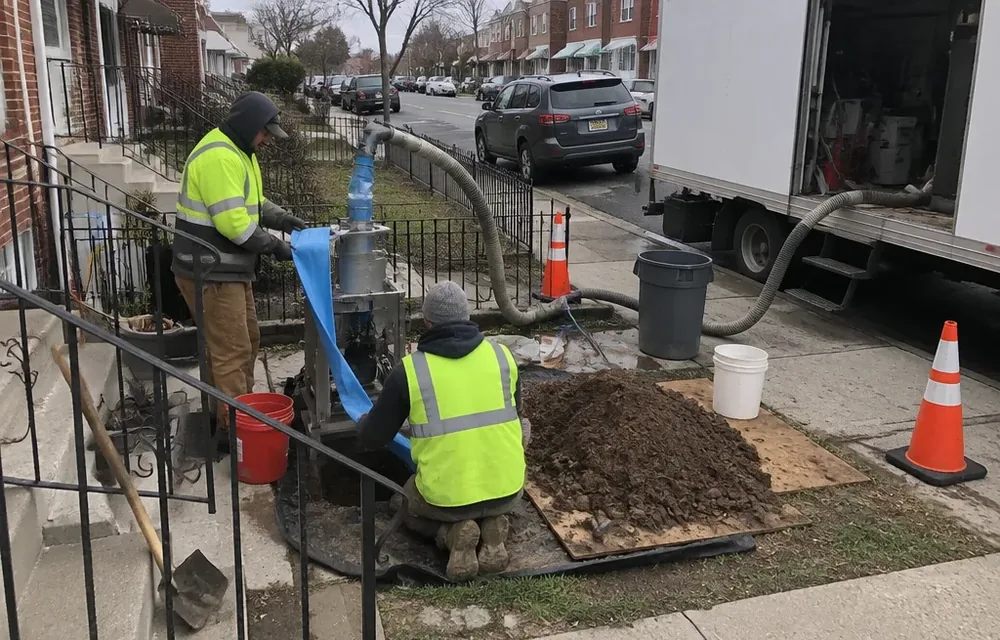
Commercial Hydro Jetting
Commercial drains fail on schedule — fryer volume, tenant count, storm season — so they should be serviced on schedule.
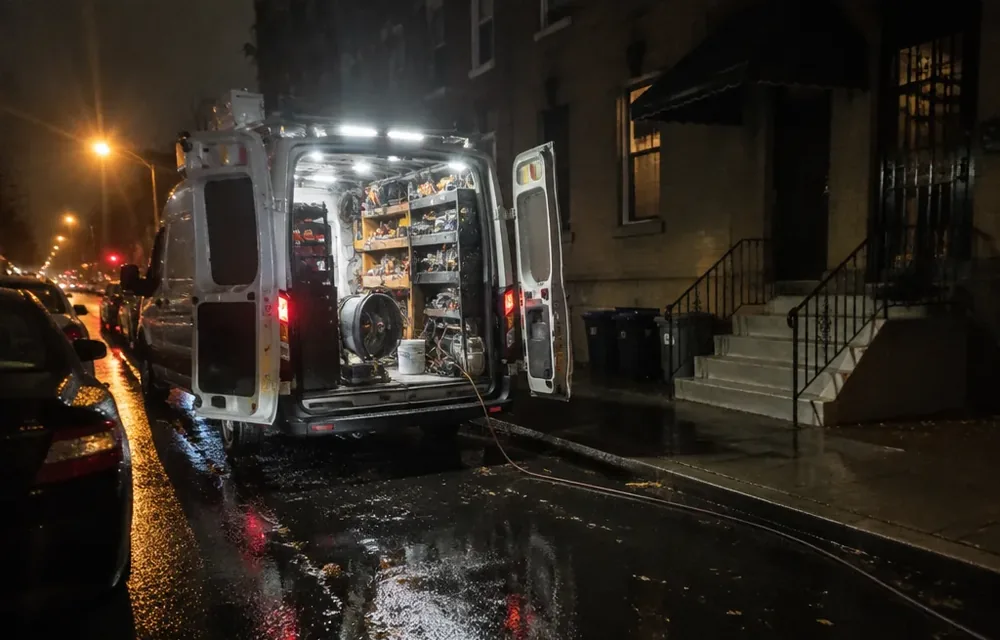
Emergency Drain Service
Sewage on the basement floor does not wait for business hours, and neither do we.

Restaurant Food-Service Jetting
A restaurant drain never fails at 2 p.
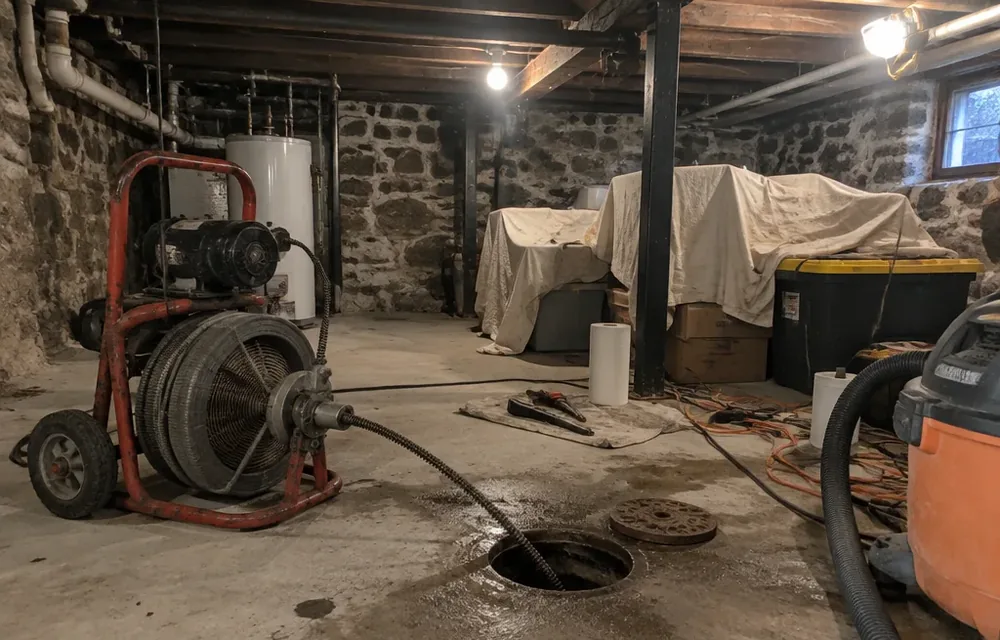
Property Manager Multifamily Drains
Nobody treats a rental drain like an owner does.
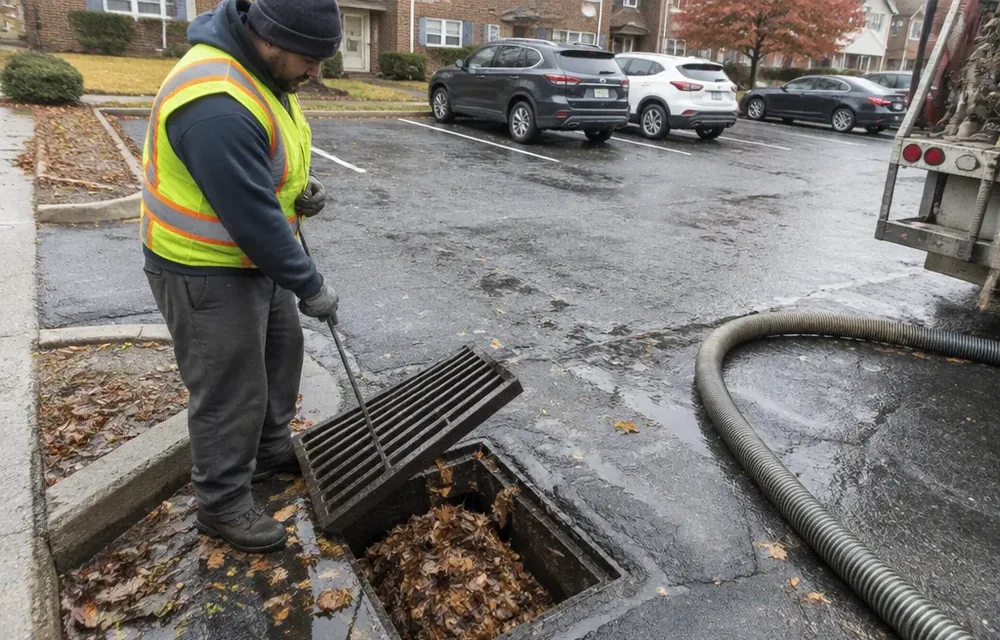
HOA Community Drains
HOA drain problems are never one owner's problem.
Guides and symptom checks matched to Abington's housing
Guides for this housing stock
- Tree Roots in Philadelphia Sewer Lines Guide — why clay joints open and what the camera should log
- Philly Rowhouse Laterals: Clay, Iron & More — which pipe your build era used and what each needs
- Camera Inspection Before Hydro Jetting Guide — when scoping must come before any pressure
Symptoms we trace in Abington
- Water Backing Up Into Fixtures — when one fixture fills another, act fast
- Same Clog Keeps Returning — repeat clogs mean coating or defect, not bad luck
- All Drains Slow — whole-house slowness means main line, not fixture
Abington plumbing questions
Does my Abington home have Orangeburg pipe?
If it sits in a tract built roughly 1945 to 1960 — common in Ardsley, Roslyn, and parts of Rydal and Meadowbrook — and the lateral was never replaced, the odds are meaningful. Orangeburg fiber pipe was rated for 30 to 50 years and every remaining run is now decades past it. Only a camera pass showing the actual pipe wall tells you, because the answer changes the scope from repair to replacement.
Why do Abington backups cluster in winter?
Montgomery County clay-loam around Glenside, Crestmont, and Noble holds winter groundwater high, and it enters open clay joints and deformed Orangeburg seams for months. The lateral runs partially full of infiltration all season, so household flow that clears fine in August backs up in January. Sealing sound clay by lining — or replacing failed Orangeburg — restores the headroom.
Can I keep my Glenside oaks and fix the line too?
Yes, and lining is how. The towering oaks and maples over 1920s–1930s clay in Glenside, Abington proper, and Rydal stand directly over mortared joints, and removal neither suits the streetscape nor repairs joints already opened. CIPP lining seals every joint from inside while the canopy stands.
Cast iron or clay — which fails first in Abington?
They fail together on different symptoms. Clay admits roots at the hubs outside while cast iron scales shut along the invert inside, so the classic Abington colonial shows both: root masses on the outside run and whole-house slow drainage from the scaled stack inside. Camera both segments before choosing a scope, because each needs its own answer.
Is jetting or cabling right for Abington clay?
Cabling punches a path through roots and scale and the snag returns within weeks. High-pressure jetting with a root head actually scours the wall and flushes silt from settled joints, which is why Abington clay with root-and-silt loading responds durably to jetting plus a lining plan rather than to clearing alone.