Drain Gurgling in Philadelphia: What That Sound Means
Gurgling is air being forced through water it should not have to move through. In Philadelphia rowhouses it almost always means a partial blockage downstream of the fixture or a vent that can no longer balance pressure, and which fixtures gurgle together tells you which one you have.
- Symptom guide
- Philadelphia area
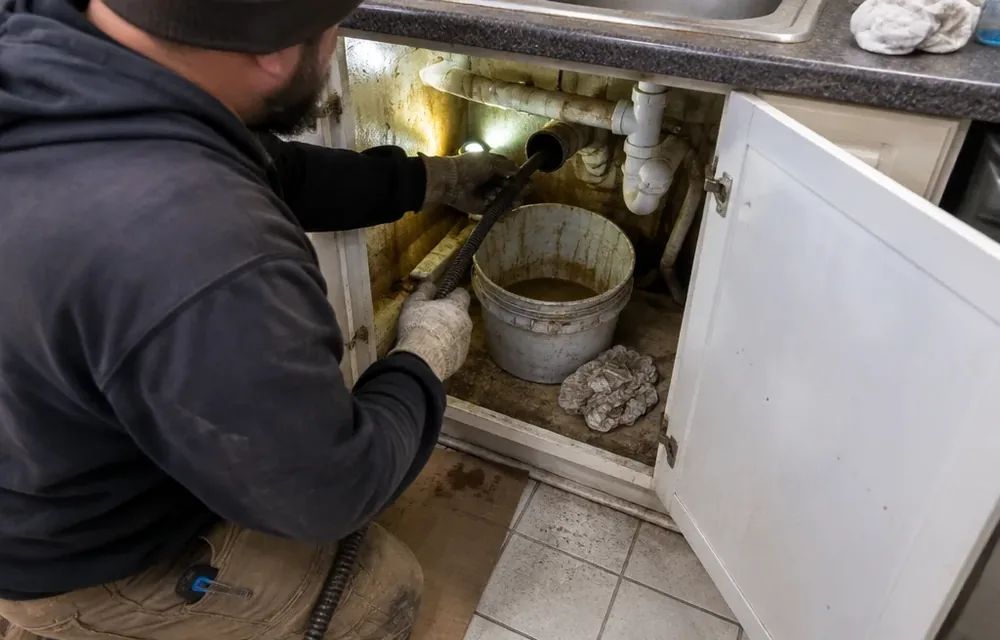
Understanding drain gurgling
What gurgling means inside the pipe
Every drain relies on smooth air movement as much as on gravity. When water leaves a fixture it pushes air ahead of it and pulls air behind it, and the vent stack on your roof exists to supply that makeup air. When the vent path is open and the pipe is clear, drainage is silent because air arrives through the vent instead of bubbling up through trap water.
A partial blockage changes the geometry. Wastewater squeezing past a narrowed section acts like a piston, compressing the air ahead of it and dragging a vacuum behind it. That pressure wave escapes through the nearest trap seal, which is the glug-glug you hear from a tub or basement sink. In 1890s to 1940s rowhouses the narrowing is usually cast iron scale roughening a stack or branch arm, or a grease collar in a kitchen line that has been building since long before you owned the house.
A vent fault produces the same sound by a different route. If the vent is blocked by a bird nest, leaves, or a cap of snow and ice, the draining water cannot draw makeup air from the roof, so it pulls air through the nearest trap instead. Philadelphia rowhouses are prone to this because many share party-line vent runs with odd tie-ins from a century of remodels, and a single blocked termination can serve two bathrooms. Gurgling that appears in cold snaps and vanishes in a thaw is a vent signature, not a clog signature.
How to narrow it down safely at home
Run the isolation test before you touch any tool. Fill the fixture you suspect, release it, and stand quietly at every nearby drain with the room silent. If only one fixture gurgles and everything else runs normally, the restriction sits in that fixture trap arm within a few feet. If flushing an upstairs toilet makes a first-floor tub or basement floor drain gurgle, the restriction is downstream of where those branches join, which makes it a building-drain or lateral problem on a shared Philadelphia block.
Use your nose and your eyes alongside your ears. A gurgle with no odor and normal drainage speed is often early-stage and worth watching for a week. A gurgle plus a rotten-egg or musty smell means a trap seal is being siphoned dry or sewer gas is pushing past a compromised seal, and that deserves same-week attention. Look at the water level in the toilet bowl after a gurgle episode: a bowl that sits lower than usual confirms the trap is losing its seal to pressure swings.
Check the vent side without climbing anything. After a cold night, look at the roof vent termination from the street with binoculars for a visible cap of frost or debris. Inside, run a full tub and watch whether the gurgle starts immediately or only near the end of the drain-down; an immediate gurgle points to a restriction close by, while a late gurgle as the tub empties points to vent starvation under sustained flow. Note the pattern down, because a technician who hears exactly when the sound starts will diagnose in minutes what guessing takes weeks to find. The clog symptom diagnostic walks through the same fixture-by-fixture logic.
What fixes it, and when to call now versus wait
A single gurgling fixture that still drains at full speed can wait for a scheduled visit. Start with the harmless steps: plunge correctly with the overflow blocked by a wet cloth, pull and clean the pop-up or strainer where hair and soap collect, and refill every infrequently used trap in the house, including the basement floor drain and any laundry standpipe. If the gurgle disappears for weeks, it was likely a dry trap or a minor vent burp after heavy rain pressurized the combined-sewer main outside.
Call promptly when the sound crosses fixtures or brings company. Toilet flushes that gurgle the tub, a washing machine cycle that makes the kitchen sink talk back, or any gurgle paired with slow drainage across two rooms means the restriction is in the building drain or the clay lateral to the street, and that is past plunger range. See drain cleaning for how a branch clog is cleared and main sewer line cleaning for the deeper line, because they are different jobs at different prices.
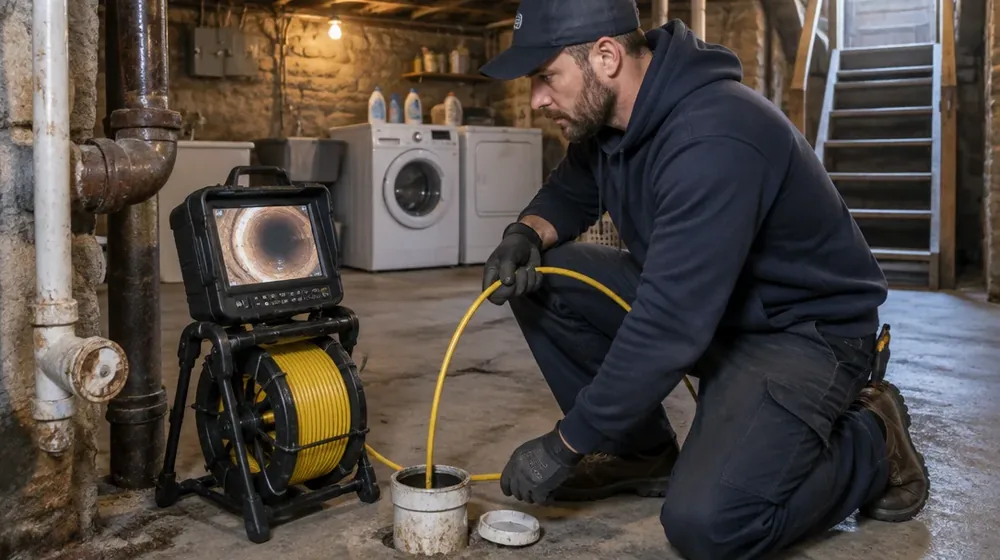
Treat gurgling as urgent the moment sewage odor turns strong, water visibly rises anywhere, or the pattern started during or just after heavy rain. Rain-linked symptoms on a combined-sewer block mean the public main is surcharging your lateral at the same time your line is already narrowed, and that combination produces basement backups with little further warning. If the same line has gurgled and been cleared twice before, skip another blind clearing and ask for a sewer camera inspection first, since repeat symptoms mark a pipe defect rather than a fresh clog. For the fuller picture of what sits in old city pipe, read rowhouse laterals: clay, cast iron and Orangeburg.
Drain Gurgling: questions
Why does my tub gurgle when I flush the toilet?
Because the two fixtures share a drain path and something downstream is narrowing it. The flush sends a slug of water past the restriction, and the displaced air escapes up through the tub trap. When fixtures affect each other this way the problem is past both fixtures, not in either one, which is why plunging the tub never fixes it.
Can a blocked vent cause gurgling without a clog?
Yes, and it is common in winter. A vent capped with frost, a nest, or debris starves the drain of makeup air, so draining water pulls air through trap seals instead. Vent-only gurgling often arrives suddenly in a cold snap, affects fixtures high in the house first, and clears when the blockage melts or is removed from the termination.
Is drain gurgling an emergency?
A lone gurgle with normal drainage can wait for a scheduled visit. It becomes urgent when multiple fixtures gurgle together, when sewage odor accompanies the sound, or when water rises in any fixture. Those patterns mean a main-line restriction or a lost trap seal, and both worsen with every gallon you keep using.
Services that fix this
Drain Cleaning
A single slow sink is a nuisance.
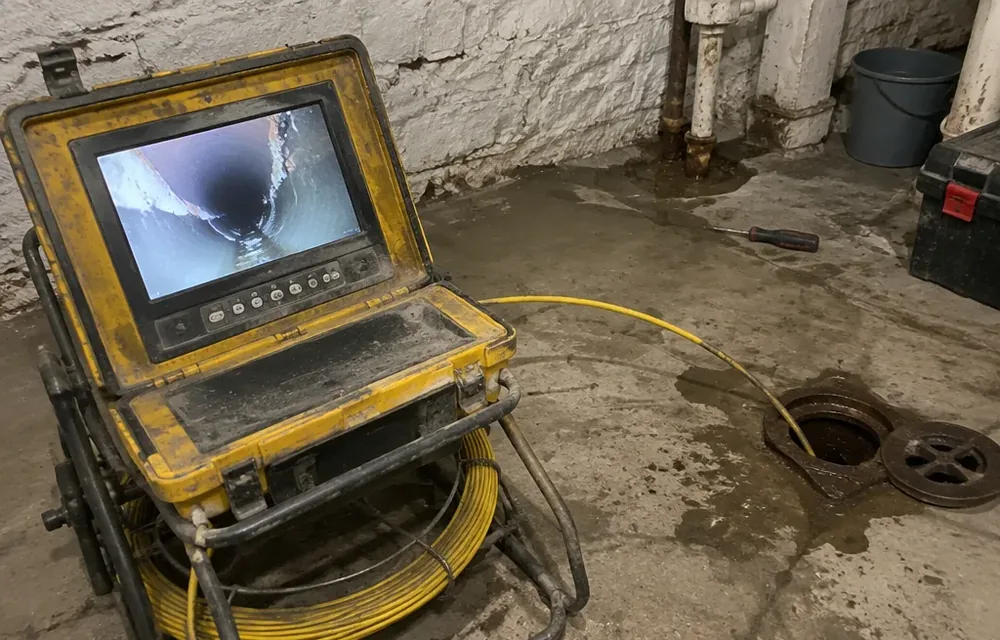
Sewer Camera Inspection
Every expensive sewer decision in Philadelphia — jet, repair, line, replace — depends on one thing: what the pipe actually looks like inside.
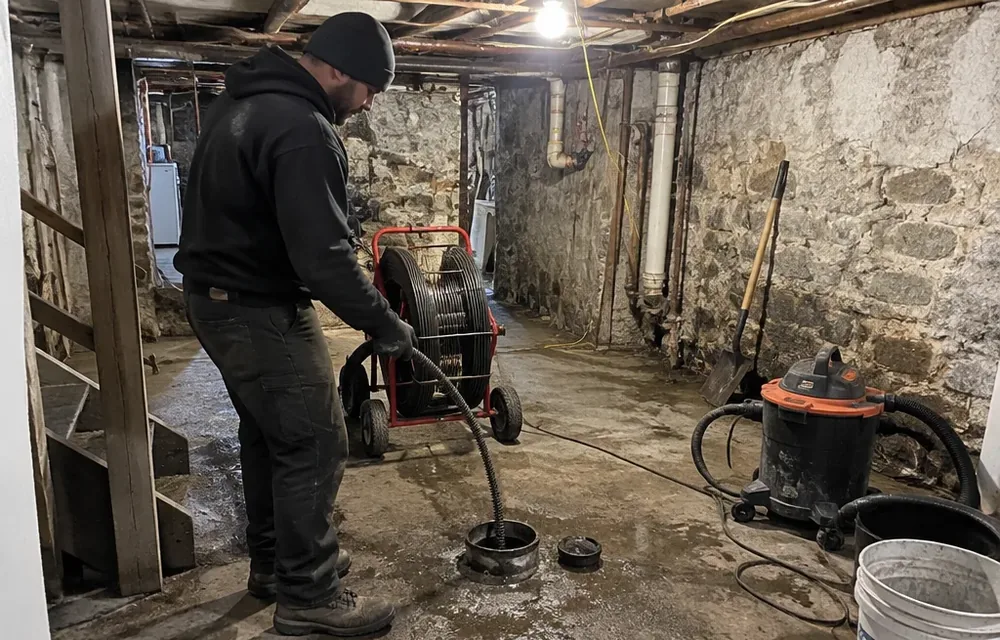
Main Sewer Line Cleaning
The lateral is the most expensive drain you own — a 60-to-100-foot clay run from your rowhouse to the street main, shared with stormwater, hunted by street-tree roots.
Guides on this symptom
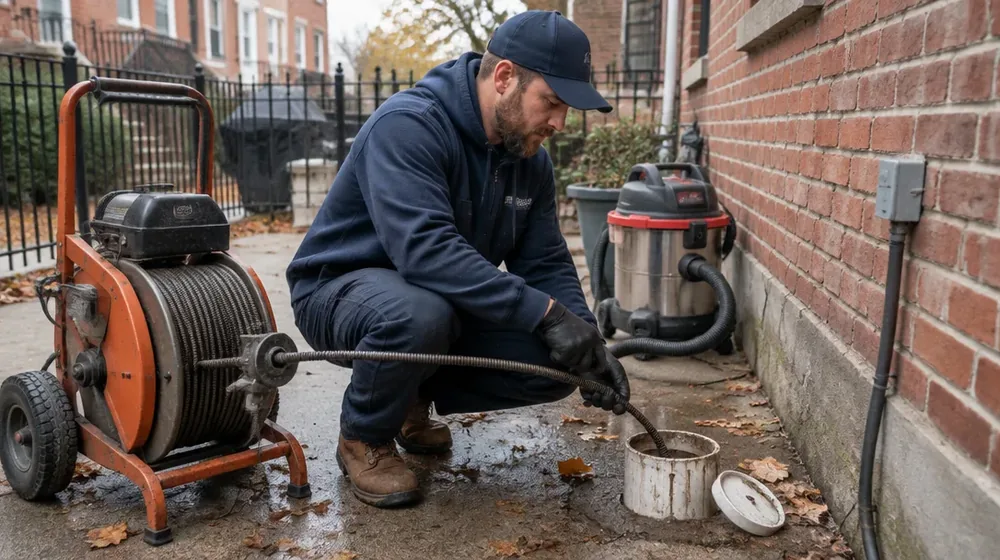
How to Unclog a Main Sewer Line Safely in Philly
When a main sewer line blocks, every drain in the house shares one failing exit. Safe homeowner triage means stopping …
What Is Sewer Camera Inspection? Philly Guide
A sewer camera inspection sends a small waterproof camera through a drain or sewer line on a push rod or crawler, reco…