Main Sewer Line Cleaning in Philadelphia — Rowhouse Laterals Done Right
The lateral is the most expensive drain you own — a 60-to-100-foot clay run from your rowhouse to the street main, shared with stormwater, hunted by street-tree roots. Clearing it properly means reaching the main, not just the first obstruction.
- 2 to 3 hours
- Philadelphia Area
- 7 days a week
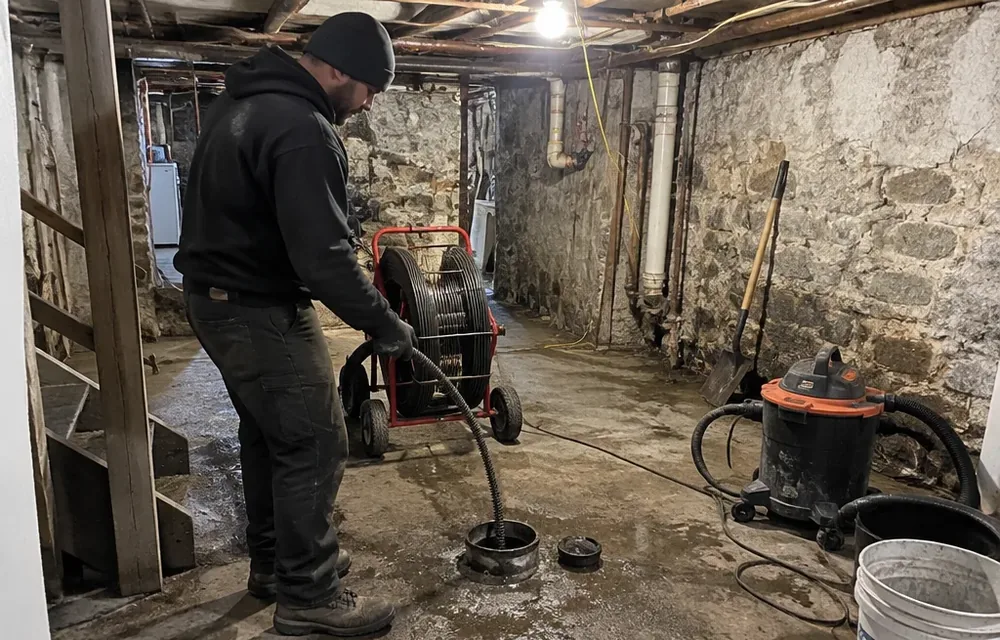
Signs you may need main sewer line cleaning
Most people arrive here describing a symptom rather than naming a service. These are the three that point this way.
Upstairs flush backs up the basement drain
Gravity-driven backup at the lowest opening means the restriction sits in the building drain or the clay lateral to the street. The full run to the city main needs clearing and verification.
Backups arrive with every heavy rain
Rain-linked failure is the combined-sewer lateral signature: storm flow surcharges a line already narrowed by roots, grease or grit. Clearing plus camera diagnosis breaks the cycle.
Sewage odour in the cellar or damp yard strip
Persistent cellar odour or a spongy yard strip above the lateral path suggests a weeping joint or break feeding the problem. Clearing restores flow; footage locates the defect behind it.
How a Philadelphia lateral is built
Most rowhouses connect through a 4-inch lateral — pre-1920 clay tile on older blocks, cast iron through the foundation wall, sometimes Orangeburg mid-century — running under the basement slab, the front yard or areaway, the sidewalk, and into the combined city main at the street.
Because the system is combined, that same lateral carries sanitary flow plus roof, yard and basement drainage. Storm grit rides every rain into the pipe and settles wherever the grade flattens. Seasonal freeze-thaw and shifting soil crack older clay and cast iron, letting groundwater flood the lateral, while kitchen grease coats over the grit. Roots enter at the joints. Each layer narrows the next.
Lateral length is the cost driver. A deep South Philly rowhouse set back from a wide street can run 80 to 100 feet of buried pipe. Clearing 90 feet of root-loaded clay is simply a bigger job than clearing 30.
Symptoms that point at the lateral
Multiple fixtures failing together, following gravity: upstairs flush backs up the basement drain, the washer cycle fills the shower pan, toilets bubble when sinks drain.
Rain-linked backups. Dry-weather flow passes; the first heavy storm surcharges the combined main and your restricted lateral at once. If backups track the forecast, the restriction is downstream, not in a fixture arm.
A cable that stops hard at the same footage every visit. That repeatable stop is an offset joint, a belly, or root mass at a clay joint — and it argues for camera verification, not a fourth blind cabling.
Gurgling from the basement floor drain when upper fixtures run. That drain is the lowest opening and the system relief point; it complains first.
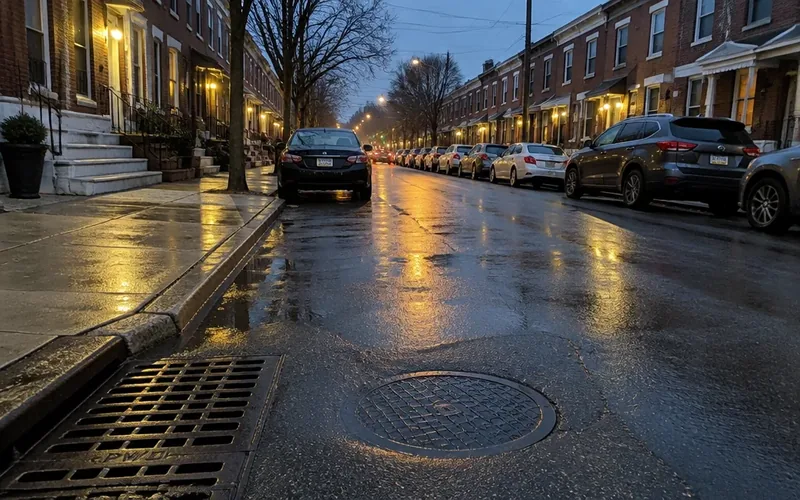
Cable vs. jetting on the lateral
A cable with a root-cutting head opens a root-blocked lateral fast and affordably. For a first-time blockage with no history, cabling plus a camera check is often the right spend.
Jetting earns its premium when the wall is coated — grease over grit, scale inside cast iron transitions, fine root hair across many joints — or when the same lateral clogs repeatedly. A jetted lateral buys years between calls; a cabled coated lateral buys months. See hydro jetting for the honest comparison.
Neither tool fixes shape problems. Bellies, offsets and collapses clear and then re-clog on schedule. That pattern — same footage, same season — is the camera talking to you. See sewer camera inspection.
Our lateral cleaning process
Read the fixture pattern
Confirm lateral vs. fixture blockage before quoting, so you pay lateral prices only for a lateral problem.
Open from the best access
Basement or exterior cleanout preferred. No cleanout? We price pulling a toilet or installing a cleanout honestly — many rowhouses need one and it pays for itself in a single avoided toilet pull.
Cut, then flush
Root-cutting head to open the bore, then high-flow flushing to carry debris to the city main rather than leaving it to re-lodge.
Camera-verify to the main
Post-clearing footage confirming the full run is open and documenting joints, bellies or breaks for the record.
Report condition, not just clearing
Root footage marks, grease zones, belly locations — with a maintenance interval if the pipe is sound and a repair conversation if it is not.
Roots, PWD, and whose pipe is whose
You own the lateral from the house to the connection at the city main — including the sidewalk and curb segment. PWD owns the main itself. Cleaning within your lateral needs no permit; excavation beyond the curb involves PWD coordination and street-opening requirements.
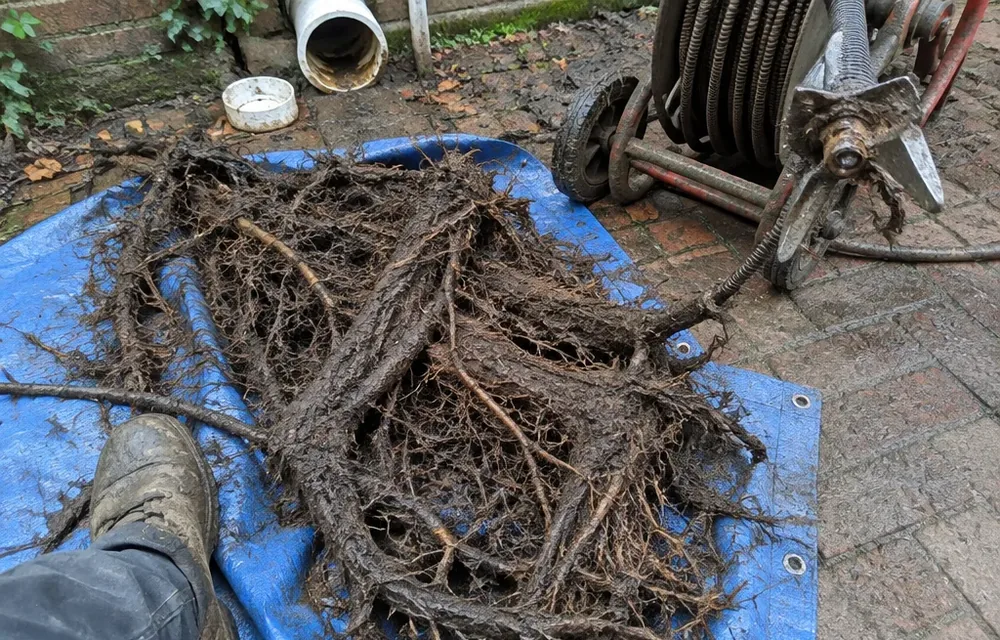
London plane and silver maple street trees do most of the intruding. You cannot root-proof a weeping clay joint by clearing alone; fine roots return on a one-to-three-year cycle depending on species, distance and joint condition. Scheduled maintenance keeps a sound-but-gappy lateral working indefinitely.
When roots keep winning — same joints, shortening intervals — the joint is widening and the conversation shifts from rooter service to repair or lining. The camera footage makes that call evidence-based.
Pricing, plainly stated
Lateral clearing in Philadelphia typically runs $249 to $650: cabling at the low end, jetting or long root-loaded runs at the high end. That is the going band for sewer and drain cleaning on the lateral itself — missing cleanouts, after-hours dispatch, and extreme footage move the number, always disclosed before work starts.
A maintenance interval on a root-prone but sound lateral — cutting plus camera check every one to two years — costs a fraction of one emergency backup with wastewater on a finished basement floor. Ask for the interval in writing with footage marks, so any future contractor starts from knowledge.
Frequently asked questions
How much does main sewer line cleaning cost in Philadelphia?
Typically $249 to $650 depending on method, lateral length, access and cause. Simple cabling through a good cleanout sits low; jetting a long grease-and-grit lateral or heavy root cutting sits high. After-hours dispatch adds a premium.
Why does my sewer back up every time it rains?
Combined sewers carry stormwater and sanitary flow together. Heavy rain surcharges the public main while storm grit re-packs restrictions in your lateral. Rain-linked backups point at a downstream restriction — roots, belly or grease — that only fails under storm flow.
Who is responsible for the sewer lateral in Philadelphia?
The property owner owns and maintains the lateral from the house to the city main, including under the sidewalk. PWD owns the public main. Cleaning your lateral needs no permit; digging beyond the curb does.
How often should a root-prone lateral be cleaned?
Most clay laterals near mature street trees land on a one-to-two-year cutting interval with periodic camera checks. Jetting stretches the interval where grease or grit is the co-factor. Shortening intervals mean the joints are widening — time to scope.
Can you clear my line if I have no cleanout?
Yes — typically by pulling and resetting a toilet, priced honestly with a new wax ring. If your rowhouse lacks a cleanout, installing one is worth discussing; it makes every future visit faster and cheaper.
Does cleaning fix an offset joint or belly?
No. Clearing restores flow; it does not straighten pipe. Offsets and bellies re-clog on schedule until repaired. If the cable stops at the same footage every time, stop paying for clearing and pay for a camera instead.
What does main sewer line cleaning include?
Access from your cleanout, root cutting or debris clearing along the full lateral to the city main, high-flow flushing toward the main, and camera verification with footage marks — a main sewer line cleaning done properly ends with proof, not just flow. Typically $249 to $650; toilet-pull access and after-hours add.
Guides that cover this in more depth
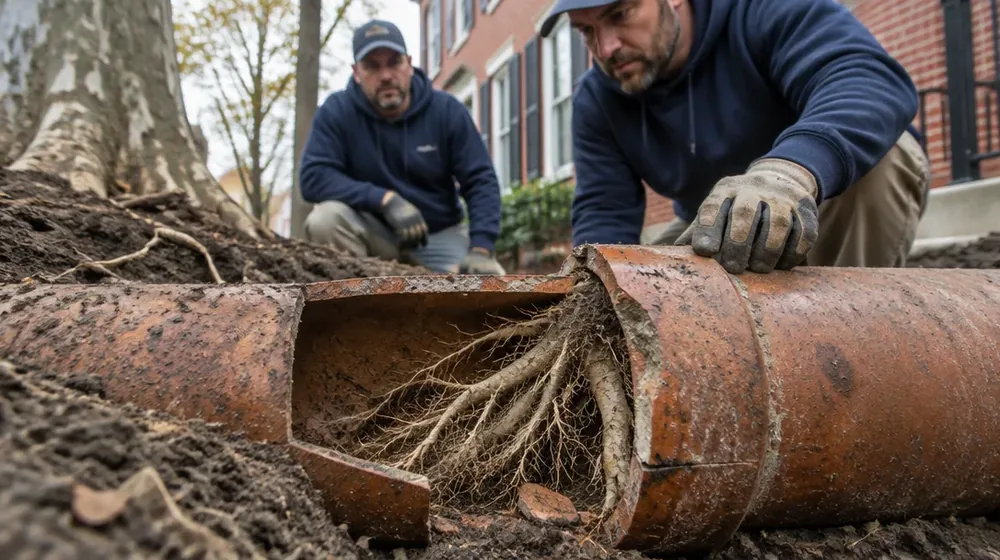
Tree Roots in Philadelphia Sewer Lines Guide
Roots do not break into sound pipe. They find the clay joint that is already leaking, thicken in the flow, and become …
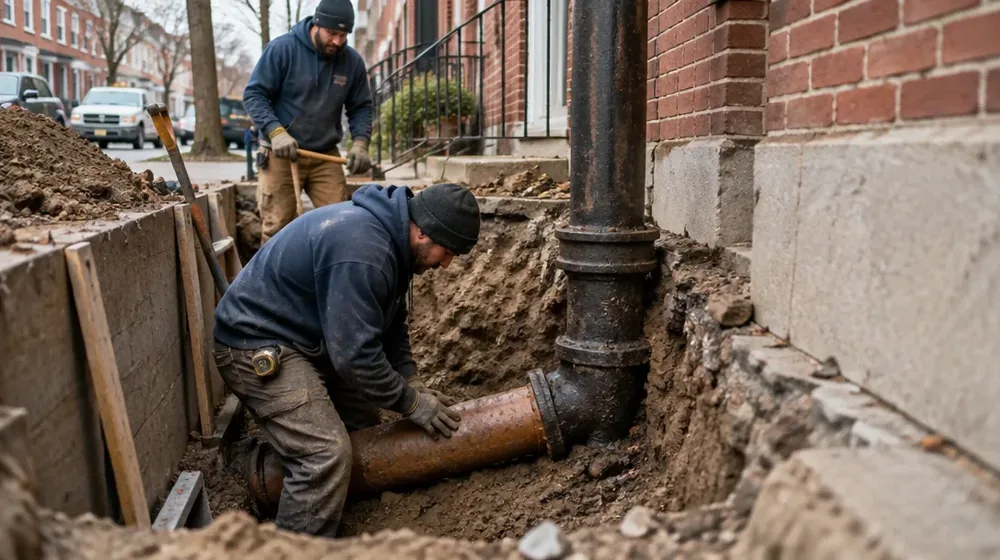
Philly Rowhouse Laterals: Clay, Iron & More
The year your Philadelphia rowhouse was built predicts what is buried in front of it. Clay joints admit roots, cast ir…
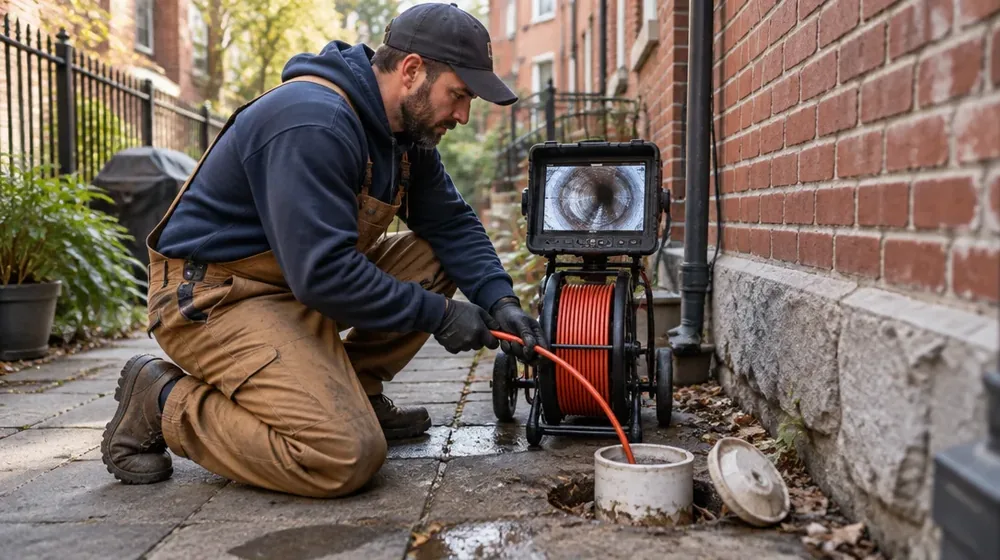
Camera Inspection Before Hydro Jetting Guide
Nobody can price pressure honestly without seeing the pipe first. On Philadelphia laterals of unknown age and material…
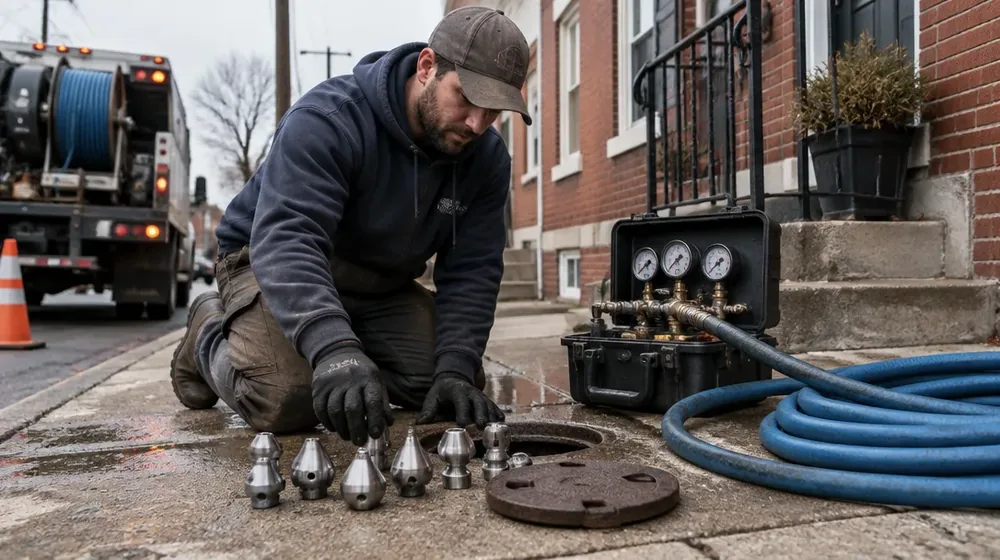
How Hydro Jetting Works: PSI, GPM & Nozzles
A hydro jetter is a pump, a hose, and a nozzle working as one system. The pump builds pressure, the hose delivers it i…
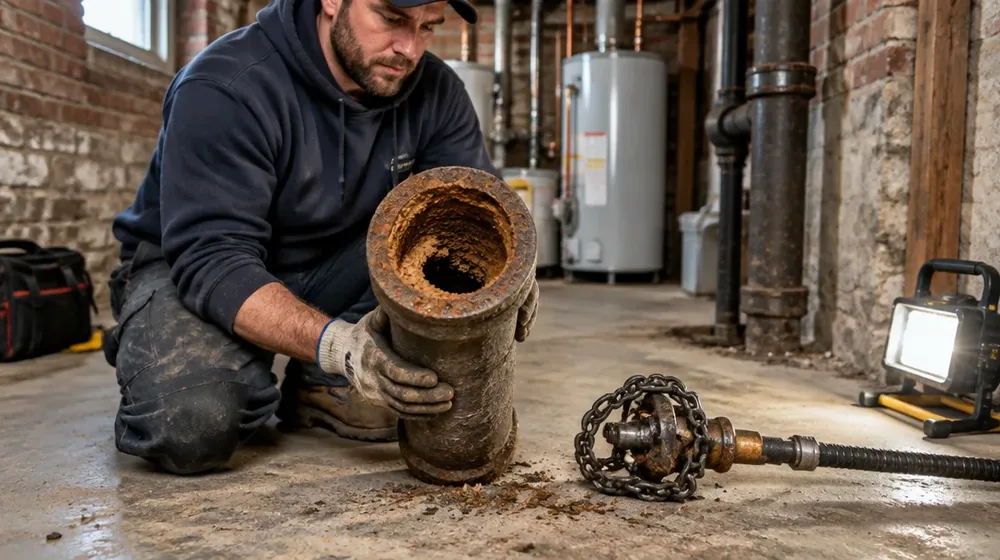
Cast Iron Descaling vs Jetting: Philly Homes
Inside every aging cast iron stack two processes run at once: scale builds inward and corrosion eats outward. Jetting …
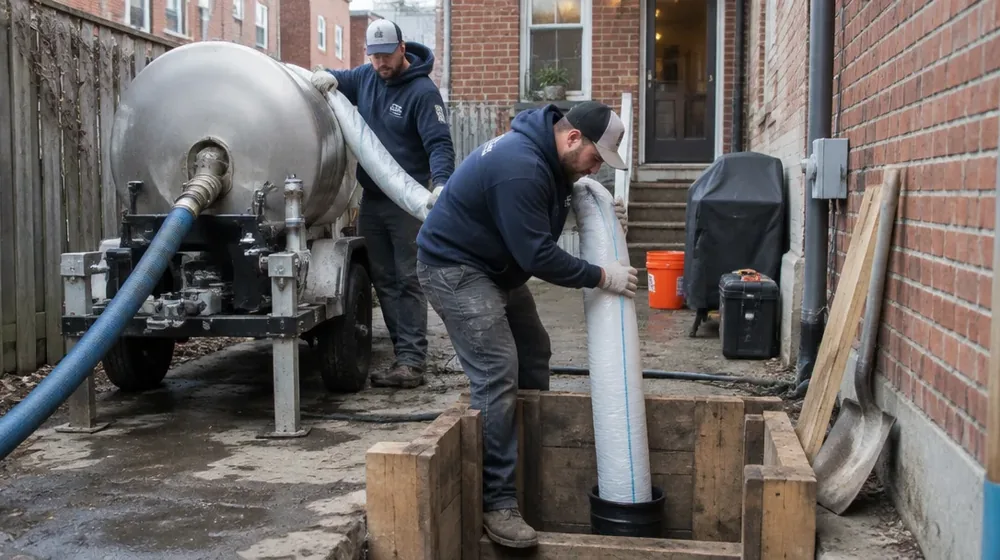
Trenchless Sewer Repair After Jetting Guide
Trenchless repair fixes the pipe without opening the whole street, but the liner or bursting head can only work with a…
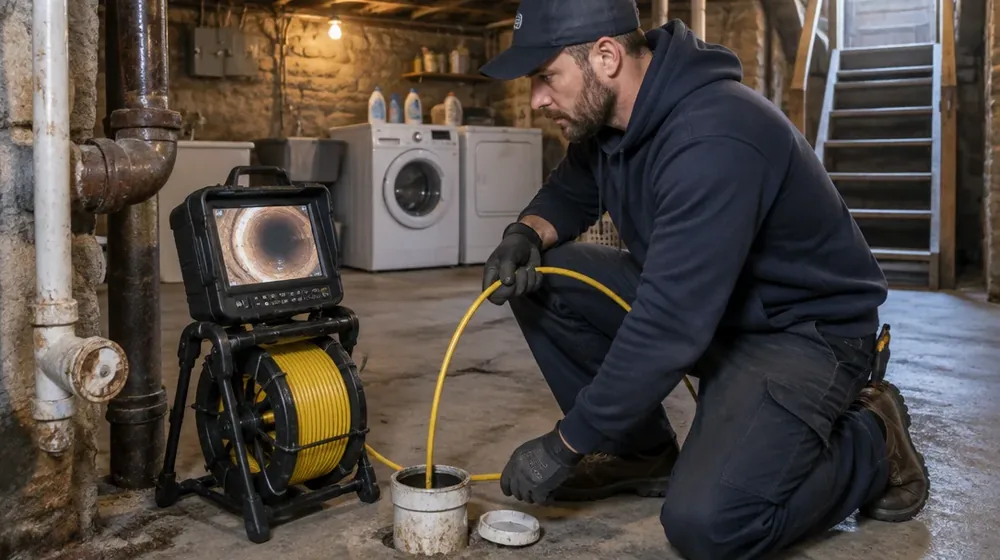
What Is Sewer Camera Inspection? Philly Guide
A sewer camera inspection sends a small waterproof camera through a drain or sewer line on a push rod or crawler, reco…
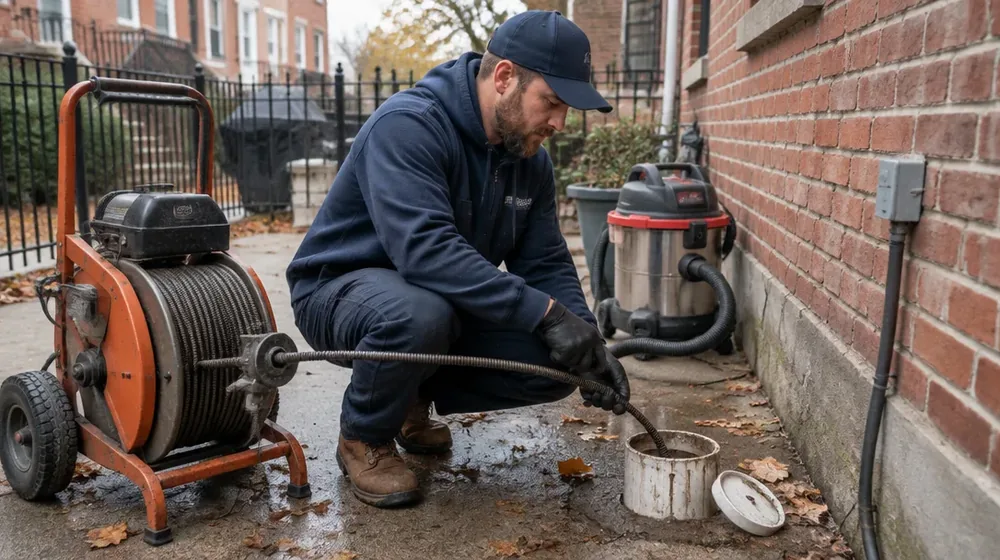
How to Unclog a Main Sewer Line Safely in Philly
When a main sewer line blocks, every drain in the house shares one failing exit. Safe homeowner triage means stopping …
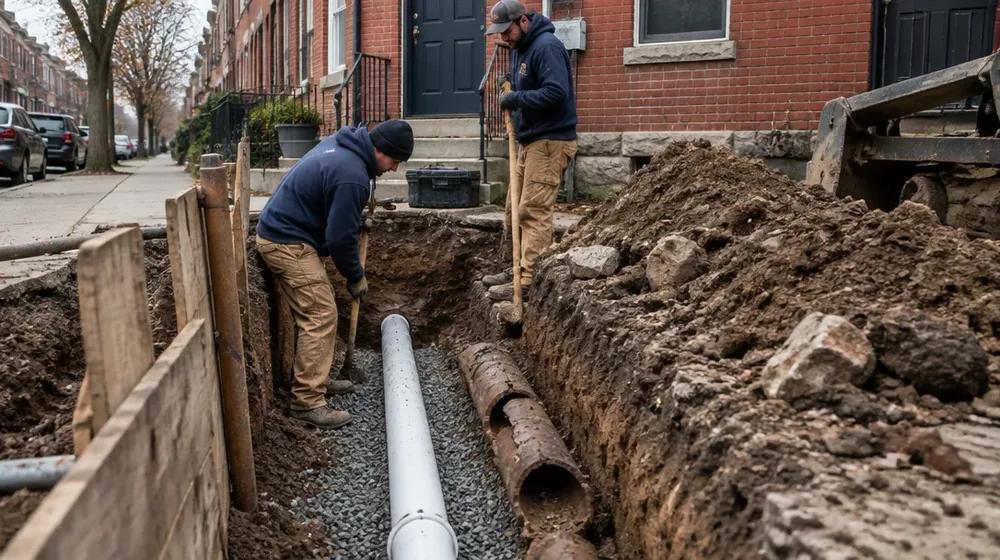
Sewer Repair Cost in Philadelphia: 2026 Guide
A Philadelphia sewer figure means nothing until camera footage and a locate map define the defect, the depth, and the …
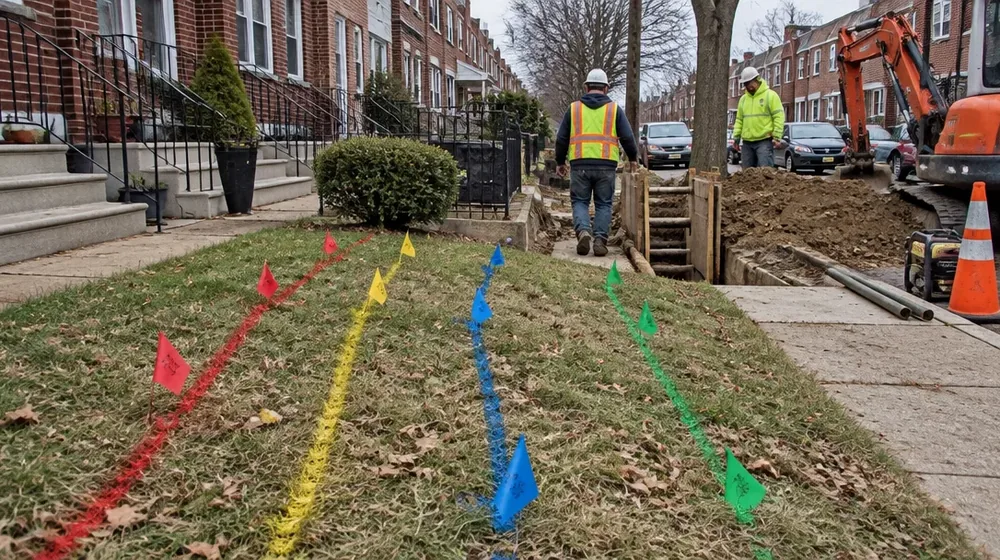
Call 811 Before Digging in Philadelphia: PA Guide
Any digging for sewer or drain work in Philadelphia, from a full lateral replacement to a small cleanout excavation, l…
Sewer Cleanout Guide for Philadelphia Rowhouses
The sewer cleanout is the capped access riser through which every drain machine, jetter hose, and camera enters your l…
Symptoms this service fixes
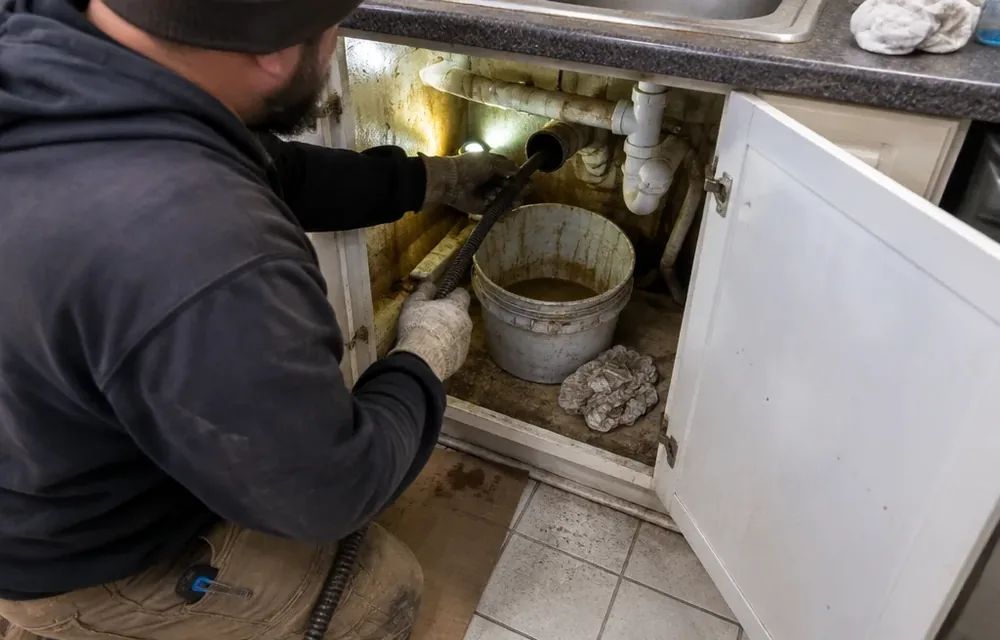
Drain Gurgling
Gurgling is air being forced through water it should not have to move through.
All Drains Slow
One slow drain is a fixture problem, but every drain slowing together means the restriction sits where all branches meet: the building drain or the lateral to the street.
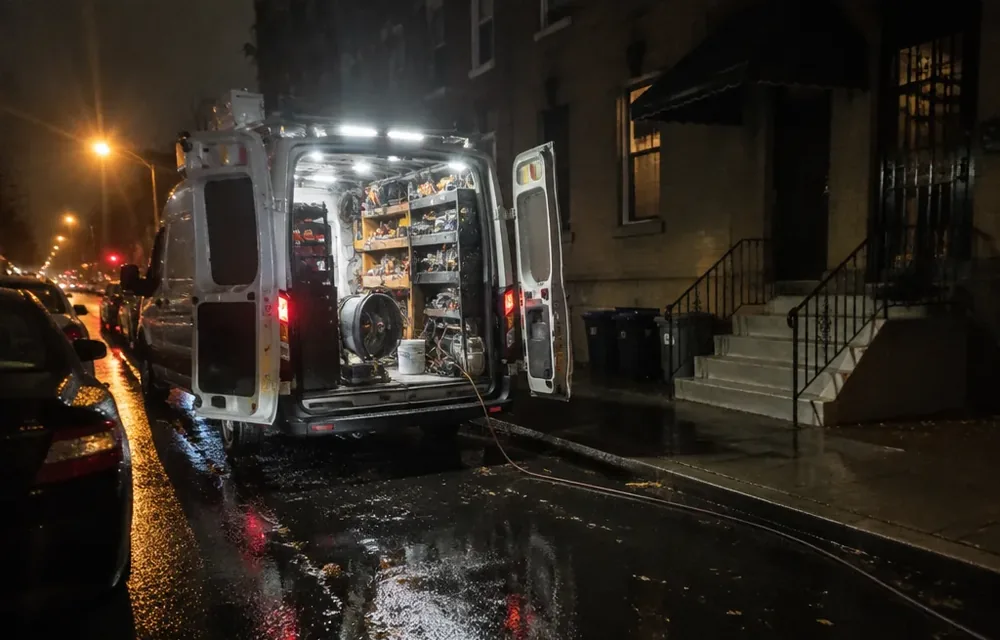
Water Backing Up Into Fixtures
Water rising where it should be leaving means the line downstream is blocked and every gallon you add has to surface somewhere.
Toilet Bubbling
A toilet that bubbles when another fixture drains is reporting air displaced past a downstream restriction.
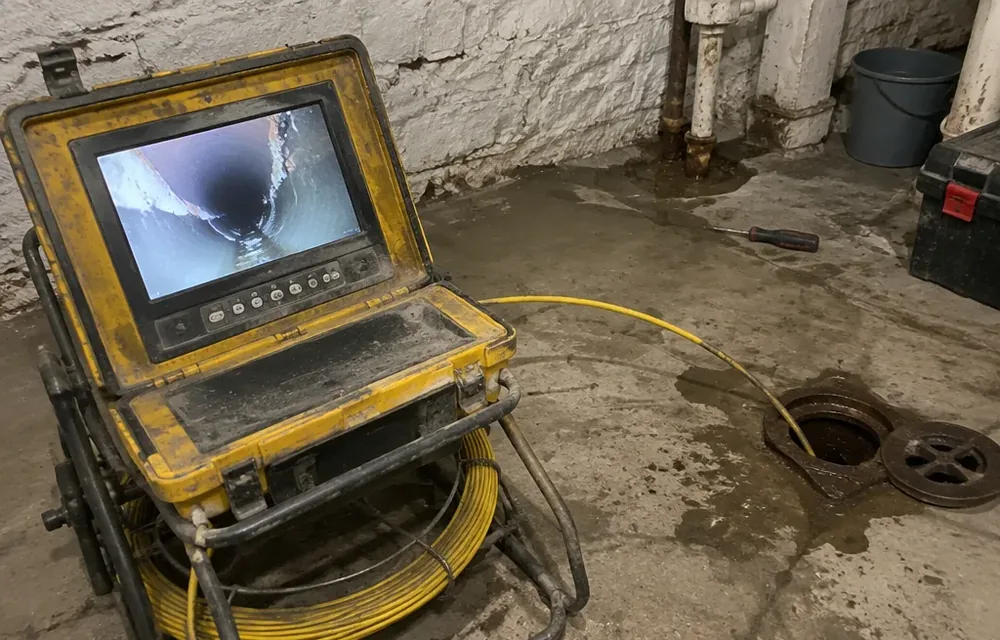
Soggy Strip in the Yard
A persistently soggy or suspiciously lush strip of ground between your house and the street usually marks where a sewer lateral is leaking underground.
Related services
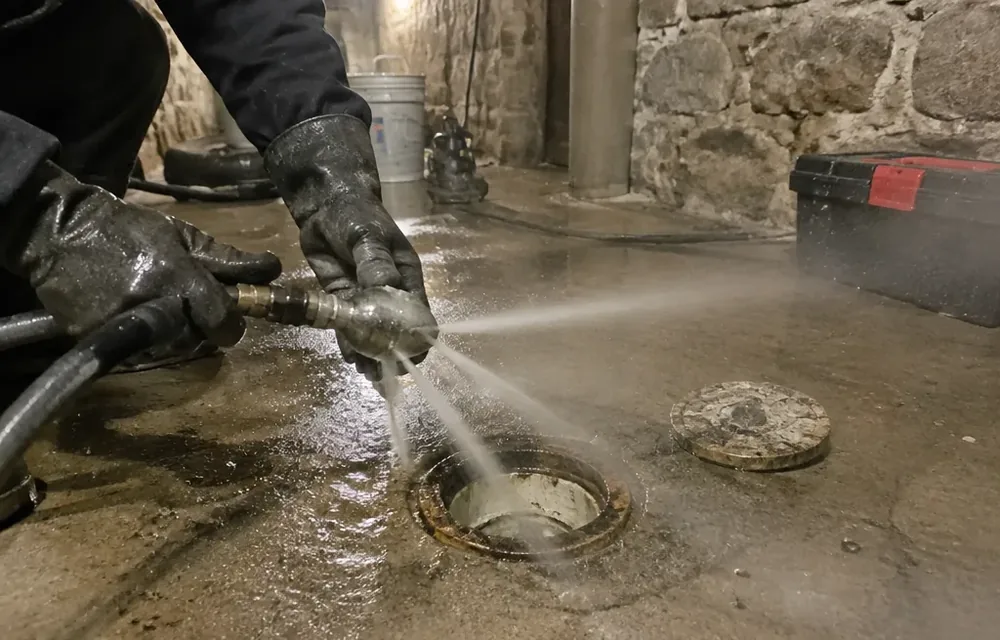
Hydro Jetting
A cable bores a hole through the clog.
Sewer Camera Inspection
Every expensive sewer decision in Philadelphia — jet, repair, line, replace — depends on one thing: what the pipe actually looks like inside.
Rooter Service
Roots do not break your pipe to get in.
Emergency Drain Service
Sewage on the basement floor does not wait for business hours, and neither do we.
Main Sewer Line Cleaning across Philadelphia and its suburbs
We provide main sewer line cleaning in 32 Philadelphia-area towns. Local pages cover the housing stock and pipe materials specific to each area.
Philadelphia
Delaware County
- Upper Darby
- Media
- Yeadon
- Lansdowne
- Havertown
- Springfield (Delco)
- Chester
- Drexel Hill
- Ridley Park
- Swarthmore
- Darby
Montgomery County
- Norristown
- Abington
- King of Prussia
- Ardmore
- Bala Cynwyd
- Conshohocken
- Plymouth Meeting
- Jenkintown
- Cheltenham
- Willow Grove
- Lansdale
- Pottstown
- Ambler
- Horsham
- Hatboro