Storm Drain & Catch Basin Cleaning in Philadelphia — Lots & Garages
A flooded loading dock or parking lot is rarely a rain problem. It is a maintenance problem that rain exposed — months of sediment, leaves and trash packed into a basin nobody opened until the water had nowhere to go.
- 2 to 4 hours
- Philadelphia Area
- 7 days a week
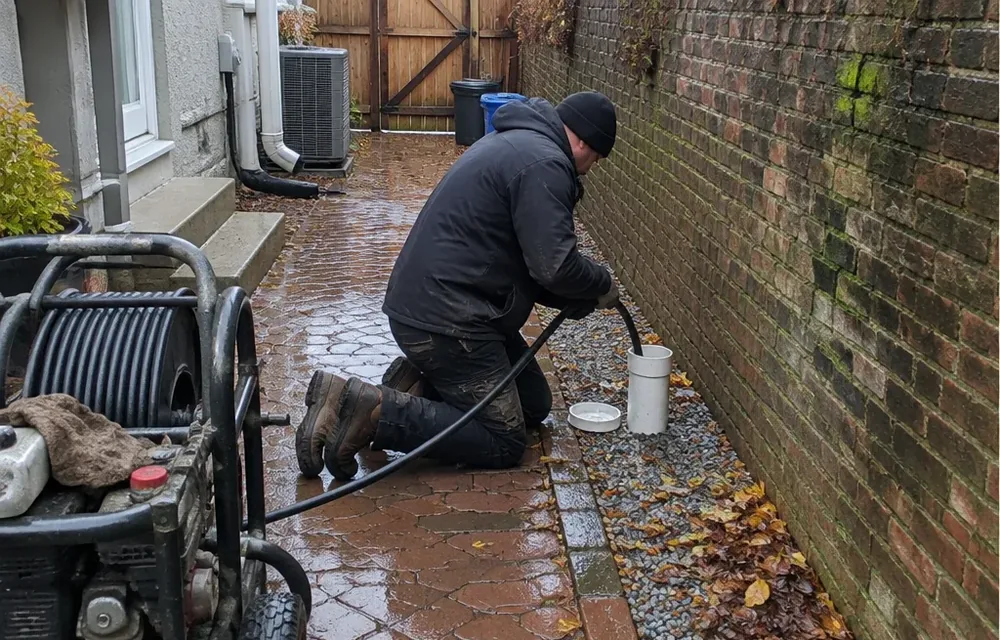
Signs you may need storm drain & catch basin cleaning
Most people arrive here describing a symptom rather than naming a service. These are the three that point this way.
Lot water standing days after rain has ended
Ponding that outlasts the storm by days means the basin sump is packed or the connecting storm lateral is silted. The outlet cannot pass design flow and needs vacuuming plus jetting.
Grate buried under compacted leaves and grit
A grate invisible under debris mats cannot admit water, so runoff sheets past to the low corner instead. Leaf-season clearing under mature London planes is non-negotiable annual maintenance.
Garage and courtyard drains slow in ordinary rain
Sluggish connected drains during light rain indicate silted connecting runs rather than overwhelming storms. Jetting restores grade flow before the next cloudburst turns it into flooding.
How Philadelphia storm structures fail
Catch basins are sediment traps by design: runoff slows in the sump, grit drops out, and relatively cleaner water exits to the combined system. That design only works if someone empties the trap. Across Philadelphia lots, courtyards and driveways, sumps fill with street grit, London plane leaves, trash and winter road residue until the outlet chokes.
Area drains and trench drains fail differently — shallow runs with flat grades that silt along their full length rather than at one sump. Rowhouse courtyards, basement areaways and garage aprons collect sediment fans that each storm re-packs tighter.
Because the city runs on combined sewers, a choked private storm structure does double damage: surface flooding on your property plus concentrated debris slugs into the shared main during cloudbursts. PWD street inlets have their own maintenance cycle; your private basin is your responsibility.
Signs your basin or storm line needs service
Standing water that lingers days after rain ends — the outlet is restricted, not the sky. Normal basins drain down between storms. Medium urgency, but it rots pavement while it sits.
Sediment visible above the sump outlet, mulch-like debris mats, or a grate buried under compacted leaves and street litter sealing the surface. If you cannot see the outlet, water cannot reach it.
Gurgling or slow drainage from connected garage and courtyard drains during ordinary rain — the connecting storm lateral is silted along its run. Medium urgency and worsening with every storm.
Foul, stagnant odours from the basin — trapped organic debris rotting in standing water instead of draining. Low structural danger, high nuisance, and a certain sign the sump has stopped turning over.
Sinkholes or subsidence rings around the basin frame. Washed-out bedding means water is escaping the structure through failed joints, carrying soil with it. That is structural, critical, and needs repair rather than cleaning — vehicle damage risk if ignored.
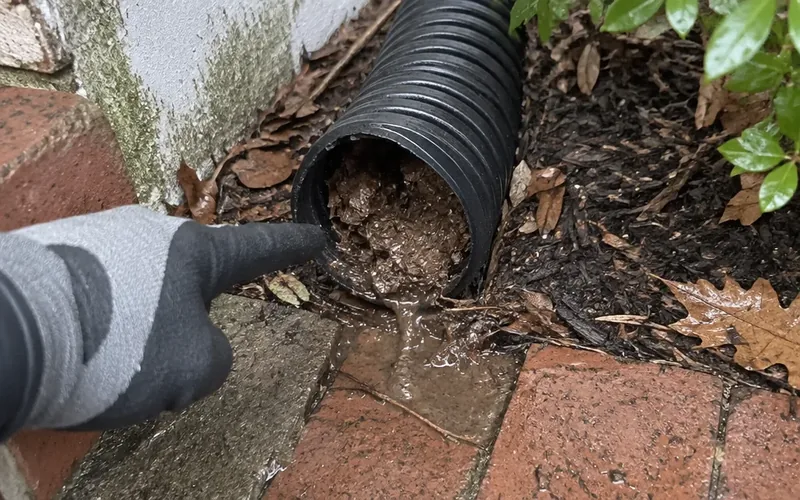
How a storm cleaning visit works
Open and assess every structure
Grates lifted, sump depths measured, outlet condition checked. You learn which basins are maintenance and which are repair before any jetting starts.
Remove solids first
Shovelled and vacuumed debris out of sumps — leaves, grit, trash — so jetting moves water and silt rather than churning solids deeper.
Jet the connecting runs
High-pressure flushing of the storm laterals toward the combined connection, restoring grade flow. Root-cutting heads where plane or maple roots found the joints.
Verify flow under volume
Hose-fed water tests proving each basin drains at design rate, not just that the grate area looks clean.
Report condition and interval
Sump depths, structural notes, and a cleaning interval matched to tree cover and traffic — leaf-heavy lots need autumn service on schedule.
Who owns what: private drains and PWD inlets
Private basins, area drains and their connecting laterals on your parcel are owner-maintained — parking lots, courtyards, areaways, garage aprons. Street inlets and the public combined main belong to PWD.
The boundary matters during flooding: water ponding at your basin with a clean sump and clear outlet points downstream at the street inlet or main, which is a PWD report. Water ponding over a packed-full private sump is your maintenance backlog. We diagnose the boundary honestly rather than jetting a structure whose outlet is fine.
Commercial sites should keep basin service records alongside grease and sanitary records. During cloudburst flooding disputes — tenant, insurer, neighbour — dated maintenance documentation is the evidence that matters.
Cost and sensible intervals
Storm structure cleaning typically runs $275 to $1,200 depending on basin count, debris volume, run length and access for jetting equipment. Single courtyard or areaway drains land low; multi-basin commercial lots land high. Severe blockages needing industrial vacuum trucks or heavy jetting scope $500 to $2,000+ per project, with main-line jetting to clear heavy obstructions averaging around $750.
Intervals follow tree cover and traffic: lots under mature London planes need pre-winter clearing every autumn without exception — one leaf season fills a sump. High-traffic lots accumulate grit year-round and suit semi-annual service. Quiet courtyards often manage biennial visits.
Compare that against one flooded loading dock, one tenant slip claim, or one emergency call during a cloudburst week when every contractor is booked. Scheduled basin service is among the cheapest insurance a property carries.
Frequently asked questions
How much does catch basin cleaning cost in Philadelphia?
Typically $275 to $1,200 depending on basin count, debris load, connecting-run length and equipment access. A single courtyard or areaway drain sits low; multi-basin commercial lots sit high. Severe cases needing vacuum trucks run $500 to $2,000+. Regular intervals cost less per visit than emergency de-silting.
Why does my parking lot flood every heavy rain?
Usually a packed-full basin sump or silted connecting lateral — the structure cannot pass design flow. If the sump is clean and the outlet clear, the restriction is downstream at the street inlet or combined main, which points to PWD rather than your contractor.
How often should catch basins be cleaned?
Leaf-heavy lots under mature street trees need autumn clearing every year. High-traffic lots suit semi-annual service. Quiet courtyards often manage every two years. The sump depth at each visit sets the next interval honestly.
Can hydro jetting clear a storm drain?
Yes — jetting is the standard method for silted storm runs, flushing sediment toward the combined connection. Solid-packed sumps get vacuumed and shovelled first so jetting moves silt rather than churning trapped solids deeper.
Is my flooded basement areaway connected to the sewer?
Often yes in Philadelphia: areaway and courtyard drains commonly tie into the combined lateral. A flooded areaway with a clear grate points at a restricted lateral — the same roots-and-grit story as sanitary backups, entered through a different grate.
Who do I call for a blocked street inlet?
PWD handles public street inlets and the combined main. Private basins and laterals on your parcel are owner-maintained. We diagnose which side the blockage sits on before anyone spends money.
Guides that cover this in more depth
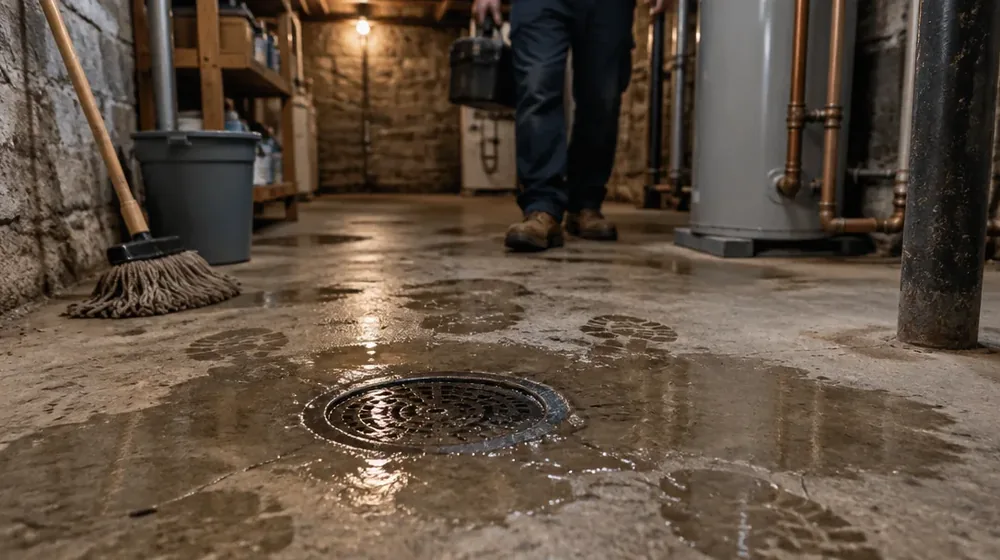
Basement Backup in Philly: Combined Sewers
When rain and sewage share the same Philadelphia main, a cloudburst can push water backward through the lowest drain i…
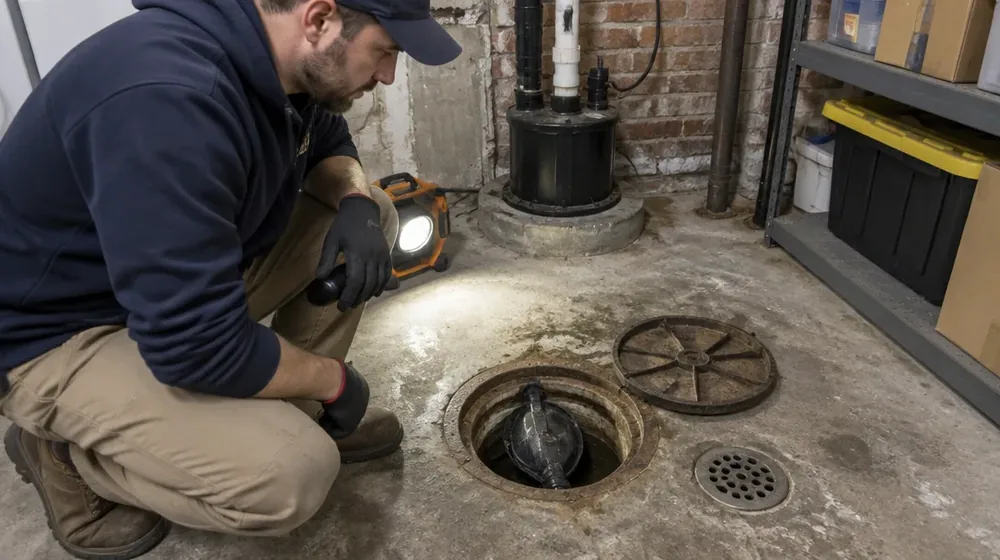
How to Prevent Basement Backup in Philadelphia
Prevention on a combined-sewer block means giving surcharge water no low opening to use and giving your own discharge …
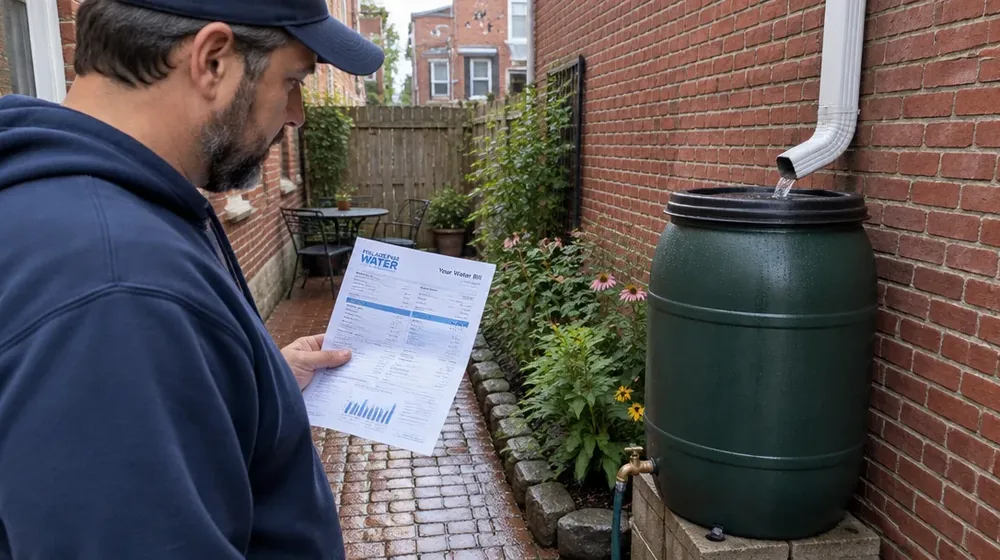
Philadelphia Stormwater Charge Explained for Homes
Every Philadelphia water bill carries a stormwater line, usually abbreviated SWMS, and it puzzles owners because it ne…
Related services
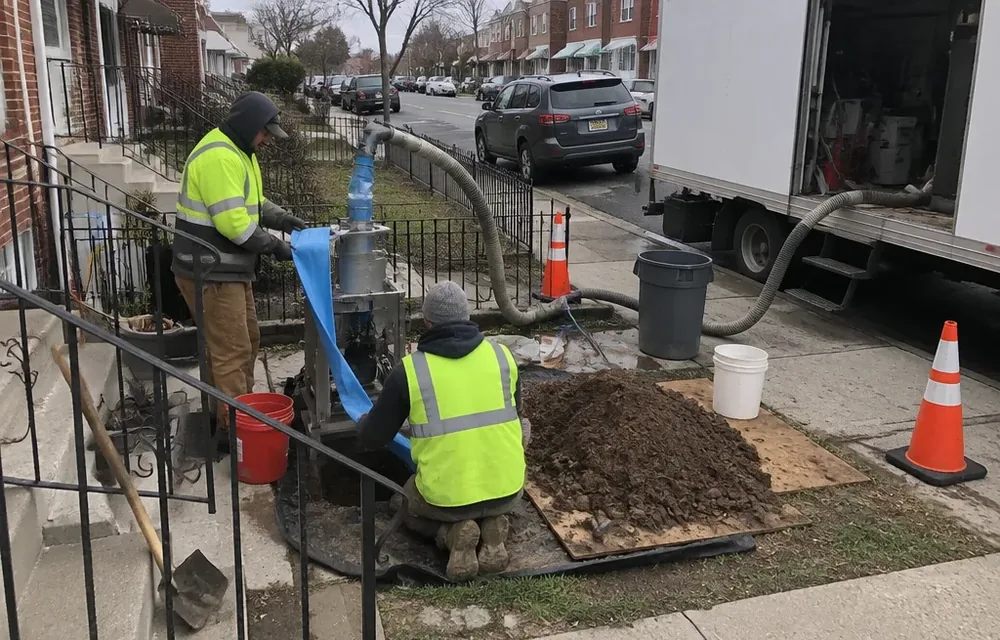
Commercial Hydro Jetting
Commercial drains fail on schedule — fryer volume, tenant count, storm season — so they should be serviced on schedule.
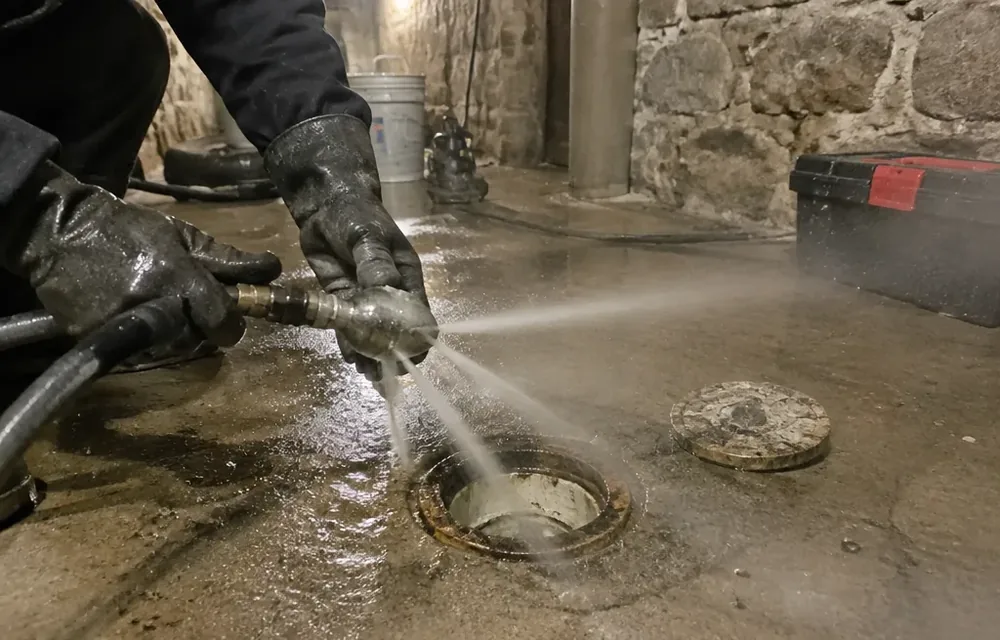
Hydro Jetting
A cable bores a hole through the clog.
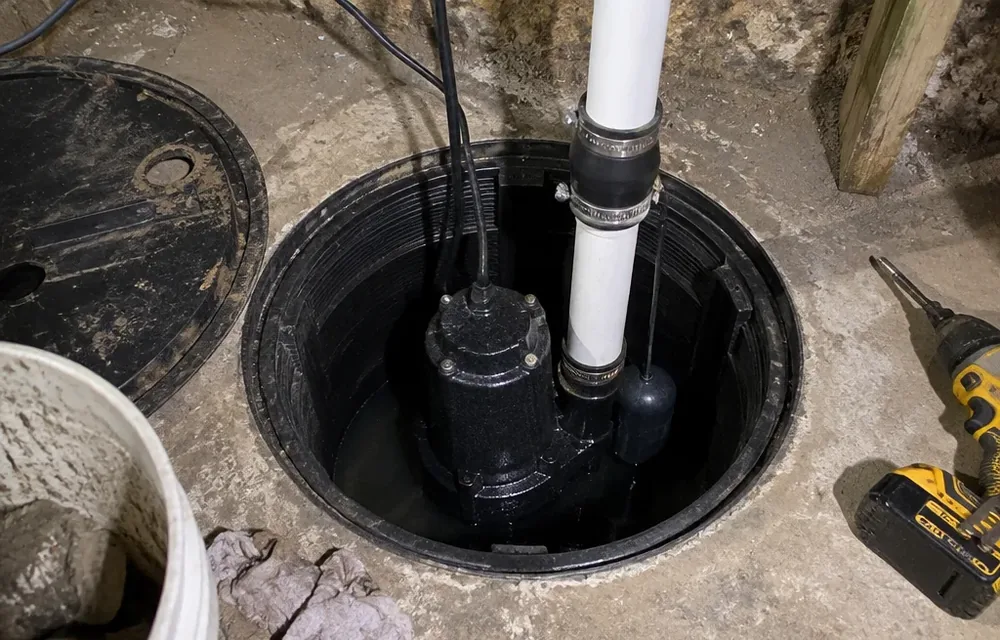
Basement Floor Drain Cleaning
The basement floor drain is the lowest opening in your rowhouse — which makes it the relief valve for every downstream restriction.
Drain Cleaning
A single slow sink is a nuisance.
Storm Drain & Catch Basin Cleaning across Philadelphia and its suburbs
We provide storm drain & catch basin cleaning in 32 Philadelphia-area towns. Local pages cover the housing stock and pipe materials specific to each area.
Philadelphia
Delaware County
- Upper Darby
- Media
- Yeadon
- Lansdowne
- Havertown
- Springfield (Delco)
- Chester
- Drexel Hill
- Ridley Park
- Swarthmore
- Darby
Montgomery County
- Norristown
- Abington
- King of Prussia
- Ardmore
- Bala Cynwyd
- Conshohocken
- Plymouth Meeting
- Jenkintown
- Cheltenham
- Willow Grove
- Lansdale
- Pottstown
- Ambler
- Horsham
- Hatboro