Basement Floor Drain Cleaning in Philadelphia — Backup Help Fast
The basement floor drain is the lowest opening in your rowhouse — which makes it the relief valve for every downstream restriction. When sewage appears there, the drain is not the problem. It is the messenger.
- 1 to 3 hours
- Philadelphia Area
- 7 days a week
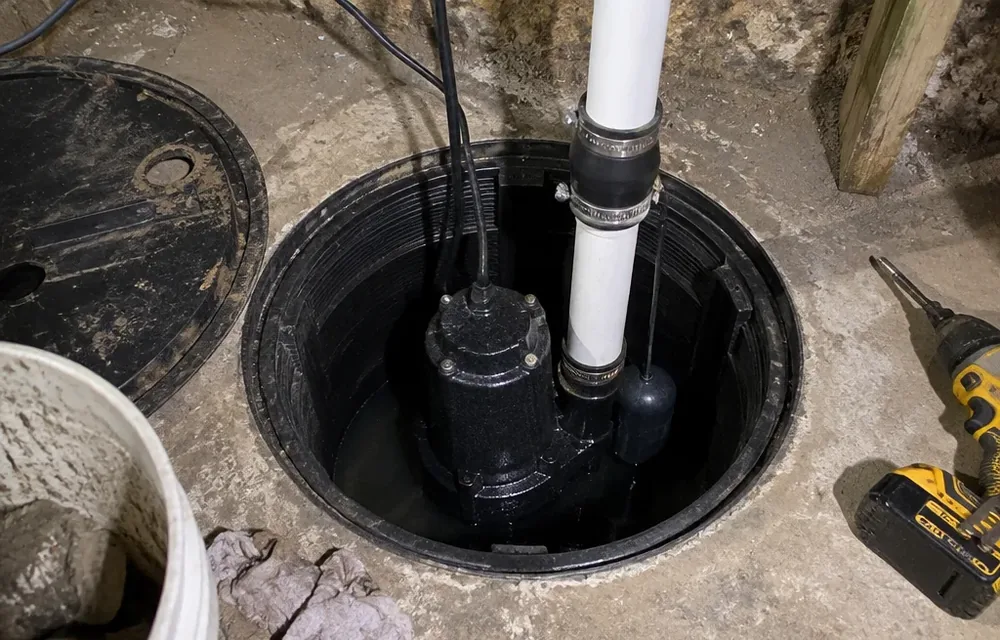
Signs you may need basement floor drain cleaning
Most people arrive here describing a symptom rather than naming a service. These are the three that point this way.
Sewage surfacing at the basement floor drain
Wastewater at the lowest opening means a downstream lateral restriction or a surcharged combined main is pushing flow backward. Stop water use immediately and treat it as an active backup.
Floor drain surging whenever it rains hard
Rain-timed surging with no fixtures running is the combined-sewer surcharge pattern, not a fixture clog. The lateral needs diagnosis and the basement may need backwater valve protection.
Damp sewage smell rising from the basement drain
Persistent odour from the floor drain suggests a dry trap, a weeping lateral joint, or chronic partial restriction venting back. Diagnosis now beats sewage on the floor later.
Why backups surface at the floor drain first
Drainage follows gravity to the lowest opening. In Philadelphia rowhouses that is almost always the basement floor drain or a basement shower pan. Any restriction downstream — roots in the clay lateral, grease over storm grit, a surcharged combined main — pushes wastewater up through that opening first.
Two distinct mechanisms produce the same puddle. A lateral restriction backs up your own wastewater: backups track your water use and worsen with every flush. A city-main surcharge during heavy rain pushes combined flow backward into your lateral: backups track the forecast and arrive even when you use no water.
Telling them apart matters because the fixes differ completely. Your lateral restriction is cleared from your cleanout. A surcharge problem needs a backwater valve or overhead-sewer protection — clearing changes nothing about the next storm.
What to do in the first hour
Stop running water immediately — every gallon becomes basement water. Do not run the washer, dishwasher or showers, and limit flushing to true necessity.
Avoid the water. Combined-sewer backup carries sanitary pathogens; keep children and pets clear, wear boots and gloves if you must enter, and do not run basement HVAC that recirculates damp air.
If water is rising near outlets or the breaker panel, shut off power to the basement area safely — never step through standing water to reach the panel. Call an electrician if the shutoff path is not dry.
Note the pattern for the technician: which fixtures were running, whether it is raining, whether backups arrived with your water use or on their own, and whether low tubs or toilets gurgle too. That history halves the diagnostic time.
Then call. Active sewage entry is exactly what emergency drain service exists for — nights, weekends and storm peaks included.
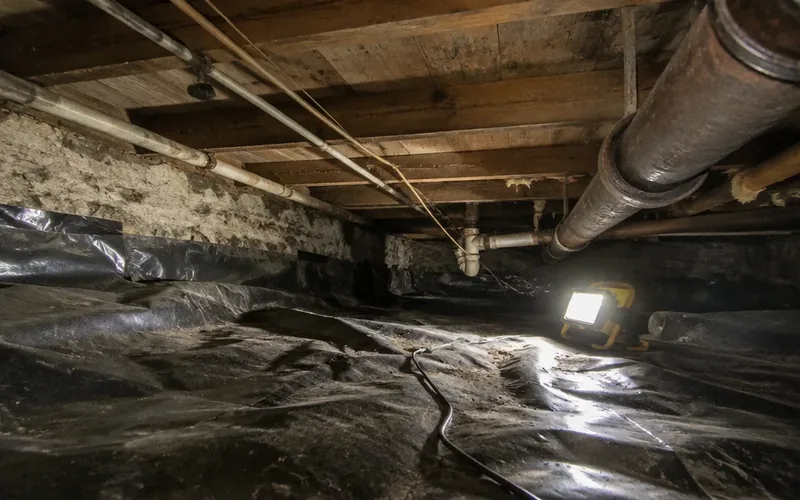
How we diagnose and clear a floor-drain backup
Read use-vs-rain pattern
Water-use-linked backup points at your lateral; rain-linked backup with no water use points at main surcharge or infiltration.
Open the best access
Basement or exterior cleanout. Floor-drain access alone is a last resort — proper cleanout access reaches the actual restriction.
Clear the restriction
Root cutting or debris clearing for lateral blockages, with flow carried toward the city main. Surcharge cases skip straight to protection advice.
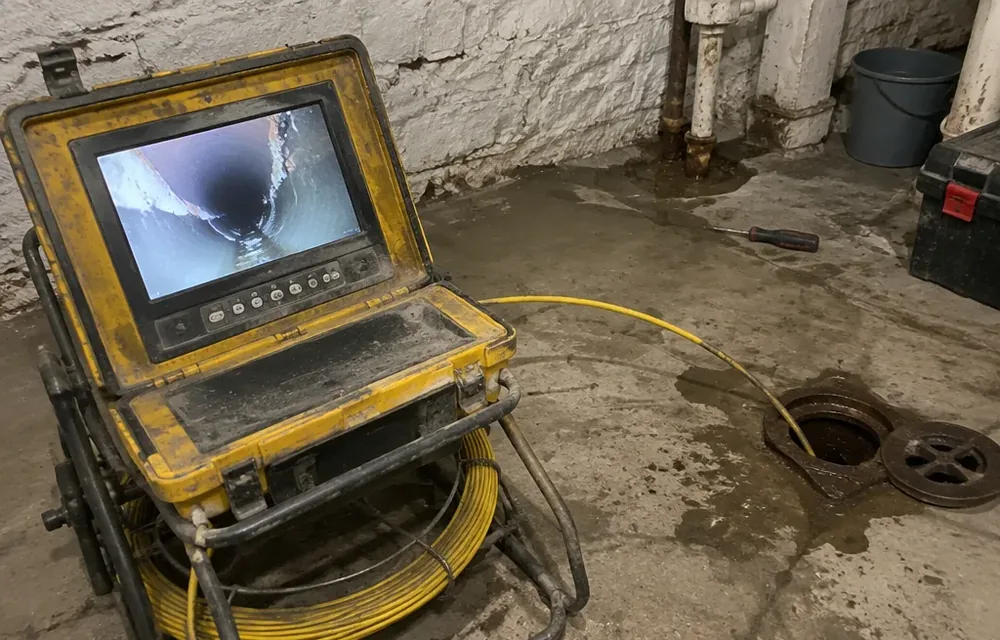
Camera-verify the lateral
Post-clearing footage to the main: roots, bellies, grease zones and breaks documented by footage for the record.
Recommend protection honestly
Recurring rain-linked backups earn a backwater-valve conversation. One-off use-linked clogs earn a maintenance interval. Neither earns a scare pitch.
Backwater valves: the honest explanation
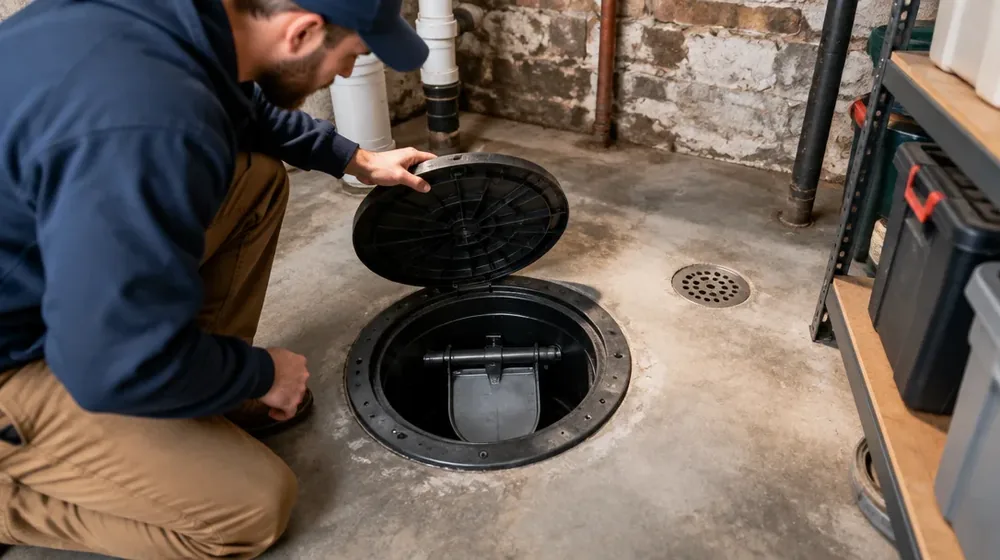
A backwater valve is a one-way gate on your lateral that closes when city-main flow tries to reverse into your basement. For rowhouses with finished basements on combined-sewer blocks, it is the highest-value flood protection available.
It is not maintenance-free: the gate needs periodic inspection and cleaning, and it must be accessible — buried, forgotten valves fail exactly when needed. Installation involves excavation at the right point in the lateral, with PWD-relevant coordination where the work nears the curb and main.
What a valve does not do: fix your own lateral restriction. A root-blocked lateral backs up with the valve wide open. Valve advice follows camera proof of surcharge-pattern backups, never as a substitute for clearing.
Cost, cleanup and prevention
Floor-drain clearing typically runs $175 to $550 depending on cause, access and whether camera verification follows. Backwater valve installation is a separate project priced by excavation depth and location — quoted from footage-verified plans, not guesses.
Cleanup after sewage entry is a sanitation job, not a mopping job: porous basement materials that wicked sewage generally get removed, and affected surfaces need proper disinfection. Document everything photographically for any insurance backup-endorsement claim.
Prevention for rowhouse basements: know your cleanout location before the emergency, keep stored goods off basement floors, consider a valve if backups track storms, and hold a root-maintenance interval if camera footage shows joint intrusion. See main sewer line cleaning for interval plans.
Frequently asked questions
Why is sewage coming up through my basement floor drain?
Because a downstream restriction or a surcharged city main is pushing wastewater to the lowest opening. If backups track your water use, your lateral is restricted. If they arrive during heavy rain with no water use, the combined main is surcharging backward.
What should I do when my basement drain backs up?
Stop all water use, keep people and pets clear of the water, note whether it is raining and what was running, then call for emergency service. Do not keep flushing or run the washer — every gallon becomes more basement water.
How much does basement floor drain cleaning cost?
Typically $175 to $550 depending on cause and access. Lateral root or debris clearing with camera verification sits in the middle; after-hours emergency dispatch adds a premium. Backwater valve installation is quoted separately.
Will a backwater valve stop basement backups?
It stops city-main surcharge from reversing into your basement — the rain-linked case. It does not clear your own lateral restriction. Valve recommendations follow camera-verified surcharge patterns, not guesswork.
Does PWD fix basement backups?
PWD maintains the public main, not your lateral. If the main is surcharged or blocked, PWD handles that side — but clearing, maintaining and protecting your lateral and basement openings is the property owner’s responsibility. Homes with chronic storm-linked backups should also check the Philadelphia Water Department Basement Backup Protection Program for qualifying free backwater valves or downspout disconnections.
Is basement sewage backup covered by insurance?
Only with a water-backup endorsement, which many standard rowhouse policies lack or cap low. Sewer backup is generally excluded from base coverage. Check your endorsement limit before storm season, not after a loss.
Guides that cover this in more depth
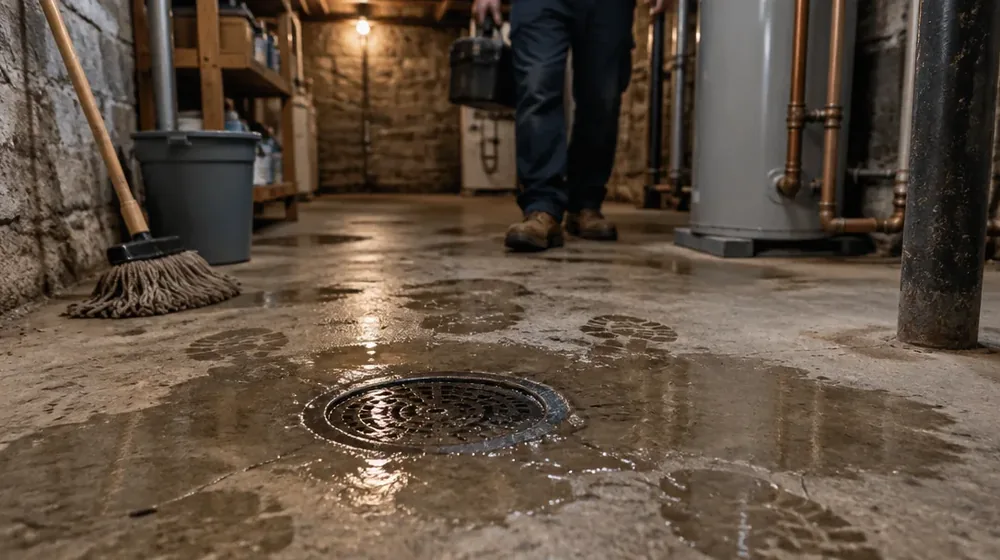
Basement Backup in Philly: Combined Sewers
When rain and sewage share the same Philadelphia main, a cloudburst can push water backward through the lowest drain i…
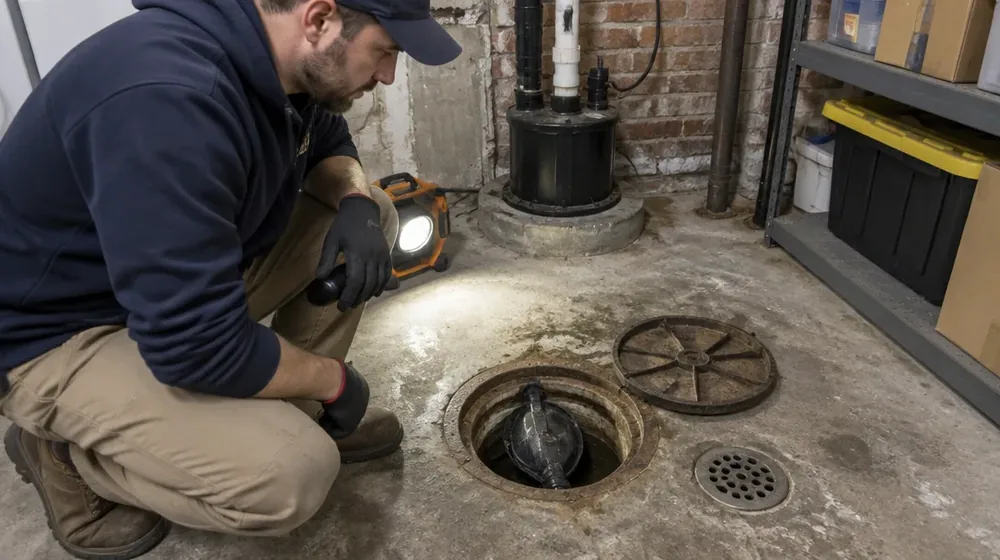
How to Prevent Basement Backup in Philadelphia
Prevention on a combined-sewer block means giving surcharge water no low opening to use and giving your own discharge …
PWD Backwater Valve Program: Free Valve Guide
Philadelphia will install a backwater valve in a qualifying home at no charge to the owner through its Basement Backup…
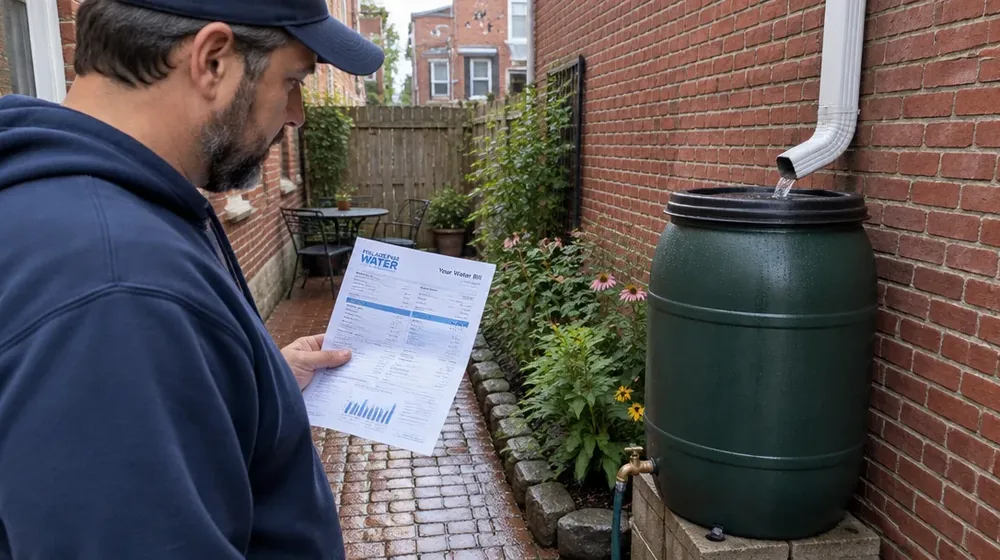
Philadelphia Stormwater Charge Explained for Homes
Every Philadelphia water bill carries a stormwater line, usually abbreviated SWMS, and it puzzles owners because it ne…
Symptoms this service fixes
Sewage Smell in the Basement
Most basement sewage odor in Philadelphia comes from a dry floor-drain trap or a failed seal, both cheap fixes.
Water Backing Up Into Fixtures
Water rising where it should be leaving means the line downstream is blocked and every gallon you add has to surface somewhere.
Water in the Basement Floor Drain
The basement floor drain is the lowest opening on your drainage system, so it is where every downstream restriction shows itself first.
Related services
Emergency Drain Service
Sewage on the basement floor does not wait for business hours, and neither do we.
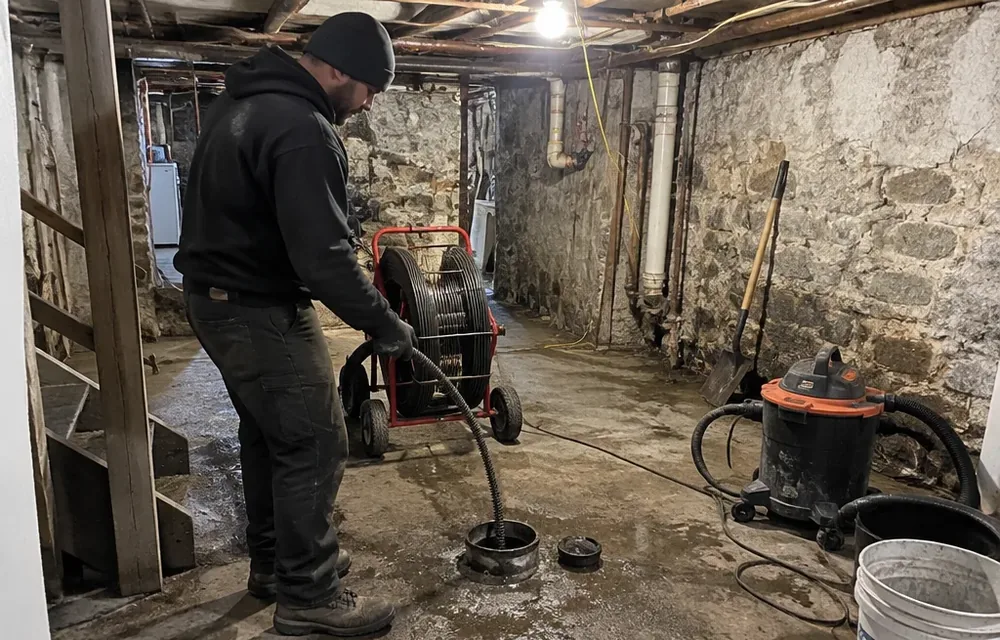
Main Sewer Line Cleaning
The lateral is the most expensive drain you own — a 60-to-100-foot clay run from your rowhouse to the street main, shared with stormwater, hunted by street-tree roots.
Sewer Camera Inspection
Every expensive sewer decision in Philadelphia — jet, repair, line, replace — depends on one thing: what the pipe actually looks like inside.
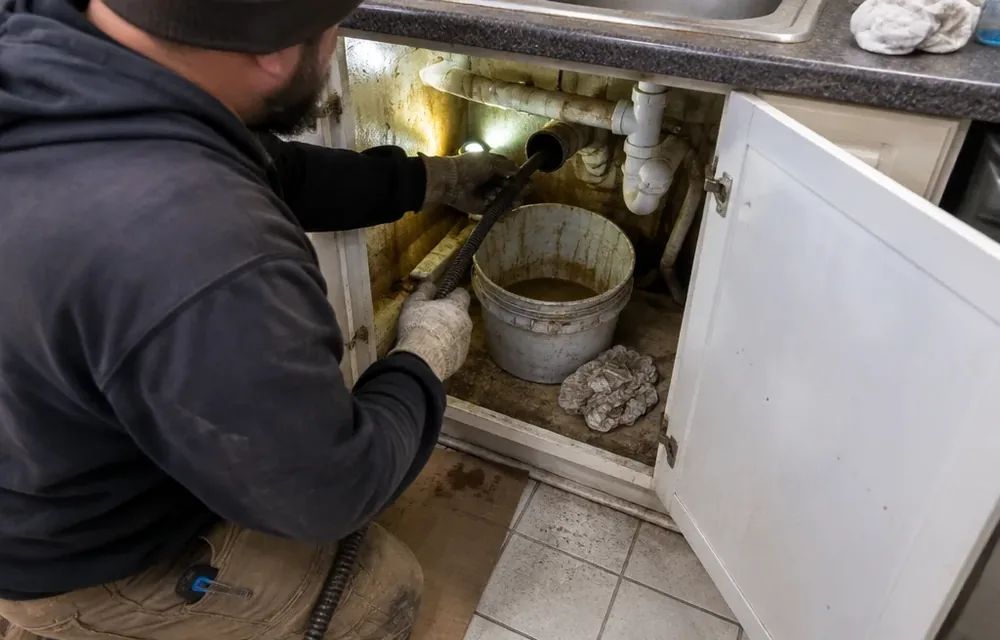
Drain Cleaning
A single slow sink is a nuisance.
Basement Floor Drain Cleaning across Philadelphia and its suburbs
We provide basement floor drain cleaning in 32 Philadelphia-area towns. Local pages cover the housing stock and pipe materials specific to each area.
Philadelphia
Delaware County
- Upper Darby
- Media
- Yeadon
- Lansdowne
- Havertown
- Springfield (Delco)
- Chester
- Drexel Hill
- Ridley Park
- Swarthmore
- Darby
Montgomery County
- Norristown
- Abington
- King of Prussia
- Ardmore
- Bala Cynwyd
- Conshohocken
- Plymouth Meeting
- Jenkintown
- Cheltenham
- Willow Grove
- Lansdale
- Pottstown
- Ambler
- Horsham
- Hatboro