Hydro Jetting Cost in Philadelphia: What Moves the Number
Most Philadelphia homeowners budget around national jetting ranges, then discover access, lateral length, and root cutting move their job within that band. Understanding the five cost drivers before anyone arrives is what keeps the invoice unsurprising.

The national ranges, stated honestly and kept in context
National homeowner guides from Angi, Bob Vila, and Forbes consistently place hydro jetting around 350 to 600 dollars as a typical band, within a wider spread near 300 to 1,100 dollars for straightforward versus difficult jobs. Those figures describe single-visit residential cleaning with reasonable access, and they are useful as orientation so a Philadelphia homeowner can tell an ordinary figure from an extraordinary one. They are cited here as published national ranges, not as any local contractor price, because Philadelphia access conditions differ enough that any honest local figure must be scoped on site.
What moves a Philadelphia job inside or beyond that band is almost never the water or the machine time. It is everything around the pipe: whether a usable cleanout exists, how far the lateral runs from the rowhouse front to the city main, whether roots must be cut before jetting can scour, whether a camera inspection is bundled, and whether the call arrives at night or during a storm surge when every contractor in the city is triaged. A Center City restaurant lateral with heavy grease and a basement cleanout prices differently from a Northeast Philadelphia ranch with a straight PVC run and an exterior two-way cleanout, even though both are called jetting.
Treat any figure given without those five facts as a placeholder. A meaningful number specifies the access point, the diameter and approximate footage, whether cutting and camera verification are included, and what happens if the camera shows pipe too fragile to pressurize. Homeowners who collect those four details with every figure can compare competing proposals line for line instead of comparing headline numbers that describe different scopes.
One more framing point before the drivers: jetting is usually compared against the wrong alternative. The comparison that matters is rarely one cable visit against one jetting visit, because the cable visit on a coated line recurs. National ranges help only when multiplied by expected frequency, which is why this guide pairs every price discussion with the interval question further down.
Driver one: cleanout access in Philadelphia rowhouses
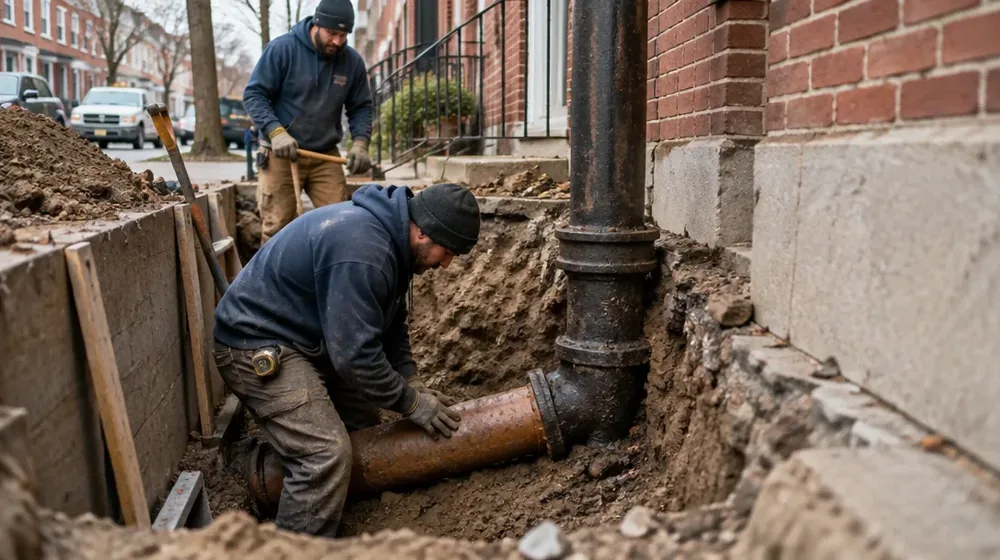
Cleanout access is the single largest Philadelphia-specific cost variable. A proper exterior two-way cleanout or an accessible basement cleanout lets the crew set up in minutes, jet downstream toward the main and upstream toward the house, and contain the flushed debris without entering living space. Many pre-war rowhouses from Kensington to Point Breeze were built without one, leaving only a pulled toilet, a small basement trap, or a roof vent as entry points, each of which adds labor time, drop cloths, and fixture handling that a cleanout avoids entirely.
Installing a cleanout is frequently the highest-return money in the whole project. An exterior two-way fitting with a properly bedded riser converts every future service from a fixture-pulling visit into a routine one, shortens emergency visits during wet-weather backups, and gives camera work a stable launch point with known footage references. Philadelphia Plumbing Code requirements govern cleanout placement, materials, and cover details, so the installation is permitted work done to code rather than a casual add-on, and it should be documented with its location and depth for the next crew.
Where the lateral runs matters too. Philadelphia rowhouse laterals often run beneath the front sidewalk or areaway to the combined main in the street, which means setup, hose protection across pedestrian areas, and coordination with what the Philadelphia Water Department maintains versus what the homeowner owns. Longer runs need more hose, more water, and more time under load to prove, and runs with bends at the property line or foundation penetration take longer to navigate than straight post-war runs in the Far Northeast.
When comparing figures, ask each bidder to name the access point they priced. One proposal through an existing exterior cleanout and another through a pulled toilet are not the same job even at the same address, and the cheaper headline may describe the more expensive access method once fixture reset and cleanup are counted.
Driver two: what is inside the line
| Condition | How it prices | Why |
|---|---|---|
| Soft grease coating | Lower within range | Single scouring pass, debris flushes readily |
| Hardened grease plus scale | Mid to upper range | Multiple passes, rotary head, more water and time |
| Roots plus trapped sludge | Upper range | Mechanical cutting first, then jetting, then verification |
| Fully blocked, standing water | Upper range or staged | Penetrator pass to open, then scour, longer prove-out |
| Fragile or unknown pipe | Camera bundled first | Inspection may redirect to repair rather than pressure |
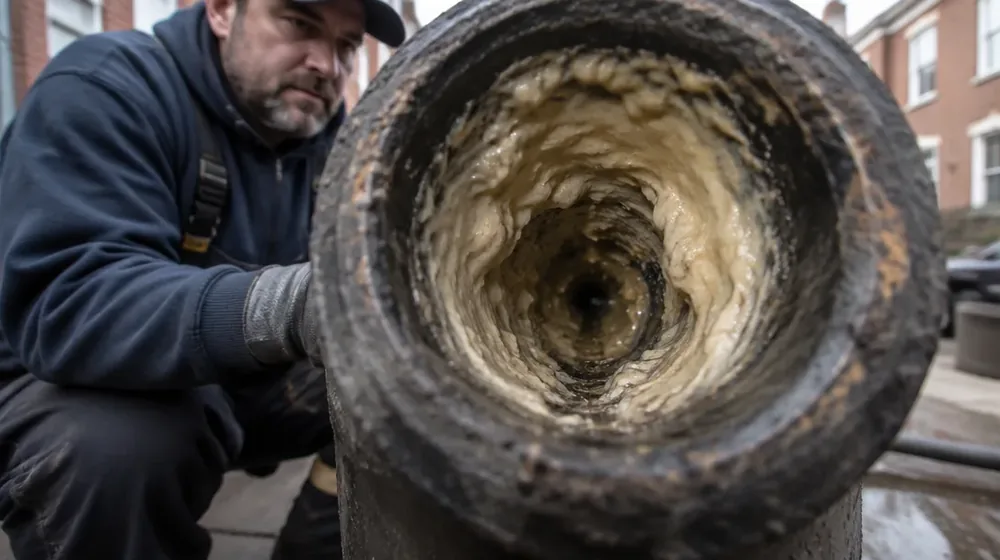
Grease is the most common Philadelphia residential load, and its age matters more than its volume. Fresh restaurant-line grease emulsifies quickly under hot-water jetting, while a decade of laminated congealed fat on cast iron in a South Philadelphia rowhouse kitchen needs repeated rotary passes that consume the extra hour. The camera tells the difference in minutes, which is why bundling inspection with jetting usually lowers total cost rather than raising it: it aims the work instead of billing blind passes.
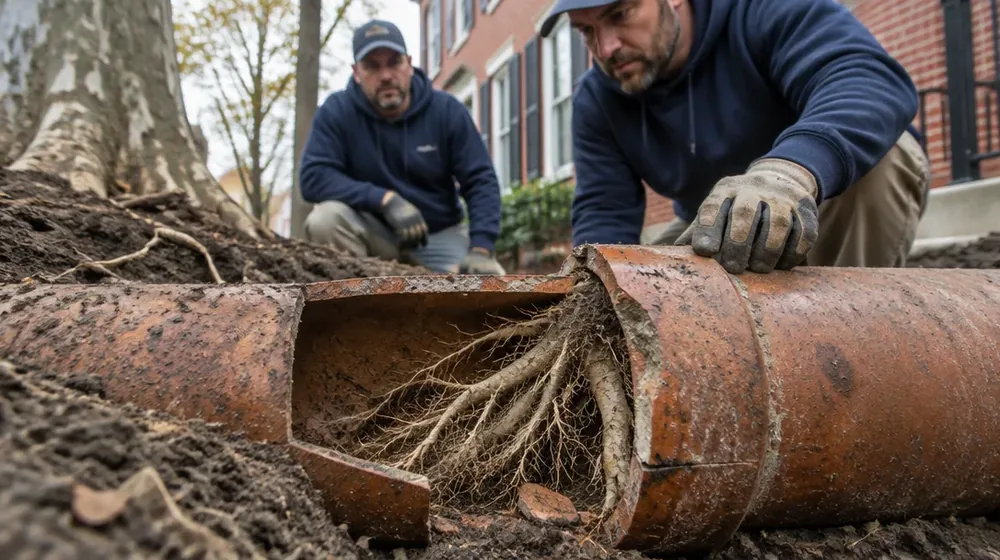
Roots add a distinct step with distinct tooling. A root mass must be cut to full diameter with a properly sized head before jetting, because pressurized water alone mats fine hair without severing the structural strands at the joint. Philadelphia street trees including London plane, silver maple, and honey locust are vigorous joint invaders along the curb-lawn corridor, so root-plus-sludge jobs along tree-lined blocks in West Philadelphia and Germantown routinely pair both tools. Figures that include cutting read higher than jetting-only figures and describe more work.
Driver three: camera inspection, before and after
A camera inspection is the step homeowners most often try to delete and most often regret deleting. The pre-clean pass establishes material, diameter, footage to each defect, depth at the curb, and whether Orangeburg, paper-thin iron, or a separated joint makes pressurizing unsafe. On any Philadelphia lateral predating 1970 without existing footage, that knowledge is worth more than the pass costs, because it is the only thing standing between a routine scouring and a pressure-driven collapse that converts a cleaning visit into an excavation.
The post-clean pass proves the wall is actually clean and logs what remains for the record. Grease jobs should show bare wall with restored diameter; root jobs should show the entry joint at a logged footage with the mass gone; scale jobs should show how much wall thickness remains. That footage with footage marks becomes the baseline for every future decision, including whether the next recurrence is new buildup or a defect that was visible all along. Contractors who include both passes in a bundled figure are selling certainty, and the bundle usually compares favorably against separate mobilizations.
Philadelphia buyers and sellers should treat footage as a transferable asset. A rowhouse changing hands in Fishtown or Passyunk with logged pre- and post-jet video, depths, and cleanout location hands the next owner a lateral with known condition rather than a mystery. Lenders and insurers never require it, but the homeowner who holds it negotiates every future service from knowledge instead of from urgency.
Budget logic therefore runs inspection plus jetting plus verification as one project, not three line items to trim. Deleting the first pass gambles the pipe; deleting the second pass discards the proof. The cheapest figure that omits both is frequently the most expensive outcome once recurrence or damage is counted.
Driver four: timing, urgency, and the combined-sewer surge
Much of Philadelphia drains to combined sewers carrying sanitary flow and stormwater in the same mains, a legacy the federal EPA combined-sewer-overflow background material describes as a wet-weather challenge in older cities nationwide. When a summer cloudburst or a stalled Delaware Valley front surcharges those mains, basement floor drains and low fixtures become the relief points, and every contractor queue in the city fills simultaneously. Work dispatched into that surge carries the urgency premium that night, weekend, and storm-window calls always carry, regardless of the underlying method.
Scheduling the thorough cleaning before the surge is therefore a cost control measure. A lateral jetted to full diameter in dry weather conveys the wet-weather slug that a half-coated lateral cannot, and the visit happens at standard scheduling rather than emergency dispatch. Homeowners with any history of wet-weather slowness, gurgling during rain, or water at the floor drain should treat late spring as the budgeting window, before the convective-storm season that rolls off the Schuylkill and Delaware corridors straight over the rowhouse belt.
Winter timing carries its own constraint. Jetting leaves the line wet, and a January cold snap following service demands the line be proved fully drained with exterior caps properly seated so frost does not enter the riser. Philadelphia freeze-thaw cycles heave shallow cleanout risers and shift old trench backfill, so winter visits should end with caps, insulation at unheated basement penetrations, and a confirmed empty line. None of this forbids winter work; it simply makes the close-out steps non-optional.
The practical rule is to price routine jetting on a weekday with clear access and dry weather, and to reserve urgent dispatch for true backups. Calling the repeat grease slowdown in April at standard scheduling beats calling the same line as a sewage backup in August at emergency rates, even before the cleanup costs that backups add.
What a comparable written scope looks like
Access point named
Which cleanout, its location, and what happens if none is usable. Cleanout installation priced separately if needed.
Diameter and footage estimated
Pipe size, approximate run to the main, and how bends or length affect time on site.
Cutting and camera stated
Whether root cutting is included, whether pre- and post-clean camera passes with kept footage are included.
Pressure matched to material
What the camera showed and which nozzle and pressure range suits that material and condition.
Prove-out under load
Full-bore flow test with a tub or laundry slug before sign-off, not merely an open channel.
Contingency in writing
What happens and what it costs if the camera shows Orangeburg, collapse, or a belly needing repair rather than cleaning.
Collect that six-line scope from every bidder and the figures become comparable even when the headlines differ. A higher figure that includes cutting, both camera passes, and a load test frequently undercuts a lower figure that describes pressure alone once the omitted steps are added back. Philadelphia homeowners who enforce this format also discover quickly which bidders scope the pipe and which merely price the visit.
Payment structure deserves one sentence: be wary of any arrangement demanding full payment before the post-clean camera proves the result. The verification pass is the homeowner leverage, and it should precede final settlement rather than follow it as a favor.
Making the number pay: intervals, habits, and repair math
A jetted line stays clean in proportion to what goes down it afterward. Kitchen laterals re-coat fastest, because every pan of bacon fat, roasting drippings, and fryer oil poured warm down the sink congeals on the first cold iron it meets. The household change that extends the jetting interval most is also the simplest: cooled fat into a jar for the trash, greasy pans wiped before washing, and strainers stopping food solids that bind into the film. Restaurant laterals on commercial corridors face the same physics at higher volume, with grease-trap maintenance deciding whether the jetting interval is measured in months or quarters.
Roots enforce their own interval regardless of habits. An open clay joint admits hair every growing season, and no household discipline closes it. Where the post-jet camera logs a single entry joint in otherwise sound pipe, scheduled cutting plus flushing on a one-to-three-year cycle is rational maintenance; where joints are failing along the whole run or intervals shorten each cycle, the maintenance total should be set against a spot repair or lining figure. Ten-year arithmetic usually favors maintenance on sound pipe and correction on failing pipe, with one emergency backup and its cleanup often erasing the maintenance savings in a finished basement.
Set the next inspection by the line history rather than the calendar. A grease line that slowed at eighteen months wants a look at fifteen; a root joint cut in spring wants verification before the autumn root-growth push; a line that backed up during combined-main surcharge wants its capacity proven before the next storm season. Logged footage makes each of those decisions a comparison against baseline rather than a fresh gamble, and that is ultimately what converts a cost into an investment with a visible return.
Frequently asked questions
What is the typical cost of hydro jetting?
National homeowner guides from Angi, Bob Vila, and Forbes place typical residential jetting around 350 to 600 dollars within a wider 300 to 1,100 dollar spread, cited here as national orientation rather than any local price. Philadelphia specifics including cleanout access, lateral length, roots, and camera bundling move individual jobs within or beyond that band.
Why do Philadelphia jetting figures vary so much?
Access dominates: an exterior cleanout job prices differently from a pulled-toilet job, and a short straight PVC run differs from a long clay-and-iron rowhouse lateral. Contents matter next, with roots and hardened grease adding cutting and extra passes. Timing matters last, with storm-surge and after-hours dispatch above weekday scheduling.
Is a camera inspection really necessary with jetting?
On older, repeat-offender, or unknown lines it is the step that protects the pipe and aims the work. The pre-clean pass screens out Orangeburg, collapse, and bellies that pressure would worsen; the post-clean pass proves the wall is clean and logs the baseline. Bundled inspection usually lowers total cost across the life of the line.
Does jetting permanently fix roots or grease?
It durably removes grease when habits change and the pipe is sound, often resetting the clock for years. It does not close the open joint that admits roots or correct a belly that re-collects sediment. Those defects set a maintenance interval that should eventually be compared against repair on ten-year math.
How do I compare competing jetting figures?
Require the same six-line scope from each bidder: access point, diameter and footage, cutting and camera inclusion, pressure matched to camera findings, load-test prove-out, and the written contingency if the pipe proves unjettable. Comparable scopes make headlines comparable; without them the cheapest figure often omits the steps that protect you.
Services mentioned in this guide
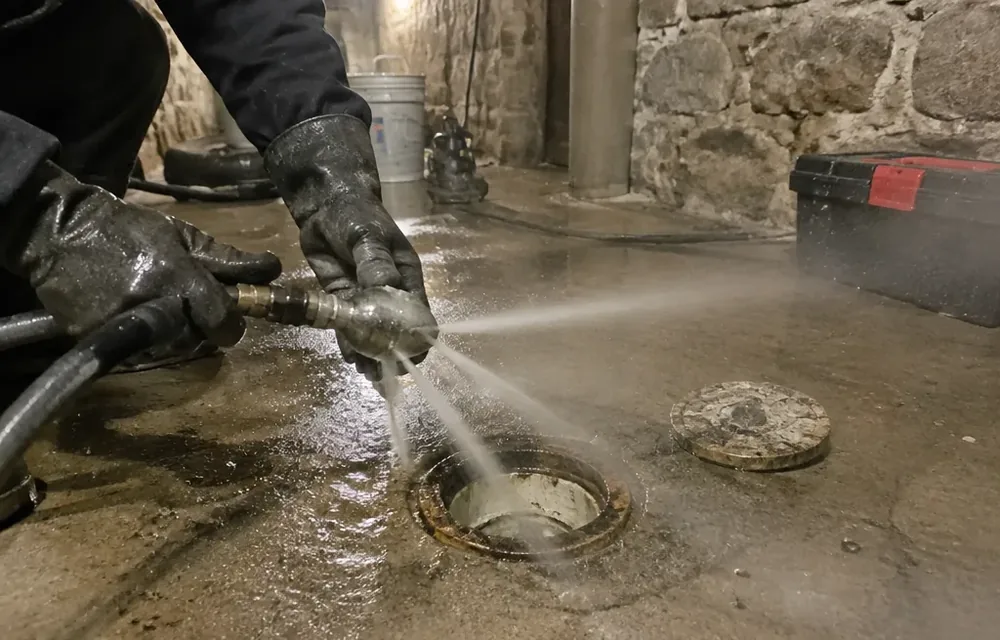
Hydro Jetting
A cable bores a hole through the clog.
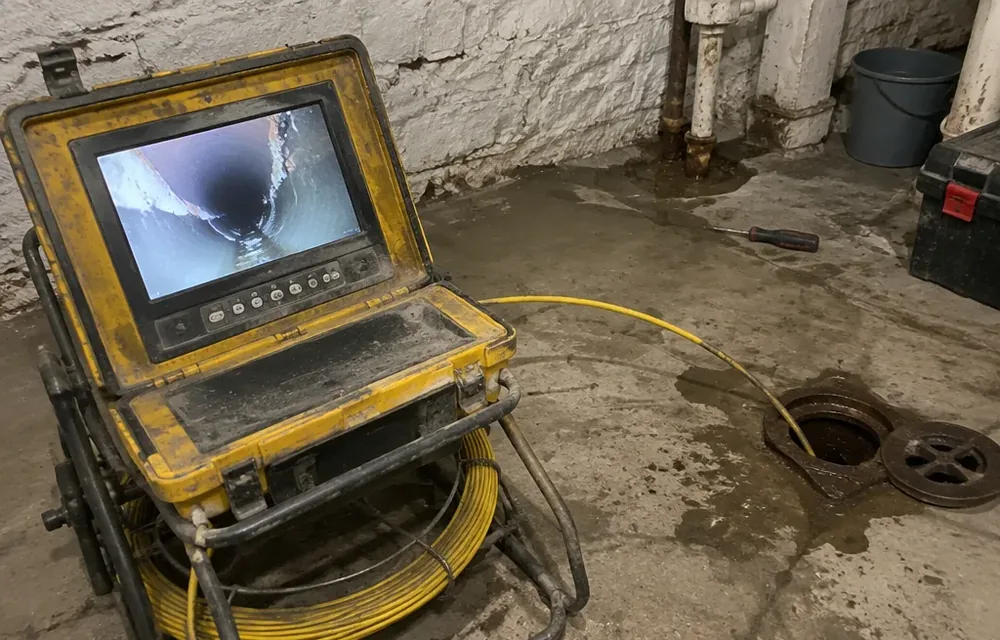
Sewer Camera Inspection
Every expensive sewer decision in Philadelphia — jet, repair, line, replace — depends on one thing: what the pipe actually looks like inside.
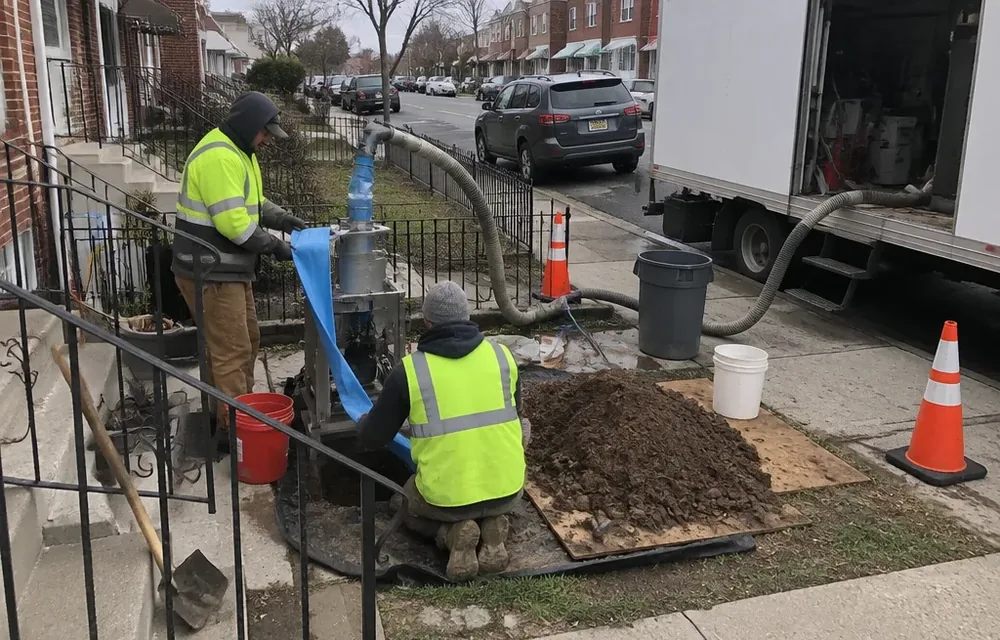
Commercial Hydro Jetting
Commercial drains fail on schedule — fryer volume, tenant count, storm season — so they should be serviced on schedule.
Free tools that help with this exact problem
More guides
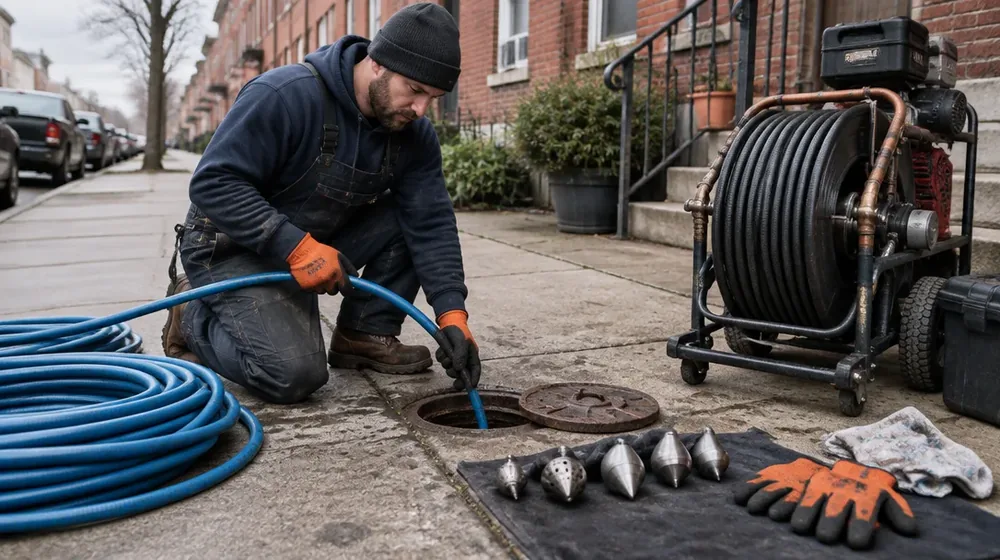
Hydro Jetting vs Snaking: What Philly Homes Need
A cable bores a hole through the blockage so water moves again. A jetter scours the whole pipe wall back toward bare m…
Tree Roots in Philadelphia Sewer Lines Guide
Roots do not break into sound pipe. They find the clay joint that is already leaking, thicken in the flow, and become …
Grease Lines: Philly Rowhouses & Restaurants
Grease goes down warm and liquid, meets cold iron, and becomes a wall coating rather than a plug. That is why the same…
Philly Rowhouse Laterals: Clay, Iron & More
The year your Philadelphia rowhouse was built predicts what is buried in front of it. Clay joints admit roots, cast ir…