Drain Cleaning in Philadelphia — Clogs Cleared, Usually Same Day
A single slow sink is a nuisance. Every drain in the rowhouse backing up at once is a main-line failure. They need completely different tools and cost very different amounts, so the first job is working out which one you actually have.
- 45 minutes to 3 hours
- Philadelphia Area
- 7 days a week
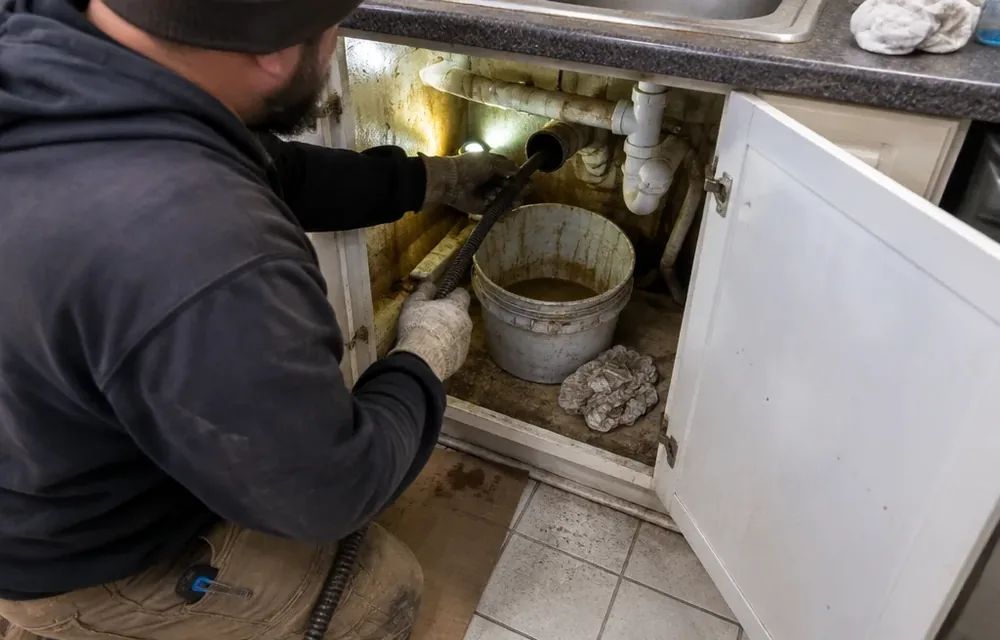
Signs you may need drain cleaning
Most people arrive here describing a symptom rather than naming a service. These are the three that point this way.
One fixture slow while the rest run fine
An isolated slow sink, tub or toilet usually means a trap or branch-arm blockage within feet of the fixture. Fast mechanical clearing restores it, typically inside ninety minutes.
Gurgling drains and bubbling toilets together
Cross-fixture gurgling means the blockage sits downstream where branch lines join, and every gallon used pressurises the system. Stop running water and get the main line diagnosed.
Washer cycle backs water into showers or tubs
Discharge from a high-volume appliance surfacing at low fixtures is a downstream restriction signature. The lateral needs clearing and camera verification, not another plunger.
How to tell a fixture clog from a main-line clog
This is the single most useful thing a rowhouse owner can learn, because it changes the price by a factor of three.
A fixture clog affects one drain and nothing else. The bathroom sink is slow but the tub and toilet run fine. The blockage sits in the trap or the branch arm within a few feet of the fixture — almost always hair, soap scum, toothpaste solids, or kitchen grease.
A main-line clog shows up as multiple fixtures failing together, and it follows gravity. Flush an upstairs toilet and the basement floor drain gurgles or fills. Run the washing machine and the first-floor shower backs up. Toilets bubble when a sink drains. Those symptoms mean the blockage is downstream of where the branch lines join — in the building drain or the clay lateral heading to the street.
If you are seeing main-line symptoms, stop running water immediately. Every gallon you add has to go somewhere, and with the line blocked the lowest opening becomes the overflow point — in Philadelphia rowhouses, usually a basement floor drain or a ground-floor shower pan.
What Philadelphia homes clog with, and why it is local
The failure pattern tracks build era and block type closely.
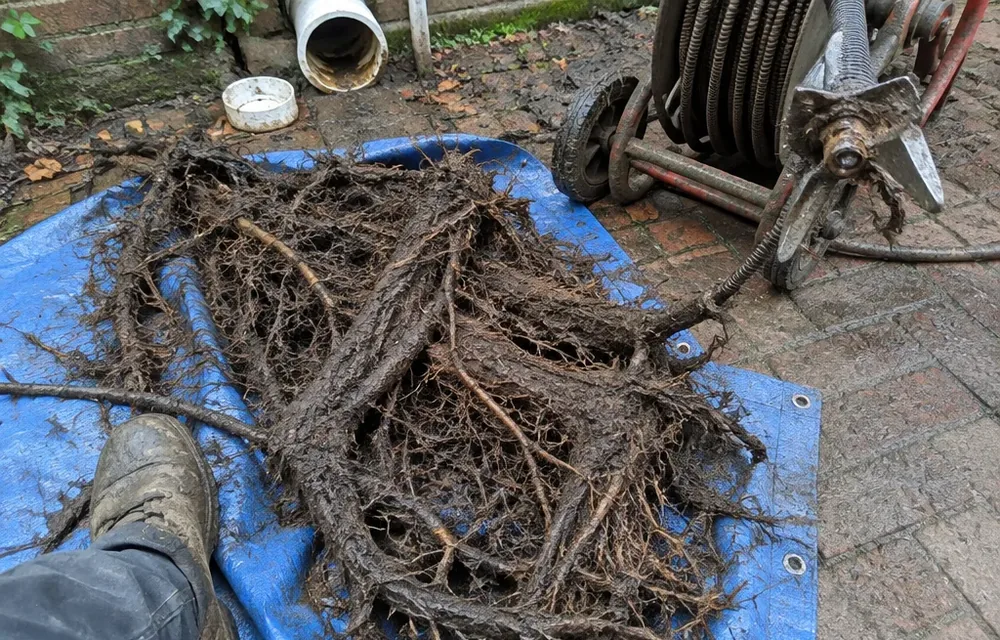
Tree roots dominate main-line failures citywide. London plane street trees and backyard silver maples send hair roots toward the warm vapour leaking from pre-1920 clay tile joints. Roots do not break sound pipe; they find the joint already weeping and thicken there until the line strains like a colander.
Grease dominates kitchen lines. It goes down warm and liquid, meets the ground temperature around a buried lateral, and congeals onto roughened cast iron in layers. Long rowhouse runs to the street main give it plenty of distance to cool and stick.
Cast iron scale narrows stacks and branch arms in 1890s–1940s rowhouses. The interior rusts into a rough, tubercular surface that grabs everything passing through.
Storm grit enters through the same failed joints roots use, because much of the city runs on combined sewers carrying sanitary flow plus roof and yard drainage. Each heavy rain re-packs sediment into bellies and flat spots.
Wipes and paper products labelled flushable snag on every rough edge above — scaled iron, clay joint lips, root hair — and turn a slow line into a blocked one in a single weekend.
Orangeburg pockets from 1945–1972 in parts of the Northeast and Southwest deform and blister with age. Those lines progressively narrow regardless of what flows through them, and no amount of clearing fixes the pipe shape.
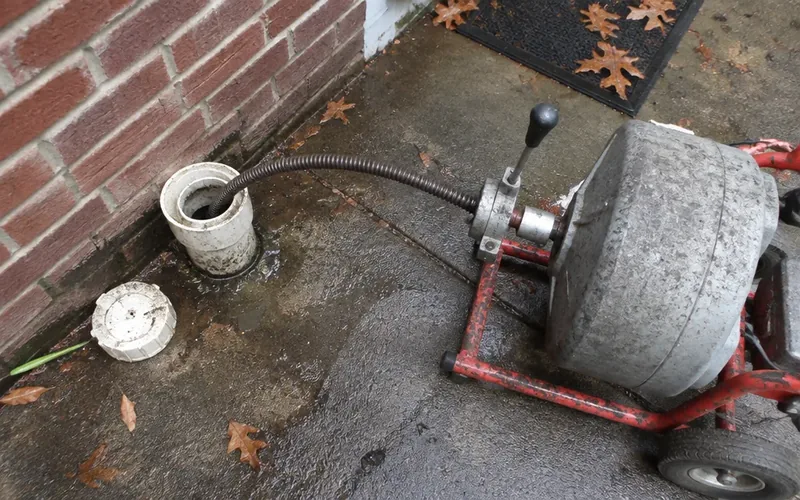
The three tools, and when each one is right
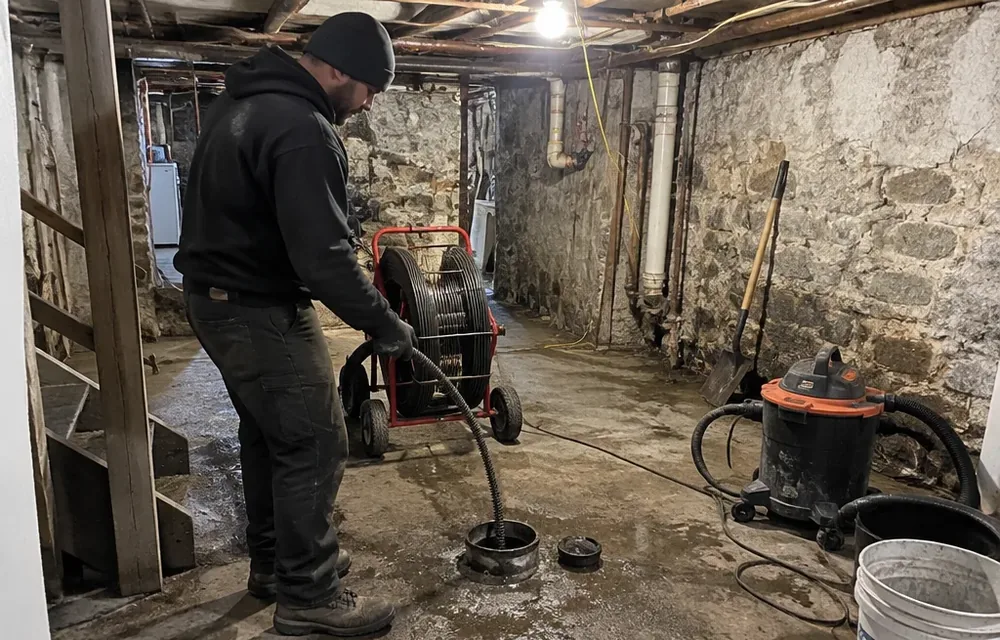
Cable machine (drum auger, or "snake"). A rotating steel cable with a cutter head. Hiring a drain snaking service means exactly this: steel cable, matched cutter, run to full bore. Right for a discrete blockage — a hairball, an isolated root mass — and for lines you need cleared quickly and affordably. What it does not do is clean the pipe wall. On a grease-coated cast iron line, a cable bores a channel and you will call again inside a year.
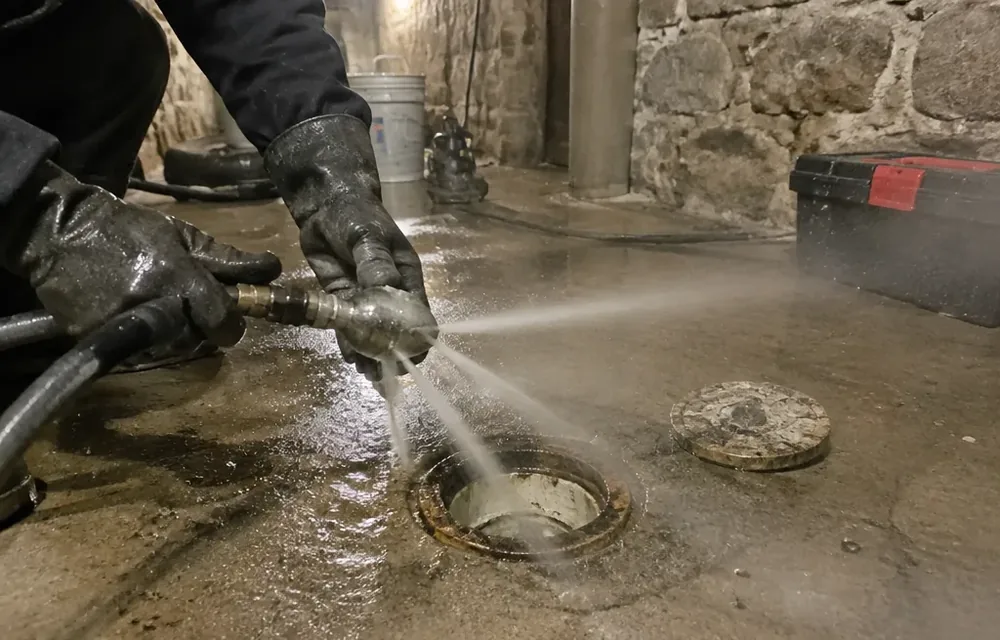
Hydro jetting. A high-pressure water nozzle that scours the pipe toward bare wall. Correct for grease, repeat clogs, restaurant lines, and anywhere you want the interval between calls measured in years. See hydro jetting for the full picture, including when we refuse to do it.
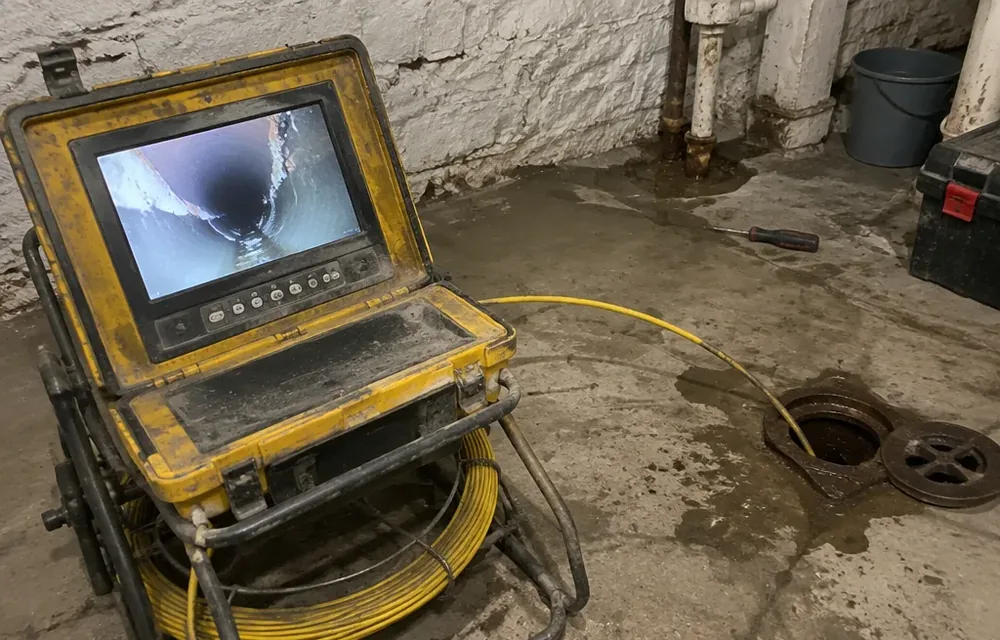
Camera inspection. Not a clearing tool, but the only way to learn why the line failed. Second clog in eighteen months in the same line? Clearing again without looking is throwing money away. See sewer camera inspection.
What actually happens on a drain-cleaning call
Diagnose before quoting
We run the fixtures and read the pattern to establish fixture clog vs. main line. You are told which one you have and what each costs before any tool comes off the truck.
Protect the work area
Drop cloths, boot covers and a containment plan for wastewater. Rowhouse basements are tight; your floors should not show it afterward.
Access the right cleanout
Working from a proper cleanout is faster and safer than pulling a toilet. Many older rowhouses lack an accessible cleanout — we say so and price the alternative honestly, including the option of installing one.
Clear the line
Correct machine and cutter head for the pipe diameter. We run until the line flows at full bore, not just until standing water drops.
Verify under real volume
We fill and flush repeatedly. A line that passes a cable but fails under a full tub draining is not fixed.
Tell you what comes next
If we pulled back roots or the cable hung on an offset joint, you hear about it — with a camera recommendation and a real price, not a scare pitch.
Honest pricing, and what moves it
Published ranges cover a standard residential call across Philadelphia. The number moves for real reasons, disclosed before starting:
- Accessible cleanout vs. no cleanout. Pulling and resetting a toilet to reach the line adds labour and a new wax ring — common in rowhouses without basement cleanouts.
- Line length and diameter. A 60-to-100-foot lateral out to the street main is a different job than a 12-foot branch arm under a sink.
- Cause. Roots need cutting heads and repeat passes. Heavy grease may need jetting to genuinely resolve rather than merely open.
- After-hours. Nights, weekends and holidays carry a dispatch premium, disclosed on the phone, never as a surprise line on the invoice.
When drain cleaning is the wrong answer
We would rather lose a call than sell the wrong one. Clearing does not fix a structurally failing line. If any of the following is true, the honest recommendation is a camera inspection first — not another cabling:
- Third clog in the same line within two years.
- The cable stops hard at the same footage every time. That is an offset clay joint, a belly, or a partial collapse — not a clog.
- Sewage smell in the cellar or yard, or a strip of ground noticeably spongier than the rest.
- The lateral has never been inspected and the block falls in the Orangeburg window or the pre-1920 clay era. See main sewer line cleaning and sewer camera inspection.
Frequently asked questions
How much does drain cleaning cost in Philadelphia?
Most residential sewer and drain cleaning calls run $149 to $475. A single accessible fixture drain sits at the low end. A main-line clog with root cutting and long lateral footage sits at the high end. After-hours calls carry a dispatch premium. Access is the biggest driver: an exterior or basement cleanout keeps it low, pulling a toilet does not.
Why does my rowhouse basement drain back up when it rains?
Much of Philadelphia runs on combined sewers, so heavy rain surcharges the public main and your lateral at once. If your line already has roots, grease or a belly, storm flow is what pushes it over the edge. Recurring rain-linked backups deserve a camera inspection, not another blind cabling.
Will a chemical drain cleaner fix my clog?
Rarely, and it can make the eventual repair worse. Caustic cleaners generate heat that deforms PVC and accelerates corrosion in old cast iron. They also sit in standing water above a full blockage — that caustic solution is what comes out when a technician opens the line. If you already poured some in, tell us; that is a crew safety issue.
How long does a drain cleaning appointment take?
A straightforward fixture clog is typically 45 to 90 minutes. A main-line clog with root cutting runs two to three hours. If we find something structural mid-job, we stop and show camera footage before spending more of your money.
Do you offer same-day drain cleaning?
Yes, across Philadelphia, with 24/7 dispatch for active backups. Availability is tightest during heavy-rain weeks when combined-sewer infiltration drives call volume up. See emergency drain service for after-hours help.
Do you handle drain cleaning near me in Philadelphia?
If near you means Philadelphia or any of our 32 suburbs — yes. Tell us your town and house age when you call and you will get a realistic arrival window, not an optimistic one. Same-day visits for active problems, 24/7 dispatch for backups.
How do I pick between drain cleaning companies in Philadelphia?
When choosing which drain plumber to call, ask each one three things: do they diagnose fixture-versus-main before quoting, do they verify flow under a full tub before leaving, and do they show camera footage when recommending more work. A company that prices a sewer over the phone without seeing the line is guessing with your money.
Is a slow drain an emergency?
A single slow fixture can wait for a scheduled visit. What cannot wait is sewage entering the home, multiple fixtures failing together, or water rising in a tub when you flush. That is an active main-line backup and it worsens with every gallon used.
Guides that cover this in more depth
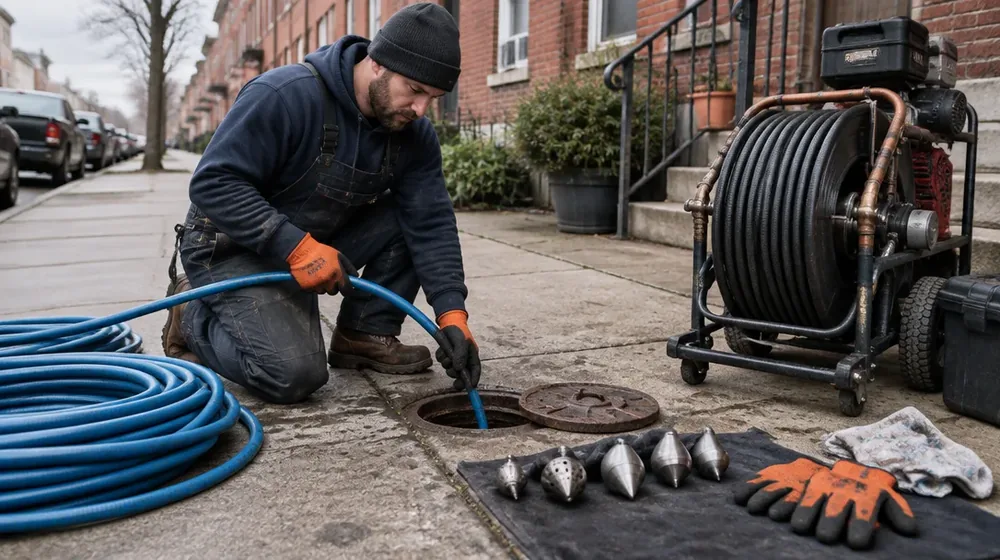
Hydro Jetting vs Snaking: What Philly Homes Need
A cable bores a hole through the blockage so water moves again. A jetter scours the whole pipe wall back toward bare m…
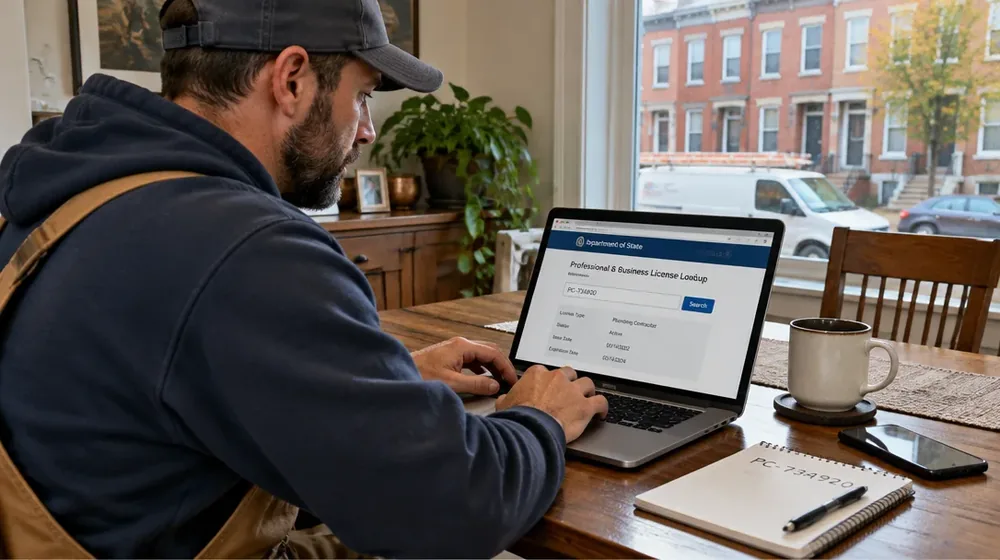
How to Check a PA Plumber License in Philly
Verifying license and insurance before work begins takes minutes and is the homeowner responsibility that protects eve…
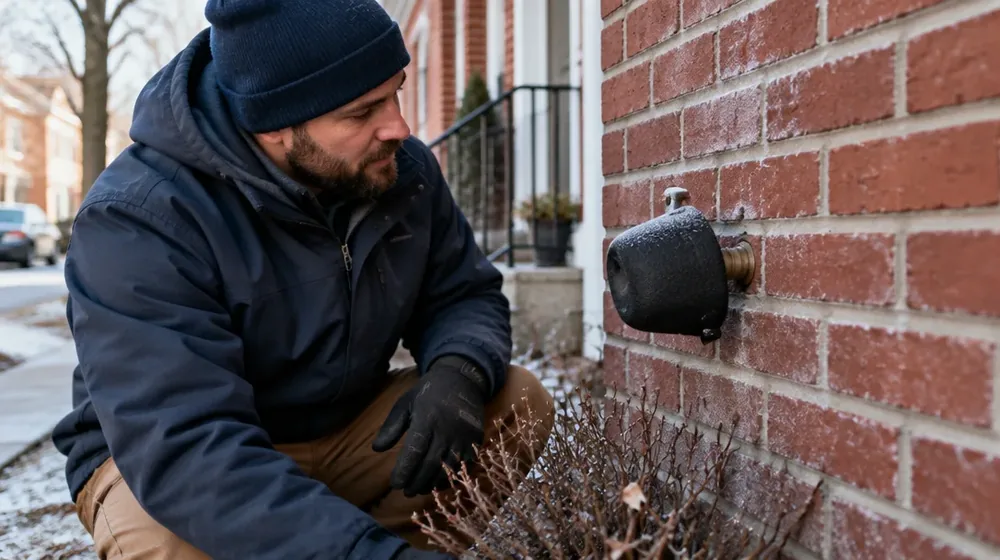
Winter Freeze Protection for Philly Drains
Philadelphia winters rarely freeze a buried lateral, yet every year they burst exposed pipes, heave cleanout risers, a…
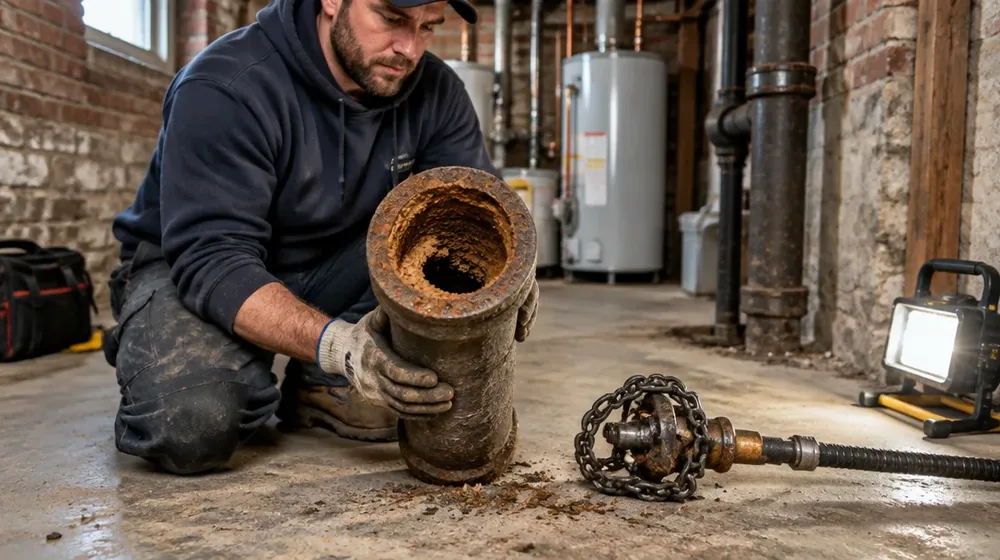
Cast Iron Descaling vs Jetting: Philly Homes
Inside every aging cast iron stack two processes run at once: scale builds inward and corrosion eats outward. Jetting …
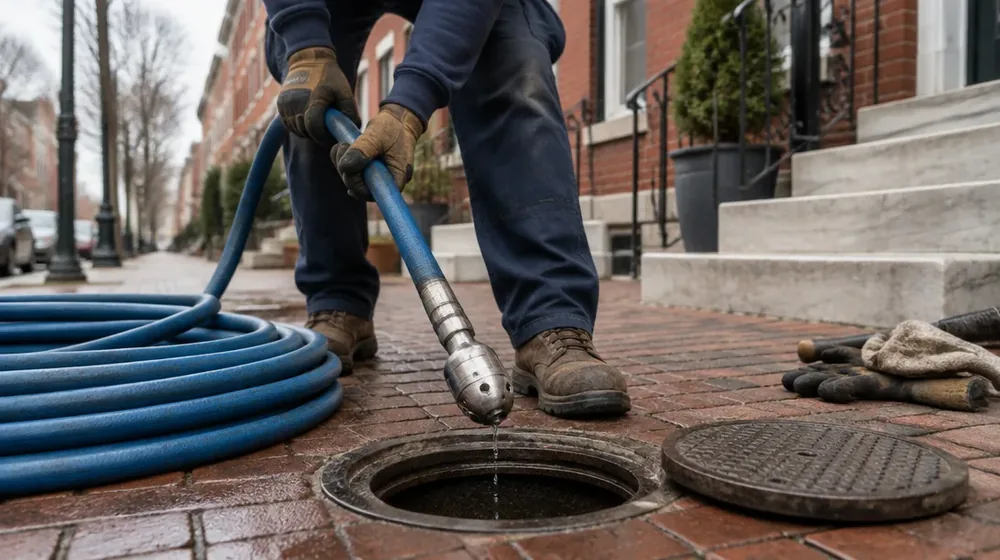
What Is Hydro Jetting? Philly Homeowner Guide
Hydro jetting is a drain cleaning method that uses high-pressure water, sent through a hose and a specially drilled no…

How to Choose a Drain Cleaning Company in Philly
The right drain hire is a verifiable company, a camera-led diagnosis, and a written scope with a load-tested proof. Ev…
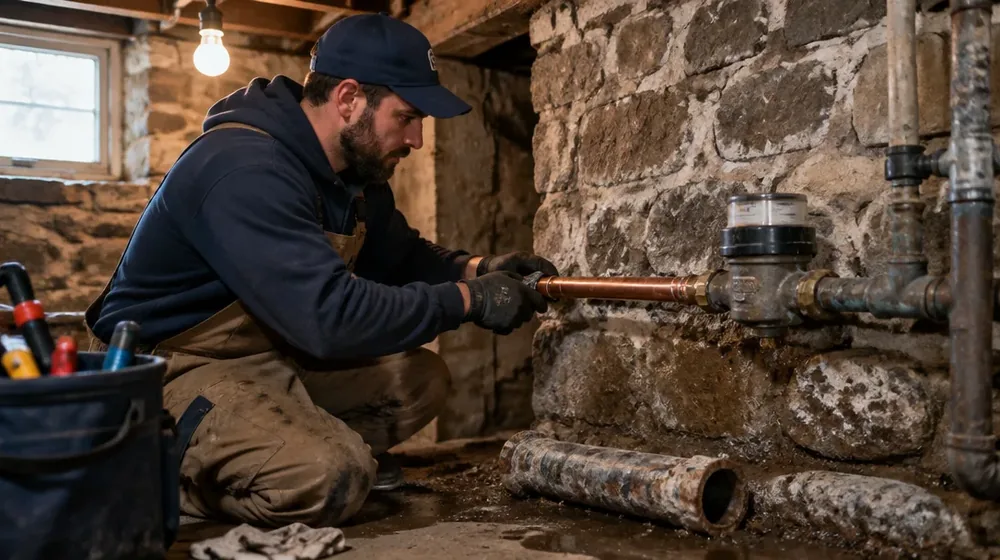
Lead Service Line Replacement in Philadelphia 2026
Philadelphia will replace a qualifying home’s lead drinking-water service line at no charge to the owner — during plan…
Sewer Cleanout Guide for Philadelphia Rowhouses
The sewer cleanout is the capped access riser through which every drain machine, jetter hose, and camera enters your l…
Symptoms this service fixes
Drain Gurgling
Gurgling is air being forced through water it should not have to move through.
All Drains Slow
One slow drain is a fixture problem, but every drain slowing together means the restriction sits where all branches meet: the building drain or the lateral to the street.
Toilet Bubbling
A toilet that bubbles when another fixture drains is reporting air displaced past a downstream restriction.
Related services
Hydro Jetting
A cable bores a hole through the clog.
Sewer Camera Inspection
Every expensive sewer decision in Philadelphia — jet, repair, line, replace — depends on one thing: what the pipe actually looks like inside.
Rooter Service
Roots do not break your pipe to get in.
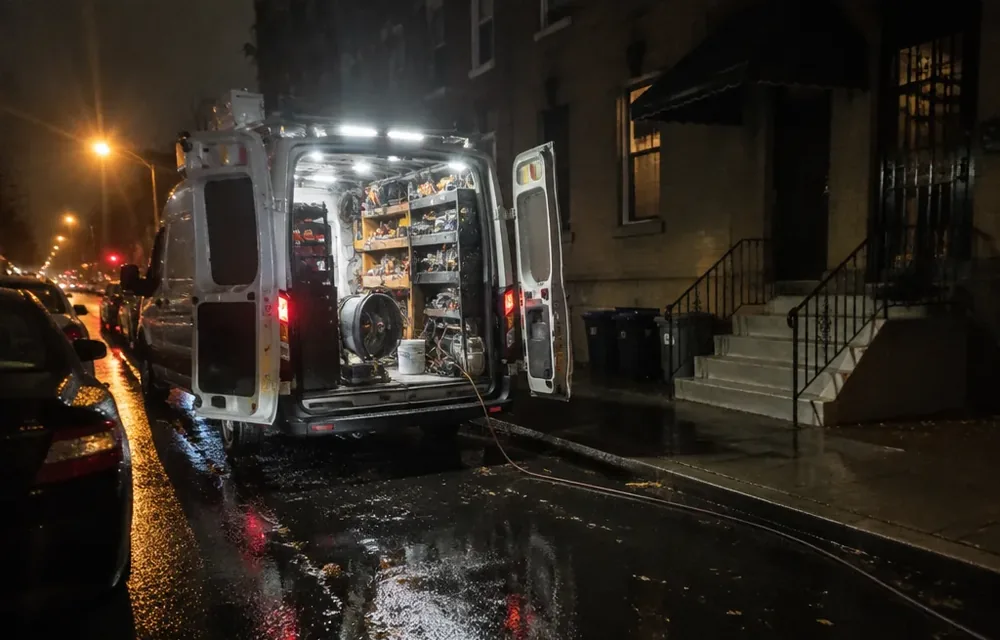
Emergency Drain Service
Sewage on the basement floor does not wait for business hours, and neither do we.
Drain Cleaning across Philadelphia and its suburbs
We provide drain cleaning in 32 Philadelphia-area towns. Local pages cover the housing stock and pipe materials specific to each area.
Philadelphia
Delaware County
- Upper Darby
- Media
- Yeadon
- Lansdowne
- Havertown
- Springfield (Delco)
- Chester
- Drexel Hill
- Ridley Park
- Swarthmore
- Darby
Montgomery County
- Norristown
- Abington
- King of Prussia
- Ardmore
- Bala Cynwyd
- Conshohocken
- Plymouth Meeting
- Jenkintown
- Cheltenham
- Willow Grove
- Lansdale
- Pottstown
- Ambler
- Horsham
- Hatboro