Bathroom Drain Cleaning in Philadelphia — Tubs, Showers & Sinks
Bathroom clogs are almost never mysterious: hair, soap scum and toothpaste solids, wrapping around cast iron scale in a century-old branch arm. The fix is fast — provided nobody mistakes a main-line backup for a tub clog first.
- 45 minutes to 2 hours
- Philadelphia Area
- 7 days a week
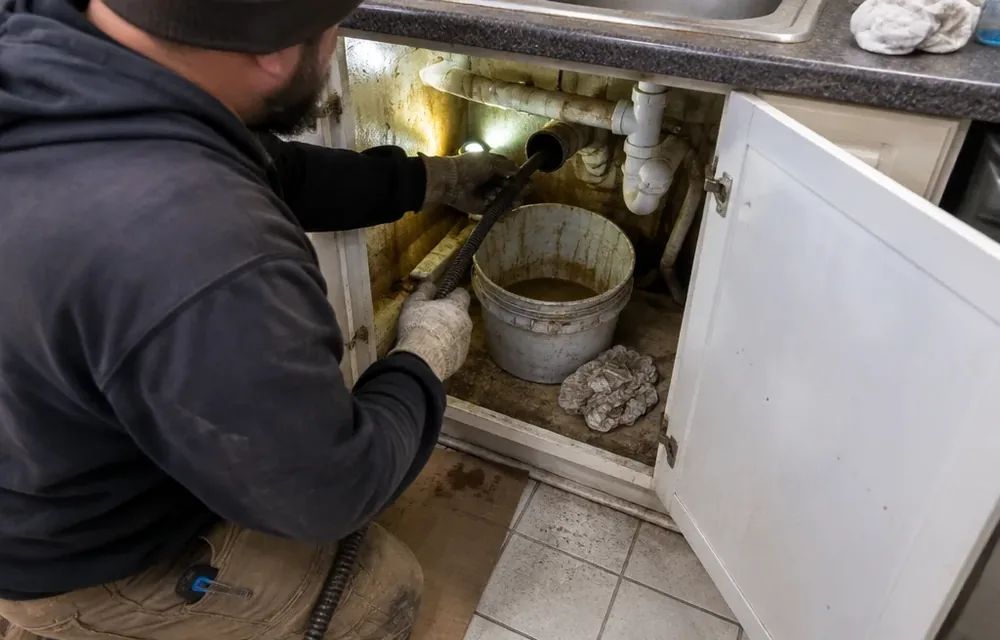
Signs you may need bathroom drain cleaning
Most people arrive here describing a symptom rather than naming a service. These are the three that point this way.
Tub fills while showering, sink gurgles nearby
A tub that ponds during normal showering with nearby gurgling describes a hair-and-soap mass in the trap arm. Mechanical clearing plus assembly cleaning restores full flow quickly.
Pop-up sink draining to a trickle despite cleaners
Toothpaste solids and shaving residue cement around pop-up assemblies where chemicals only soften the surface. Pulling and clearing the assembly solves what bottles cannot.
Cleared bathroom drain still running slowly
A drain that stays sluggish after clearing points at a blocked roof vent rather than a remaining clog. Vent checks belong in the same visit, not on a second invoice weeks later.
First: is it the bathroom, or the whole house?
One slow tub while everything else drains fine is a fixture clog — hair and soap within feet of the drain. The tub fills during showers, the sink gurgles, but toilets flush normally.
A tub that fills when toilets flush, or a shower pan rising during the washer cycle, is a main-line problem wearing a bathroom costume. Clearing the tub trap changes nothing because the blockage sits downstream in the building drain or lateral. See drain cleaning and main sewer line cleaning for that case.
Philadelphia rowhouses add two confounders: basement bathrooms and ground-floor showers sit near the lowest opening, so lateral restrictions show up in bathroom fixtures first — and many older homes still carry a basement house trap that, when clogged, fills the lowest drains with sewage regardless of which fixture you ran. Pattern matters more than any single fixture.
What clogs Philadelphia bathroom drains
Hair plus soap scum is the universal pair. Hair wraps the stopper assembly and trap walls; soap scum cements it into a felt-like mass. Long-hair households clog tub traps two to three times faster — that is household physics, not a pipe defect.
Cast iron scale in 1890s–1940s branch arms gives hair a rough surface to anchor on. A smooth PVC trap sheds hair for years; a scaled iron arm grabs the first strand and builds from there. Advanced corrosion narrows the bore until even normal use stalls.
Toothpaste solids, shaving residue and bath products load sink arms specifically. Sink pop-up assemblies are hair-and-paste collectors by design, and rental bathrooms with years of accumulated buildup clog at the assembly before the pipe.
So-called flushable wipes and hygiene products do not break down in old iron and clay. They snag on scaled edges and trap joints and cause near-instant blockages — a growing share of our tub-and-toilet-together calls.
Tree-root intrusion downstream can masquerade as a bathroom clog where mature street trees have entered the clay lateral. When roots catch paper and slowed flow, the lowest bathroom fixtures fill first.
Vent restriction mimics clogging: a blocked vent slows drainage and gurgles without any obstruction in the drain itself. Rowhouse roof vents clog with leaves, nests and ice — worth checking when clearing does not change the symptom.
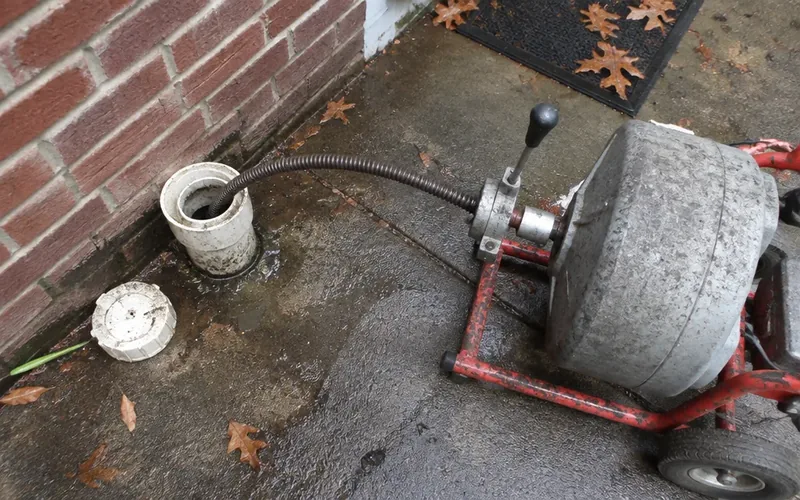
How we clear bathroom drains
Confirm fixture vs. main line
Run adjacent fixtures and listen. Whole-house symptoms redirect to lateral work before anyone touches the tub.
Pull and clean the assembly
Stoppers, strainers and pop-ups come out and get de-haired by hand. Half of all bathroom calls effectively end here.
Cable the branch arm correctly
Small-diameter cable with the right head for 1.5-to-2-inch arms — enough to clear the trap arm without scarring old iron.
Check the vent when flow stays slow
Cleared drain that still drains slowly points at venting. Roof-vent checks are part of the visit, not a second invoice.
Flush and volume-test
Full tub release, not a cup of water. A line that passes a trickle but fails a tub volume is not cleared.
When the bathroom keeps clogging
Same tub clogging twice a year with long-hair use is maintenance, not pathology — a strainer and a scheduled clearing solve it. Same sink clogging quarterly points at the pop-up assembly or a scaled arm that needs descaling or replacement rather than another cabling.
Whole-bathroom recurrence — tub, sink and toilet all slowing together — is a stack or lateral issue. Cast iron stacks in rowhouses scale from the inside over decades until the bore narrows; at that point clearing buys months and descaling or stack work buys years.
Chemical cleaners deserve their usual warning: caustic products generate heat that deforms PVC traps and accelerates iron corrosion, and they sit above full blockages as a chemical hazard for whoever opens the line. Tell us if you already poured some in.
Pricing and simple prevention
Bathroom drain clearing typically runs $149 to $375: single accessible fixture at the low end, multi-fixture branch work or vent involvement at the high end. Most visits finish inside two hours.
Prevention is unusually effective here. A two-dollar mesh strainer over the tub drain outperforms every chemical on the market. Brush hair before showering, not during. Wipe heavy bath oils from the tub rather than rinsing them into a cool iron arm where they congeal onto scale.
For landlords: bathroom assemblies in rentals repay scheduled attention. A turnover clearing plus fresh strainers costs less than one mid-lease emergency visit — and tenants never report slow drains until they are fully blocked.
Frequently asked questions
How much does bathroom drain cleaning cost in Philadelphia?
Typically $149 to $375 depending on fixture count, access and whether vent work is involved. A single tub or sink clearing sits at the low end; multi-fixture branch clearing sits higher. Most visits finish within two hours.
Why does my tub fill up when the toilet flushes?
That is usually a main-line restriction, not a tub clog — flush water cannot pass the downstream blockage and backs up at the lowest nearby opening. Stop using water and treat it as a lateral problem, not a bathroom problem.
Are chemical drain cleaners safe for old rowhouse pipes?
No — caustic heat deforms PVC traps and worsens cast iron corrosion, and leftover chemical sits above full blockages as a hazard. Mechanical clearing is faster, safer and actually removes the hair mass instead of softening its surface.
Why does my bathroom sink drain slowly but the tub is fine?
The blockage is in the sink branch arm or the pop-up assembly itself — toothpaste solids and shaving residue plus hair at the assembly. It is a fifteen-foot problem, not a whole-house problem, and it clears quickly.
My cleared drain still gurgles. Is it still clogged?
Possibly a vent restriction rather than a drain blockage. A blocked roof vent lets fixtures drain slowly with gurgling even when the drain runs clear. We check venting when post-clearing flow stays sluggish.
How do I stop bathroom drains clogging so often?
Mesh strainers on tubs and showers, brushing hair before showering, and clearing pop-up assemblies a few times a year. For long-hair households, a scheduled clearing beats every chemical additive sold.
Guides that cover this in more depth
Related services
Drain Cleaning
A single slow sink is a nuisance.
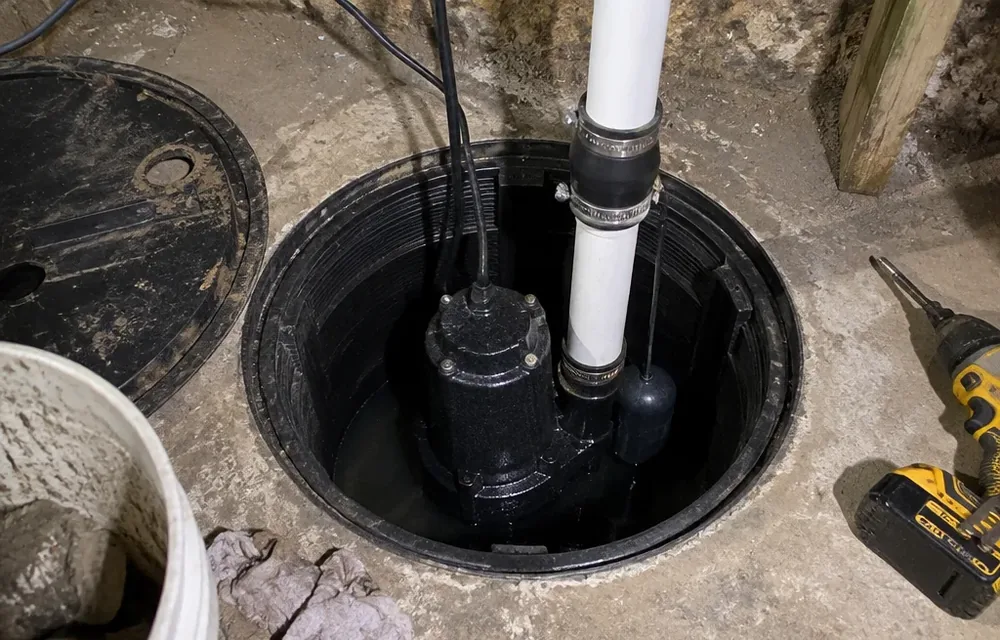
Basement Floor Drain Cleaning
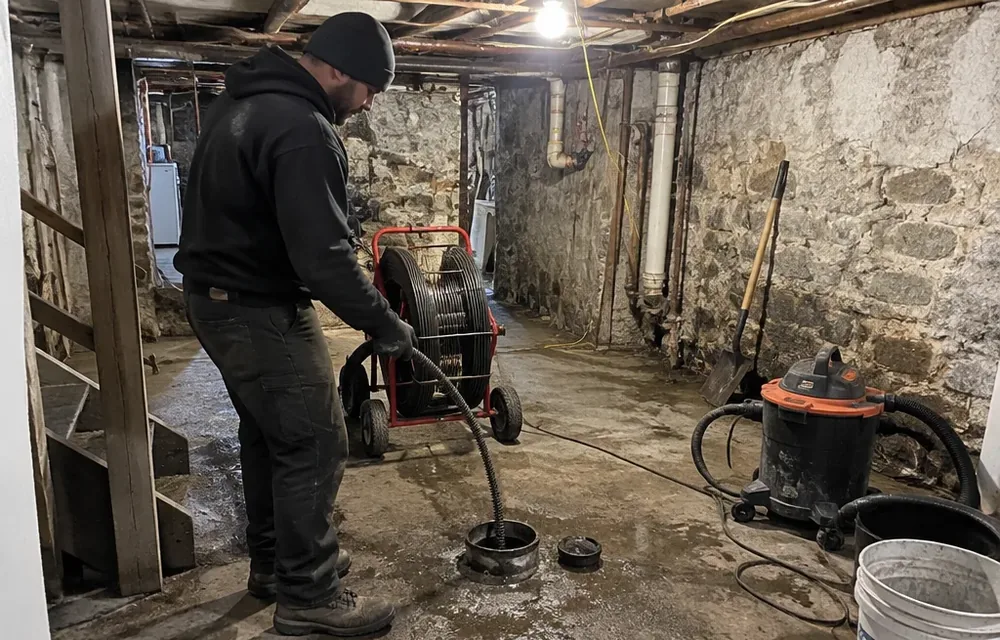
The basement floor drain is the lowest opening in your rowhouse — which makes it the relief valve for every downstream restriction.
Main Sewer Line Cleaning
The lateral is the most expensive drain you own — a 60-to-100-foot clay run from your rowhouse to the street main, shared with stormwater, hunted by street-tree roots.
Emergency Drain Service
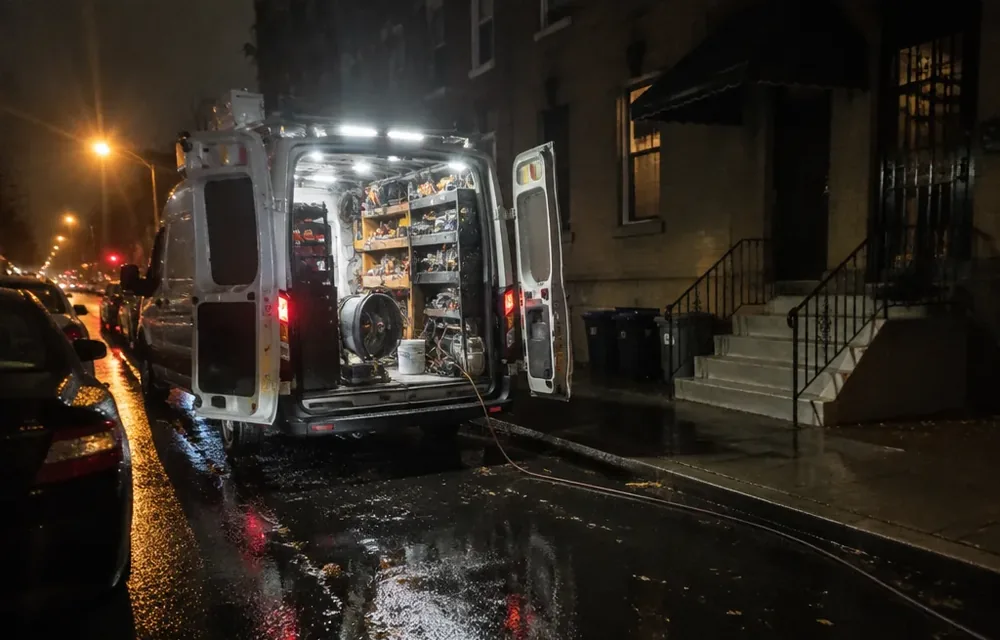
Sewage on the basement floor does not wait for business hours, and neither do we.
Bathroom Drain Cleaning across Philadelphia and its suburbs
We provide bathroom drain cleaning in 32 Philadelphia-area towns. Local pages cover the housing stock and pipe materials specific to each area.
Philadelphia
Delaware County
- Upper Darby
- Media
- Yeadon
- Lansdowne
- Havertown
- Springfield (Delco)
- Chester
- Drexel Hill
- Ridley Park
- Swarthmore
- Darby
Montgomery County
- Norristown
- Abington
- King of Prussia
- Ardmore
- Bala Cynwyd
- Conshohocken
- Plymouth Meeting
- Jenkintown
- Cheltenham
- Willow Grove
- Lansdale
- Pottstown
- Ambler
- Horsham
- Hatboro