Should I call an emergency plumber now or wait until morning?
Call now for active sewage backup, sewage odors with slow drains across fixtures, no working toilet, water rising at a floor drain, or any backup arriving during heavy rain. Wait until morning for a single slow sink or tub with other fixtures working normally, provided you stop using the affected fixture overnight.
- Direct answer
- 2 min read
The triage logic is about damage per hour. Raw sewage keeps spreading contamination, rising floor-drain water keeps climbing toward finished walls and electrics, and a combined-main surcharge during a cloudburst off the Schuylkill or Delaware corridors will not pause because the hour is late. Philadelphia rowhouses with finished basements in particular convert each hour of standing water into flooring, drywall, and contents losses that dwarf any after-hours premium. Dry-weather whole-house stoppages rank nearly as high: with nowhere for wastewater to go, every flush uphill becomes water on the lowest floor, and the household cannot function until the line opens. In these cases waiting saves nothing and risks the cleanup bill that erases years of maintenance savings.
The safe-to-wait category is narrow but real. One slow kitchen sink while the bathroom fixtures drain normally, one sluggish tub with no odors and no basement activity, or a lavatory that drains slowly but empties fully all point to a local branch restriction that overnight disuse will not worsen. Protect the night: stop using the affected fixture, avoid chemical openers that sit in the trap and endanger the morning crew, keep laundry and dishwashers off if any lower drain has shown sympathy symptoms, and note exactly which fixtures misbehave so the morning visit starts with evidence. If anything escalates overnight, from odor to multi-fixture slowness to water where it should not be, the case promotes itself to call-now without further debate.
When you call, bring dispatch the four facts that shorten the visit: which fixtures are affected and when it started, whether it arrived with rain, whether sewage or clear water is present, and where your cleanout sits. Ask for the honest sequence on arrival: containment first, the least invasive opening that proves the restriction, camera where the line is older or a repeat offender, and kept footage before final settlement. And whatever the hour, schedule the follow-through in daylight: verification footage with depths, a stated maintenance interval, and, for any wet-weather history, a backwater-valve conversation before the next storm season makes the decision for you.
Want the full picture?
How to Unclog a Main Sewer Line Safely in Philly — Read safe main-line triage: what to do before anyone arrives.
Follow-up questions
What should I do while waiting for the crew?
Stop all water use, keep people and pets clear of affected areas, photograph water lines for your records, and clear basement access to the cleanout. Never open a cap against a blocked line yourself.
Does calling at night cost more?
Urgent dispatch typically carries a premium over weekday scheduling, which is exactly why true backups still warrant the call: the cleanup from waiting costs far more than the premium.
Services behind this answer
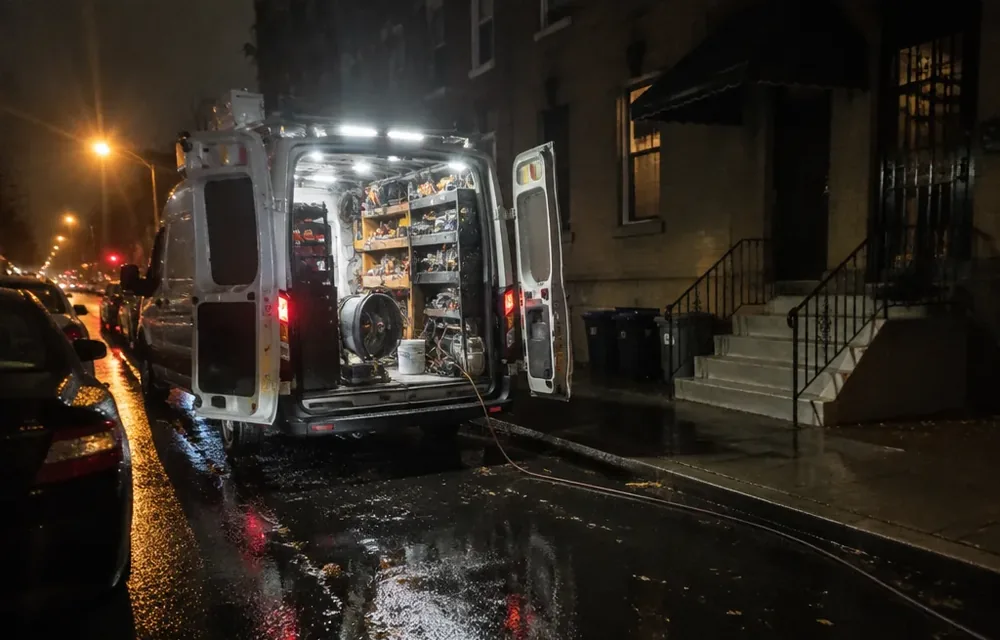
Emergency Drain Service
Sewage on the basement floor does not wait for business hours, and neither do we.
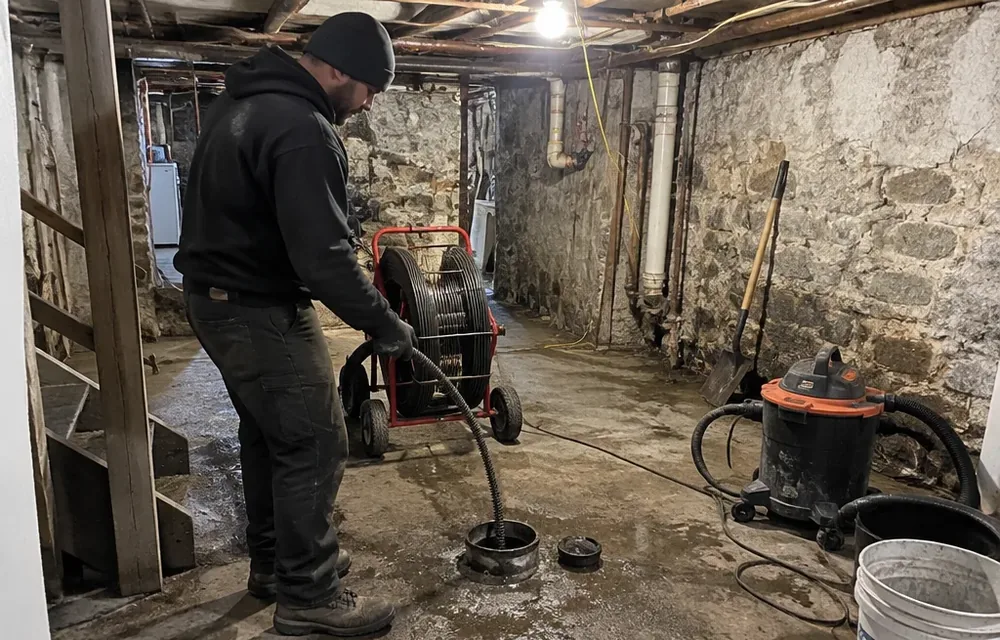
Main Sewer Line Cleaning
The lateral is the most expensive drain you own — a 60-to-100-foot clay run from your rowhouse to the street main, shared with stormwater, hunted by street-tree roots.