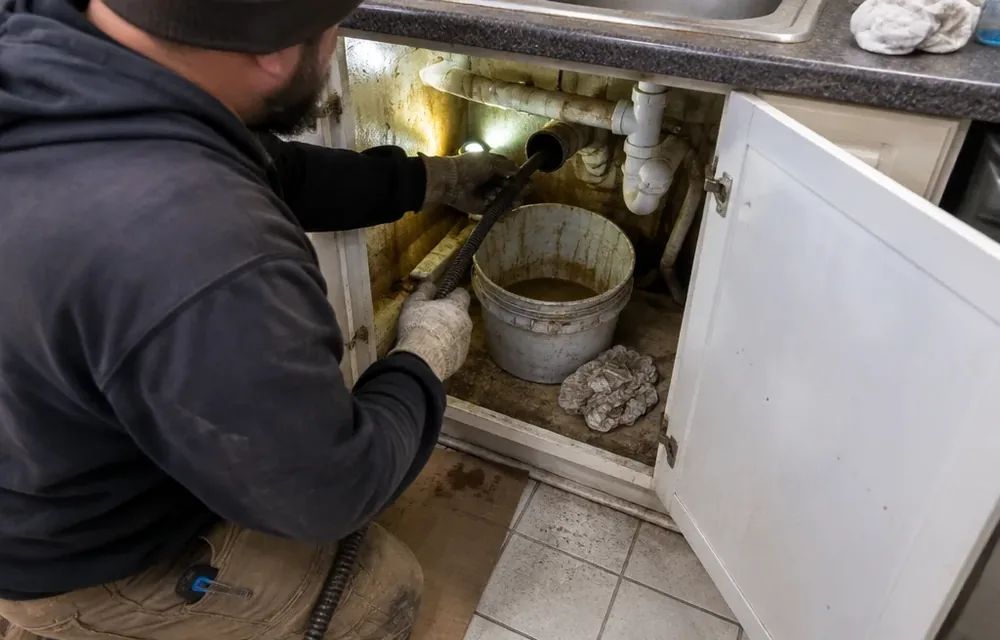
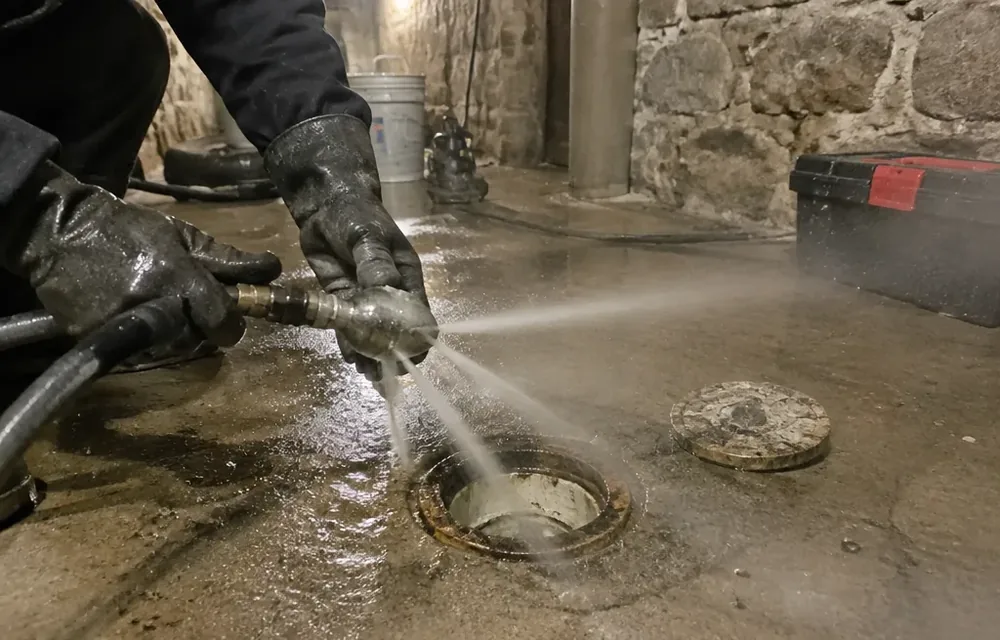
How often does a Philadelphia rowhouse need drain cleaning?
Most Philadelphia rowhouses land on a one-to-three-year professional cleaning rhythm when roots or grease are involved, with sound PVC lines and careful kitchens stretching longer. The exact interval comes from your pipe material, what the last camera showed, and how fast symptoms returned, never from a generic calendar alone.
- Direct answer
- 2 min read
Pipe material writes the baseline. Jointed clay laterals under sidewalk corridors in South Philadelphia, Fishtown, Kensington, Point Breeze, and West Philadelphia admit root hair every growing season through joints that household discipline cannot close, so a logged entry joint sets a scheduled cutting-plus-flushing cycle. Cast iron stacks and branch arms inside the building roughen with age and grab grease faster each year, which shortens kitchen-line intervals in narrow galley runs with long carries to the street main. Orangeburg lines from the 1945 to 1972 window follow a different rule entirely: monitor by camera and plan correction, because no cleaning interval restores fiber pipe. Converted jointless PVC or HDPE laterals largely retire the root schedule, an underrated dividend of doing a correction properly.
History refines the baseline into your schedule. A grease line that slowed at eighteen months wants attention at fifteen; a root joint cut in spring wants verification before the autumn growth push; any line that labored during a combined-sewer surcharge wants capacity proven before the next storm season, since summer cloudbursts off the Schuylkill and Delaware corridors punish half-coated laterals first. Set the next visit by that history: shortening intervals mean openings are enlarging and the trend runs against you, while stable multi-year intervals on sound pipe mean maintenance is working. Keep every camera file with its date as a lateral health record, because a 2026 baseline showing one root joint at a logged footage makes the next scope a comparison rather than a fresh exploration.
Habits stretch whatever interval the pipe allows. Cooled fat into a jar for the trash, greasy pans wiped before washing, strainers stopping food solids, and grease-trap diligence on restaurant corridors such as East Passyunk and Baltimore Avenue slow re-coating more than any product. What never stretches an interval is waiting for the backup: one emergency visit plus cleanup in a finished basement erases years of maintenance savings. Schedule in dry spring weather at standard scheduling, bundle the verification camera, and compare the ten-year maintenance total against a repair figure once intervals start compressing.
Want the full picture?
How Often Should You Hydro Jet? Philly Schedule — Read the full scheduling guide: intervals by line and load.
Follow-up questions
We just moved in. When should the first cleaning happen?
Start with a camera inspection, not a cleaning. Baseline footage with depths sets the interval from evidence instead of from the first emergency.
Does a garbage disposal change the schedule?
Yes, it shortens kitchen intervals by loading food solids that bind into grease film. Strainers and wiped pans matter more than any additive poured afterward.