Is hydro jetting worth it?
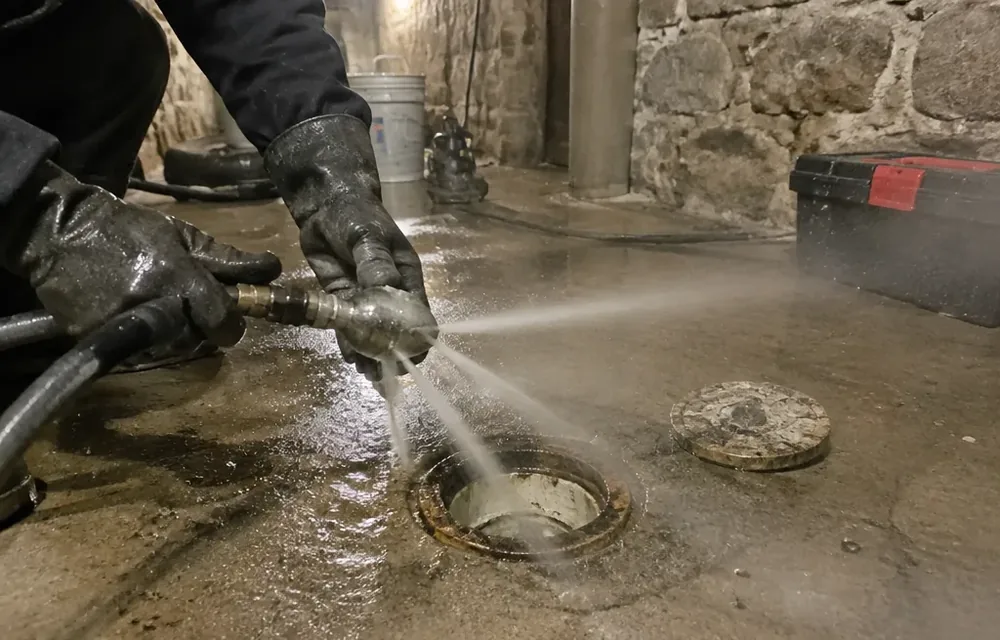
Yes, hydro jetting is worth it when clogs keep returning, grease coats the line, roots intrude, or a liner is planned, because it scours the wall to full diameter instead of boring a hole. A proper scouring commonly holds two to five years, while a snaking of the same line often holds six to eighteen months.
- Direct answer
- 2 min read
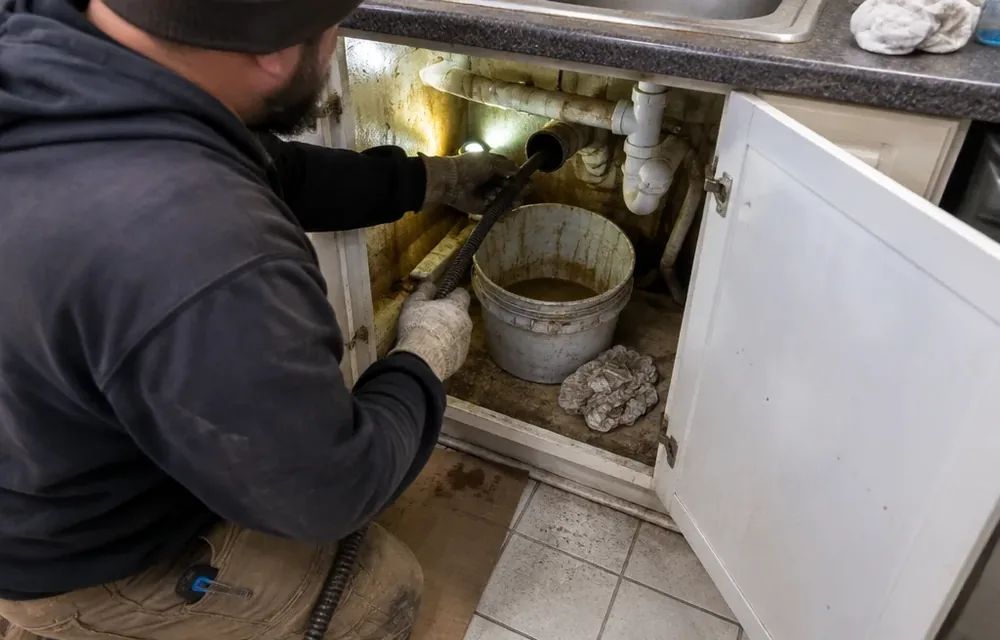
The longevity math is what justifies the higher visit cost for Philadelphia rowhouses. A cable machine punches a channel through grease, paper, and sludge so flow resumes, but the rough coating stays on the wall and catches the next load of kitchen fat and lint. In narrow galley kitchens across South Philadelphia, Fishtown, and Point Breeze, where decades of congealed grease laminate onto old cast iron, that channel narrows again within months and the homeowner pays for a second and third cable visit. Jetting with a rotary head shears the coating off, flushes it to the combined main, and restores the full bore, so one visit replaces a cycle of repeat calls. Roots sharpen the contrast further: street trees such as London plane and silver maple along West Philadelphia and Germantown blocks send hair into clay joints every season, and cutting followed by jetting plus camera verification of the entry joint resets the interval, while snaking alone leaves shredded strands that regrow through the mat. Pre-lining work is the clearest case, since no liner bonds to a wall still carrying grease and scale.
Jetting still has real disadvantages, and honest crews say so. It costs more per visit than snaking, it demands structurally sound pipe, and it is overkill for a one-off hair clog at a single tub or lavatory that a hand auger resolves in minutes. Lines with bellies that hold standing water, Orangeburg fiber pipe from the 1945 to 1972 window, collapsed segments, or cast iron scaled paper-thin need repair or replacement rather than pressure, which is why the pre-clean camera inspection is part of the value rather than an add-on. Pressurizing a failing line does not just waste the visit, it can force a collapse that turns a planned repair into an excavation, so a crew that declines to jet after showing camera findings is protecting the budget, not padding it.
Decide by pattern, not by price headline. Jetting earns its keep when two or more fixtures clog together, backups recur after previous snakings, kitchen drains slow across the whole branch, camera footage shows wall coating or root hair, or a contractor requires a clean wall before lining. Snaking wins for an isolated first-time clog with no history. Either way, ask for the same written scope: access point, diameter and footage, root cutting if roots appear, camera before and after with kept footage, a full-bore load test before sign-off, and the stated contingency if the camera shows pipe needing repair. In combined-sewer neighborhoods where summer cloudbursts fill every queue at once, a dry-weather scouring at standard scheduling beats an August backup visit on every measure.
Want the full picture?
Hydro Jetting vs Snaking: What Philly Homes Need — Read the full comparison: hydro jetting vs snaking.
Follow-up questions
How long does hydro jetting last compared to snaking?
A full scouring commonly holds two to five years on grease and root lines, while a cable clearing of the same line often holds six to eighteen months because the wall coating remains.
When is snaking the better choice?
For a first-time clog at one fixture with no history and no multi-fixture symptoms, snaking clears it faster and cheaper, and jetting would be overkill.