What should I do if sewage backs up into my basement?
If sewage is backing up into your basement, stop all water use immediately, keep people and pets out of the water, avoid the electrics, and call for professional help. Do not flush again, do not run the dishwasher or laundry, and do not wade in to rescue belongings until the flow stops.
- Direct answer
- 2 min read
Philadelphia basements flood the way they do for a structural reason. Much of the city drains to combined sewers carrying sanitary flow and stormwater in the same mains, so when a summer cloudburst or a stalled Delaware Valley front surcharges the main, basement floor drains and low fixtures become the relief points. Rowhouses in low-lying pockets, blocks with long flat laterals, and homes whose lines already carry grease, roots, or grit feel it first. While waiting, kill the inflow you control: toilets, showers, dishwasher, and washing machine all stay off, and every occupant should know that one more flush uphill becomes one more gallon on the basement floor. If water approaches outlets, panels, or the water heater controls, stay out entirely and leave power decisions to responders.
What you do in the first hour shapes the cleanup. Note which fixtures gurgle or drain slowly and whether the backup arrived during heavy rain, because wet-weather arrival points toward main surcharge while dry-weather backup points toward your own lateral blockage. Photograph water lines and affected contents for your records before anything is moved, and check whether your policy carries a buried-lateral or sewer-backup endorsement, since many Philadelphia homeowners hold coverage they have never reviewed. Do not open a coil cap against a blocked line yourself, do not pour chemicals into standing sewage, and do not run fans across contaminated areas, which spreads contamination into wall cavities and HVAC. Contaminated porous contents, carpet pad, and soaked drywall are losses; hard surfaces need real disinfection after the water recedes.
After the immediate crisis, convert the emergency into a plan. A cleared-line camera with footage marks and depths distinguishes a coated lateral that wants jetting from roots that want scheduled cutting, a belly that wants regrading, or a collapse that wants repair, and the footage file becomes the baseline every future decision compares against. Ask about a backwater valve: the city offers a program covering installation for qualifying homeowners, and a properly placed valve is the single device that stops the next surcharge from entering through the same drain. Late spring, before convective-storm season, is the budgeting window for that work, because capacity planning should assume the wet-weather slug rather than the dry-weather trickle.
Want the full picture?
Basement Backup in Philly: Combined Sewers — Read the full backup guide: combined sewers and first response.
Follow-up questions
Is it safe to clean up sewage myself?
Grey-water from a single fixture overflow is manageable with protection and disinfection. Raw sewage across a floor is a contamination job: protective gear, no fans, and professional cleanup for porous materials.
Will it drain away on its own after the rain stops?
Surcharge-driven water often recedes with the main, but the coating, roots, or defect that let it in remain. Treat the recession as the moment to scope and plan, not as proof the problem passed.
Services behind this answer
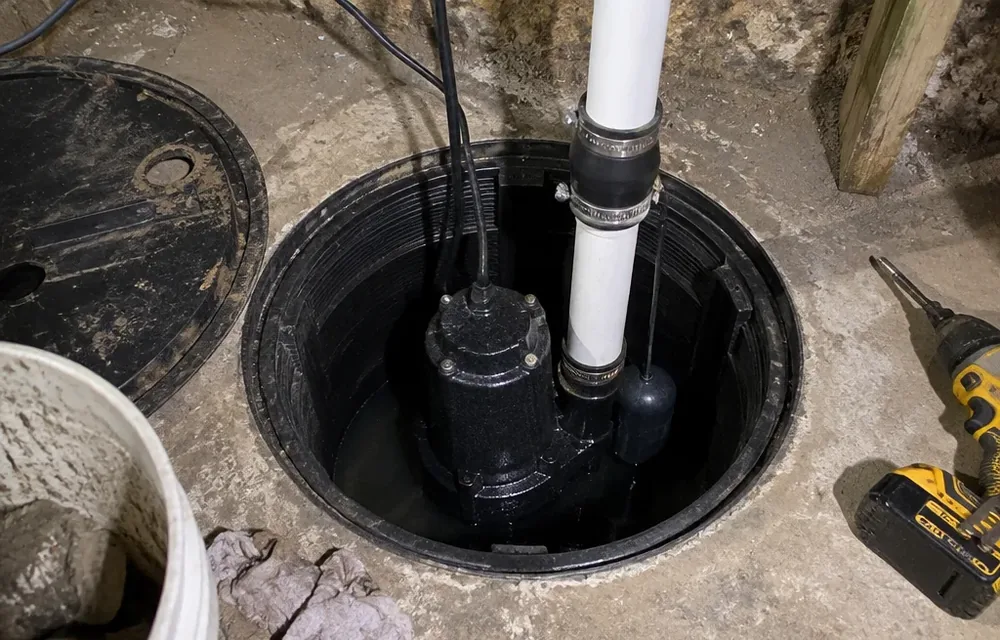
Basement Floor Drain Cleaning
The basement floor drain is the lowest opening in your rowhouse — which makes it the relief valve for every downstream restriction.
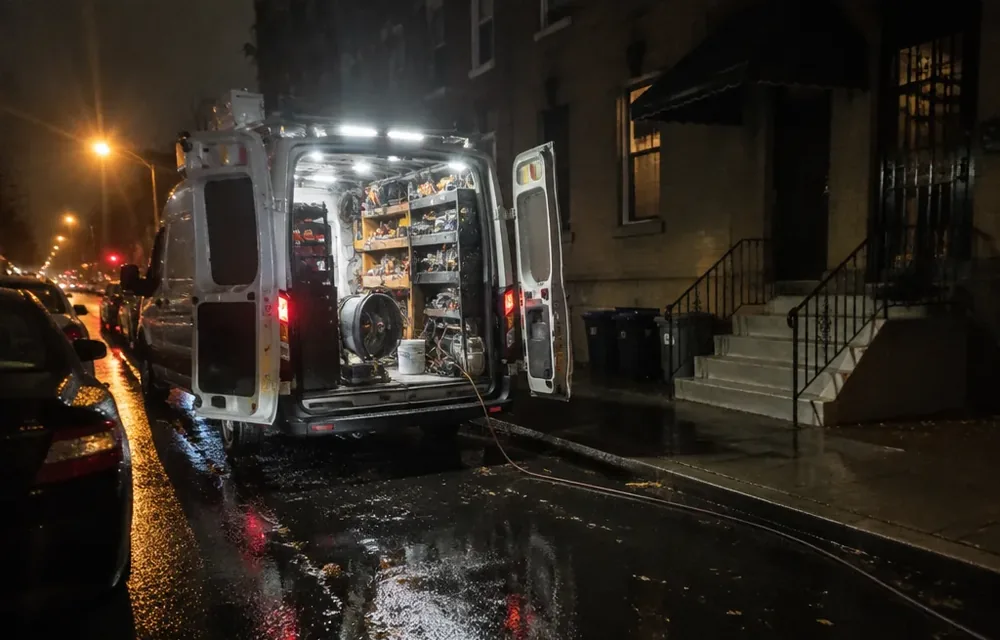
Emergency Drain Service
Sewage on the basement floor does not wait for business hours, and neither do we.