Will Drano unclog a main sewer line?
No. A main sewer line holds far more volume than a bottle of chemical opener can treat at strength, so the product dilutes in standing water long before reaching the blockage. Worse, the trapped chemicals sit in the line and turn the eventual professional clearing into a chemical-burn hazard for whoever opens the pipe next.
- Direct answer
- 2 min read
Main-line stoppages are a different species from slow sink drains. The lateral from a Philadelphia rowhouse can run dozens of feet beneath the front areaway and sidewalk to a combined main in the street, holding gallons of standing water that reduce any poured product to irrelevance before it travels ten feet. The blockages themselves are mechanical problems chemistry cannot solve: root masses woven through clay joints, wipes and paper felted over a grease dam, scale shelves inside old cast iron, or a collapsed or bellied segment. Caustic and acid openers are designed to attack soft organic matter at close range in a trap or short branch; they cannot dissolve roots, cannot rebuild grade, and cannot cut a path through a felted wipe dam dozens of feet from the pour point. The product instructions assume a partial slow drain, not a fully stopped main, and a fully stopped main is exactly when homeowners reach for the bottle.
The leftover chemistry creates the real emergency. Caustic liquid trapped behind a main stoppage does not drain away; it waits, and when a contractor pulls a toilet or opens a cleanout to cable the line, pressurized chemical water can splash eyes and skin. Responsible pros ask what was poured and may delay or add protective steps when the answer is a caustic product, which is why the bottle often makes the eventual bill larger rather than smaller. Old Philadelphia pipe suffers too: heat-generating chemicals attack rubber couplings and gaskets, craze porcelain and stain fixtures, and can pit already-thin cast iron, while soft Orangeburg fiber pipe tolerates neither heat nor harsh chemistry. Anything flushed eventually reaches the combined sewer system carrying stormwater and sanitary flow together, so overdosing the line is a neighborhood-scale mistake as well as a household one.
Work the STOP rules instead. Stop running water everywhere in the house, because every flush and laundry load stacks more wastewater behind the blockage and can push sewage up through the lowest fixture, usually a basement floor drain or shower. Stop pouring more product; a second bottle doubles the hazard without changing the hydraulics. Stop plunging main-line symptoms hard, since pressure against a full lateral can force sewage out of weak joints and wax seals. Then check one diagnostic: if a single fixture is slow, the trouble is local to that branch, but if toilets, tubs, and basement drains back up together, the stoppage is in the main and needs professional cable clearing with camera verification, plus jetting once footage confirms the pipe is sound. Describe any chemicals already used when booking, so the crew arrives prepared.
Want the full picture?
How to Unclog a Main Sewer Line Safely in Philly — Read the full guide: how to unclog a main sewer line safely.
Follow-up questions
Is it safe to use a chemical opener in a toilet that keeps backing up with sewage?
No. Toilets that back up along with tubs or basement drains signal a main-line stoppage, and chemicals poured there sit in the bowl and line without reaching the blockage. Stop adding product, stop running water, and arrange professional clearing.
What should I tell the drain pro if I already used a chemical opener?
Say exactly which product, how much, and when. That information decides the protective gear, the opening sequence, and whether the crew flushes first, and it protects everyone who touches the line after you.
Services behind this answer
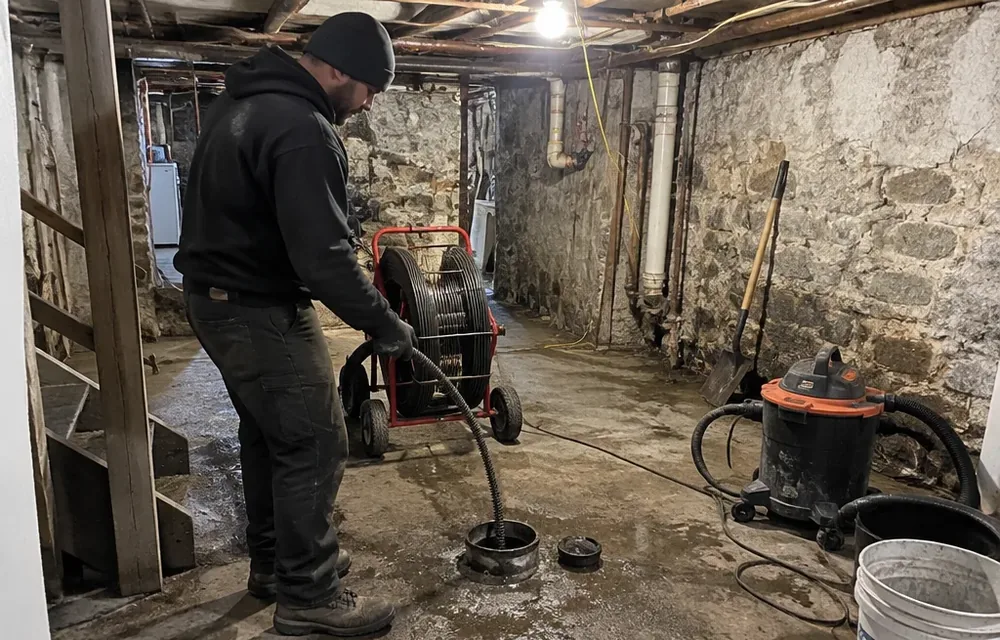
Main Sewer Line Cleaning
The lateral is the most expensive drain you own — a 60-to-100-foot clay run from your rowhouse to the street main, shared with stormwater, hunted by street-tree roots.
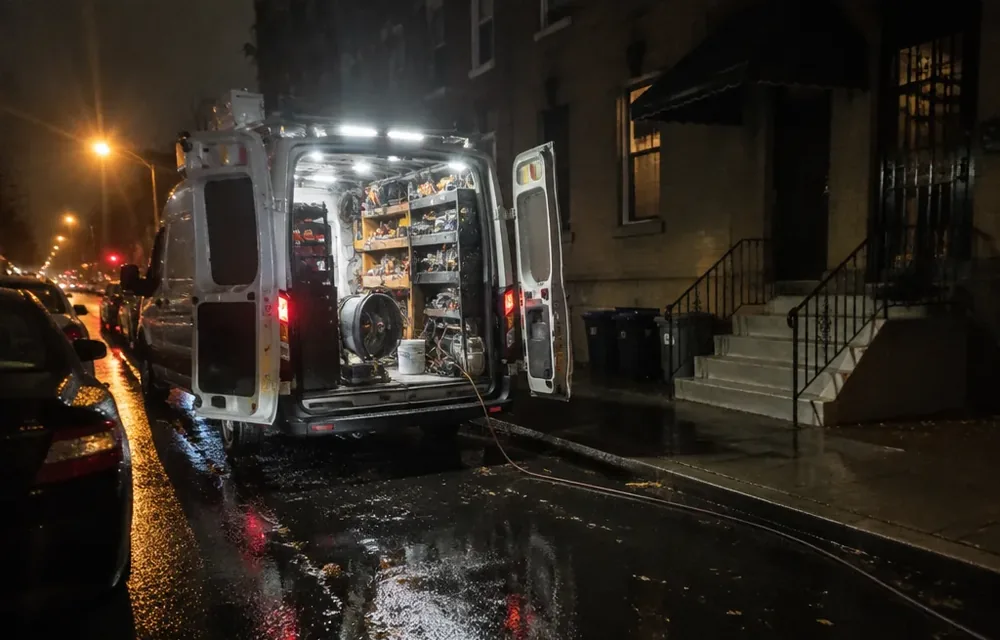
Emergency Drain Service
Sewage on the basement floor does not wait for business hours, and neither do we.