Will hydro jetting remove tree roots?
Hydro jetting alone does not remove established tree roots, but jetting paired with mechanical cutting clears a rooted line thoroughly. Cutting severs the structural strands at the joint to full diameter, and jetting then shears remaining hair and flushes paper and sludge out so fragments never re-lodge downstream.
- Direct answer
- 2 min read
Philadelphia combines every ingredient of root intrusion at city scale. Its rowhouse belt, built roughly from the 1880s through the 1950s across South Philadelphia, Fishtown, Kensington, Point Breeze, and West Philadelphia, went in with jointed clay laterals where every shifted joint is a potential entry. Streets were lined generously with vigorous shade trees including silver maple, London plane, honey locust, and Callery pear, whose roots follow the loose backfill of the sewer trench itself, often extending two to three times the canopy radius and crossing property lines freely. The suspect tree is frequently the city street tree in the curb lawn rather than anything in your own yard, and the combined-sewer moisture plume feeds roots through dry spells alike.
Recognize roots by recurrence at the same place: the blockage returns roughly annually, often with late-summer dryness or the first heavy autumn rain; white fibrous material returns on the cutter head; toilets gurgle while fixtures drain slowly; sometimes a greener strip traces the lateral path across the lawn or rear yard. Confirmation comes from a cleared-line camera showing the entry joint with footage and depth, never from another blind cable pass. Note the order: cutting to full diameter first, jetting the fines out where the pipe is sound enough to take pressure, then scoping the cleared line. Scoping a fully blocked line photographs debris as failure and has sold many replacements that a cleared-line re-scope would have reduced to maintenance.
Cutting plus jetting buys a one-to-three-year interval on otherwise sound pipe but never closes the joint, so permanent correction means repair or jointless replacement. The honest comparison is ten-year maintenance against correction: maintenance wins on a single entry joint with good remaining pipe, while correction wins when footage shows joints failing along the whole run, intervals shortening each cycle, or one finished-basement backup costing more than the repair premium. Chemical root killers only slow regrowth after mechanical clearing, rock salt never reaches the joint in useful concentration while corroding metal along the way, and removing the tree leaves the joint open while decay voids worsen settlement. Spend the money on the pipe first, keep the footage log with depths, and schedule service before the autumn root-growth push.
Want the full picture?
Tree Roots in Philadelphia Sewer Lines Guide — Read the full roots guide: species, symptoms, and honest math.
Follow-up questions
Should I just remove the tree?
Usually not for the pipe sake. Street-tree removal needs permits that are frequently denied for healthy specimens, and the open joint remains regardless. Fix the pipe, then plant future trees clear of the run.
Will roots come back after cutting and jetting?
Yes, through the same open joint on a seasonal rhythm. The post-clean footage with depths turns each return into a scheduled maintenance visit at a known location.
Services behind this answer
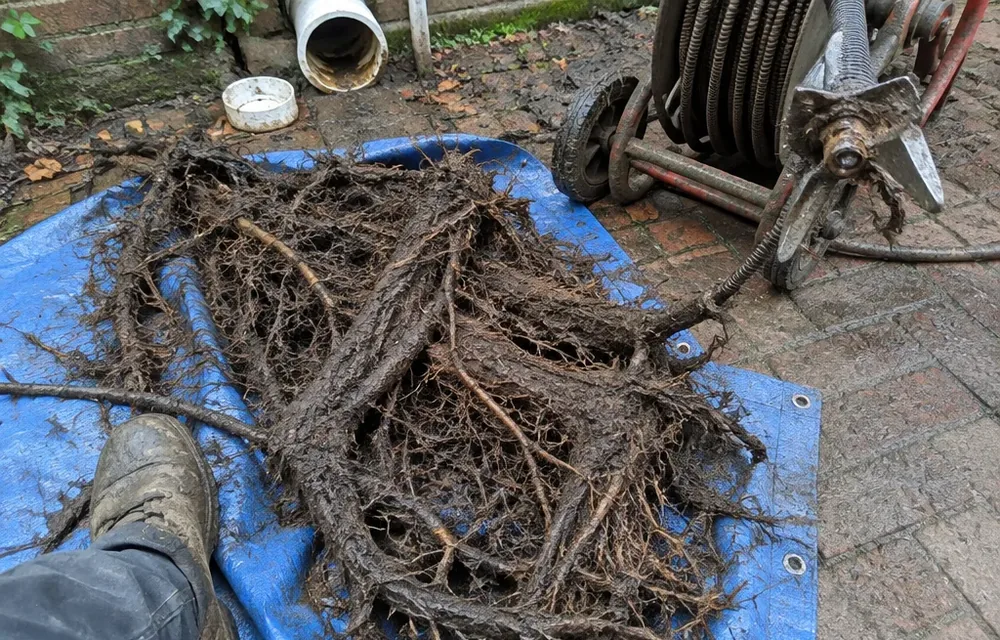
Rooter Service
Roots do not break your pipe to get in.
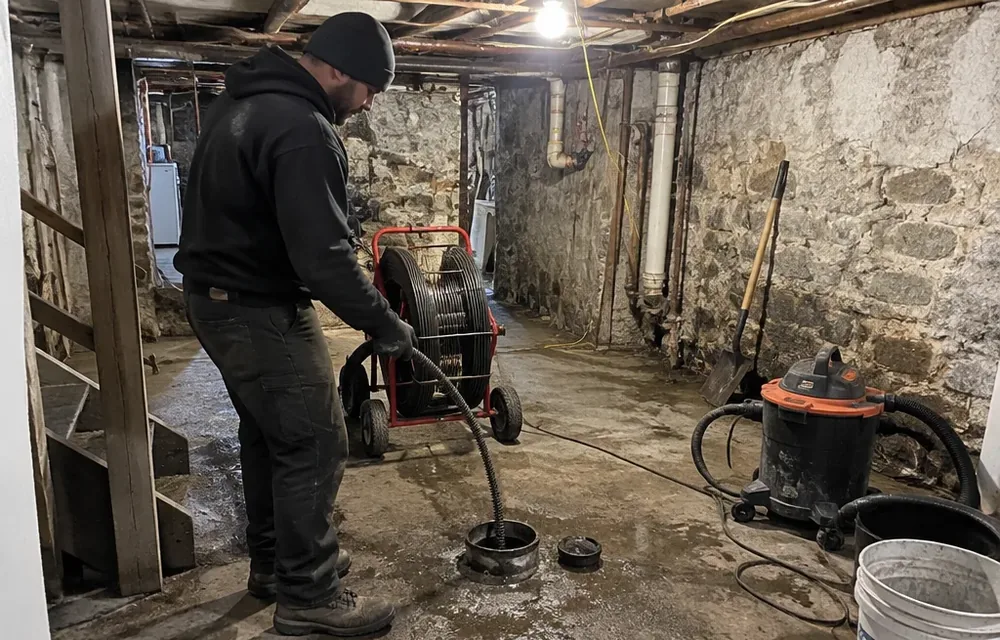
Main Sewer Line Cleaning
The lateral is the most expensive drain you own — a 60-to-100-foot clay run from your rowhouse to the street main, shared with stormwater, hunted by street-tree roots.