Philadelphia Stormwater Charge: What the SWMS Line Means
Every Philadelphia water bill carries a stormwater line, usually abbreviated SWMS, and it puzzles owners because it never moves with the water meter. The charge pays for what rain does after it hits roofs, driveways, and streets, not for what comes out of the tap. This guide explains how Philadelphia computes the charge for houses and for larger parcels, what counts as paved ground, how credits and appeals work, and why side yards and garage lots so often arrive with their own surprise bills.
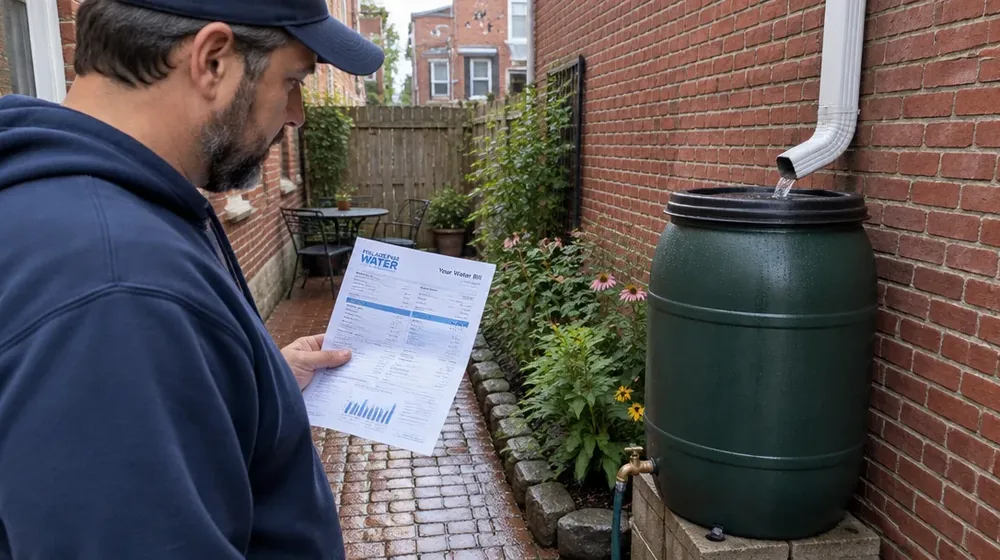
The short answer: what the stormwater charge pays for
The stormwater line on your Philadelphia water bill pays for managing rain and snowmelt runoff, not for the water you use. Philadelphia charges it because paved and roofed surfaces send runoff into sewers and rivers, and the city must convey, treat, and control that flow under state and federal clean-water obligations.
On the bill the line appears as Stormwater Management Service, shortened to SWMS, alongside separate lines for water quantity and sewer quantity. Those quantity lines follow the meter. The stormwater line follows the ground: how much of the parcel is covered by surfaces that shed water instead of absorbing it. That is why two neighboring houses with identical families and identical water habits can owe different stormwater amounts when one sits on a larger or more heavily paved lot, and why cutting water use to nearly nothing never shrinks the stormwater line. Full detail on the current structure lives on the Philadelphia stormwater billing page.
A dedicated charge exists because runoff imposes real system costs that metered rates cannot capture. Rain landing on roofs, asphalt, and compacted ground becomes runoff within minutes, and in Philadelphia much of that runoff enters combined sewers shared with sanitary flow. The city must convey that combined volume to treatment plants, manage combined sewer overflows during heavy storms, maintain miles of storm drains and outfalls, and fund the green stormwater infrastructure program that slows runoff before it ever reaches a pipe. None of that work scales with any single meter, so it is recovered through a charge tied to each parcel and its paved footprint.
Think of the bill as paying for two different services that happen to arrive on one page. Metered water and sewer charges pay for water brought to the property and wastewater carried away, both roughly proportional to use. The stormwater charge pays for a shared drainage system sized for cloudbursts over the whole city, from the rowhouse blocks of South Philadelphia to the industrial tracts along the Delaware. Once that split clicks, the rest of the bill stops looking arbitrary, and decisions like depaving a yard or disputing a parcel measurement start to make financial sense.
Residential bills: one flat rate built from citywide averages
Every residential parcel in Philadelphia pays the same flat monthly stormwater charge, plus a separate monthly billing and collection line. The amount does not change with household size, metered use, lot dimensions, or whether the building is a narrow rowhouse, a twin, or a detached house with a driveway. If the property is classified residential, the stormwater line is identical to the one on every other residential bill in the city for that billing period.
The flat amount is built from measured citywide averages rather than from any individual survey. The Philadelphia Water Department bases residential stormwater billing on an average residential parcel of 2,110 square feet of gross area carrying 1,050 square feet of impervious area, figures published on the residential stormwater billing page. Surveying every roof, patio, and walkway on hundreds of thousands of homes would cost more than it could fairly redistribute, so the city measured the housing stock, set one representative parcel, and bills everyone at that level.
The practical consequence is easy to state and occasionally startling. A small rowhouse with a 700-square-foot footprint pays the same stormwater line as a large detached house with a driveway and patio, because the flat rate deliberately trades precision for simplicity and low administration cost. Owners who feel the average overstates their parcel are not imagining things; the system simply declines to measure houses individually. That tradeoff is also what keeps residential billing disputes rare, since there is no per-house measurement to argue about on a standard home.
Flat does not mean frozen. Stormwater rates move over time through Water, Sewer and Storm Water Rate Board proceedings, and the billing and collection line can move as well, so an old bill is never a safe budgeting reference. Confirm the live figures in the current PWD rates schedule, published as a PDF and linked from the stormwater billing page, and read any bill change notice before assuming an error. When the flat amount changes, it changes for every residential parcel at once, which is itself a useful diagnostic: a jump that appears on one bill only points to a classification or parcel problem, not a rate change.
Non-residential bills: gross area plus impervious area in 500-square-foot units
| Step | Example parcel | Result |
|---|---|---|
| Gross area factor | 10,000 sq ft lot divided into 500 sq ft units | 20 GA billing units |
| Impervious factor | 7,500 sq ft of roof and paving divided into 500 sq ft units | 15 IA billing units |
| Monthly SWMS math | 20 units times the GA rate plus 15 units times the IA rate | SWMS charge plus the billing and collection line |
| Minimum check | Computed charge below the floor on a very small lot | Minimum monthly charge applies instead |
| Rate source | Current PWD rates schedule linked from the billing page | Always confirm live rates; schedules change by Rate Board action |
Larger and commercial parcels leave the flat-rate world behind. Commercial, industrial, and institutional properties, larger apartment buildings, mixed-use buildings, vacant commercial lots, and condominiums are billed as non-residential, with the charge computed from two measured inputs: gross area, the full parcel within its legal boundaries, and impervious area, the paved and roofed portion that sheds runoff. Each input is converted into billing units of 500 square feet, rounding up to the next whole unit, and each unit type carries its own rate.
The monthly math runs in four steps. Divide gross area in square feet by 500 and round up to get the gross area factor, then multiply by the gross area rate. Divide impervious area by 500 and round up to get the impervious factor, then multiply by the impervious rate. Add the two products for the SWMS charge, then add the monthly billing and collection charge for the total stormwater line. The impervious rate runs far higher than the gross area rate, which is the entire policy in one number: open ground that absorbs rain costs the system little, while paved ground that sheds it costs a great deal.
Condominiums follow the same computation with special billing rules for splitting the result. A complex on a single water meter account sees the whole parcel SWMS charge plus one billing and collection charge on that account, while a complex with individual unit meters divides the parcel SWMS charge equally across the unit accounts with a billing and collection charge on each. Owner associations can request an alternative allocation in some meter configurations. Anyone buying into a Philadelphia condo should therefore ask how stormwater is split before closing, because the parcel total behind those per-unit lines can be substantial on a large paved complex.
A minimum monthly charge floors the whole calculation, so tiny parcels still owe a meaningful amount, and the billing and collection charge applies on top regardless of size. Because rates, minimums, and credit rules change by Rate Board action, treat any arithmetic below as method rather than amount: the units and the rounding are stable, while the dollar rates belong to the live schedule. The worked example shows the method on a mid-size commercial lot without stating any rate, which keeps it accurate no matter when it is read.
What counts as impervious, and the small-parcel 85 percent rule
Impervious area means ground that is compacted or covered so water cannot infiltrate: roofs, asphalt streets and lots, concrete driveways and walks, conventional pavers, attached and detached structures, compacted clay, and similar hard or semi-pervious surfaces. Lawns, planting beds, gardens, and open soil count as pervious. The classification follows the physical surface, not the use beneath it, so a parking pad used twice a year counts exactly like one used daily, and a lawn that floods in every storm still counts as pervious because the water eventually soaks in rather than sheeting straight to the inlet.
Small non-residential parcels get an estimation shortcut known as the 85 percent rule. For properties under 5,000 square feet of gross area, the department estimates impervious area as a percentage of gross area instead of measuring it: 85 percent of gross area for developed parcels, and 25 percent for undeveloped ones. The logic is administrative rather than scientific. Precisely surveying a tiny corner lot costs more than the resulting correction could justify, so the city applies a standard ratio that matches what small developed lots in Philadelphia typically look like, which is mostly roof and paving with a narrow margin of open ground.
Aerial imagery underlies most of these measurements, and imagery lags reality in both directions. A shed demolished last spring may still read as roof, fresh gravel may read as paving or miss entirely, and a yard depaved into a garden may still be coded impervious until the records catch up. Conversely, new paving laid after the last imagery pass may be missing from the bill, which feels like a bargain until a corrected measurement arrives with back-billing questions. Owners planning surface changes should photograph the work with dates and keep contractor invoices, because that file becomes the evidence for any later correction.
When the coded area is wrong, the remedy is a measurement appeal rather than a complaint to the call center. The adjustment appeal procedure lets owners challenge gross area, impervious area, and property classification with supporting evidence such as a survey, dated photographs, or parcel records. Appeals succeed most often when they are specific: the northeast 400 square feet coded as paving is actually a planting bed installed in a named month, with photos and a receipt attached. Vague claims that the bill feels high go nowhere, while documented surface-by-surface corrections move quickly.
Paying less: credits, appeals, and the Rain Check program
Non-residential owners can earn credits that reduce the stormwater charge for managing runoff on site. The rates schedule recognizes distinct credit classes that reduce the impervious charge, the gross area charge, or the total SWMS charge depending on what the property achieves, and a single parcel can hold credits from more than one class at once. Eligibility starts with a current account, the owner must open the property for department inspection, and every credit carries maintenance, inspection, and reporting obligations that continue for as long as the reduction lasts. A credit that is earned and then neglected can be revoked, so the paperwork matters as much as the installation.
Qualifying practices all do the same physical thing: keep rain out of the sewer system. Rooftop disconnection reroutes downspouts onto lawns or planting beds where water infiltrates instead of entering the combined system. Pavement disconnection breaks up expanses of asphalt so runoff crosses soil before reaching an inlet. Preserved and planted tree canopy intercepts rainfall and transpires soil moisture, and engineered green infrastructure such as basins, trenches, and permeable paving stores storm volume and releases it slowly. Each practice needs documentation proving it exists, is sized correctly, and is maintained, which is why credit applications read more like permit files than rebate forms.
The appeals track runs parallel to credits and suits a different problem. Credits reward managing runoff; appeals correct the inputs, meaning wrong gross area, wrong impervious area, or wrong property classification. An owner who believes a side yard is coded as a commercial lot, or whose depaved garden still shows as asphalt, should appeal the measurement with dated evidence rather than applying for a credit against a charge that should never have existed. Credits and appeals can also stack in sequence: first correct the parcel data, then earn credits against the corrected baseline, which produces a larger and more defensible reduction than either step alone.
Single-family homeowners have a different and simpler path called Rain Check. The program supplies Philadelphia homeowners with green stormwater tools at no cost, historically including rain barrels, downspout planters, rain gardens, yard depaving, and permeable surface work, installed to cut runoff from exactly the roofs and paving the flat rate assumes. Availability and offerings change with program funding, so check current options through the links on the stormwater billing page before planning around any specific installation. Rain Check will not shrink a flat residential bill directly, but it cuts the runoff the system must handle, protects basements in heavy storms, and positions the property well if residential credit options ever expand.
Side yards, garage lots, and parcels that surprise owners
The most common stormwater surprise in Philadelphia has nothing to do with rates and everything to do with parcels. Every parcel is billed separately, so a rowhouse owner who also owns the vacant side lot, or a rear garage lot held on its own deed, receives a separate stormwater bill for each piece of ground. These secondary bills frequently arrive at or near the non-residential minimum, they carry their own billing and collection line, and they surprise owners who assumed one house means one bill.
The charge lands even where nothing seems to use any service. A side yard has no meter, no structure, and no drain connection, yet rain still falls on it and runoff still leaves it for the street inlet and the combined main. Philadelphia bills the parcel for that runoff, not the owner for any consumption, which is why an empty lot that costs nothing to maintain can still generate a monthly stormwater obligation. Owners who pave a side lot for parking sometimes make the bill worse twice over: the classification stays non-residential while the impervious ratio climbs toward total coverage.
Cheap lots carry this obligation with them. Side yards picked up through sheriff sales, land bank transfers, or quiet deals between neighbors arrive with their stormwater accounts attached, and several years of unnoticed minimum bills can accumulate into an unpleasant balance. Before taking title to any vacant Philadelphia ground, confirm the parcel number, pull its billing status, and price the ongoing stormwater cost into the decision. A lot that looked nearly free can carry a perpetual monthly charge that dwarfs the acquisition price within a few years.
Start any cleanup by matching parcel numbers on the bills against Board of Revision of Taxes records so each charge is tied to the correct ground. If a side yard or garage lot looks misclassified, appeal the classification with deed and survey evidence rather than ignoring the bill, because unpaid balances follow the parcel and can complicate a later sale or refinance. Keep every parcel account current while any appeal or credit application is pending, since delinquency can block credits and trigger collection steps. For most rowhouse owners the entire stormwater portfolio, house plus side ground, is managed in an afternoon of parcel matching and one round of calls, and then it stays quiet for years.
Frequently asked questions
Why do I owe a stormwater charge when I barely use any water?
Because the charge is not based on water use at all. It recovers the cost of conveying, treating, and controlling rain and snowmelt runoff from paved and roofed ground across the city. A household that uses almost no metered water still owns ground that sheds runoff into sewers and waterways, so the stormwater line stays constant while the metered lines fall.
I rent my home. Is the stormwater charge my bill or my landlord and owner responsibility?
The bill follows the water account, which in Philadelphia is typically in the owner name, and ultimate responsibility sits with the owner of record. Some leases pass utility costs through to tenants, so check the lease language and confirm whose name is on the account before assuming either way. Owners selling or refinancing should clear every parcel account first, since balances follow the property.
Can a single-family house earn a stormwater credit?
The formal credit program is aimed at non-residential and condominium parcels that document on-site runoff management, while residential parcels pay the flat rate. The residential path is the Rain Check program, which installs runoff-reducing improvements at no cost to qualifying homeowners. Check current Rain Check offerings through the stormwater billing page, since available installations change with funding.
My rowhouse and my side lot each received a bill. Is that a billing error?
Usually it is not an error. Each parcel is billed separately, so a side yard or garage lot on its own deed gets its own stormwater bill even with no meter or structure on it. Verify the parcel numbers against tax records to confirm each bill matches the correct ground, and appeal the classification with deed evidence if a parcel looks miscoded.
Where do I find the current stormwater rates?
In the current PWD rates schedule, published as a PDF and linked from the Philadelphia stormwater billing page. Rates, minimums, and credit terms change through Rate Board proceedings, so always confirm live figures there rather than budgeting from an old bill or a quoted number that may belong to a prior rate period.
Services mentioned in this guide
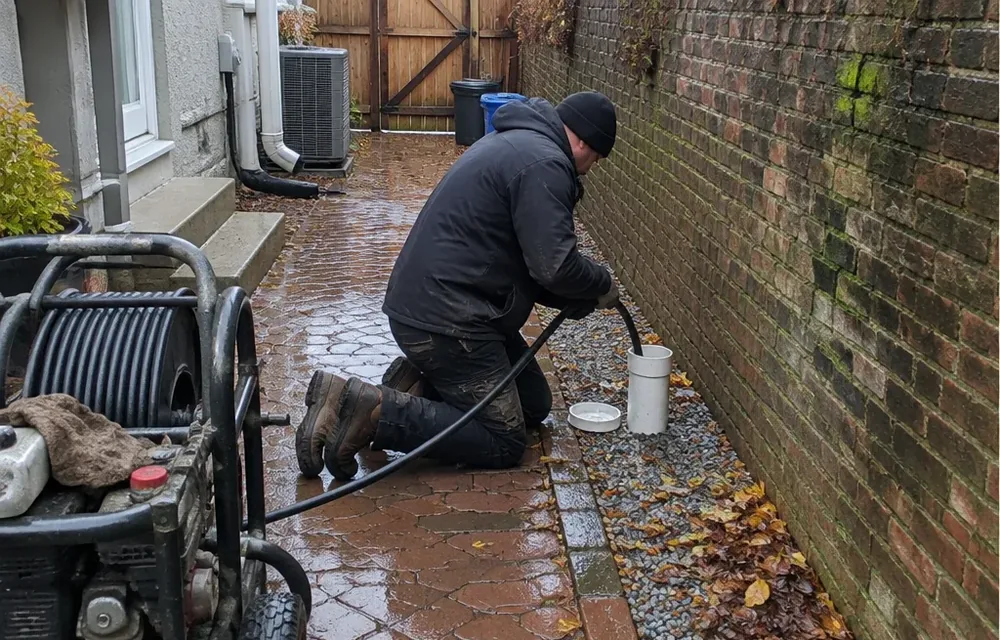
Storm Drain & Catch Basin Cleaning
A flooded loading dock or parking lot is rarely a rain problem.
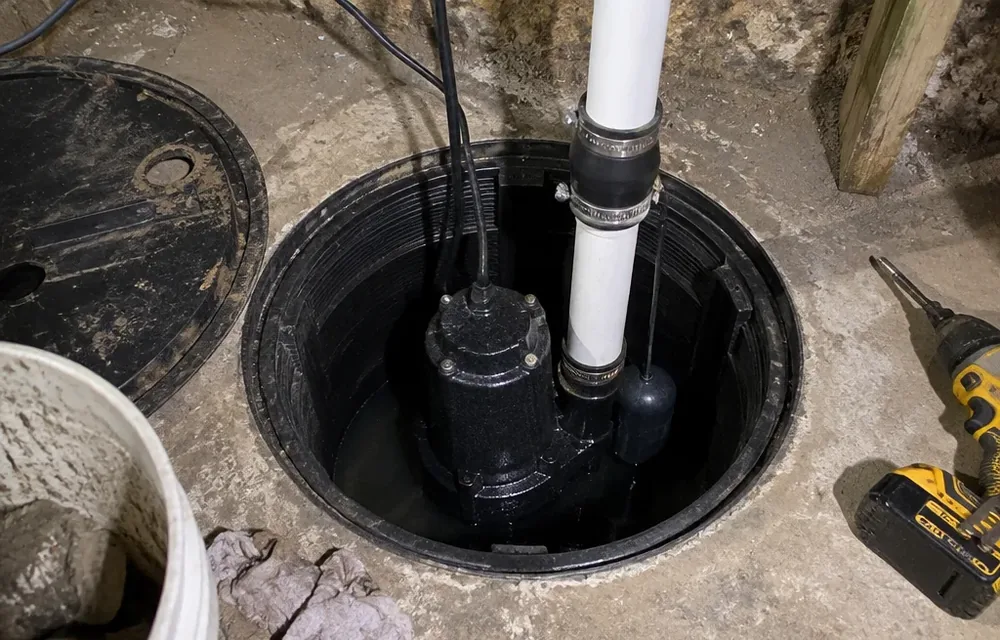
Basement Floor Drain Cleaning
The basement floor drain is the lowest opening in your rowhouse — which makes it the relief valve for every downstream restriction.
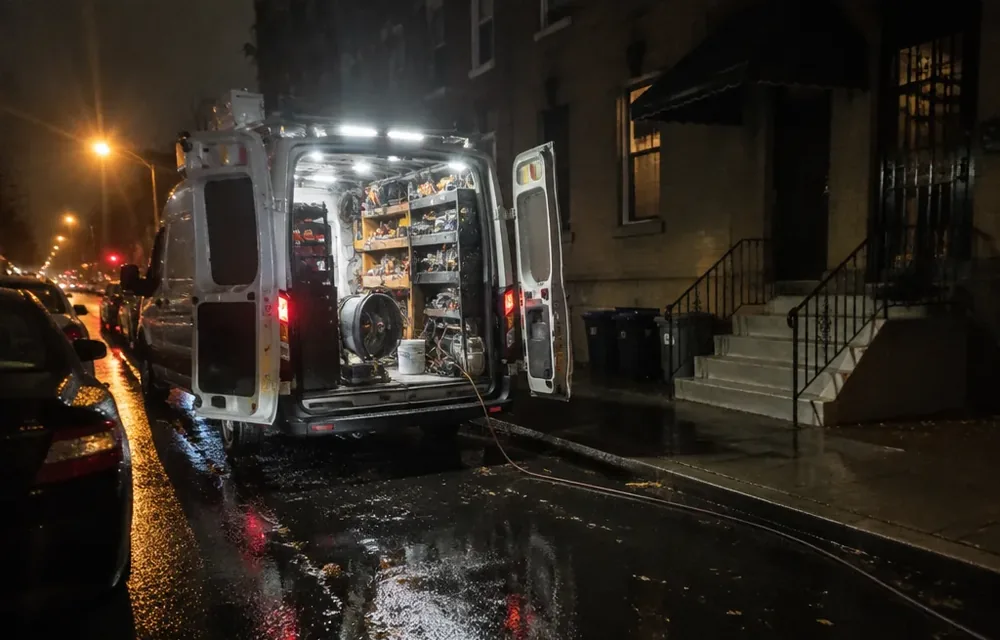
Emergency Drain Service
Sewage on the basement floor does not wait for business hours, and neither do we.
More guides
Basement Backup in Philly: Combined Sewers
When rain and sewage share the same Philadelphia main, a cloudburst can push water backward through the lowest drain i…
How to Check a PA Plumber License in Philly
Verifying license and insurance before work begins takes minutes and is the homeowner responsibility that protects eve…
Winter Freeze Protection for Philly Drains
Philadelphia winters rarely freeze a buried lateral, yet every year they burst exposed pipes, heave cleanout risers, a…
How to Unclog a Main Sewer Line Safely in Philly
When a main sewer line blocks, every drain in the house shares one failing exit. Safe homeowner triage means stopping …