How to Prevent Basement Sewer Backup in Philadelphia Rowhouses
Prevention on a combined-sewer block means giving surcharge water no low opening to use and giving your own discharge a full-bore path out. Valves, elevation, grading, and maintenance each close one door that storm water would otherwise walk through.
Why prevention beats cleanup on combined-sewer blocks
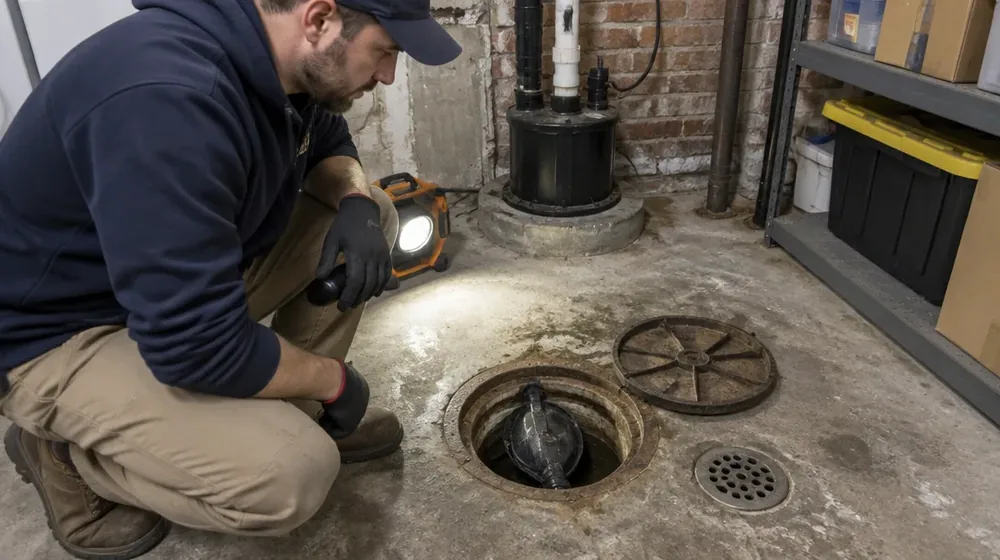
Much of Philadelphia drains through combined sewers that carry sanitary flow and stormwater in the same mains, a nineteenth-century design that performs calmly in dry weather and surcharges violently when cloudbursts pour street runoff into the shared pipe within minutes. When the main fills faster than downstream capacity accepts, pressure seeks the lowest connected opening, which in a rowhouse is a basement floor drain, a laundry standpipe, or a low shower trap sitting below street grade. The house that floods is rarely the house with the worst luck; it is the house with a restricted lateral, a low unprotected opening, or both at the moment the surge arrives.
Rowhouse architecture concentrates every risk factor in one small footprint. Living space pushed into finished basements, washers and mechanicals below street elevation, short flat laterals to the combined main with little head to resist backpressure, and dense impervious blocks that shed stormwater instantly into inlets all combine along corridors from South Philadelphia through Kensington, West Philadelphia, and Germantown. A grease-narrowed lateral that drains fine on a dry Tuesday becomes the constriction that fails during a Saturday cloudburst tracking up the Schuylkill or Delaware valleys, which is why wet-weather backups revisit the same addresses while prepared neighbors stay dry.
The economics of prevention are lopsided in the homeowner favor once stated plainly. Sewage cleanup discards porous contents, disinfects hard surfaces in sequence, dries cavities with equipment over days, and frequently involves mechanical and electrical assessments, while a single finished-basement event can exceed the cost of protection hardware by multiples before contents are counted. Standard homeowner policies commonly exclude sewer backup without a specific endorsement carrying its own limit, so the unprotected household absorbs both the water and the bill. Prevention hardware plus a full-bore lateral plus documented maintenance is the only combination that addresses both halves of the mechanism.
This guide is deliberately a prevention playbook rather than a causes explainer. It assumes the combined-system mechanism as background and spends its length on hardware, elevation, grading, programs, checklists, and response drills that keep the next storm outside. Households wanting the surcharge physics in depth should read the causes companion first, then return here to build the defenses it implies.
Backwater valves: the one-way gate that decouples the basement
A backwater valve is a one-way gate installed on the lateral that permits household flow out to the city main while seating shut against reverse flow when the main surcharges. The common residential form is a normally open flapper in an accessible chamber: wastewater passes freely in dry weather, and a rising main pushes the flapper onto its seat before sewage can reach basement fixtures. Sizing matches the lateral diameter, placement sits so that below-grade fixtures are protected while any upstairs fixtures that can drain by gravity above surcharge grade remain sensibly arranged, and the chamber lid must stay accessible for inspection rather than buried under storage.
Placement and code compliance decide whether the device protects or merely decorates. Philadelphia Plumbing Code provisions govern valve type, location relative to fixtures, accessibility, and venting relationships, and permitted work with inspection is the normal path rather than a casual basement add-on. A valve installed where it cannot be reached for cleaning will jam on grease and paper at the worst moment; a valve installed upstream of fixtures it was meant to protect leaves those fixtures exposed; an oversized or undersized unit chatters, slams, or restricts normal flow. The scope should name the valve model, diameter, chamber location with access detail, and the fixtures protected versus bypassed in plain language.
Maintenance is a calendar item, not an install-and-forget promise. The flapper and seat need periodic verification that they move freely and seat fully, with grease film, wipes, and scale as the usual jamming culprits in Philadelphia kitchen-heavy laterals. Households should schedule a chamber check with each lateral service, keep the lid accessible with clearance marked on the floor, and log every inspection alongside camera footage so the next technician sees history rather than guessing. A valve that has never been opened since installation is an untested hypothesis about the next storm.
No valve substitutes for a full-bore lateral, and misunderstanding this point causes the most expensive prevention failure. A valve on a grease-throttled line protects against the street while the household floods itself from its own laundry discharge held back behind the restriction, and a valve chamber packed with debris cannot seat when the surge calls. The competent order restores the lateral to verified full diameter with camera proof first, then installs and commissions the valve, then load-tests the combination with a full tub or laundry slug before sign-off.
Standpipes, elevation, and the cheap inches that stop minor surges
Elevation is the simplest protection because surcharge water obeys grade before it obeys hardware. Extending a basement laundry standpipe upward, capping or raising a rarely used low shower or slop sink, and relocating irreplaceable contents above the last observed high-water line each raise the relief elevation so minor surcharges never reach living space. These are convenience trade-offs rather than capital projects: a taller standpipe costs little, a capped low fixture costs a habit change, and a storage shelf at chest height instead of floor level costs an afternoon. Yet together they absorb the frequent small surcharges that never make the news but ruin stored contents repeatedly.
Overhead or pumped ejection goes further for finished basements and rental units where even one event is unacceptable. By lifting basement sanitary flow to discharge above the surcharge grade, often through an ejector pit and pump to an elevated connection, the basement becomes hydraulically disconnected from the main during storms rather than merely gated. The investment suits below-grade bedrooms, home offices, and tenant units on combined blocks, where content loss, displacement, and health procedure costs dwarf the conversion figure. Power reliability matters here: pump protection should be evaluated alongside backup power or alarm strategy so a storm outage does not trade one failure for another.
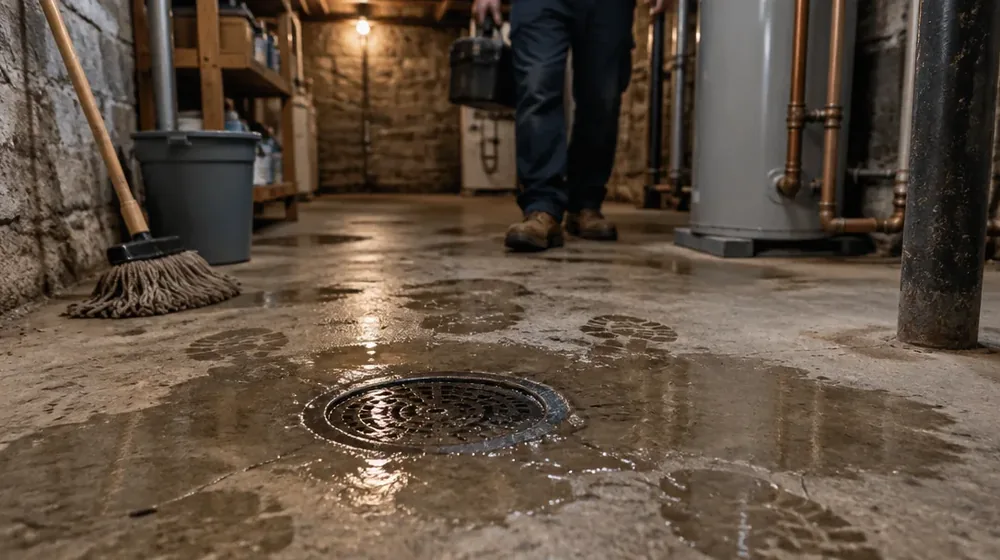
Floor-drain strategy deserves its own sentence because the floor drain is the classic entry point. A basement floor drain exists to admit water by design, which makes it the first relief opening during surcharge and the fixture least amenable to simple capping where groundwater or heater discharge needs it. Threaded standpipe extensions, removable plugs used strictly per code and fixture duty, and clear labeling of which drains serve sanitary versus seepage duty all help, but the floor drain should never be sealed blindly where it serves equipment safety or foundation drainage. Camera and layout knowledge showing which drains connect where must precede any capping decision.
Pair every elevation change with a lateral capacity proof. Raising the relief point while the lateral remains half-coated means household discharge ponds behind the restriction at the new elevation instead of the old one, which protects against the street while preserving self-flooding. Run the full-bore load test after any elevation work: discharge a full tub or washing machine while observing the line, and confirm that the household own water leaves freely before declaring the basement protected.
Grading, downspouts, and the PWD Basement Backup Protection Program
| Measure | What it does | Philadelphia note |
|---|---|---|
| Re-grade soil away from foundation | Sheds surface water away from foundation and trench backfill | Six inches of fall in ten feet where lot lines allow; reset settled areaways |
| Extend downspouts from foundation | Moves roof water to grade or compliant discharge, not the foundation bed | Verify against city stormwater rules before redirecting to sidewalks or mains |
| Clear areaway drains and window wells | Keeps entry-point drains flowing during cloudbursts | Leaves, silt, and ice are the usual Philadelphia blockers each autumn |
| Backwater valve plus chamber | Gates the lateral against main surcharge | Permitted work with inspection; chamber must stay accessible |
| Sump separation discipline | Keeps groundwater and sanitary duties on separate systems | Cross-connecting sewage to storm sumps violates code separation |
| PWD program inquiry | City guidance and possible assistance for qualifying basements | Contact Philadelphia Water Department for current eligibility and scope |
Parcel grading is stormwater prevention at its most literal: soil, paving, and areaway surfaces should fall away from the foundation so cloudburst water runs to grade rather than ponding against foundation walls and trench backfill. Philadelphia rowhouses with tiny front yards and brick-paved rear courts settle into reverse grade easily as backfill consolidates and pavers sink, and each settled low spot becomes a funnel during intense bursts. Seasonal attention with a level, fresh soil or reset pavers where settlement shows, and cleared areaway drains before autumn leaf fall cost little and remove surprising volumes from the foundation equation.
Downspout and gutter discipline multiplies grading work. Gutters choked with maple and plane-tree debris overtop directly onto the foundation bed, while disconnected or broken leaders discharge roof water at the wall where it infiltrates trench backfill and adds to basement seepage that homeowners misread as sewer backup. Clean gutters each autumn and spring, verify leaders run clear to compliant discharge points, and confirm that no leader ties roof water into the sanitary lateral where code separation applies. Roof water belongs managed at the surface or storm path, never injected into the sewage path.
The Philadelphia Water Department offers basement protection guidance and, for qualifying properties, program assistance historically described under its Basement Backup Protection Program umbrella, with eligibility, scope, and application details that change over time. Homeowners should contact the department directly for current program status, qualifying conditions, and the inquiry path rather than relying on any third-party summary, and should assemble the file the inquiry will need: backup history with dates and storm correlation, lateral camera footage with depths, fixture elevations relative to street grade, and existing valve or sump inventory. Whether or not assistance applies, the department wet-weather guidance remains the authoritative city-facing reference for combined-block behavior.
Landscaping choices along the lateral corridor deserve prevention-minded thinking. Deep-rooted plantings over the lateral chase water to the pipe joints, heavy irrigation saturates fresh backfill, and new impervious paving that sheds additional runoff toward the foundation or into combined inlets worsens the block-level surge the household then resists alone. Permeable surfaces where suitable, plantings set off the lateral alignment, and mulch beds graded away from walls all reduce the water the property contributes to its own problem and to the shared main.
Seasonal prevention checklist, in calendar order
Spring camera and load test
Scope the lateral to the main, log footage and depths, then prove full bore with a tub or laundry slug before storm season.
Verify valve flapper and chamber
Open the chamber, confirm free movement and full seating, clear grease and debris, and reseat the accessible lid.
Prove sumps, alarms, and discharge
Cycle each pump, confirm check valves hold, test alarms audibly, and verify discharge points run clear.
Walk grading and gutters
Confirm fall away from walls, clear gutters and leaders, extend downspouts, and clear areaway and window-well drains.
Raise contents and stage supplies
Lift stored goods above the last high-water line, stage sandbags or barriers where planned, and keep disinfectant and dehumidifier access ready.
File insurance, contacts, and footage
Confirm backup endorsement and limit, store PWD and mitigation contacts together, and keep footage with the project file.
Run this checklist in dry weather when every item takes minutes, because the same items take hours or become impossible once water is rising. Late spring is the natural window in Philadelphia: winter frost has released the soil, convective storm season has not yet peaked, and contractors still schedule at standard lead times rather than surge triage. Households with any history of wet-weather slowness, gurgling during rain, or water at the floor drain should treat the checklist as mandatory rather than aspirational.
Log each completion with a date and keep the log with the lateral footage. Insurance conversations, landlord-tenant discussions, and future service visits all proceed faster from a dated record showing valve checks, sump tests, and camera baselines than from memory. The rowhouse that can show three years of spring proofs negotiates everything from endorsements to bids from knowledge rather than from urgency.
The first ten minutes: what to do when water starts rising
Stop all water use immediately: no flushing, no laundry, no dishwasher, no showers. Every gallon added joins water already seeking the lowest drain, and household discharge during a surcharge converts a street event into a household-amplified flood. Tell everyone in the building once, clearly, and then enforce it until the main recedes and the lateral is proven clear.
Keep people and pets clear of the water and treat it as sewage until proven otherwise. Combined-system inflow carries pathogens, and basement water that looks like rain seepage frequently is not. Shut down HVAC circulation if returns draw from the affected area so contaminants are not distributed through ductwork, and de-energize vulnerable electrics only from dry ground: if water nears outlets, panels, heaters, or laundry motors, switch off from a dry location and never wade to a panel through standing water.
Document before touching anything, because the claim and the later engineering both depend on the record. Photograph water lines, entry points, affected contents, and fixture elevations with timestamps, note the storm timing and whether neighbors are affected, and preserve any Philadelphia Water Department advisory or reference numbers. Do not open a cleanout cap against an actively surcharging line to relieve pressure, do not run cable or chemical products into standing sewage, and do not re-energize wet equipment on optimism. Restraint, documentation, and dry-ground decisions in that order limit damage and preserve every later option.
After recession comes removal in the correct sequence: extract water and solids first, clean visible soil second, disinfect hard surfaces third, and dry aggressively throughout with dehumidification and exposed cavities, because disinfectant applied over organic soil disinfects the soil rather than the surface. Porous contents such as carpet and pad, upholstery, mattresses, and saturated lower drywall have no reliable decontamination path and should be documented, bagged, and discarded. Mechanical equipment that stood in water needs professional assessment with nameplate photographs before re-energizing.
Rentals, finished basements, and making the investment stick
Below-grade rental units on combined blocks carry foreseeable exposure that landlords should treat as a design condition rather than bad luck. Protection hardware with maintenance logs, documented lateral condition with footage, sump and alarm verification, tenant instructions for the first ten minutes, and mitigation contacts posted where a night flood demands them are the defenses that matter when a tenant bedroom floods during a cloudburst. Disclosure, prompt mitigation, and documented maintenance cost far less than every alternative once water has entered rented space, and the file that proves diligence reads as diligence in every later conversation.
Finished basements deserve the same frank arithmetic even for owner-occupants. Drywall, flooring, built-ins, and electronics convert a manageable surcharge into a five-figure restoration, so the prevention budget should scale with the finished value at risk: valve plus elevation plus monitoring for modest finishes, pumped ejection with alarm and backup power thinking for high-value below-grade living space. Raising outlets, using removable baseboards, choosing hard-surface flooring with washable finishes, and keeping mechanicals elevated are finish choices that acknowledge the combined system rather than denying it.
Make the investment permanent with records and relationships. Keep camera footage with footage marks, valve model and chamber location, sump inventory with duties labeled, grading sketches, endorsement declarations pages, and contractor scopes in one accessible file, and keep at least one pre-verified service contact who already holds your lateral history. Related reading supports both halves: basement floor drain cleaning for the private lateral half and storm drain and catch basin cleaning for the stormwater half that feeds the same mains. The next storm tests the whole file at once; build it while the basement is dry.
Frequently asked questions
What is the single best way to prevent basement sewer backup?
There is no single device: a verified full-bore lateral plus a maintained backwater valve plus raised relief elevations plus grading and sump discipline together prevent what no one measure stops alone. Start with camera proof of the lateral, then add the valve, then elevation and drainage.
Do backwater valves require maintenance?
Yes, on a schedule. The flapper and seat need periodic verification that they move freely and seat fully, with grease and debris cleared from the chamber. A valve buried under storage or never opened since installation cannot be trusted when the main surcharges.
What help does Philadelphia offer for basement backups?
The Philadelphia Water Department publishes wet-weather and basement protection guidance and has described program assistance for qualifying properties. Contact the department directly for current eligibility and scope, with backup history, footage, and fixture elevations ready.
Should I seal my basement floor drain to stop backups?
Not without knowing what each drain serves. The floor drain is often the relief point by design and may serve equipment or seepage duty, so blind sealing can create new hazards. Camera and layout knowledge plus code-compliant elevation or valve strategy must precede any capping.
What do I do in the first minutes of a backup?
Stop all water use, keep people and pets clear, avoid energized equipment in water, photograph everything with timestamps, and report promptly. Do not open cleanouts against the surge or pour chemicals into standing sewage, and dry aggressively after recession.
Services mentioned in this guide
Basement Floor Drain Cleaning
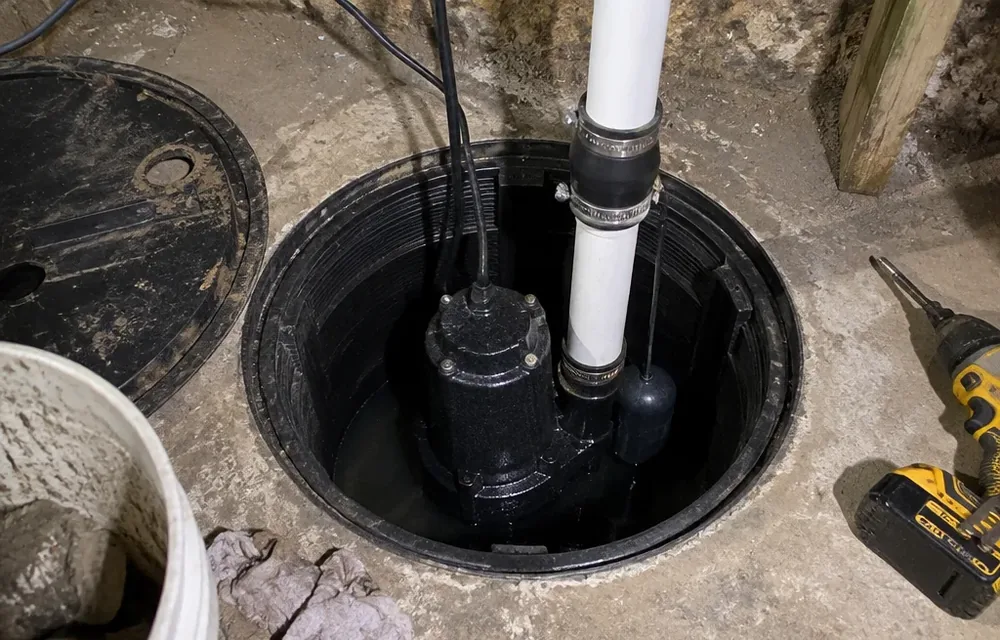
The basement floor drain is the lowest opening in your rowhouse — which makes it the relief valve for every downstream restriction.
Storm Drain & Catch Basin Cleaning
A flooded loading dock or parking lot is rarely a rain problem.
Emergency Drain Service
Sewage on the basement floor does not wait for business hours, and neither do we.
Free tools that help with this exact problem
More guides
Basement Backup in Philly: Combined Sewers
When rain and sewage share the same Philadelphia main, a cloudburst can push water backward through the lowest drain i…

How to Check a PA Plumber License in Philly
Verifying license and insurance before work begins takes minutes and is the homeowner responsibility that protects eve…

Winter Freeze Protection for Philly Drains
Philadelphia winters rarely freeze a buried lateral, yet every year they burst exposed pipes, heave cleanout risers, a…
How to Unclog a Main Sewer Line Safely in Philly
When a main sewer line blocks, every drain in the house shares one failing exit. Safe homeowner triage means stopping …