Winter Freeze Protection for Philadelphia Drains and Sewers
Philadelphia winters rarely freeze a buried lateral, yet every year they burst exposed pipes, heave cleanout risers, and turn small drips into ice dams. Prevention is insulation, drainage, and habits applied before the first hard freeze.
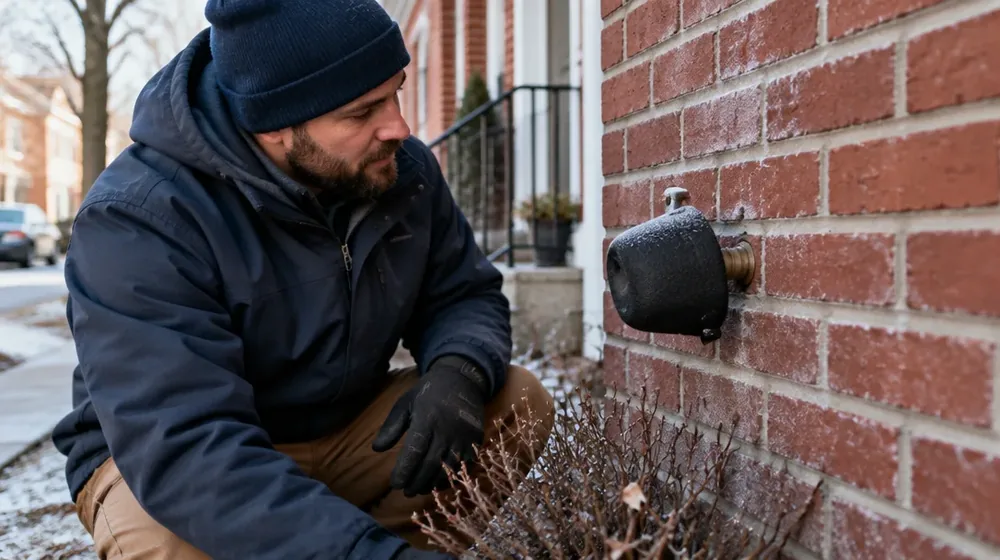
What Philadelphia freeze cycles actually attack
Philadelphia winters oscillate across the freezing point rather than settling below it, and that oscillation is more destructive to plumbing than sustained deep cold. Water in an exposed trap, hose bibb, or unheated basement run freezes, thaws, and refreezes, expanding roughly nine percent with each cycle, working joints loose, splitting thin-wall sections, and heaving shallow soils that shift cleanout risers and old trench backfill. Buried laterals below frost depth survive these cycles thermally while suffering them mechanically, as heaved soils offset already-marginal clay joints and compacted areaway fill settles unevenly each spring.
The housing stock concentrates the exposure in predictable places. Brick rowhouses with unheated basement areaways, rear additions with plumbing run through crawl voids, hose bibbs on shaded north walls, laundry standpipes against exterior foundation walls, and vacant or under-heated units where thermostats sit low all freeze first while the rest of the house feels normal. Three-story rowhouses add stack-effect drafts that pull frigid air through pipe chases past bathroom branches, so a bathroom that drains slowly every January is reporting a thermal problem rather than a clogging one.
impaired drainage converts cold into damage. A lateral with a belly holding standing water, a grease-narrowed kitchen run, or a root-dammed clay joint gives ice a place to anchor and grow, while exterior cleanout caps left loose admit frost directly into the riser. The Schuylkill and Delaware river corridors funnel Arctic outbreaks with wind that finds every unsealed penetration, so the night the temperature drops into the teens with gusts is the night marginal drainage becomes a frozen blockage and the morning after is when supply splits reveal themselves as floods.
The cost pattern is what makes prevention rational. Insulation, heat tape where appropriate, cap discipline, and habit changes cost little against the mitigation of even one burst supply line or one sewage backup into a finished basement during a holiday cold snap. Philadelphia freeze damage arrives overwhelmingly in the first hard freeze before habits adjust and in vacant-unit situations where nobody is watching, which is why the checklist below is dated to autumn rather than to winter.
Exposed pipes, hose bibbs, and the basement perimeter
| Location | Freeze risk | Protection that works |
|---|---|---|
| Hose bibbs, north and shaded walls | Highest | Shutoff drained, hose removed, insulated cover fitted |
| Basement runs on exterior walls | High | Insulation sleeves, air sealing, maintained heat |
| Crawl voids and rear additions | High | Enclosure, insulation, monitored heat tape on supply |
| Laundry standpipes, low traps | Moderate | Heat maintained, traps kept wet, infrequent runs flushed |
| Exterior cleanout risers | Moderate | Caps seated, riser marked, grade draining away |
| Buried lateral below frost line | Low thermally | Full-bore proof before winter; mechanical not thermal care |
Hose bibbs deserve first attention because they fail most and cost least to protect. Shut the interior valve where one exists, open the exterior bibb to drain, remove every hose and splitter so water cannot be trapped against the seat, and fit an insulated cover over the penetration. Frost-proof sillcocks reduce but never eliminate the risk when hoses stay connected, and the most common January burst in Philadelphia rowhouses remains a bibb with a hose left on through the first teen-degree night.
Basement perimeter plumbing wants heat, air sealing, and insulation in that order. Maintain thermostat setpoints that keep basement exposures above freezing even in unused spaces, seal the rim-joist and penetration drafts that jet frigid air across traps and supplies, then fit insulation sleeves on both supply and vulnerable drain exposures. Heat tape on supply runs has a legitimate role in chronically cold chases when installed to manufacturer instructions with thermostatic control and never overlapped, but it is a managed electrical device rather than fit-and-forget wrapping, and it never belongs on drains where it masks the drainage problem it protects.
Laterals, cleanouts, and proving drainage before winter
A lateral that drains fully resists freezing far better than one that holds water, which makes autumn the season for proving full bore. Camera verification that grease, roots, scale, and bellies leave no standing water, followed by scouring jetting where the pipe is sound, sends the line into winter with nothing for ice to anchor on. Homes with any history of January slowness, gurgling as temperatures drop, or backups during holiday loading should treat the autumn scope-and-scour as scheduled maintenance rather than optional diligence.
Cleanout discipline is the small habit with outsized winter value. Confirm every exterior cap seats firmly and threads or seals correctly so frost and stormwater cannot enter the riser, verify risers stand protected where shoveling and delivery traffic strike them, and keep their locations marked and accessible rather than buried under leaf piles or snow berms. A cleanout that cannot be found during a January emergency converts a routine clearing into an excavation-class search, while a frost-split riser admits the very water that freezes the line it serves.
Areaway and grade drainage around the lateral corridor matters through the freeze-thaw sequence. Grading that ponds water over the trench saturates backfill that then heaves against clay joints and cleanout bedding with each cycle, while downspouts discharging at the foundation keep the coldest soils wettest. Extending downspouts away from the areaway, clearing leaf-choked drains before the first freeze, and confirming sump discharges route to daylight or approved points rather than recycling against the foundation all reduce the heave that spring cameras later read as new offsets.
Vacant units, rentals, and holiday absences
Never set heat to off
Maintain protective setpoints in every unit with plumbing, including vacant ones.
Open cabinet and chase airflow
Vanity and sink cabinets on exterior walls opened so room heat reaches traps.
Keep a monitored trickle plan
Dripping farthest faucets during teen-degree nights only as a bridge, not a strategy.
Drain what must be left cold
Hose bibbs, detached additions, and seasonal lines shut and drained before departure.
Arrange watch coverage
A person with keys, shutoff knowledge, and emergency contacts for every absence.
Know every shutoff location
Main valve, fixture valves, and hose shutoffs tagged and operable before winter.
Vacant Philadelphia rowhouse units freeze disproportionately because nobody hears the early signals: the slowing drain, the whistling draft at the chase, the weeping joint that becomes a split on the next cycle. Landlords with turnover units between tenants should treat freeze protection as a re-leasing checklist item rather than a tenant duty, with heat maintained, bibbs drained, traps kept wet against sewer gas, and watch coverage assigned. The burst that floods three floors of a rowhouse almost always originates in the unit nobody checked after Thanksgiving.
Holiday absences need the same discipline at household scale. A family leaving for a week in January should set protective heat rather than economy setback, open the vulnerable cabinets, drain the bibbs, confirm the sump and its alarm, and leave keys with someone who knows the main shutoff location and the emergency contacts. Returning to a flood that ran for days multiplies mitigation across every porous material in the path, while a watch visitor who catches a weep on day one limits the event to a plumber visit.
When freezing is already happening: safe responses
A frozen drain announces itself through fixtures that suddenly stop draining in cold weather with no prior slowdown history, gurgling as trapped air forces past ice, and sometimes frost visible on exposed traps or risers. Respond with heat applied gradually to the space rather than to the pipe directly: raise room temperature, open cabinets to admit warm air, and direct a fan to circulate warmth around the exposure. Never apply open flame or high-heat guns to plumbing, never pour boiling water into a PVC trap that thermal shock can deform, and never use caustic chemicals that sit uselessly against ice while creating a hazard for whoever opens the line next.
A frozen supply split announces itself as water where it should not be, often discovered as thaw reveals the crack. Shut the main valve immediately if flow cannot be isolated at the fixture, de-energize electrics standing in water from dry ground, and call for repair before attempting restoration, because the split that leaks at thaw may have companions still frozen upstream. Photograph damage for the insurer before mitigation begins, and dry aggressively once the repair holds, since winter humidity and tight rowhouse air circulation extend the mold window.
Sewage backing up during a cold snap needs the combined-system lens this region demands. Ice-throttled laterals fail exactly when holiday loading peaks and when stormwater from winter rain-on-snow events surcharges Philadelphia combined mains, so the event may combine a private freeze restriction with a street surge. Stop water use, keep clear of the water, and treat the lateral restriction and the surcharge contribution as parallel hypotheses for the camera to resolve after conditions stabilize rather than as competing certainties to argue during the flood.
Autumn checklist that prevents January emergencies
Work the checklist in autumn order rather than winter urgency. Prove the lateral to full bore with a camera and scour where sound, so no standing water or grease shelf gives ice its anchor. Service the perimeter: bibbs shut and drained with hoses off and covers on, basement exposures insulated after drafts are sealed, heat tape verified where installed, and traps in infrequent baths and laundry flushed and kept wet. Seat every exterior cleanout cap, mark riser locations, and confirm grade drains away from the trench corridor and areaway.
Commission the mechanicals that winter leans on. Verify the heating system services vulnerable zones with thermostats accurate and setpoints protective, test sump pumps with alarms audible before the rain-on-snow season, confirm water heater and laundry discharges run hot enough to carry grease through cold iron without congealing mid-run, and tag every shutoff so any occupant can isolate flow without searching. Renters should receive the shutoff tour and the emergency contacts in writing rather than by word of mouth.
Coordinate the stormwater half before it freezes. Clear gutters, areaway drains, and catch basins of autumn leaves so the first freeze does not lock a dam in place, extend downspouts away from foundations, and confirm with the Philadelphia Water Department guidance where parcel stormwater should go in combined-sewer blocks. The January emergency most worth preventing is the compound one: a frozen private restriction meeting a surcharged public main while the household discovers both at midnight, and the autumn checklist is what keeps those two systems from meeting unprepared.
Costs, priorities, and what to do this weekend
Prioritize by failure frequency rather than by project size. This weekend means hoses off and bibbs drained with covers fitted, exterior cleanout caps seated and marked, basement thermostat verified with vulnerable cabinets opened, and infrequent traps flushed. Those four tasks take an hour across a typical Philadelphia rowhouse and prevent the failures that dominate January call queues. Next on the list sits the lateral proof: an autumn camera with scouring where the footage supports it, which converts the unknown winter risk into a documented bore with a known interval.
Larger investments follow the footage rather than preceding it. Insulation and air sealing of chronic cold chases, heat tape where a chase cannot otherwise be tempered, regrading where bellies hold the water that freezes, and backwater protection where combined surcharge meets below-grade fixtures each earn their place from camera evidence, storm history, and loss exposure rather than from generic winterization anxiety. National cost orientation from Angi, Bob Vila, and Forbes places typical residential jetting around 350 to 600 dollars within a 300 to 1,100 dollar spread as context, with the winter premium arriving through emergency timing rather than through the method.
The related services complete the seasonal set: drain cleaning for the autumn clearing, sewer camera inspection for the proof that winter needs, and emergency drain service for the January night when prevention met its match. Philadelphia winters punish deferred drainage and reward autumn diligence without exception, and the households that act in October spend January warm while the block learns the lesson again.
Frequently asked questions
Will my buried sewer lateral freeze in Philadelphia?
Rarely from soil frost alone below frost depth, but laterals with bellies, grease shelves, or root dams hold water that ices readily, and frost enters through loose cleanout caps. Proving full-bore drainage in autumn is the protection that matters most for buried pipe.
What freezes first in a Philadelphia rowhouse?
Hose bibbs with hoses left connected, basement supplies on exterior walls, plumbing in crawl voids and rear additions, and traps in infrequent or under-heated spaces. Those exposures want shutoffs drained, insulation after air sealing, and maintained heat before the first teen-degree night.
Should I drip faucets during a cold snap?
As a short bridge during extreme nights, a farthest-fixture trickle can relieve pressure buildup, but it is not a strategy. Insulation, heat, drainage proof, and cap discipline prevent freezing; dripping merely postpones it while wasting water.
Can I jet a line in winter?
Yes where the pipe is sound, with the line proved fully drained and caps seated afterward so frost does not enter the riser. Schedule the thorough scouring for autumn where possible so the line faces both deep winter and spring storm loading with full diameter.
What should landlords do about vacant units in winter?
Maintain protective heat, drain bibbs and seasonal lines, keep traps wet, open vulnerable cabinets to room heat, and assign watch coverage with keys and shutoff knowledge. Vacant units generate the multi-floor floods, and prevention is a re-leasing checklist item.
Services mentioned in this guide
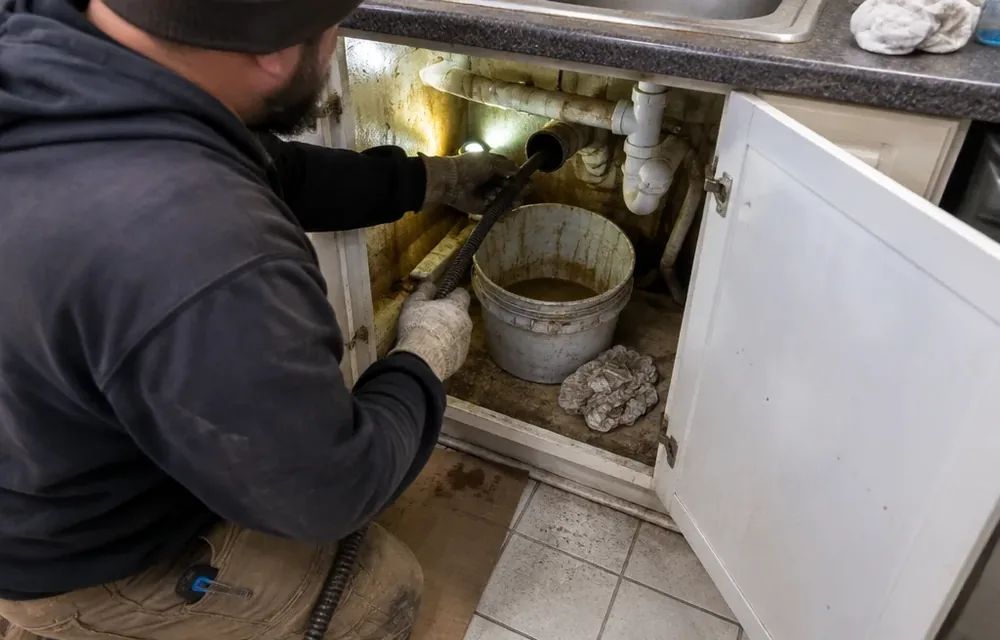
Drain Cleaning
A single slow sink is a nuisance.
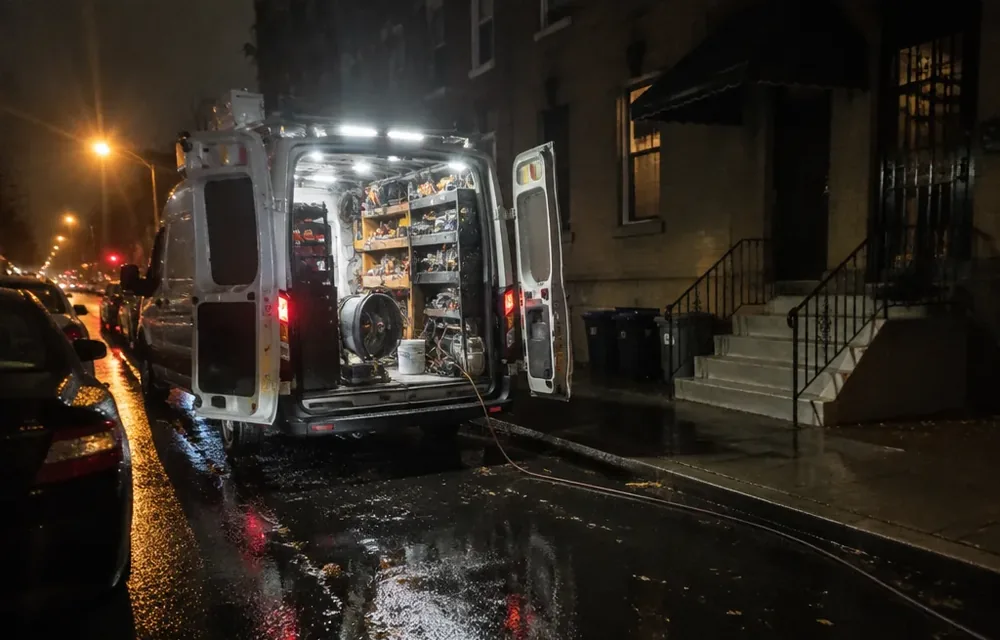
Emergency Drain Service
Sewage on the basement floor does not wait for business hours, and neither do we.
Bathroom Drain Cleaning
Bathroom clogs are almost never mysterious: hair, soap scum and toothpaste solids, wrapping around cast iron scale in a century-old branch arm.
Free tools that help with this exact problem
More guides
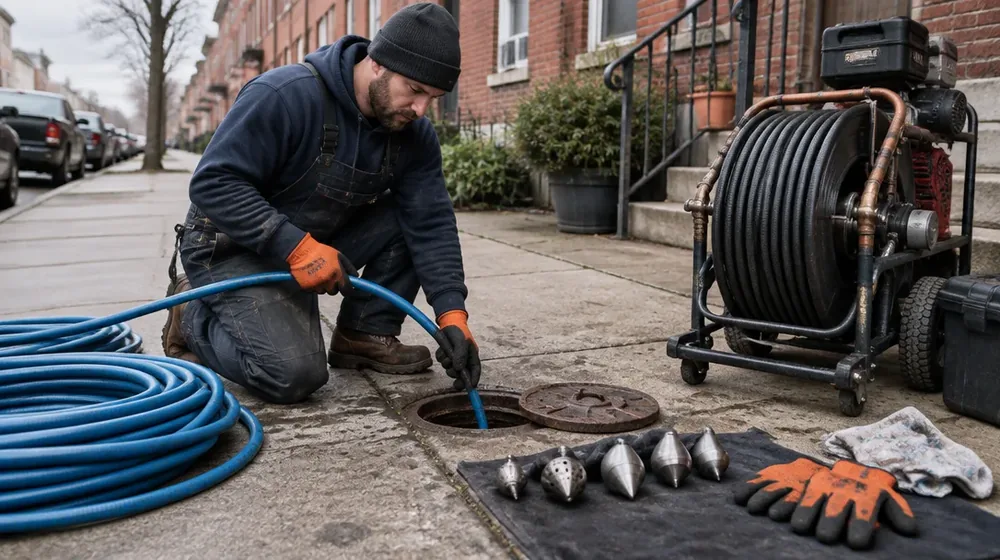
Hydro Jetting vs Snaking: What Philly Homes Need
A cable bores a hole through the blockage so water moves again. A jetter scours the whole pipe wall back toward bare m…
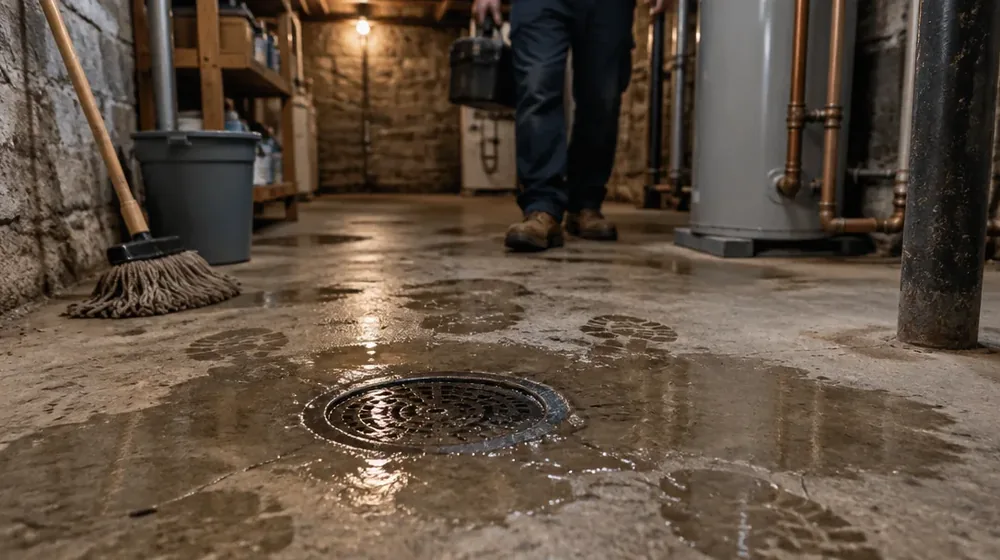
Basement Backup in Philly: Combined Sewers
When rain and sewage share the same Philadelphia main, a cloudburst can push water backward through the lowest drain i…
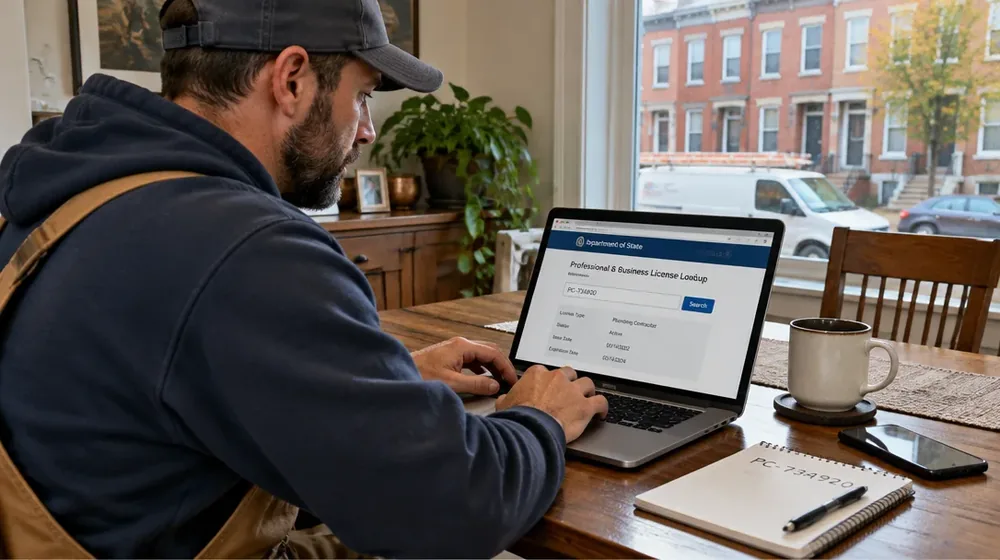
How to Check a PA Plumber License in Philly
Verifying license and insurance before work begins takes minutes and is the homeowner responsibility that protects eve…
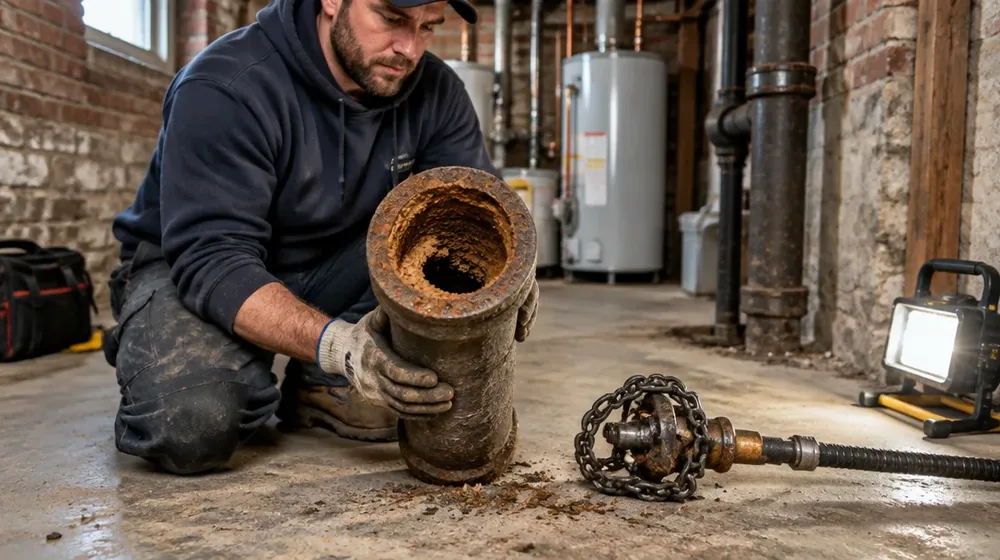
Cast Iron Descaling vs Jetting: Philly Homes
Inside every aging cast iron stack two processes run at once: scale builds inward and corrosion eats outward. Jetting …