How much does it cost to descale a cast iron sewer line?
Descaling a cast iron sewer line in Philadelphia typically falls in the four-figure range as market context, with short accessible runs near the bottom and long, heavily scaled, or difficult-access runs toward the top. Treat every figure below as background for comparing scopes, not a quotation for your address.
- Direct answer
- 2 min read
Three drivers decide where a job lands. Footage comes first: a short basement-run descaling under an open Northeast Philadelphia utility room costs far less in machine time and abrasive media than a full-length rowhouse lateral running beneath the front sidewalk to the combined main in South Philadelphia or West Philadelphia. Access comes second: an exposed stack and cleanout let the crew chain-flail and jet in hours, while lines buried under finished slabs or reached only through a pulled toilet add labor, protection, and restoration. Wall thickness comes third and matters most: cast iron interiors roughen and thin from the inside through tuberculation, and the pre-clean camera inspection measures how much sound wall remains. Thick-walled pipe with heavy scale is the ideal candidate, while iron scaled thin enough to flex or show through redirects the budget from descaling to replacement, which is exactly the finding the camera exists to deliver cheaply.
No safe chemical shortcut dissolves cast iron scale, despite what shelf products imply. Acid and caustic openers attack fixtures, gaskets, and the remaining iron faster than they attack mineral scale, they cannot distinguish tuberculation from sound wall, and in Philadelphia rowhouses they sit against the blockage and then surge downstream into traps and floor drains when flow resumes. Mechanical descaling is the real method: chain-flail or brush heads spun inside the line to shatter scale, followed by hydro jetting to shear residue and flush it to the city main, with camera verification proving bare wall and restored diameter. The sequence runs camera first for thickness and defect mapping, descale at matched aggression, jet to flush, and camera again with kept footage marks and depths. Any bidder who proposes descaling without both camera passes is pricing hope rather than pipe.
The chain-flail versus replacement decision follows the footage. Sound pipe with isolated heavy scaling or a few bad joints earns descaling plus scheduled maintenance, and the kept footage file makes every future visit cheaper because depths and materials are already logged. Failing pipe with widespread thinning, channeling, separations, or intervals between blockages that keep shortening earns jointless replacement, since descaling thin iron only buys months before the wall gives way. Point Breeze, Kensington, and Germantown rowhouses hold both outcomes on the same block, so the address and the decade never decide: the wall on camera decides. Get the contingency in writing before work starts, stating what happens and what it costs if the first camera pass shows replacement-grade iron.
Want the full picture?
Cast Iron Descaling vs Jetting: Philly Homes — Read the full guide: descaling vs jetting for cast iron.
Follow-up questions
Can I dissolve cast iron scale with chemicals myself?
No. Consumer openers cannot dissolve mineral scale without attacking fixtures, gaskets, and the remaining iron wall, and they leave the rough surface that catches the next clog.
How do I know if my cast iron needs descaling or replacement?
The pre-clean camera shows wall thickness, channeling, and joint condition. Thick-walled scaled pipe earns descaling; widespread thinning or separations redirect the budget to replacement.
Services behind this answer
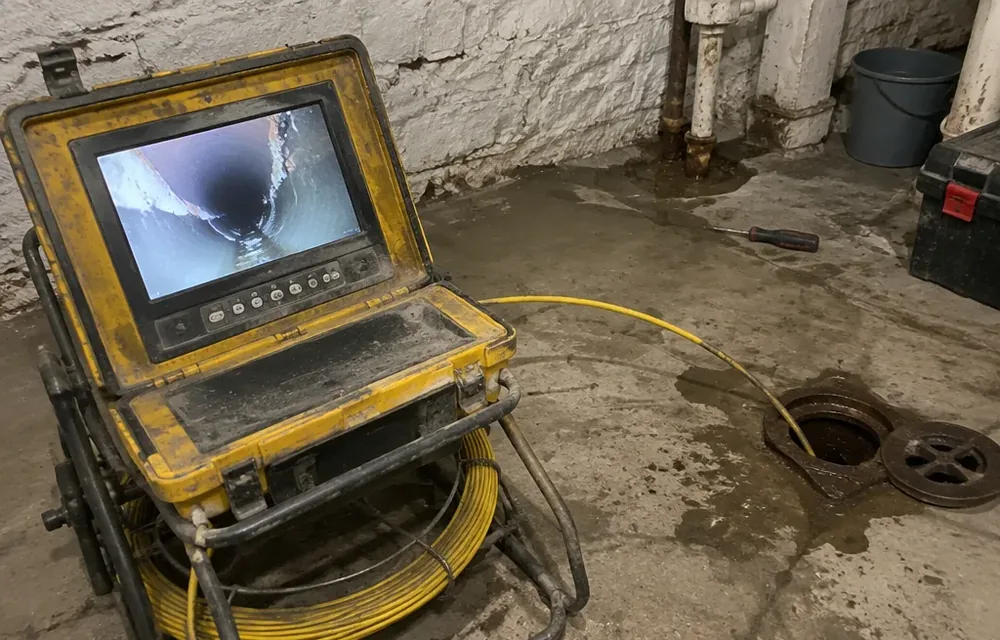
Sewer Camera Inspection
Every expensive sewer decision in Philadelphia — jet, repair, line, replace — depends on one thing: what the pipe actually looks like inside.
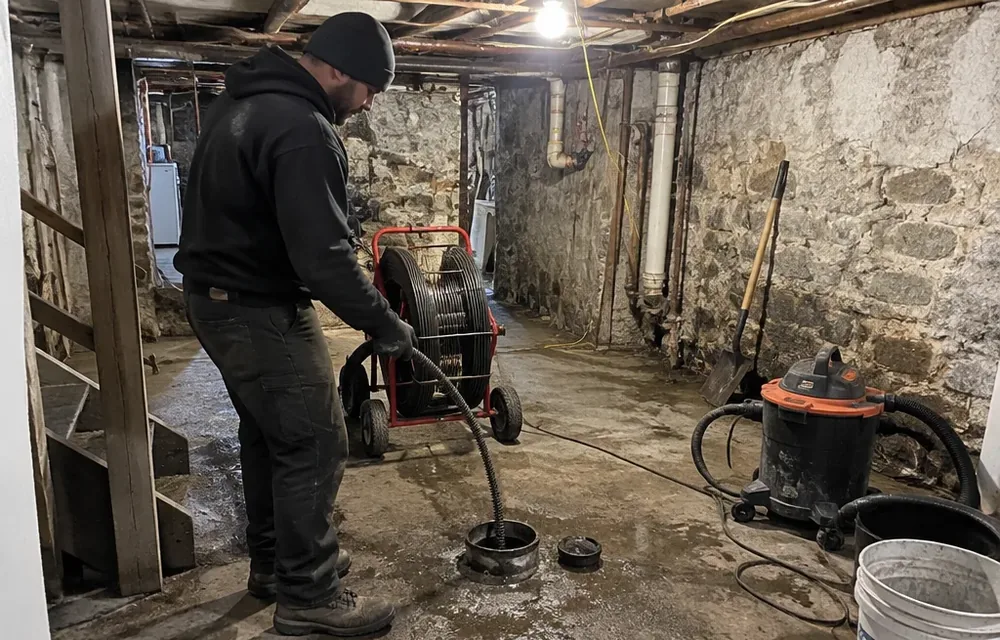
Main Sewer Line Cleaning
The lateral is the most expensive drain you own — a 60-to-100-foot clay run from your rowhouse to the street main, shared with stormwater, hunted by street-tree roots.