How much does grease trap cleaning cost in Philadelphia?
Small indoor grease traps in Philadelphia typically service in the low hundreds per visit, mid-size under-sink and floor units higher, and large outdoor interceptors of 500 gallons and up in the mid-to-high hundreds and beyond. Size, access, and load decide the visit, so treat these bands as market context rather than a quotation.
- Direct answer
- 2 min read
Size sets the baseline because it sets the waste volume and the labor around it. A compact under-sink trap in a Center City coffee shop or Old City takeout counter pumps out quickly with modest disposal weight, while a 500-plus-gallon in-ground interceptor behind a South Philadelphia roast pork shop or a Reading Terminal-area commissary holds far more fats, oils, and grease plus settled solids, needs a vacuum truck, and carries disposal by weight and volume. Access moves the figure next: a trap with clear truck approach and an unobstructed lid services in one setup, while interceptors buried under delivery lanes, dumpsters, or regraded paving in dense rowhouse commercial corridors add lid excavation, traffic control, and washdown. Load matters as much as gallons: fry-heavy menus, woks, and bakeries fill a trap faster than a sandwich counter of equal size, and a trap pumped past its scheduled interval arrives emulsified and odorous, which adds scraping, baffle cleaning, and line flushing the on-schedule visit would have avoided.
Frequency follows the quarter-full rule of thumb: pump before settled and floating layers together reach a quarter of the trap depth, which for most Philadelphia kitchens means monthly to quarterly on small indoor units and on a hauler schedule for large interceptors. The city expects records of manifests and pump-outs, and inspectors treat missing paperwork as its own violation regardless of how clean the trap looks. Know the three trades and their lanes: a licensed waste hauler pumps and manifests the trap contents, a plumber repairs baffles, lids, and inlet and outlet piping, and a jetting crew scours the grease-coated lines downstream of the trap to the combined main when flow stays slow after a fresh pump-out. Calling the wrong trade wastes the visit, since a hauler cannot descale a laminated kitchen lateral and a jetting crew cannot manifest interceptor waste.
Restaurants along Passyunk, Fishtown, and University City corridors share one failure pattern: the trap gets pumped while the downstream lateral stays coated, so backups return within weeks and the kitchen blames the hauler. The fix is sequencing: pump the trap, jet the grease lateral with a rotary head matched to the pipe, verify with camera that the wall runs clean to the street, and log footage marks for the next cycle. Keep wipes, rice, and mop solids out of every drain regardless of trap size, train closers on scraping before rinsing, and keep manifests filed where a shift lead can produce them. In combined-sewer blocks where cloudbursts surcharge every line at once, a pumped trap plus a scoured lateral is the difference between a busy Friday service and a dining room smelling of the floor drain.
Want the full picture?
Restaurant Grease Trap Maintenance in Philadelphia — Read the full guide: restaurant grease trap maintenance.
Follow-up questions
How often should a restaurant pump its grease trap?
Pump before contents reach a quarter of the trap depth, which usually means monthly to quarterly for small indoor units and a standing hauler schedule for large interceptors.
My trap was just pumped but drains still run slow. Why?
The downstream lateral is likely still grease-coated. A rotary jetting pass with camera verification after the pump-out restores the line the hauler does not service.
Services behind this answer
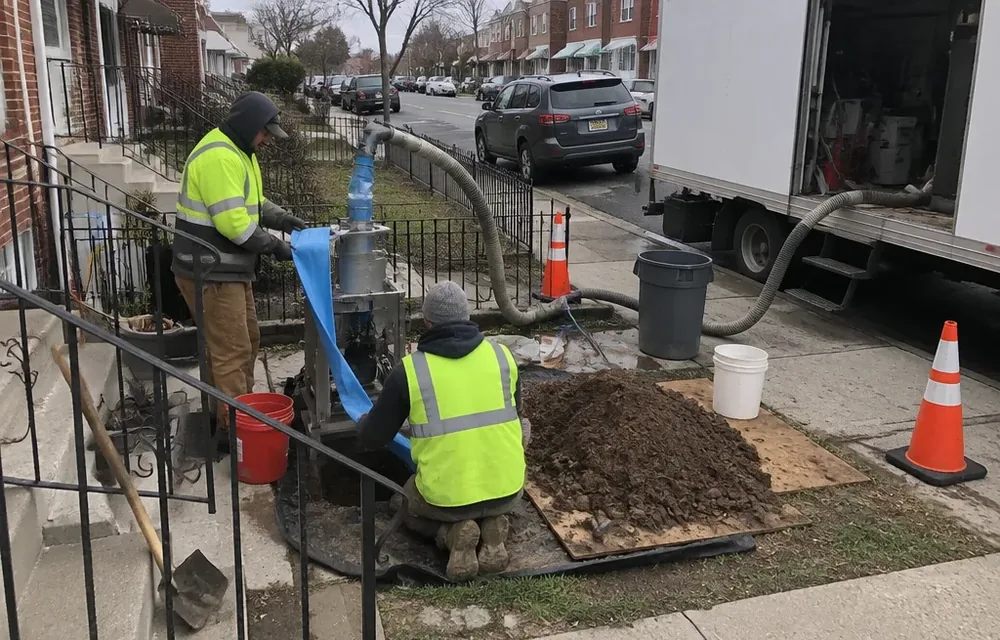
Commercial Hydro Jetting
Commercial drains fail on schedule — fryer volume, tenant count, storm season — so they should be serviced on schedule.
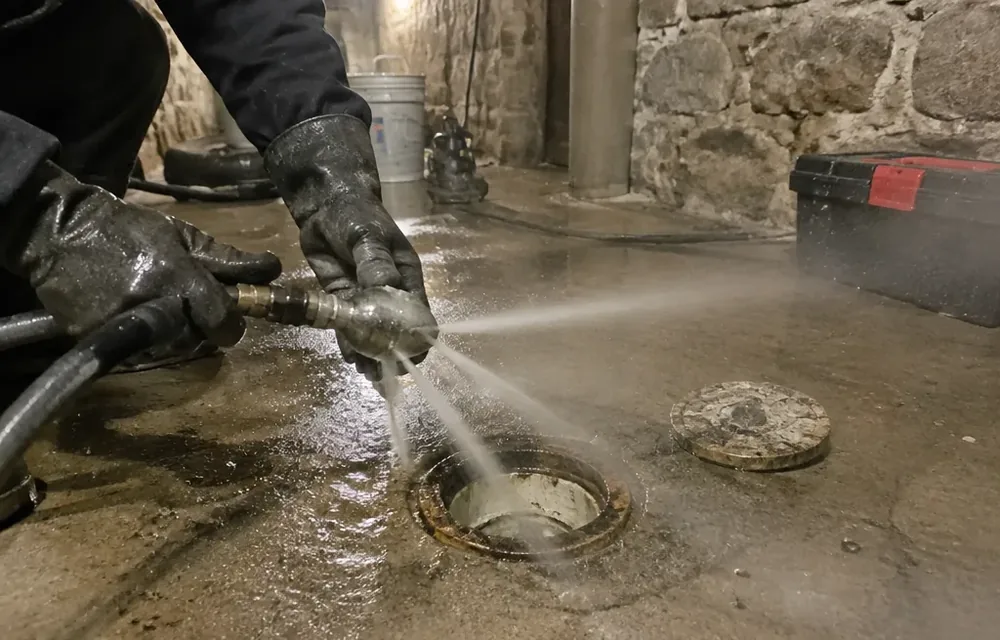
Kitchen Grease Line Jetting
Grease is the one clog material a cable cannot fix.