Restaurant Grease Trap and Grease Line Maintenance in Philadelphia
A Philadelphia kitchen flood rarely starts at the fryer; it starts weeks earlier as grease cools on iron, traps go too long between pump-outs, and jetting intervals stretch past what volume demands. Traps, lines, logs, and habits together decide whether service is scheduled or emergency.
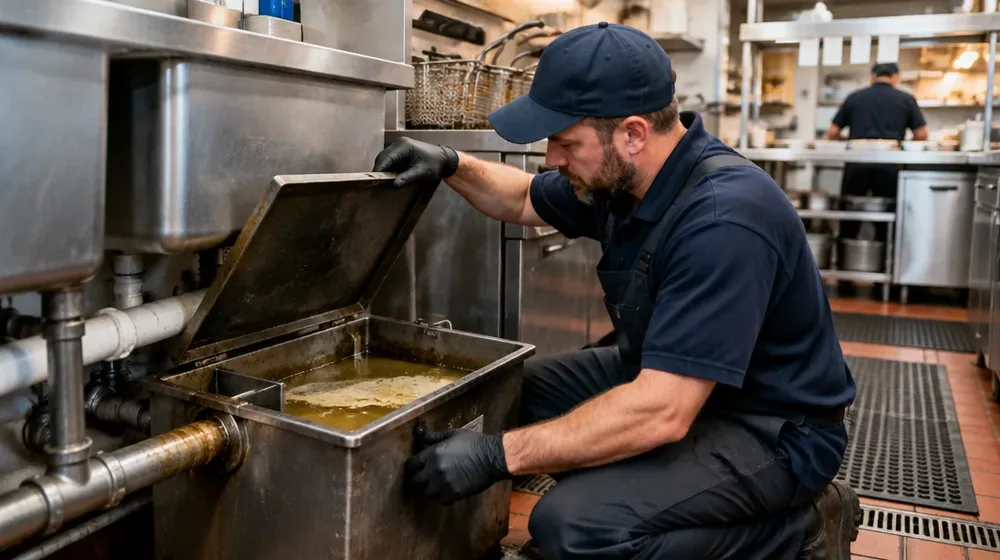
Trap versus interceptor: what each device does in a Philly kitchen
A grease trap, typically a compact under-sink or in-floor box measured in tens of gallons, slows wastewater just long enough for fats, oils, and grease to cool, separate, and float while clearer water exits to the drain line. It serves individual fixtures or small prep areas and fits tight Center City and South Street back-of-house footprints where space is the binding constraint. An interceptor, usually a large in-ground or exterior tank measured in hundreds to over a thousand gallons, gives the full kitchen flow far longer residence time and far greater storage, serving high-volume fryers, woks, and dish lines along corridors such as East Passyunk, Market East, and the Reading Terminal area where covers per day justify buried capacity.
Sizing follows fixture load, flow rate, and menu rather than square footage. A coffee and pastry corner with one triple sink imposes a fraction of the loading of a fried-chicken counter, a cheesesteak grill with fryer batteries, or a Sichuan kitchen running wok oil at volume, even at identical seat counts. Undersized devices pass grease straight through to the lateral from the first busy weekend, which is why chronic line backups in an otherwise maintained building so often trace to a device that was adequate for the previous tenant concept and inadequate for the current menu. Any concept change, fryer addition, or hours extension should trigger a sizing review before the lateral delivers its verdict.
Philadelphia installation realities add code, access, and coordination layers that generic advice skips. Device type and placement, venting relationships, flow-control fittings, and discharge connections follow plumbing code with permits and inspection, while exterior interceptors implicate excavation, traffic and pedestrian protection, and restoration in some of the tightest service alleys in the city. Back-of-house access for pump-out trucks on narrow streets with bike lanes, loading zones, and late-night delivery windows must be planned rather than assumed, because a correctly sized interceptor that the truck cannot reach on schedule becomes an undersized one in practice.
The diagnostic split matters for every later decision in this guide: the device manages what floats and settles at the fixture end, while jetting manages what coats the lateral between the building and the city main. A kitchen with a pristine trap log and chronic line backups has a lateral problem, often hardened deposits downstream that pump-outs never touch; a kitchen with a clean lateral camera and chronic trap overflows has a device problem of sizing, scheduling, or staff practice. Camera footage of the lateral plus measured device levels together show which half is failing instead of guessing.
Pump-out intervals by volume: schedules that match real loading
| Kitchen profile | Typical pump-out rhythm | Why this rhythm |
|---|---|---|
| Low volume cafe and bakery | Quarterly device service with monthly level checks | Modest fryer load; monitoring catches drift before pass-through |
| Mid volume grill and casual dining | Every one to two months with weekly dip checks | Steady grill and fryer fats accumulate faster than calendars assume |
| High volume fryers and cheesesteaks | Monthly or more often in peak seasons | Fryer oil turnover and grill drippings fill storage within weeks |
| Wok, fried chicken, late-night fryers | Every two to four weeks as measured levels dictate | Very high oil throughput; fixed quarters guarantee overflow |
| Interceptor with long lateral to main | Device schedule plus lateral jetting each quarter or half | Stored grease controlled at device; coated lateral needs its own cadence |
The only interval rule that survives contact with real kitchens is measurement: service the device when retained grease and settled solids reach the service threshold, commonly discussed around one quarter of device capacity, rather than on a fixed quarter regardless of volume. Fixed quarterly pump-outs suit genuinely low-volume cafes and may already be too infrequent for fryer-heavy concepts, where a busy month fills storage that a quiet month barely touched. Weekly dip measurements with a simple sludge stick, logged with dates, turn the schedule from a guess into a response curve the manager can actually defend to owners and inspectors.
Seasonality in Philadelphia moves the curve more than newcomers expect. Summer tourism, festival weekends, outdoor seating expansions, holiday catering runs, and late-night stretches all spike covers and fryer throughput without changing the calendar interval, so devices sized for February overflow in July unless the schedule flexes. Kitchens along South Broad event corridors, Old City nightlife blocks, and University City student calendars feel this acutely: the same device needs a denser summer rhythm and a lighter winter one, with the logbook proving the adjustment rather than memory.
Pump-out quality matters as much as frequency. A complete service removes the full contents including the settled solids blanket and the floating cap, scrapes accessible walls, verifies baffles, tees, and flow-control fittings are intact, and leaves the device refilled with clean water to restore separation immediately. Partial skims that leave the solids heel in place restore apparent capacity while preserving the seed of the next overflow, and undocumented visits with no manifest or log entry cannot prove anything to a health reviewer, a landlord, or an insurer after a backup. Require full evacuation with paperwork every time.
Coordinate device service with lateral awareness rather than treating them as separate vendors who never meet. Note backup dates against pump-out dates in one log: backups clustering just before scheduled service point to interval stretch, while backups days after a documented full pump-out point downstream to a coated lateral that needs jetting rather than another truck visit. That single correlation saves kitchens from buying repeated pump-outs for a jetting problem or repeated jetting for a sizing problem.
Jetting schedules for grease laterals: keeping the run to the main open
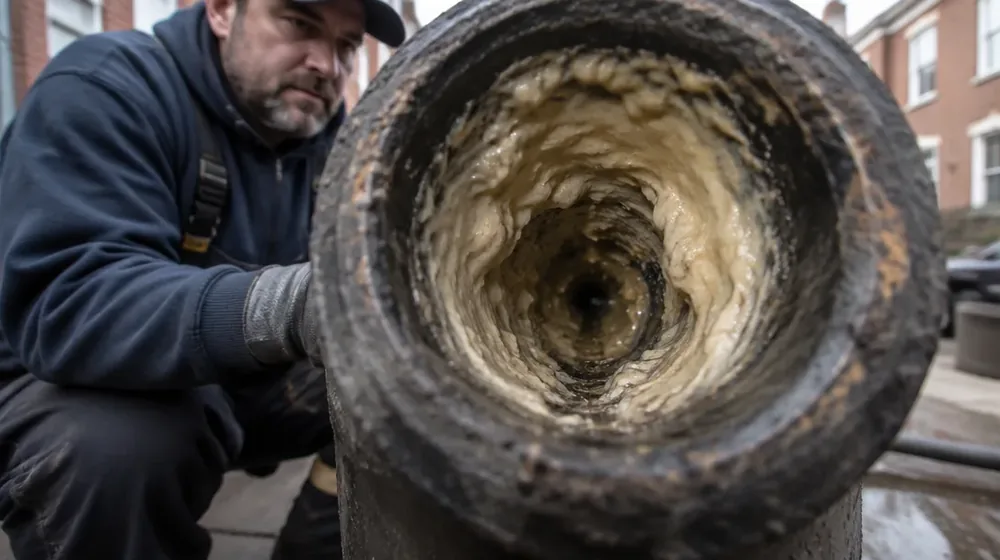
Even a perfectly maintained device passes some emulsified grease, especially under hot dish-line discharge that carries fats downstream before they can separate. That residual plates onto the first cold iron it meets, typically the lateral between the building and the combined main, where it hardens into laminated layers that narrow the bore load by load. Philadelphia rowhouses converted to restaurants along corridors like East Passyunk, Frankford Avenue, and Baltimore Avenue often run long small-diameter laterals with bends at the foundation and property line, which collect these layers faster than straight purpose-built commercial runs.
Effective grease jetting uses hot water where available, rotary scouring heads matched to diameter, and enough flow to carry dislodged material to the main rather than redepositing it downstream. A cable visit that bores a channel through the coating restores flow for weeks while leaving the wall loaded, which is why kitchens that snake quarterly and flood annually are not maintaining but postponing. Proper jetting peels to near bare wall under camera proof, restoring diameter that the next service interval then consumes at a rate the logbook can measure.
Cadence follows volume and lateral geometry rather than tradition. Low-volume cafes with short straight runs may hold a half-year or annual scouring with monitoring, mid-volume grills commonly need quarterly attention, and fryer-heavy kitchens with long bent laterals may need monthly to bi-monthly jetting during peak seasons. Set the first interval from the post-jet baseline camera, then adjust from measured re-coating at the next camera rather than from habit: heavy re-coating at three months shortens the interval, clean walls at six months extend it. National cleaning ranges are orientation only; the lateral footage at your address sets the real schedule.
Bundle jetting with camera verification every time, because grease work without proof is indistinguishable from theater. The pre-clean pass aims head selection and pressure and screens out structural defects that pressure would worsen in older converted buildings; the post-clean pass proves restored bore and logs remaining wall, joints, and any root or scale contributors that grease was masking. Keep both videos with footage marks alongside the device logs, so the next slowdown is diagnosed by comparing current footage against baseline rather than by debating opinions in a flooded prep area.
Compliance and record-keeping: the logbook that answers every reviewer
Reviewers from health, landlord, insurer, and city directions all ask the same underlying question in different words: prove the system is maintained on a schedule matched to load. The logbook that answers keeps device pump-out dates with manifests, measured grease and solids levels between services, jetting dates with pre- and post-clean footage references, staff training dates, enzyme or additive policies where used, and any backup events with storm correlation and response notes. Generic-but-true discipline wins here: complete dated records kept on site and backed up off site satisfy every reviewer faster than any verbal assurance about how careful the kitchen is.
Waste handling paperwork closes the loop that kitchens most often leave open. Used fryer oil collection with licensed hauler receipts, interceptor waste manifests showing lawful disposal, and confirmation that no contractor decants waste to the lateral, storm inlet, or rear-alley drain together prove the kitchen removes grease from the premises rather than relocating it. Philadelphia storm inlets feed the same combined system whose surcharge floods basements, so alley or inlet dumping is both an environmental violation path and a direct contribution to the block-level flooding the kitchen itself then suffers. File every manifest with the device log rather than in a separate drawer nobody opens.
Permit and device documentation belongs in the same file for converted buildings especially. Device approvals, plumbing permits with inspection sign-offs, as-built locations with depths, cleanout locations with access notes, and landlord responsibility splits for shared laterals in multi-tenant buildings prevent the common dispute where each party assumes the other maintains the buried half. Multi-tenant food halls and shared-lateral rowhouses on commercial corridors should state in writing who schedules jetting, who holds footage, and how costs divide when one tenant grease load coats a shared run.
Review readiness is a drill worth running before it is needed. A manager should be able to produce the current interval rationale, the last three pump-out manifests, the last jetting baseline with footage, the hauler contacts, and the emergency response card within minutes during a busy service without calling the owner. Kitchens that can do this pass reviews calmly and negotiate insurance and lease renewals from strength; kitchens that cannot spend the review explaining gaps that dated paper would have closed.
Staff practices that extend every interval: habits at the sink and fryer
Scrape and wipe before washing
Food solids to trash, greasy pans wiped with disposable towels before any water touches them.
Cool fryer oil to collection, never to drains
Filter and transfer used oil to the rendering container; lock the container against theft and spills.
Keep strainers in every sink and floor drain
Basket strainers catch solids that bind into grease film; empty them to trash on a schedule.
Run dish lines with separation in mind
Avoid sustained slugs of near-boiling greasy water that carry emulsified fats straight past the device.
Treat floor drains as grease checkpoints
Squeegee solids to trash first; mop water carries fines that settle where the lateral slows.
Log anomalies the same shift
Overflow signs, slow drainage, odors, or missed pickups written up immediately with date and time.
Training is the cheapest grease control available because habits decide loading before hardware does. New-hire onboarding should demonstrate the scrape-wipe-wash order at the actual sink, the oil transfer path at the actual fryer, and the strainer routine at the actual stations, with a signed checklist kept alongside food-safety training. Refresher coaching belongs on the schedule each season and after every backup, when attention is highest and the lesson attaches to a real event rather than a poster.
Chemical shortcuts deserve skepticism stated plainly. Caustic or emulsifying products that appear to clear a slow drain often relocate the grease downstream where it re-congeals on colder pipe, trading a visible fixture problem for a buried lateral problem that costs more to jet. Biological additives marketed for traps have narrow effective conditions and never substitute for pump-outs or scouring where volume is real. The kitchen that pours discipline down the drain instead of product keeps its intervals; the kitchen that doses its way out of maintenance buys emergency jetting at night rates.
Corridor realities: Center City, South Street, Passyunk, and shared runs
Philadelphia food corridors impose distinct constraints that suburban guidance never mentions. Center City basements with low headroom and maze-like shared laterals complicate jetting access and camera launches, South Street and Old City late-night volume spikes load devices hardest exactly when pump-out truck access competes with nightlife traffic, East Passyunk and Graduate Hospital conversions run restaurant grease through century-old iron sized for rowhouses, and Market East and Reading Terminal adjacency adds delivery-window and loading-dock choreography to every service visit. Scope every service for the corridor reality rather than a generic commercial template.
Shared laterals in converted rows deserve explicit agreements before the first backup. Two or three food tenants discharging into one old run to the combined main will coat it at the sum of their loads, yet each tenant log shows only its own device and none shows the shared pipe. Master-lease or landlord-held jetting schedules with footage shared to all tenants, cost splits stated in the lease, and device minimums enforced per concept prevent the familiar dispute where each kitchen proves its own trap is clean while the shared lateral floods all three. Put the shared run on one calendar with one footage archive.
Access planning saves more money than haggling over unit rates. Confirm cleanout locations with working clearance before booking night jetting, stage hose paths that avoid dining rooms and food contact surfaces, schedule loud exterior work outside residential quiet expectations on mixed blocks, and coordinate truck standing with loading-zone realities on narrow streets. Kitchens in Fishtown, Northern Liberties, and West Philadelphia mixed-use blocks that plan access once repeat every future service at lower friction and lower cost.
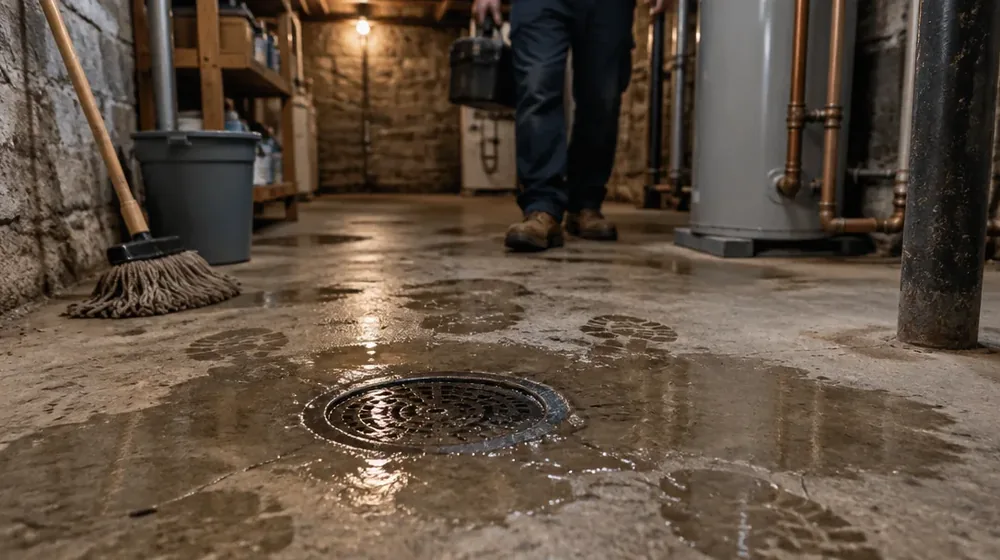
Storm behavior on combined blocks adds a final corridor consideration most kitchens discover too late. When cloudbursts surcharge the combined main along the Schuylkill and Delaware corridors, basement prep areas and low mop sinks become relief points regardless of how clean the lateral is, and a backup during rain is a street event as much as a kitchen event. Backwater awareness for below-grade fixtures, elevated storage of dry goods and paper above observed high-water lines, and a rain-event response card posted at the manager station complete the corridor preparation that device and jetting schedules alone cannot provide.
When the line still slows: diagnose in order instead of buying blind
Treat any slowdown as a measurement exercise rather than a product order. Check device levels first: grease or solids at the service threshold means the interval stretched and a pump-out is due, while normal levels days after service point downstream. Check the log for storm correlation: multi-fixture gurgling during intense rain implicates combined-main surcharge rather than kitchen loading. Then camera the lateral from a proper cleanout before authorizing pressure, because the footage distinguishes re-coating, structural defects, root entries at joints, and bellies holding water, each of which demands a different spend.
Match the fix to the footage without improvisation. Re-coating on sound pipe calls for scouring jetting with hot water and rotary heads plus a tightened device or habit interval; root masses call for cutting to full diameter followed by jetting and a logged entry footage with depth; bellies, collapses, or wall loss call for repair pricing rather than another cleaning, with the capital scope written from the survey rather than from symptoms. Pouring chemicals, ordering repeated pump-outs for a lateral problem, or jetting a collapsed run each spends money while preserving the defect.
Prove the result under load and file it before the next rush. Run the dish line and dump a full compartment sink while observing the lateral, confirm full-bore flow with the post-clean camera, and log the baseline footage, the interval set from measured re-coating, and the staff or scheduling change made alongside. Related services frame the standing program: commercial hydro jetting for the lateral cadence and kitchen grease line jetting for the fixture-to-main scouring that keeps corridor kitchens open. The kitchen that diagnoses in order buys scheduled maintenance; the kitchen that buys blind buys emergencies.
Frequently asked questions
How often should a Philadelphia restaurant pump its grease device?
By measured levels rather than fixed quarters: service when grease plus solids approach about one quarter of capacity, which means quarterly for low-volume cafes but monthly or more often for fryer-heavy concepts and peak seasons. Weekly dip checks with a dated log set the real rhythm.
What is the difference between a grease trap and an interceptor?
A trap is a compact fixture-level box for small flows, while an interceptor is a large in-ground or exterior tank giving the whole kitchen far longer separation time. Menu, fixture load, and flow rate decide sizing, and any concept or fryer change should trigger a sizing review.
How often should restaurant grease lines be jetted?
Volume and lateral geometry decide: low-volume short runs may hold half-year or annual scouring, mid-volume grills commonly need quarterly work, and fryer-heavy kitchens with long bent laterals may need monthly service in peak seasons. Set intervals from post-jet baseline cameras and measured re-coating.
What records should a kitchen keep for grease compliance?
Dated pump-out manifests, between-service level readings, jetting dates with footage references, used-oil hauler receipts, training dates, and backup events with response notes, kept on site and backed up. Complete dated paper answers health, landlord, and insurer reviewers faster than any assurance.
Why does the kitchen back up right after a pump-out?
Because the blockage is downstream in the lateral rather than in the device: hardened grease coating, a root mass, a belly, or a structural defect that pump-outs never touch. Camera the lateral before buying more pump-outs, then jet or repair per what the footage proves.
Services mentioned in this guide
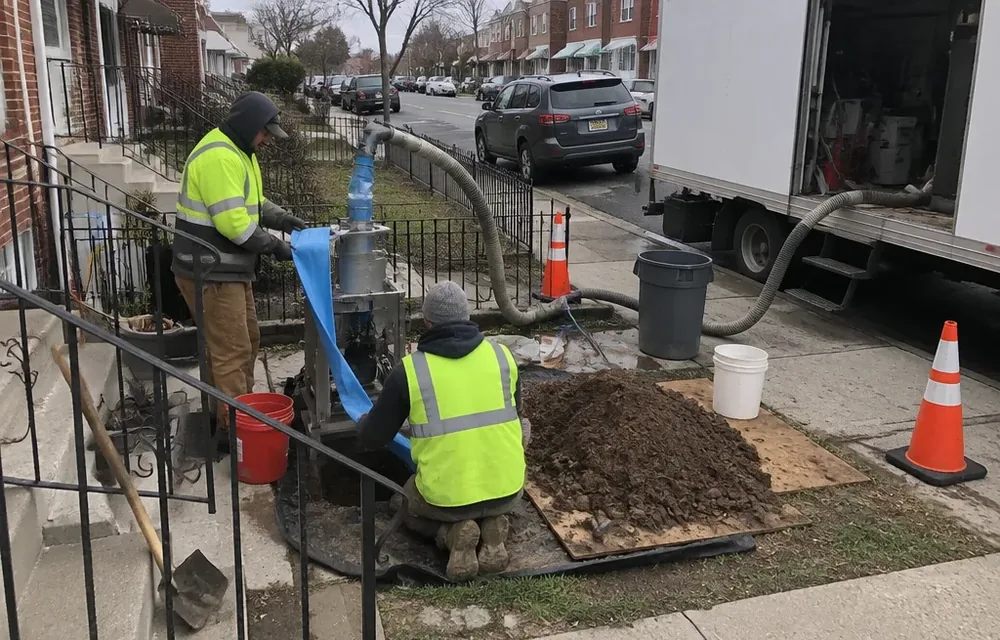
Commercial Hydro Jetting
Commercial drains fail on schedule — fryer volume, tenant count, storm season — so they should be serviced on schedule.
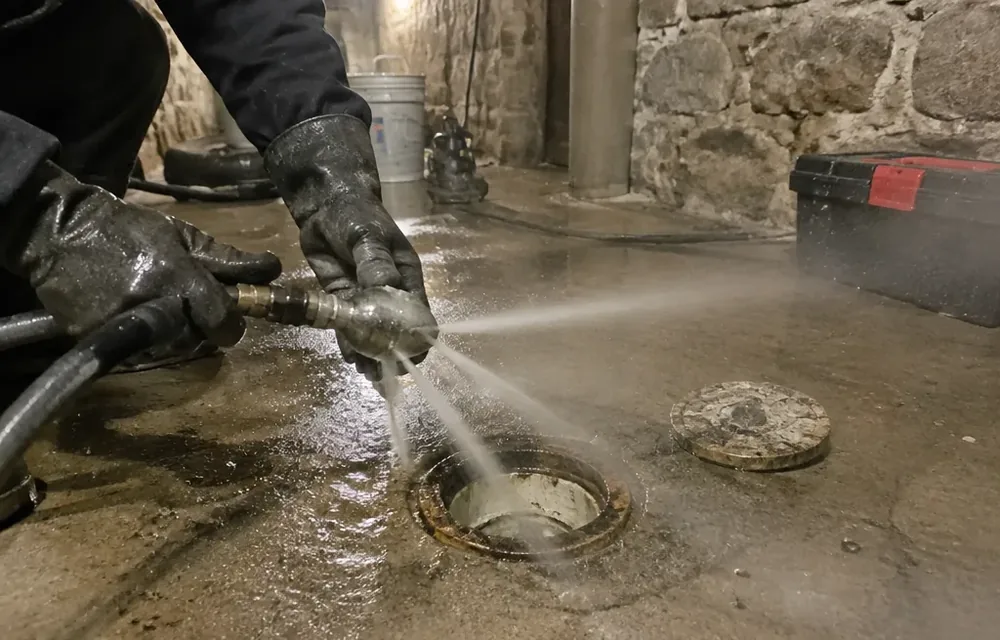
Kitchen Grease Line Jetting
Grease is the one clog material a cable cannot fix.
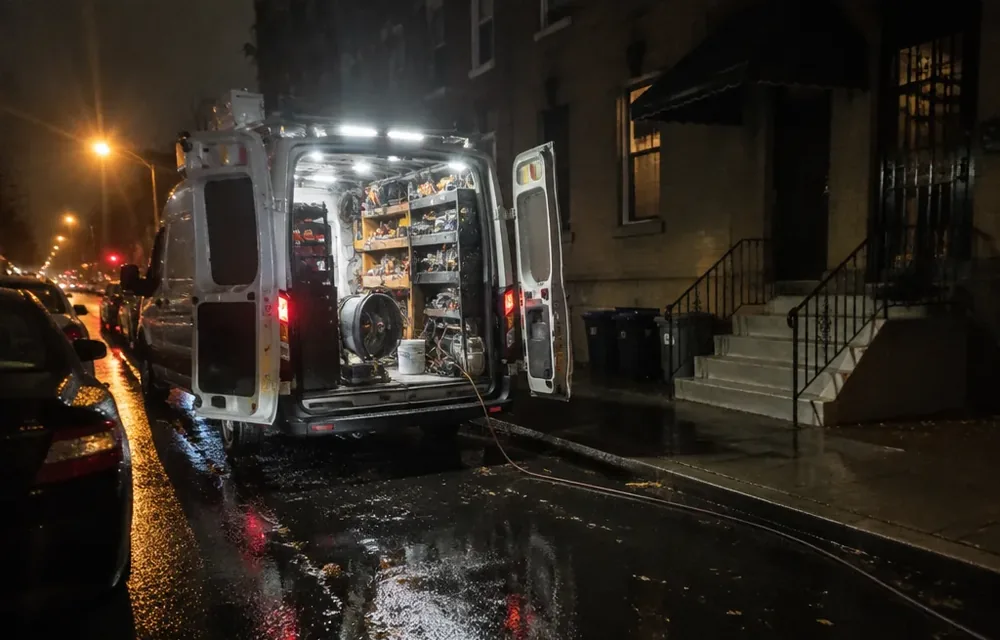
Emergency Drain Service
Sewage on the basement floor does not wait for business hours, and neither do we.
Free tools that help with this exact problem
Clog diagnostic
The difference between a fixture clog and a main line failure is a factor of three in price and the difference between "book it next week" and "stop using water now".
Jetting vs snaking
Snaking costs less and jetting lasts longer, but that is not the real decision.
More guides

Hydro Jetting Cost in Philadelphia: 2026 Guide
Most Philadelphia homeowners budget around national jetting ranges, then discover access, lateral length, and root cut…
Grease Lines: Philly Rowhouses & Restaurants
Grease goes down warm and liquid, meets cold iron, and becomes a wall coating rather than a plug. That is why the same…
Basement Backup in Philly: Combined Sewers
When rain and sewage share the same Philadelphia main, a cloudburst can push water backward through the lowest drain i…

How to Check a PA Plumber License in Philly
Verifying license and insurance before work begins takes minutes and is the homeowner responsibility that protects eve…