Call 811 Before Digging in Philadelphia: A Homeowner Guide to PA One Call
Any digging for sewer or drain work in Philadelphia, from a full lateral replacement to a small cleanout excavation, legally starts with a call rather than a shovel. Pennsylvania requires advance notice to PA One Call so buried gas, electric, water, and communications lines get marked before anyone breaks ground. This guide explains what 811 marks, what it never marks, the request sequence in order, how to read the paint and flags, and the Philadelphia wrinkles, from shared rowhouse laterals to narrow streets, that catch owners off guard.
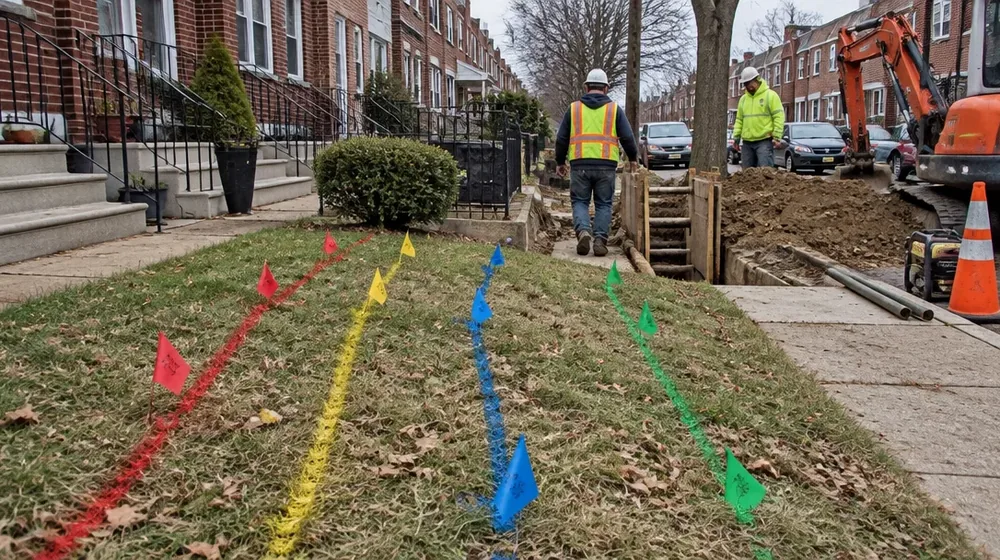
Why the call comes before the shovel on any sewer job
A sewer lateral leaves the house through ground that already belongs to half a dozen other systems. Gas services, electric secondaries, water services, telephone and fiber, and sometimes steam or private lines all cross the same few feet of soil between the foundation and the street main, and a trench opened to repair a broken lateral must pass through that shared corridor. Striking any one of them converts a planned plumbing repair into an emergency: gas leaks evacuate blocks, severed electric feeds injure operators, cut fiber bills run into the thousands, and every one of those outcomes lands on the party that dug without proper notice.
Pennsylvania answers that risk with a single statewide rule. The Underground Utility Line Protection Law requires excavators to notify PA One Call before digging so every member facility owner can mark its buried lines, and the notice, the waiting period, and the marking obligation apply in Philadelphia exactly as they do everywhere else in the state. The homeowner locate request process, including online ticket submission, is documented for residents at PA One Call. Filing the request costs nothing, takes minutes, and creates a ticket record proving the dig was announced; skipping it costs nothing up front and potentially everything later.
Philadelphia density makes the call more important here than in most of the state, not less. Narrow streets compress mains and services into tight corridors under the cartway and footway, rowhouses sit on zero lot lines with no side yards to route around congestion, and a century of overlapping installations means the ground rarely matches any single set of drawings. Shallow services are common where later work raised grades or where prior excavations were backfilled carelessly. No visible cue reliably predicts what lies a foot down, which is why even careful hand digging finds live lines every year in the rowhouse belt.
The ticket is also the digger legal shield, and that protection is worth understanding before anyone prices the job. When proper notice is given, marks are respected, and careful practices are followed, responsibility for a line that was mismarked or unmarked shifts away from the excavator. When no ticket exists, the excavator owns the full consequence: repair costs, outage damages, state penalties, and in serious cases criminal exposure for reckless damage to utility facilities. No contractor discount is worth absorbing that risk, and no emergency is so urgent that it excuses skipping a free call that takes minutes.
What 811 marks, and what it will never mark
PA One Call notifies its member facility owners, and each owner sends a locator to mark the buried lines it owns, generally up to the service point where responsibility transfers. Gas, electric, water, sewer mains, and communications plant all get marked by their respective owners, using paint, flags, or both to trace the horizontal path across the dig area. Those marks show alignment, not depth, and they cover member-owned facilities only; anything privately owned on the far side of the service point simply does not belong to any member and never appears.
The private side is larger than most homeowners expect, and on a sewer job it includes the single most important line in the ground. The house sewer lateral running from the building to the city main is the property owner responsibility in Philadelphia, so no utility locator will ever mark it. The same gap covers the water service past the curb stop, private electric runs to garages and sheds, septic tanks and fields, wells, irrigation and sprinkler piping, landscape lighting cable, propane tank lines, sump pump discharges, and abandoned lines nobody owns anymore. A yard can be fully marked by every member utility and still hide the exact pipe the excavation is targeting. That is why the lateral gets traced privately with a camera and sonde before the bucket arrives.
Private laterals need a private locate, which on a sewer job usually means a drain contractor with a camera and a sonde transmitter. The crew pushes a camera carrying a small signal-emitting sonde through the lateral from a cleanout, then walks the surface with a receiver wand that beeps loudest directly over the transmitter, logging the lateral path and its depth at intervals with paint and a written footage log. Pairing that trace with the recorded video shows joints, offsets, root masses, and breaks at known distances from the house, which turns blind excavation into a measured dig to a known point.
Ordering the private locate before the machine arrives changes the economics of the whole repair. An excavator who knows the lateral line and depth can open one compact hole at the defect instead of trenching half the yard chasing a pipe that wanders, and can plan shoring, dewatering, and spoil placement around reality rather than guesses. On party-wall rowhouses the trace also settles the question of whose pipe is whose before the bucket touches soil serving two homes. The camera and locate visit typically costs a small fraction of one wasted day of machine time, which makes it the highest-return step in the project.
The request sequence, step by step
Pre-mark the dig area in white
Outline the proposed excavation with white paint, flags, or stakes before filing, so each locator knows exactly where to mark. A clear white box around the work area gets faster and more accurate marks than a street address alone.
File the request with PA One Call
Submit online through the homeowner process at PA One Call or call 811 at least three business days before digging. Keep the ticket number; it is the proof of notice and the key to every follow-up.
Wait out the full response window
Allow every member utility its complete legal response time. Never start early because the first one or two locators marked quickly; the slowest responder is often the line closest to the trench.
Confirm every response on the ticket
Check ticket status and confirm each member responded, marked, or reported no facilities in the area. A non-response is a task, not a clearance: request a re-notice and hold the dig until the record is complete.
Protect the marks and brief the crew
Keep paint and flags intact through the whole job, photograph them against fixed landmarks, and walk every operator and laborer through what each color means before the bucket moves.
Dig with care and keep the ticket alive
Hand expose within the tolerance zone around every mark, keep powered equipment off marked alignments, and refresh the ticket if work runs past its validity window or the marks fade.
Timing deserves emphasis because it is where most residential jobs slip. Three business days is the legal minimum notice, not a planning target, and weekends and holidays do not count, so a ticket filed on a Thursday rarely clears before the middle of the following week. Coordinate the filing with the contractor schedule rather than treating it as a morning-of formality: book the excavation for after the response window closes, confirm responses the day before mobilization, and keep a weather margin so a rained-out dig day does not push work past the ticket validity period.
The tolerance zone rule governs everything that happens near paint. Within a set distance either side of any mark, only careful hand digging or vacuum exposure is acceptable until the line is positively exposed and its exact position confirmed. Marks locate the horizontal path within a tolerance, never to the inch, and they say nothing about depth, which varies with grade changes, prior excavations, frost heave, and a century of undocumented Philadelphia street work. Exposing a line by hand feels slow for exactly as long as it takes; striking one feels far slower.
Emergencies get an expedited path, not an exemption. An active sewage backup flooding a basement, a collapsed lateral undermining a footway, or a gas odor near the trench qualifies for emergency handling through PA One Call, with shorter response expectations and priority dispatch of locators. Call, declare the emergency honestly, keep the emergency ticket number with the job file, and still complete the private lateral locate so the emergency trench lands on the defect the first time. Document everything, because emergency digs draw the closest scrutiny if anything goes wrong.
Reading the paint: utility color codes
| Color | What it marks |
|---|---|
| Red | Electric power lines, cables, conduit, and lighting cable |
| Yellow | Gas, oil, steam, petroleum, and gaseous materials |
| Orange | Communications, cable television, fiber, and alarm lines |
| Blue | Water lines and potable water services |
| Green | Sewer lines and storm drain lines |
| White | Proposed excavation limits and pre-marked dig area |
| Pink | Temporary survey markings and unknown or unidentified lines |
| Purple | Reclaimed water, irrigation, and non-potable water lines |
The colors follow the national American Public Works Association standard, so they read the same in Philadelphia as anywhere else in the country. Red and yellow demand the most respect because the consequences of contact are immediate and severe, but green deserves special attention on a sewer job: a green mark traces the city sewer or storm main the lateral must reach, while the lateral itself stays unmarked in the default color of bare dirt. Orange has grown more important as fiber has multiplied under Philadelphia footways, and its repair bills routinely exceed the cost of the entire plumbing repair that cut it.
Paint and flags work as a system with offsets, arrows, and labels that refine what the color alone says. Arrows show direction of run, parallel lines bracket a wide facility or duct bank, offsets with measurements shift marks off pavement that cannot be painted, and handwritten tags name the owner or the line size. Photograph every mark against fixed landmarks like corners, stoops, and curb lines before work starts, because paint fades under traffic and flags migrate in wind and storms. A dated photo set turns a dispute about whether a mark existed into a thirty-second review.
Multiple utilities sharing one corridor produce layered marks that need reading as a group rather than one color at a time. A typical Philadelphia frontage can show blue water, yellow gas, orange fiber, and green sewer crossing the same few feet at different depths, with the unmarked private lateral threading among them. That layered picture is exactly why the private locate matters: the member marks frame the corridor, and the traced lateral completes it. Brief the operator on the full picture, mark the lateral trace in a distinct way the crew agrees on, and keep everyone clear on which line the bucket is actually chasing.
Philadelphia specifics: party lines, narrow streets, and permits
Shared and adjacent laterals are the great Philadelphia complication. Neighboring rowhouses sometimes share a single connection to the main through a party line, and even where each house has its own lateral, two pipes often run inches apart in one historic trench along the party wall. Excavating for one house can expose, undermine, or damage the neighbor line, and camera footage from the wrong cleanout has misled more than one crew into digging up the wrong yard. Verify which lateral serves the target address with a camera run from inside that house plus a sonde trace before marking any excavation, and notify the adjoining owner when work comes near a shared wall or a shared trench.
Narrow streets compress everything else. Short frontages leave no room to reroute a trench around congestion, footways carry layered services under a few slabs of concrete, and the lateral trench from foundation to curb can cross gas, water, electric, and fiber within a single bucket width. Machine access itself is constrained: excavation equipment that fits a suburban side yard may not fit a Philadelphia rear yard reached through a three-foot walkway, which pushes more work to hand digging whether the schedule likes it or not. Plan spoil placement, shoring, and restoration for tight quarters from the start rather than discovering the constraints with a loaded truck blocking the street.
Old combined infrastructure adds depth uncertainty you will not find on newer suburban systems. Brick and vitrified clay mains sit deep, services rise at varying grades, and past street raisings, repavings, and utility cuts have shuffled cover depths unpredictably. Department records and old permit cards help aim the investigation but never substitute for field verification by hand exposure. Treat every assumed depth as a rumor until a shovel or vacuum confirms it, and budget the job for at least one surprise per trench in the oldest districts.
Sewer connection work in Philadelphia sits under Water Department regulations, including the Chapter 5 requirements governing connections, and the contractor of record carries responsibility for doing the work to those standards. In practice that means the hired contractor pulls the connection and street opening permits, schedules department inspection of the connection work, files and maintains the PA One Call ticket, and restores pavement, footway, and grading to standard. Homeowners should confirm all four items sit with the contractor in writing before digging: ticket number, permit numbers, inspection scheduling, and a restoration plan with a named responsible party. A contractor who cannot produce those basics has not done this work in Philadelphia before.
When the marks look wrong
Marks earn trust by matching expectations, so learn the patterns that signal trouble. No marks at all where old drawings or the meter arrangement suggest services should run, marks that stop dead mid-yard, conflicting colors overlapping one corridor, fresh pavement or fresh sod with zero paint anywhere, and a fully marked neighbor lot beside a blank one all warrant a pause. So does any mismatch between the private lateral trace and the member marks, such as a green sewer mark crossing where the camera proves no main exists. Each of these means the picture is incomplete, and incomplete pictures are exactly what the re-mark process exists to fix.
The response to suspect marks is procedural, not heroic. Stop the excavation, preserve everything already exposed, and request a re-mark through PA One Call referencing the original ticket number with a clear description of the discrepancy. Photograph the suspect area against fixed landmarks, note which members responded and which did not, and keep that file with the ticket. Resume only after the record is complete and the ground truth is confirmed by careful hand exposure. Crews sometimes grumble about the delay; the delay costs hours, while digging through uncertainty costs careers.
Never read depth off a surface mark. Marks show horizontal alignment within a tolerance band, and depth along that alignment wanders with original installation practice, later grade changes, frost movement, and nearby excavations that lifted or settled the line. The only known depth is one measured on an exposed line with a tape, and the only safe approach near any mark is hand or vacuum exposure until that measurement exists. This discipline matters most for gas and electric, where a bucket tooth at an assumed-safe depth is the classic strike scenario on Philadelphia streets.
Document the whole job as if a dispute is certain, because on the rare job where something breaks, it effectively is. Keep the ticket number, the response confirmations, the pre-mark photos, the mark photos, the private locate log with depths, and a daily note of what was exposed and when. That file proves notice was given, marks were respected, and practices were careful, which is the complete defense under the state law framework. Most tickets close quietly and the file gathers dust; on the one job in a hundred where it matters, it is worth more than the repair itself.
Frequently asked questions
Is calling 811 really free for a Philadelphia homeowner?
Yes. Submitting a locate request to PA One Call and the resulting marking visits by member utilities cost the homeowner nothing. Private locates are a separate paid service: tracing a house sewer lateral with a camera and sonde, or sweeping for private electric and irrigation lines, is hired and billed independently because no member utility owns those lines.
How far ahead of a sewer repair must the ticket be filed?
Pennsylvania requires at least three business days of notice, with weekends and holidays excluded from the count, so plan on a full calendar week when scheduling a contractor. File before mobilization, confirm every member response the day before digging, and refresh the ticket if work extends past its validity window or if site marks fade or are destroyed.
Do I need a ticket for a small hand-dug hole?
The state law targets excavation including powered equipment and grading, but PA One Call recommends notice for any digging because shallow services ignore hole size. Philadelphia yards hide electric, gas, and communications lines at hand-dig depth, and a shovel finds them as effectively as a machine. When in doubt, file the free ticket rather than debating definitions over an open hole.
Will 811 mark my house sewer lateral?
No. The lateral from the building to the city main is private property and the owner responsibility in Philadelphia, so member locators never mark it. Hire a drain contractor to camera the line with a sonde transmitter and trace it on the surface with a receiver wand, producing a marked path with depths that the excavation can follow.
What should I do if a utility never responds to my ticket?
Do not treat silence as clearance. Check the ticket status, request a re-notice for the missing member through PA One Call, and hold the dig in the affected area until the response record is complete. Document every check and every call, photograph the unmarked ground against landmarks, and proceed only once every member has responded or been resolved through the re-notice process.
Services mentioned in this guide
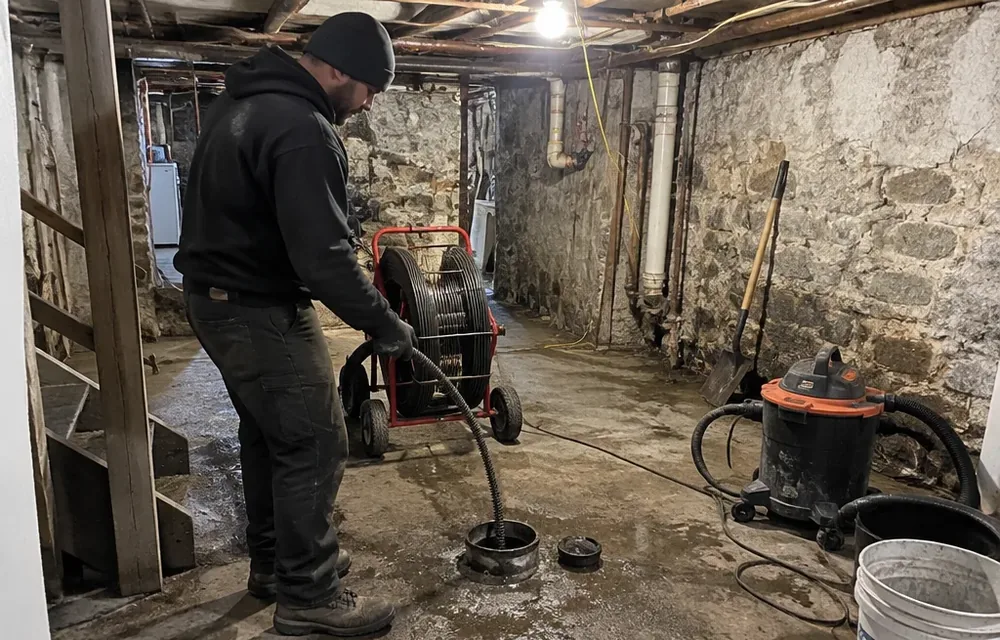
Main Sewer Line Cleaning
The lateral is the most expensive drain you own — a 60-to-100-foot clay run from your rowhouse to the street main, shared with stormwater, hunted by street-tree roots.
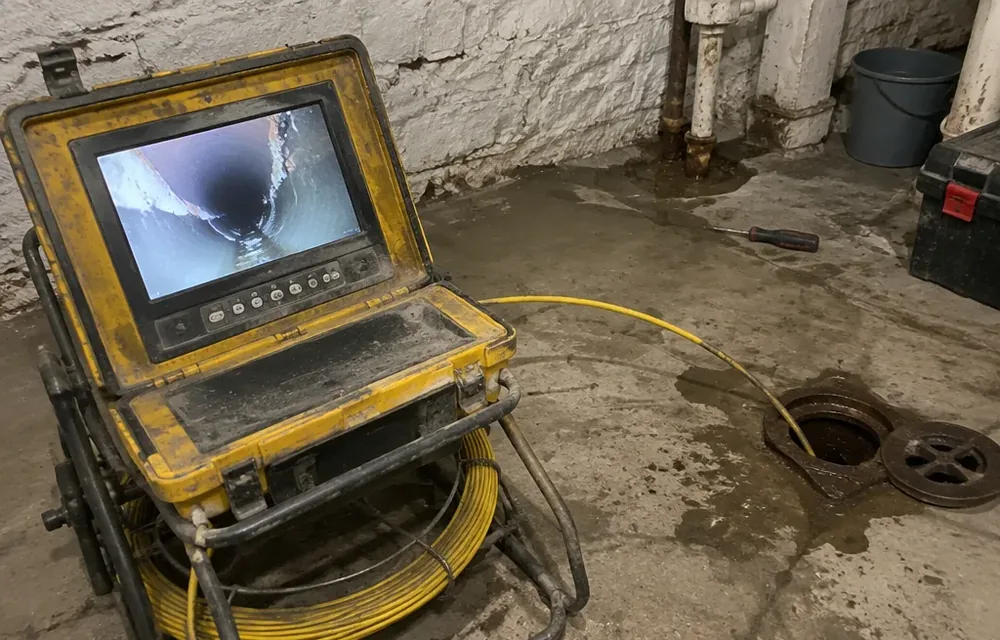
Sewer Camera Inspection
Every expensive sewer decision in Philadelphia — jet, repair, line, replace — depends on one thing: what the pipe actually looks like inside.
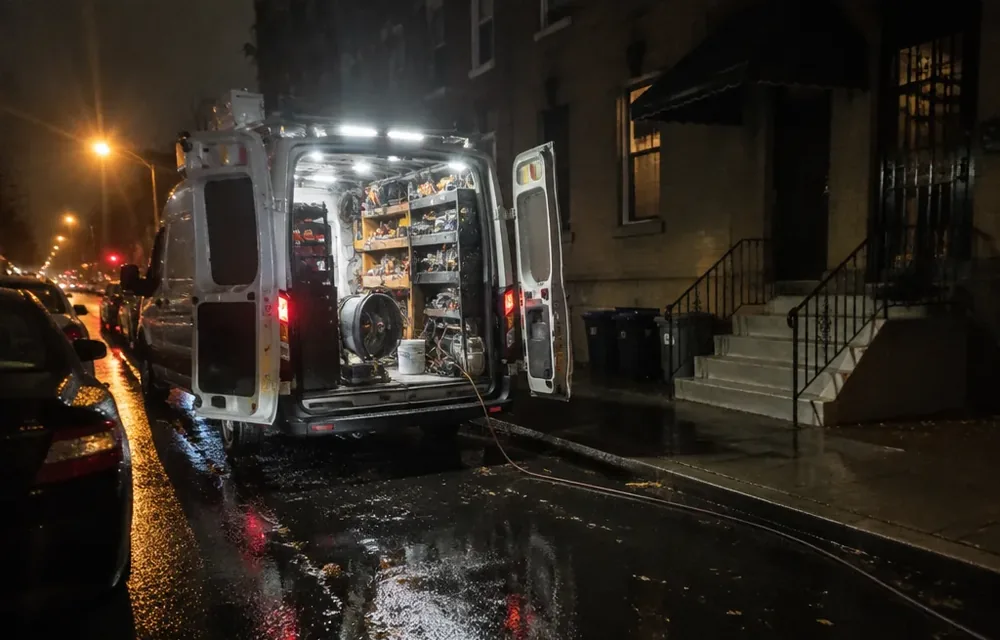
Emergency Drain Service
Sewage on the basement floor does not wait for business hours, and neither do we.
More guides
Hydro Jetting vs Snaking: What Philly Homes Need
A cable bores a hole through the blockage so water moves again. A jetter scours the whole pipe wall back toward bare m…

Hydro Jetting Cost in Philadelphia: 2026 Guide
Most Philadelphia homeowners budget around national jetting ranges, then discover access, lateral length, and root cut…
Tree Roots in Philadelphia Sewer Lines Guide
Roots do not break into sound pipe. They find the clay joint that is already leaking, thicken in the flow, and become …

Philly Rowhouse Laterals: Clay, Iron & More
The year your Philadelphia rowhouse was built predicts what is buried in front of it. Clay joints admit roots, cast ir…