Grease in Lines: Philadelphia Rowhouses and Restaurants
Grease goes down warm and liquid, meets cold iron, and becomes a wall coating rather than a plug. That is why the same Philadelphia kitchen backs up every few months no matter how often it is cabled.
Why grease behaves differently from every other clog
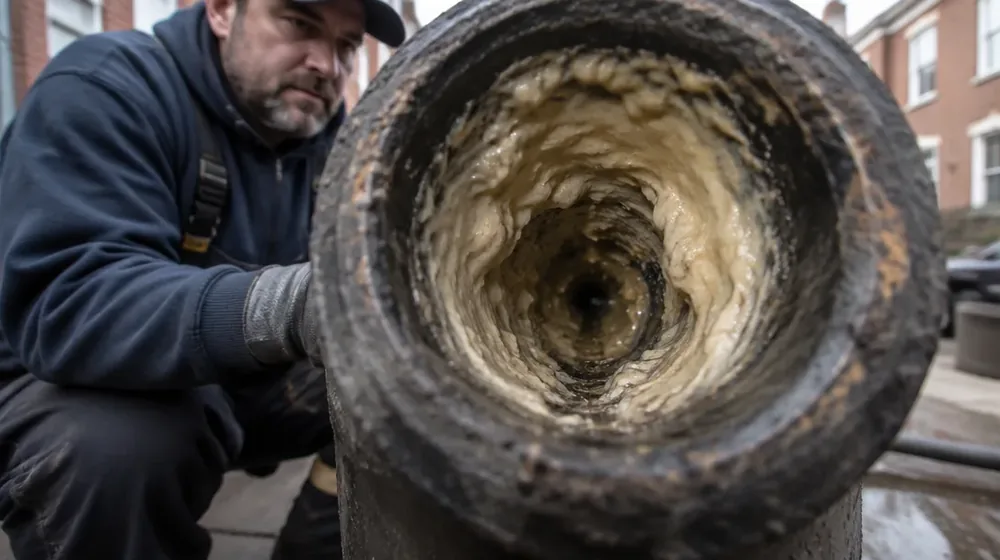
Most clogs are plugs sitting in the pipe. Grease is a coating bonded to the pipe, laid down in thin layers every time warm fat meets cold iron and congeals on contact. Food particles, coffee grounds, and paper fibers then embed in that film, narrowing the bore a fraction at a time until a routine dinner load becomes the final straw. A cable bores a channel through the coating and restores flow without removing the cause, which is why the interval between backups shortens with every visit while the wall grows thicker.
Philadelphia rowhouse plumbing makes the physics worse. Kitchen laterals in brick rowhouses from South Philadelphia to Kensington are frequently long cast iron runs with bends at the foundation and the property line,cool basement exposures that chill the pipe, and modern dishwashers discharging cooler water that congeals fat faster than the scalding hand-wash water of a generation ago. Bacon fat, roasting drippings, fryer oil, and even supposedly innocent olive oil all solidify on that cold iron, and garbage disposals compound the problem by grinding solids finer so they bind more readily into the film.
The signature is unmistakable once it is named. The same kitchen sink or the lowest drain in the run slows every few months, the cable returns coated in black or brown grease rather than a discrete mass, hot water and dish soap produce a day of improvement followed by relapse, and the rest of the house drains normally until the coating finally throttles the shared lateral. At that point the household is not experiencing repeated bad luck. It is experiencing one continuous condition interrupted by temporary channels.
Restaurant laterals follow the same physics at higher volume and higher stakes. Fryers, woks, broilers, and dish lines on the commercial corridors of Center City, South Street, East Passyunk, and the Italian Market district discharge grease loads that dwarf any household, and a single neglected weekend can laminate a coating that takes rotary jetting hours to peel. The difference is regulatory as well as hydraulic, because grease-trap maintenance records and Philadelphia Water Department pretreatment expectations turn a private plumbing habit into a compliance file.
Rowhouse kitchens: the coating cycle and how to break it
A typical Philadelphia rowhouse kitchen cycle runs like this: fat poured warm down the sink coats the first cold iron within feet, weekly cooking adds laminations, the bore narrows until paper and solids snag, the cable opens a channel, and the channel re-coats within weeks because the wall was never cleaned. Each cycle leaves the baseline slightly worse, so intervals compress from annually to quarterly to monthly while each visit costs the same. Households that recognize the compression early save the most, because jetting a moderately coated line takes one thorough pass while jetting a near-closed line takes several.
Breaking the cycle requires both a reset and a habit change in that order. The reset is a hot-water scouring jet from a proper cleanout that peels the wall back toward bare iron and proves restored diameter on camera, because no habit change removes a decade of laminated coating already bonded in place. The habit change is cooled fat into a jar for the trash, greasy pans wiped with paper before washing, strainers catching solids, and coffee grounds and fibrous scraps kept out of the disposal. Either half without the other fails: jetting without habits re-coats within months, while habits without jetting merely slow the growth of a coating that still throttles the line.
Enzyme maintainers deserve an honest paragraph. Poured monthly into a flowing line, bacterial-enzyme products modestly slow fresh film accumulation and are a reasonable supplement after a proper scouring. Poured into a blocked or heavily coated line, they do nothing the standing water permits them to reach, and they never substitute for mechanical removal. Buy the small bottle as maintenance if you wish; do not buy the case as a cure.
Caustic drain chemicals deserve a harder paragraph. On a grease-bound line they sit in standing water without reaching the coating, generate heat that deforms PVC traps and accelerates iron corrosion, and convert the eventual professional opening into a chemical-handling event. Philadelphia rowhouses with old iron and tight basement workspaces are the worst place to learn this, and any product used should be disclosed to whoever opens the line next.
Restaurants and food businesses: volume, traps, and records
| Setting | Grease load | What controls the interval |
|---|---|---|
| Rowhouse kitchen | Moderate, daily cooking fat | Jar discipline, wiping pans, strainers |
| Cafe and bakery | Moderate plus dairy and batter | Trap pumping schedule, staff training |
| Fryer-heavy restaurant | High, fryer oil turnover | Trap size and pump frequency, oil recycling |
| Commissary and catering | Very high, batch discharge | Pretreatment capacity, jetting cadence |
Commercial grease work is scheduled maintenance rather than emergency response, and the businesses that treat it that way spend less per year. A fryer-heavy kitchen that jets on a quarterly cadence with documented trap pumping almost never experiences the weekend backup that closes a dining room, while the same kitchen on a run-to-failure cycle pays emergency dispatch plus lost covers plus cleanup for the privilege of learning the same lesson. The Philadelphia Water Department publishes guidance on grease handling and trap expectations for food businesses, and following it is both cheaper than the alternative and the documented defense if a downstream blockage is ever traced back upstream.
Staff behavior decides commercial intervals more than equipment does. Wok stations and broiler lines generate airborne grease that settles on every surface including mop sinks and floor drains, fryer oil changes tempt shortcut disposal into the nearest drain during a rush, and untrained closing staff pour mop water heavy with emulsified fat straight into the line. Training, signage in the dish pit, and a sealed oil-recycling container within arm reach extend jetting intervals further than any chemical program.
What a proper grease jetting visit includes
Work from a real cleanout
Exterior two-way or basement cleanout so flushed grease exits to the main rather than through a fixture.
Hot water and the right head
Rotary scouring head matched to diameter; heat emulsifies what pressure alone would merely dent.
Scour to the wall, both directions
Downstream to the main and upstream to the house stack so no coated segment reseeds the cleaned one.
Flush volume toward the main
Sustained flow carrying dislodged grease out of the lateral, not merely loosened to resettle downstream.
Camera verification with footage kept
Bare-wall proof, restored diameter, and any remaining scale or defect logged with footage marks.
Habit and interval note
What to change at the sink and when to return based on load, not a generic sticker interval.
Measure any grease visit against that sequence and shortcuts become obvious. A visit that jets without camera proof may have polished a channel rather than scoured the wall; a visit through a pulled toilet without containment spreads the flushed grease through living space; and a visit that ends without habit guidance guarantees its own repeat. National homeowner guides from Angi, Bob Vila, and Forbes place typical residential jetting around 350 to 600 dollars within a wider 300 to 1,100 dollar spread, cited here as national orientation rather than any local price, with heavy commercial grease and root bundling moving beyond it.
Disposal of flushed grease matters too. Competent crews contain and remove what returns to the cleanout rather than washing it into the street gutter or a storm inlet, where it becomes a Philadelphia Water Department problem and a neighborhood odor. Combined-sewer areas compound the offense during rain, when streetinlets convey directly toward waterways feeding the Schuylkill and Delaware.
When grease is not the whole story
Grease often shares the lateral with scale, roots, or a belly, and each companion changes the prescription. Iron scale beneath the grease means the scouring reveals wall loss that may not hold pressure again, and the post-jet camera must judge remaining thickness honestly rather than celebrating a clean wall that is now paper thin. Roots through a clay joint trap grease-laden paper into a composite dam that needs cutting before scouring, and the joint remains open afterward regardless of how clean the wall photographs.
A belly, or sagged segment holding standing water, defeats even perfect scouring as a durable cure. The jetter washes the sediment out and the low spot collects it again within months, because gravity rather than adhesion is the mechanism. Camera footage showing water sitting mid-line with debris drifting back after flushing is the signature, common where old trench backfill settled beneath rowhouses or delivery traffic compacted soil over the lateral. Money spent re-jetting a belly quarterly is better banked toward regrading that segment.
The oldest Philadelphia laterals sometimes combine all three: grease over scale over root hair in a sagged clay-and-iron run. That line does not need a stronger chemical or a bigger nozzle. It needs a staged plan with cutting, scouring, camera documentation, and a repair figure for the defective segment, priced side by side with the maintenance interval so the homeowner chooses with open eyes rather than discovering the defects one emergency at a time.
Preventing the next coating: habits that actually hold
Household prevention is unglamorous and it works. Keep a lidded jar or can by the stove and pour every cooled fat into it for the trash: bacon grease, roasting drippings, fryer oil, and the oily liquid from canned foods. Wipe greasy pans with paper before washing so the sink receives residue rather than sheets. Fit mesh strainers on kitchen drains and empty them into the trash, not the disposal. Run the dishwasher and the hottest tap together so discharge water arrives as warm as the system allows, and follow heavy cooking with a sustained hot flush rather than a cold trickle.
Commercial prevention adds trap discipline to the same habits. Pump indoor and outdoor grease interceptors on the schedule the manufacturer and the Philadelphia Water Department guidance specify rather than when flow slows, because a full trap passes everything straight to the lateral. Log every pumping with dates and hauler receipts, train every new hire on oil, mop water, and scrap handling before their first rush, and keep the recycling container closer to the fryer than the drain is. Health inspectors and insurers both read those logs favorably when anything goes wrong.
Seasonal timing helps both settings. Schedule the thorough scouring before the heavy cooking holidays and before the summer storm season that surcharges Philadelphia combined mains, so the lateral faces peak load with full diameter. Homes that host large family cooking events should treat the autumn camera check the way drivers treat an oil change: unexciting, cheap against the alternative, and the reason the holiday passes without incident.
Costs, intervals, and the decision that ends the cycle
Think in annual totals rather than per-visit figures. A rowhouse kitchen cabled three times a year at a lower per-visit figure outspends one thorough jetting with verification that holds for two years when habits change, and the jetting total includes the footage baseline that makes every future decision cheaper. Commercial accounts should annualize the same way, adding the avoided cost of even one closed-service backup, which dwarfs any maintenance cadence once lost revenue and professional cleanup are counted.
Set the return interval from the line history the camera establishes. A moderately loaded household lateral jetted to bare wall with disciplined habits often runs years before review; a fryer-heavy commercial lateral may want quarterly or semi-annual service by the trap logs regardless of how clean the last pass photographed. Roots impose their own one-to-three-year clock where joints remain open, independent of grease discipline. The honest provider writes the interval from those facts rather than selling a universal plan.
The decision that ends the cycle is therefore procedural rather than financial: scope the line with a camera, reset it with a proper scouring, change what enters it, and verify on the schedule the footage suggests. Philadelphia kitchens that follow that order, from Passyunk rowhouses to Center City prep kitchens, convert grease from a recurring emergency into a managed line item. The pipe does not care about intentions. It responds to diameter restored and discipline maintained, and the camera proves both.
Frequently asked questions
Why does my kitchen drain clog every few months?
Because the wall is coated with congealed grease rather than blocked by a single plug. Each cabling bores a temporary channel through the coating without removing it, so intervals shorten. A scouring jet to bare wall plus changed sink habits breaks the cycle.
Does hot water and dish soap clear a grease line?
It softens fresh film enough to buy a day of drainage on a slow line, which is worth the two minutes. It does not remove laminated coating on the wall or clear a fully blocked lateral, and the standing water in a blocked line stops it ever reaching the deposit.
How often should a restaurant lateral be jetted?
By trap logs and load rather than a universal rule: fryer-heavy kitchens commonly run quarterly to semi-annual, lighter cafes longer. Businesses that pair scheduled jetting with documented trap pumping and staff training almost never pay the emergency backup that dwarfs maintenance.
Are enzyme products a substitute for jetting?
No. They modestly slow fresh accumulation in a flowing line after a proper scouring and are reasonable maintenance. They remove no existing coating and clear no blockage. Caustic chemicals are worse, risking pipe and safety without reaching the deposit.
What should a grease jetting visit prove?
Bare-wall camera footage with restored diameter, flushing both directions from a proper cleanout, contained debris removal, and a written habit and interval note. Without the footage the homeowner cannot tell a scoured wall from a polished channel.
Services mentioned in this guide
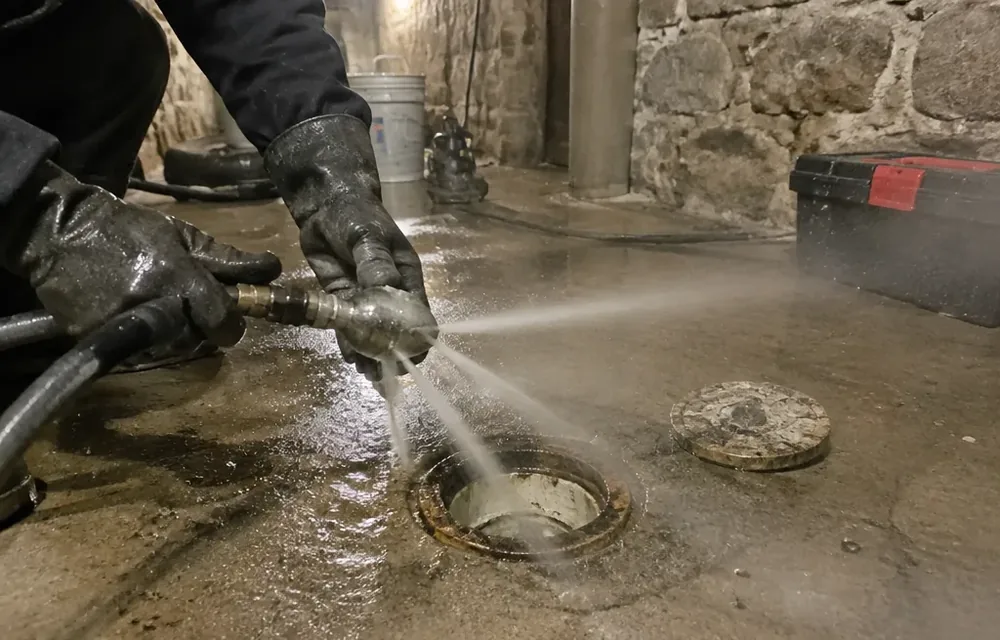
Kitchen Grease Line Jetting
Grease is the one clog material a cable cannot fix.
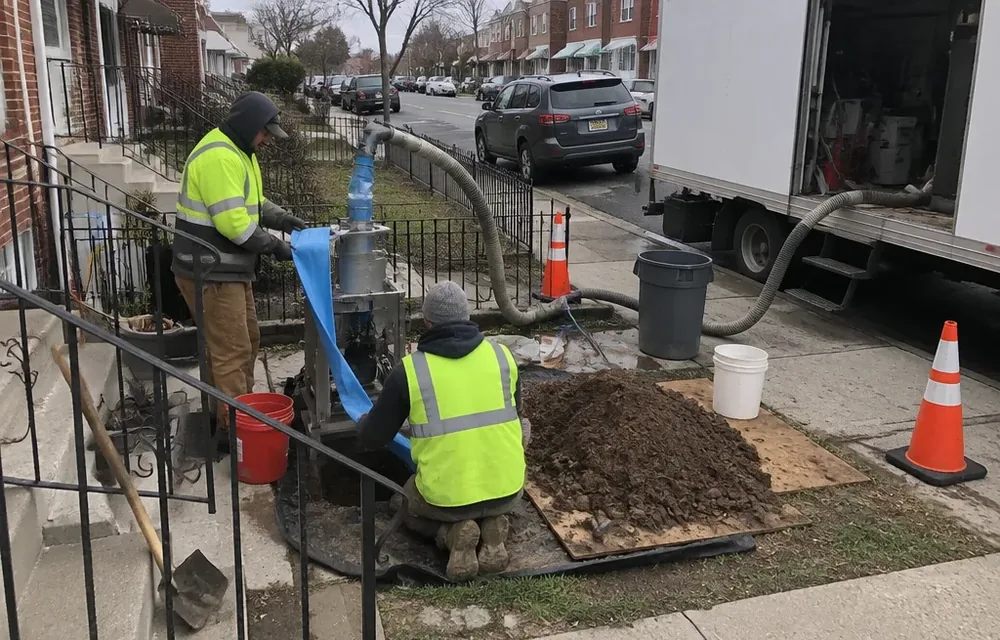
Commercial Hydro Jetting
Commercial drains fail on schedule — fryer volume, tenant count, storm season — so they should be serviced on schedule.
Hydro Jetting
A cable bores a hole through the clog.
Free tools that help with this exact problem
Clog diagnostic
The difference between a fixture clog and a main line failure is a factor of three in price and the difference between "book it next week" and "stop using water now".
Jetting vs snaking
Snaking costs less and jetting lasts longer, but that is not the real decision.
More guides
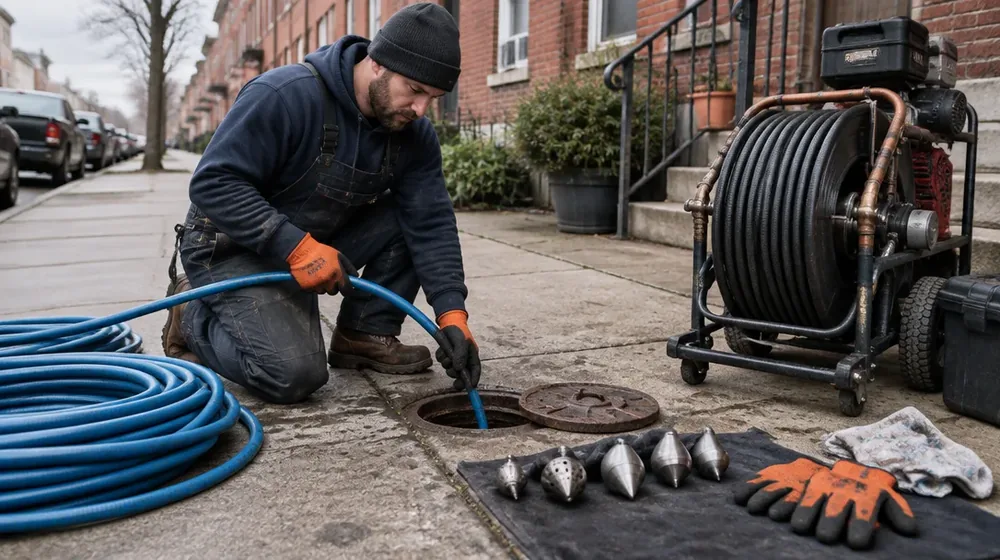
Hydro Jetting vs Snaking: What Philly Homes Need
A cable bores a hole through the blockage so water moves again. A jetter scours the whole pipe wall back toward bare m…

Hydro Jetting Cost in Philadelphia: 2026 Guide
Most Philadelphia homeowners budget around national jetting ranges, then discover access, lateral length, and root cut…
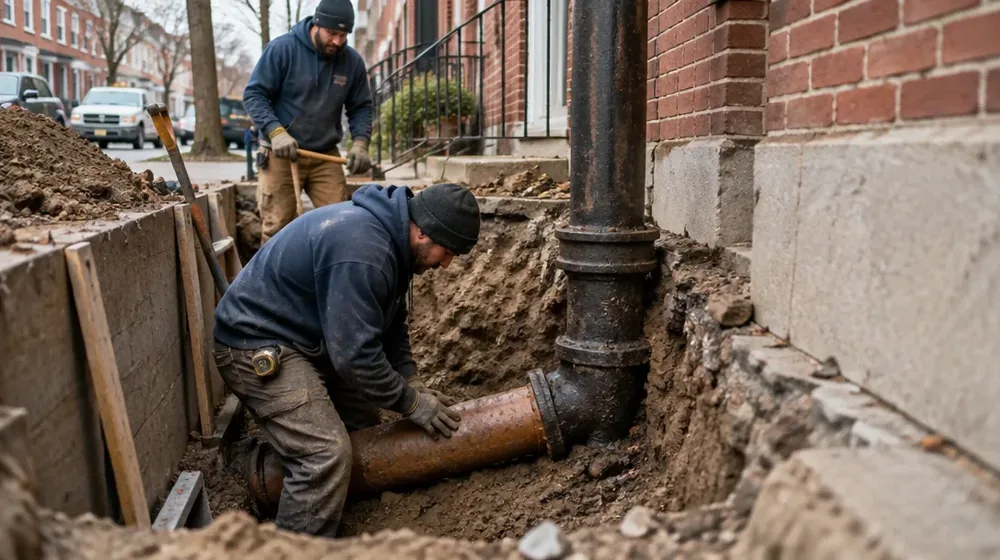
Philly Rowhouse Laterals: Clay, Iron & More
The year your Philadelphia rowhouse was built predicts what is buried in front of it. Clay joints admit roots, cast ir…
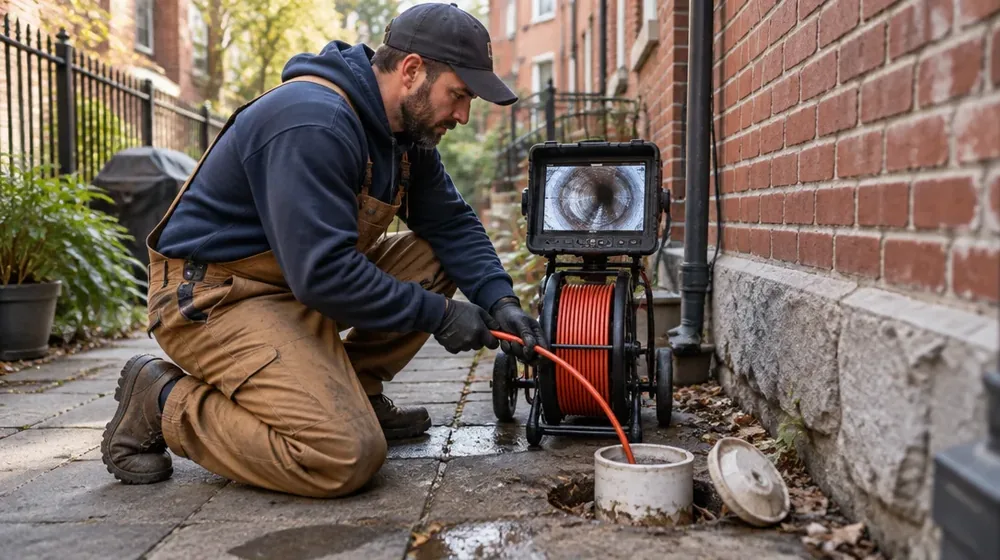
Camera Inspection Before Hydro Jetting Guide
Nobody can price pressure honestly without seeing the pipe first. On Philadelphia laterals of unknown age and material…