Free Lead Service Line Replacement in Philadelphia: the 2026 Guide
Philadelphia will replace a qualifying home’s lead drinking-water service line at no charge to the owner — during planned water-main work, through a 2026 pilot program starting in North and West Philadelphia, or financed interest-free when neither route applies. This guide shows how to check whether your line is lead, the health reason to act, the three paths in detail, and what the work means for your household.
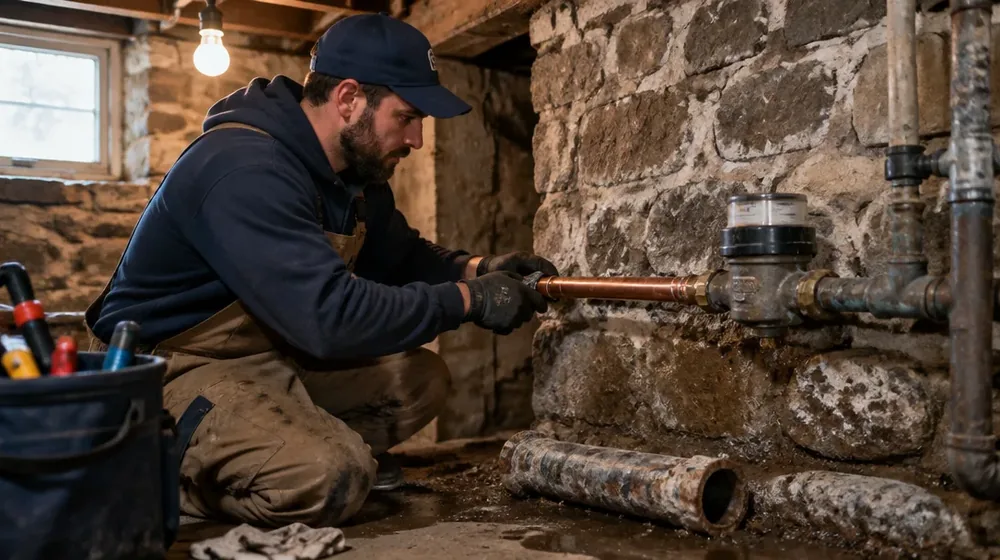
How to tell whether your home has a lead service line
Age is the first indicator and it is brutally reliable. Philadelphia homes built before 1950 commonly received lead service lines from the city main to the house, since lead was the standard water-service material of the era: soft, durable, and easy to bend around the fieldstone foundations and short front yards of the rowhouse belt. A pre-1950 original line that has never been replaced should be presumed lead until testing or records prove otherwise, while post-1986 construction falls under the federal lead ban and later replacements are typically copper. The oldest housing corridors — South Philadelphia, Kensington, North Philadelphia, and West Philadelphia — carry the highest likelihood simply because their service lines are the oldest.
The scratch test gives a same-day answer with a coin and a magnet. Find the service line where it enters the basement through the front foundation wall, usually near the meter, and scratch the pipe surface firmly with a coin: lead exposes a soft, shiny silver-gray streak beneath the dull oxidation, while copper shows a bright penny color and galvanized iron stays hard and gray. Then hold a magnet to the pipe — it will not stick to lead or copper but grips iron and steel. A soft silver scratch plus no magnet attraction reads as lead; document the result with a dated photograph showing the entry point, because that photo opens every downstream conversation with the water department.
The city’s service line map is the second check and it costs nothing. Philadelphia maintains an online service-line inventory map where addresses carry a material classification — known lead, likely lead, unlikely, or unknown — built from tap records, inspection history, and modeling. Look up the property, record exactly what the map says, and treat unknown or likely-lead as actionable rather than reassuring: the map is a planning inventory, not a laboratory result, and its purpose is to route homes toward verification and replacement rather than to certify safety. Where the map and the scratch test agree on lead, the household has its answer and should proceed directly to the replacement paths below.
Paper records close the remaining uncertainty. The closing file sometimes contains a seller disclosure or prior plumbing invoice naming the service material; a plumber’s earlier ticket may note lead at the meter or curb; and PWD records of past meter or main work occasionally state what the crew observed. None of these override a positive scratch test, but a 1990s invoice reading new copper service tells a homeowner the line was already handled. Assemble age, scratch result with photo, map classification, and any paperwork into one page — that single page is the credential the pilot application, the permission letter reply, and the loan inquiry all ask for first.
Why lead in drinking water deserves prompt attention
Lead reaches drinking water silently, through corrosion rather than catastrophe. Water sitting in a lead service line dissolves small quantities of the metal from the pipe wall, with higher uptake after long stagnation — overnight, through a workday, after a vacation — when water has rested against lead for hours. No taste, odor, or color announces it, and running the tap until cold reduces but never guarantees removal, because particulate lead can release in spikes that flushing does not tame. The service line is typically the largest lead source in a home’s drinking-water path, outweighing interior solder and fixtures by sheer surface area and contact time.
Young children and pregnant women carry the concentrated risk, which is why every public-health reference frames this as their issue first. Developing brains absorb lead more readily and suffer harm at lower exposures: reduced cognitive capacity, behavioral effects, and developmental delays that no later intervention fully reverses. During pregnancy, lead stored in bone can remobilize into the bloodstream and reach the fetus. These are not distant statistical abstractions; they are the stated reason Philadelphia’s replacement effort prioritizes homes with children and the reason a household with a toddler and a likely-lead line should treat verification as urgent rather than eventual.
Flushing taps is a reasonable interim habit while replacement is arranged, not a substitute for it. Run the cold tap until noticeably colder before drinking or cooking, use only cold water for cooking and formula, and consider a certified point-of-use filter rated for lead removal as a bridge measure — checking that the certification explicitly names lead and maintaining cartridges on schedule. Pair those habits with the application the same week: interim measures reduce exposure while the paperwork moves, but only removing the lead line removes the source. The federal fact sheet prepared for Philadelphia’s program, available as the EPA Philadelphia fact sheet, frames the same hierarchy of source removal first and precautions meanwhile.
One scope boundary matters for readers of a drain-cleaning site: this guide concerns the pressurized drinking-water service line from the city main into the house, which is an entirely different pipe from the gravity sewer lateral carrying wastewater out. Hydro jetting, cabling, and camera work belong to the drain side; service-line replacement belongs to licensed water-line and plumbing work coordinated with PWD. We do not replace water service lines, and nothing in this guide should be read as offering that work — its purpose is to route households to the city programs that pay for it.
Path one: free replacement during planned water-main work
The oldest and highest-volume route costs the homeowner nothing because the trench is already open. When PWD schedules water-main replacement or rehabilitation on a block, crews must excavate the street and expose every service connection along the run — and at that moment, replacing the private-side lead service while the ground is open adds modest marginal cost against mobilization already paid for. The department therefore coordinates customer-side replacement with its own main work, and the homeowner’s share is handled within the project rather than billed as private plumbing. Blocks with the oldest mains overlap heavily with blocks with the oldest services, so the targeting is efficient by design.
The homeowner’s role in this path is small but time-sensitive: sign and return the permission letter. PWD notifies affected properties in advance of main work with a letter requesting access authorization for the private-side replacement, and the crew’s schedule moves with or without any individual reply. A homeowner who discards the letter as junk mail, who is away and lets it sit, or who hesitates past the stated deadline watches the one open trench on their block in a generation get backfilled with their lead line still in it. Treat any PWD envelope mentioning main work and service lines as the highest-priority mail of the year, and respond within days.
Renters and multi-owner buildings need a forwarding discipline for this exact reason. Tenants should send any water-department construction notice to the landlord the day it arrives, and landlords with North, West, or South Philadelphia holdings should confirm PWD holds a current mailing address rather than a stale management address from a decade ago. Estate properties in probate, where mail piles up unopened, are the classic missed-opportunity case: the main gets replaced, the street gets repaved, and the lead service remains because nobody with signing authority ever opened the envelope. A current address on file is the cheapest replacement insurance available.
If main work is rumored but no letter has arrived, call and ask rather than waiting. Planned main projects carry public schedules, and a homeowner whose scratch test already reads lead can confirm whether their block sits in the current or upcoming program, what the notification timeline looks like, and what authorization the crew will need — basement access on which dates, meter area cleared, curb-box access maintained. Even where the answer is not yet, the inquiry puts the property on the department’s radar with a documented lead finding attached, which is exactly the record the second path also wants to see.
Path two: the 2026 pilot program in North and West Philadelphia
| Pilot fact | What it means | Household action |
|---|---|---|
| Launch geography | North and West Philadelphia first | Confirm the address falls in the starting area |
| Program scale | Roughly 1,000 service lines | Apply early; capacity is finite |
| Cost to owner | Replacement at no charge | No payment, no lien, no assessment |
| Contact email | [email protected] | Send address, findings, and household details |
| Contact phone | (215) 683-8825 | Call where email is impractical |
| Full details page | PWD pilot program details | Verify criteria before applying |
The 2026 pilot is the timeliness story of this guide: a dedicated program replacing on the order of one thousand lead service lines, beginning in North and West Philadelphia where lead prevalence and young-child exposure overlap most sharply. Unlike main-work coordination, which waits for the street schedule to arrive, the pilot reaches directly for customer-side lead services on their own timetable — a deliberate acceleration aimed at homes the main-work queue would reach years from now. Households in the starting geography with a confirmed or likely-lead line should treat this as a finite window rather than a standing entitlement, because pilot capacity is counted in hundreds of lines against need counted far higher.
Applying runs through the department’s dedicated contacts: email [email protected] or call (215) 683-8825, with the full criteria, current geography, and required documentation spelled out on the pilot program details page. Arrive organized — the one-page file from the verification section (build year, scratch-test photo, map classification, children in the home, account standing) answers most intake questions before they are asked. Mention main-work letters received or expected, since coordination between the two paths avoids double-handling blocks where both apply.
Broader lead-program context, including testing options, filter information, and the citywide inventory effort, lives on the main PWD lead information page, which is the stable reference as pilot phases expand beyond the starting neighborhoods. Check both pages before applying and again before any appointment, because pilot geography, eligibility language, and intake mechanics evolve as phases fill. A household just outside the starting boundary should still verify, document, and make contact: expansion phases and waitlists are how near-miss addresses convert into early placements rather than forgotten ones.
Prioritization logic favors the households lead harms most, so state the relevant facts plainly. Homes with pregnant residents or children under six, documented lead findings rather than suspicions, and clusters of neighboring applicants on the same block all help the department schedule efficiently — contiguous replacements on one street cost less per line than scattered singles, which gives grouped neighbor applications genuine scheduling weight. Talk to the block: three adjacent rowhomes applying together with matching pre-1950 services and one shared point of contact is the application shape crews love to say yes to.
Path three: the HELP zero-interest loan
Where neither free route currently reaches — wrong block for this year’s main work, outside the pilot geography, or a line needing replacement on a faster timeline than the queues allow — the HELP loan finances the work interest-free. This is the same homeowner assistance mechanism that funds lateral corrections, described on the PWD financial assistance page: city-administered, zero-interest financing for qualifying water and sewer work on private property, sized for households that cannot comfortably capitalize a full service replacement out of pocket. It converts an intimidating lump sum into a manageable schedule without the interest load that makes private financing punishing.
Use the loan strategically rather than reflexively, because timing and sequencing change its value. A homeowner inside the pilot geography with a confirmed lead line should apply to the pilot first and hold the loan as the fallback; a homeowner with documented elevated tap results and a toddler in residence should weigh speed over savings and move on the loan while the free applications pend. Get the replacement scoped against the verification file — entry point, distance to the main, interior plumbing tie-in — so the financed amount reflects a defined job rather than an open-ended authorization, and keep every test result and invoice with the property file for resale disclosure.
Renters cannot borrow against a building they do not own, which makes this path a landlord conversation. Tenants with lead findings should deliver the scratch-test photo, the map classification, and the program links to the owner in writing, request a defined response timeline, and meanwhile run the interim habits: flush to cold, cook only with cold, maintain a certified filter. Landlords should recognize the arithmetic — a zero-interest replacement against documented lead in a unit housing children is both a liability reduction and a property improvement — and act before a tenant’s pediatrician or an agency inquiry forces the timeline.
What replacement involves for the homeowner
The work itself replaces the lead pipe from the city connection — usually at the curb stop — into the house through the foundation wall, tying into the interior plumbing at the meter area. Expect a small street or pavement excavation at the connection, a trench or pull-pit along the service alignment through the front yard or under the pavement, basement access around the entry point and meter for one to several days, and scheduled water shutoffs with advance notice. Crews restore paving, soil, and interior penetrations as part of the job, and the department inspects the completed service. Clearing basement storage from the entry wall, maintaining curb-box access, and planning drinking-water needs around shutoff windows are the homeowner’s practical contributions.
Material and record-keeping close the loop. Replacement services are copper or approved equivalent — no new lead enters the ground — and the household should retain the completion record, material statement, and any post-replacement flushing instructions with the property file permanently. That paperwork answers the next buyer’s inspector, the next pediatrician’s question, and the map inventory’s update in one stroke. Test results after replacement typically show the service-line source removed; interior plumbing with old solder or brass may still warrant a follow-up flush-and-sample cycle, which the department’s guidance addresses alongside the replacement.
After replacement, retire the interim habits gradually and deliberately rather than all at once. Confirm any recommended post-work flushing period is complete, verify filter cartridges are fresh or remove bridge filters per guidance, and keep one dated photograph of the new copper entry with the file as the before-and-after proof. Then redirect the vigilance the lead line consumed toward the rest of the aging urban plumbing stack: the gravity sewer lateral running the opposite direction under the same front yard. That pipe — clay joints, root intrusions, grease-coated iron — is where camera inspection, jetting, and cleaning earn their keep, and where our work actually lives: sewer camera inspection for the proof, drain cleaning for the clearing, and emergency drain service when a backup beats the schedule.
Frequently asked questions
How do I know if my Philadelphia home has a lead water line?
Combine three checks: pre-1950 construction makes lead likely, a scratch test showing soft silver-gray metal that a magnet will not stick to confirms the pipe material at the basement entry, and the city service-line map gives the official classification. Assemble all three on one page before contacting any program.
Is lead service line replacement really free in Philadelphia?
Through two routes, yes: coordination with planned water-main work replaces the customer-side lead at no charge when the street is already open, and the 2026 pilot program replaces roughly 1,000 lines starting in North and West Philadelphia. Details live on the pilot program details page and the PWD lead page.
How do I apply for the 2026 lead line pilot?
Contact the department at [email protected] or (215) 683-8825 with the address, verification findings, and household details, after reviewing current criteria on the pilot program details page. Apply early since pilot capacity is finite, and keep the loan path as backup.
What if no free program reaches my block yet?
The HELP zero-interest loan described on the PWD financial assistance page finances the replacement without interest. Weigh speed against savings where children are exposed, scope the job against the verification file, and keep every result and invoice for the property record.
Do you replace lead water service lines?
No. This is drinking-water supply work coordinated with PWD, not drain work — a different pipe, different trade, different program. Our scope is the gravity sewer side: camera inspection, cleaning, and jetting. This guide exists to route households to the city programs that pay for the water-line work.
Services mentioned in this guide
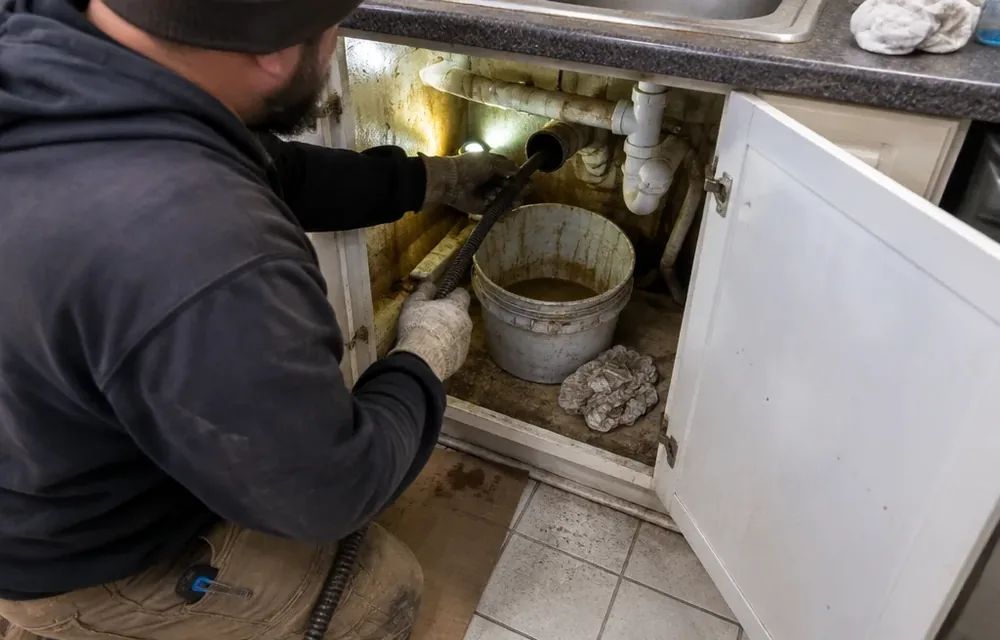
Drain Cleaning
A single slow sink is a nuisance.
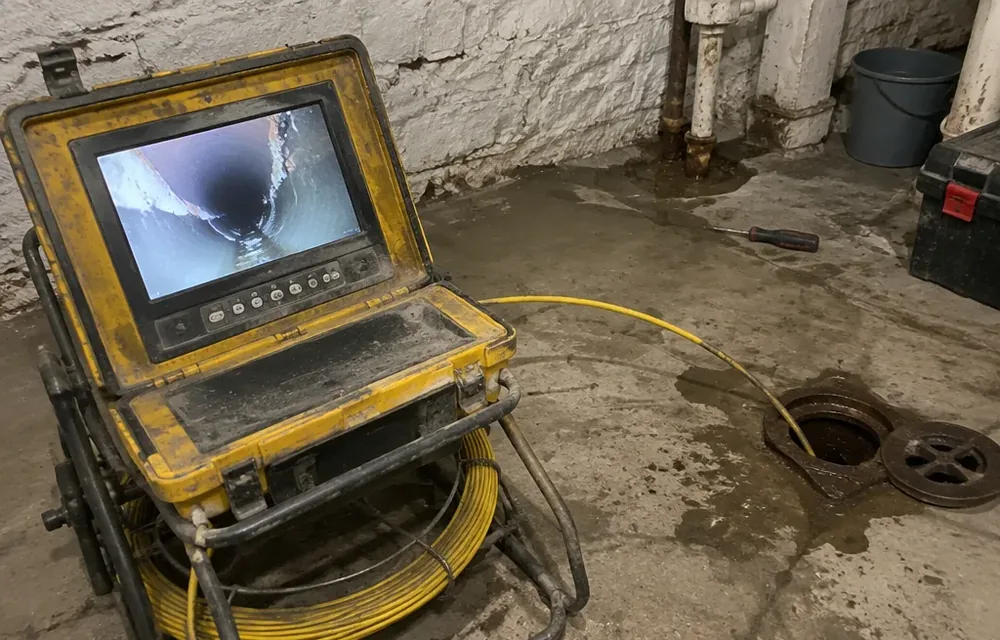
Sewer Camera Inspection
Every expensive sewer decision in Philadelphia — jet, repair, line, replace — depends on one thing: what the pipe actually looks like inside.
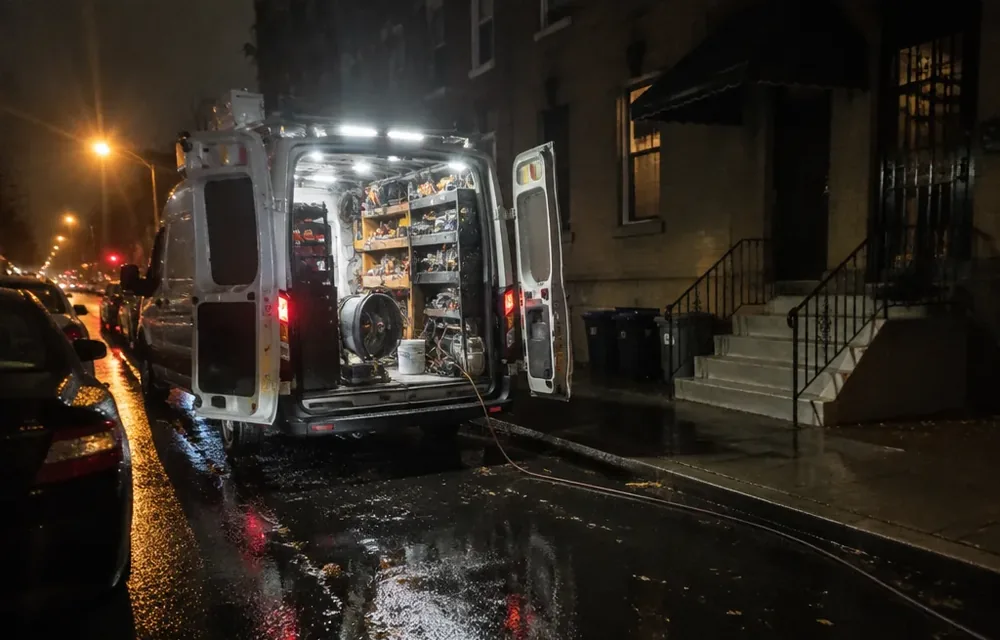
Emergency Drain Service
Sewage on the basement floor does not wait for business hours, and neither do we.
More guides
Hydro Jetting vs Snaking: What Philly Homes Need
A cable bores a hole through the blockage so water moves again. A jetter scours the whole pipe wall back toward bare m…

Hydro Jetting Cost in Philadelphia: 2026 Guide
Most Philadelphia homeowners budget around national jetting ranges, then discover access, lateral length, and root cut…
Tree Roots in Philadelphia Sewer Lines Guide
Roots do not break into sound pipe. They find the clay joint that is already leaking, thicken in the flow, and become …
Philly Rowhouse Laterals: Clay, Iron & More
The year your Philadelphia rowhouse was built predicts what is buried in front of it. Clay joints admit roots, cast ir…