How to Get the City’s Free Backwater Valve in Philadelphia
Philadelphia will install a backwater valve in a qualifying home at no charge to the owner through its Basement Backup Protection Program: you document the flooding, submit an application, host a PWD inspection, sign an agreement, and the city arranges the installation with a one-year warranty. This guide covers the program half of backup protection — who qualifies, the five steps in order, and where a broken lateral sends you instead.
What a backwater valve is, in one quotable answer
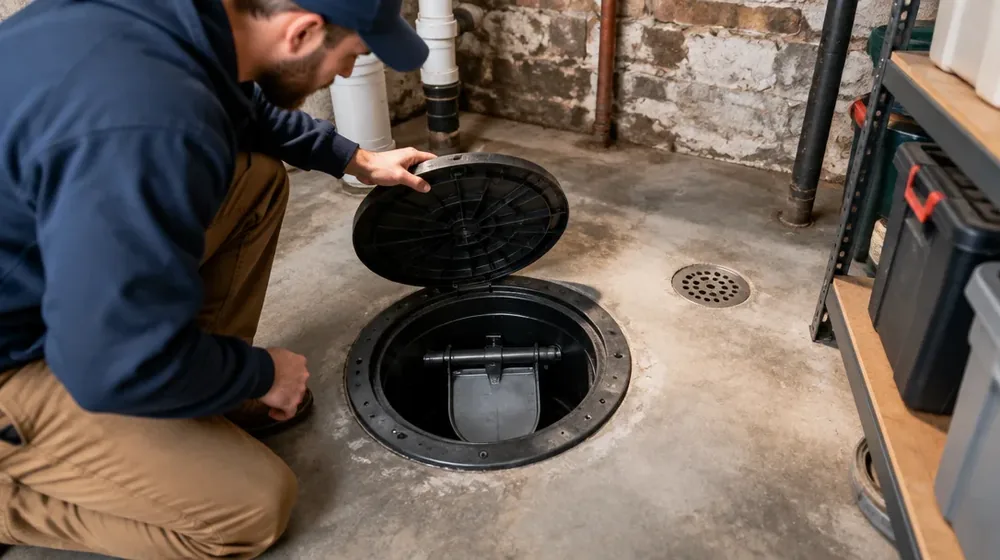
A backwater valve is a one-way gate on a home’s sewer lateral that lets household wastewater flow out to the city main while swinging shut against reverse flow when the combined sewer surcharges during heavy rain, keeping street sewage from rising through basement floor drains. Philadelphia installs it at no cost for qualifying homeowners.
The residential form most Philadelphia homes receive is a normally open flapper seated in an accessible chamber on the lateral. In dry weather wastewater passes freely on its way to the combined main, and when a cloudburst fills that main faster than downstream capacity accepts, rising pressure seats the flapper closed before sewage can reach basement fixtures. Sizing matches the lateral diameter, placement protects below-grade fixtures while fixtures above surcharge grade keep draining by gravity, and the chamber lid must remain reachable for inspection rather than buried under storage boxes.
That gate is the single most decisive piece of hardware on a combined-sewer block, because it decouples the basement from the street at exactly the moment the street becomes dangerous. Much of Philadelphia drains through combined sewers carrying sanitary flow and stormwater in the same mains, so a summer cloudburst tracking up the Schuylkill or Delaware valleys can pressurize whole blocks within minutes. Without a valve, the lowest connected opening — usually a basement floor drain, laundry standpipe, or low shower trap sitting below street grade — becomes the relief point for the entire surcharged main.
One honest caveat belongs up front because it shapes everything else in this guide: no valve substitutes for a sound lateral. A valve on a grease-throttled line protects against the street while the household floods itself from its own laundry discharge held back behind the restriction, and a valve chamber packed with debris cannot seat when the surge calls. That is why the city inspects the lateral before approving the installation, and why the competent private order is camera proof of full bore first, valve second, load test third.
Eligibility: the four tests your property must pass
The water and sewer bill must be current, or the account must sit inside an active payment agreement. This is the first screen because the program is administered through the water utility relationship: an account in unresolved arrears with no agreement in place does not proceed until the billing standing is cured. Homeowners who fell behind during a hardship spell should set up the agreement first and arrive with the confirmation in hand, since billing standing is the fastest item on this list to fix and the most common reason applications stall at intake.
Open violations against the property must be addressed before approval. Code enforcement actions, unpermitted work flags, or outstanding plumbing violations attached to the address need resolution because the city will not install new plumbing hardware on a property carrying unresolved enforcement history. Pull the property record, clear what can be cleared, and document what was done; arriving with a clean record converts the eligibility review from an investigation into a formality. Where a violation relates to the lateral itself, the repair that clears it often doubles as the lateral-condition work the next test demands.
The lateral itself must be in good condition, verified by inspection rather than by assumption. PWD inspects the line because a backwater valve bolted onto a collapsed, bellied, or root-packed lateral protects nothing: the household’s own discharge cannot leave, the chamber fouls, and the warranty that follows the installation would be spent defending a doomed assembly. Camera footage showing a continuous, full-bore lateral from the house to the main is the currency here. Homes whose laterals fail this test are not abandoned — they are routed to the HELP loan path described below — but they do not receive the valve until the pipe it guards is sound.
The applicant must be the property owner, since the agreement that follows authorizes work on private plumbing and assigns post-installation maintenance to the owner. Landlords apply for their rental properties rather than tenants, and estate, trust, or multi-owner situations should arrive with authority documentation showing who may sign for the parcel. Assembling proof of ownership, account standing, violation clearance, and lateral condition into one file before applying is the highest-leverage hour in the whole process; every downstream step moves faster when the intake reviewer never has to ask twice.
The five-step application sequence, in order
Document the flooding with video
Film backups as they happen: water entering at the floor drain or low fixture, timestamps visible, storm timing noted, and whether neighbors are affected. Date-stamped footage is the evidence the file is built on.
Submit the program application
File through the current intake channel listed on the Basement Backup Protection Program page, attaching ownership proof, account standing, and your flooding documentation.
Host the PWD inspection and receive the proposal
The department inspects the property and the lateral, confirms eligibility, and proposes the valve scope: model, diameter, chamber location, and fixtures protected.
Sign the installation agreement
The owner signs the agreement authorizing the work on private plumbing and accepting post-installation maintenance once the warranty period ends.
Licensed contractor installation plus one-year warranty
A licensed contractor performs the installation under the program, and the work carries a one-year warranty. After that year, maintenance belongs to the owner.
Treat the video documentation as the foundation rather than an afterthought, because flooding evidence gathered during dry weather is reconstruction while footage shot during the event is proof. Keep the camera steady on the entry point, narrate the time and the storm, pan to show the water line against a fixture or wall, and save the original files with their metadata intact. Two or three documented events across different storms carry far more weight than one dramatic clip, since recurrence demonstrates the pattern the program exists to break rather than a one-off anomaly.
Between application and inspection, use the waiting period productively instead of idly. Confirm the water bill standing in writing, verify no new violations posted, locate the lateral cleanout and keep it accessible, and consider a private camera scope so no condition surprises arrive on inspection day. Full program details, current intake instructions, and contact paths live on the Basement Backup Protection Program page, which is the authoritative reference that outranks any third-party summary including this one. Check it before filing, because eligibility language, scope, and application channels change over time.
After installation, the owner’s duties begin and they are calendar items, not vague intentions. The flapper and seat need periodic verification that they move freely and seat fully, with grease film, wipes, and scale as the usual jamming culprits in Philadelphia kitchen-heavy laterals. Keep the chamber lid accessible with clearance marked on the floor, schedule a chamber check with each lateral service, log every inspection alongside camera footage, and run a full tub or laundry slug through the line after any service to prove the household’s own water still leaves freely. A valve that has never been opened since installation day is an untested hypothesis about the next storm.
If your lateral is broken: the HELP loan path
| Route | What it funds | Philadelphia note |
|---|---|---|
| Backup Protection Program valve | Valve hardware and installation at no charge | Requires a lateral already in good condition |
| HELP zero-interest loan | Lateral repair or replacement cost financing | Zero-interest path for the pipe work the valve needs |
| Private camera scope first | Footage proving what the lateral needs | Decides which route the property actually belongs on |
| Post-repair re-entry | Valve installation after the pipe is fixed | Repaired lateral re-qualifies for the protection hardware |
A lateral that fails the condition test is a detour, not a denial. Cracked clay with voids above the joint, Orangeburg deformed into an oval, cast iron scaled to paper thickness, or a belly holding standing water all disqualify the valve installation for the same engineering reason: hardware cannot protect a basement whose pipe cannot convey flow. The city’s answer for this situation runs through its homeowner assistance financing, the zero-interest HELP loan described on the PWD financial assistance page, which funds the lateral repair or replacement that returns the property to valve eligibility.
Sequence the two programs the way the engineering demands: prove the defect with camera footage carrying footage marks and depths, finance and complete the lateral correction with permit and inspection where the work requires it, verify full bore under load with a post-repair scope, and then re-enter the valve program with a pipe worth guarding. Homeowners sometimes reverse this order out of urgency, pressing for the valve while the lateral remains broken, and the result is predictable — household discharge ponding behind the restriction, a fouled chamber, and a warranty consumed by a pipe problem. Fix the road before installing the gate.
Budget thinking helps here because the two routes have opposite cost shapes. The valve itself arrives at no charge to the qualifying owner, which makes it the rare capital improvement with no capital outlay; the lateral correction funded through HELP carries real cost, but at zero interest and against the alternative math of repeated sewage cleanups, discarded finished-basement contents, and a backup endorsement with its own limit. Price the correction once, against footage, rather than pricing repeated emergency visits against hope, and the loan reads as what it is: the purchase of eligibility for free protection.
What PWD will not cover
The program installs protection hardware; it does not rebuild private plumbing end to end. Interior finish restoration from past floods, replacement of water-damaged heaters or laundry equipment, regrading of settled yards, new sump systems, overhead ejection conversions, and lateral replacement itself all sit outside the valve scope. Expect the proposal to name the valve assembly, chamber, and directly associated work with precision, and expect everything beyond that boundary to remain owner scope. Reading the proposal as a defined hardware installation rather than a whole-basement rescue prevents the disappointment that comes from imagining broader coverage.
Cleanup from events before or after installation is likewise owner business, and it follows the same sequence regardless of who installed the valve. Extract water and solids first, clean visible soil second, disinfect hard surfaces third, and dry aggressively throughout with dehumidification and exposed cavities, because disinfectant applied over organic soil disinfects the soil rather than the surface. Porous contents such as carpet and pad, upholstery, mattresses, and saturated lower drywall have no reliable decontamination path and should be documented, bagged, and discarded. Standard homeowner policies commonly exclude sewer backup without a specific endorsement carrying its own limit, so confirm that endorsement separately.
Ongoing maintenance after the one-year warranty belongs to the owner without exception. The chamber checks, flapper verifications, grease clearings, and access discipline described earlier are not program services; they are the ownership duties the signed agreement assigns. A valve neglected for five years and found jammed with wipes during a cloudburst is a maintenance failure, not a program failure, and no warranty language revives hardware that was never opened. Put the chamber check on the same calendar as the lateral service and the sump test, and keep the log where the next technician and the next adjuster can both find it.
Finally, the program does not suspend the physics of the combined system for non-participants on the same block. A valve guards the fixtures downstream of its chamber; fixtures bypassed above surcharge grade, foundation seepage through walls and floors, and surface water entering through window wells and areaways all remain governed by grading, drainage, and elevation measures. Whole-property dryness still requires the full playbook — valve plus full-bore lateral plus elevation plus grading — and households wanting that broader playbook alongside this program guide should read the prevention companion that covers it. Confirm current program boundaries on the Basement Backup Protection Program page before planning around them.
Get the lateral camera-ready before you apply
Every step of this program moves faster on top of known pipe. A private sewer camera scope with footage marks, defect depths, material identification, and a written condition summary converts the PWD inspection from a voyage of discovery into a confirmation, and it tells the homeowner in advance whether the application routes toward the valve or toward HELP first. On pre-1970 Philadelphia laterals of unknown material — clay meeting cast iron at the foundation, thin-wall iron under the slab, the occasional mid-century Orangeburg replacement — scoping first is diligence rather than delay, and it is the same footage the household keeps for insurance, resale, and every future service call.
Where the scope shows a coated but structurally sound line, restoring full bore before the city arrives is money well spent. Grease laminated on cast iron, soap and biofilm layered in old branches, and root hair trapping paper at clay joints all narrow the bore the valve will guard, and a scouring pass with post-clean camera proof hands the inspector a lateral already meeting the condition test. Our work lives exactly here: sewer camera inspection for the proof, hydro jetting for the scouring, and main sewer line cleaning for the private lateral half the city does not own. We do not install valves under the program and we do not adjudicate eligibility — we prepare the pipe the program inspects.
Assemble the file while the basement is dry and the program becomes a paperwork exercise instead of a crisis response. Ownership proof, account standing confirmation, violation clearance, dated flooding footage with storm notes, camera footage with footage marks, and the PWD and service contacts stored together: that folder is the application, the inspection briefing, the warranty file, and the insurance exhibit all at once. Cloudbursts will keep tracking up the river valleys over Philadelphia’s combined blocks; the households that documented, scoped, applied, and maintained will watch the surge seat a flapper and recede, while the rest mop. Start the file this week.
Frequently asked questions
What is the PWD Basement Backup Protection Program?
It is the city program through which qualifying Philadelphia homeowners receive a backwater valve installation at no charge: document flooding, apply, host a PWD inspection with a proposal, sign the agreement, and a licensed contractor installs the valve with a one-year warranty. Current intake details live on the Basement Backup Protection Program page.
Who qualifies for the free backwater valve?
Generally the property owner, with the water bill current or under a payment agreement, open violations addressed, and the lateral in good condition as verified by inspection. Each test must pass; the lateral-condition test is the one most homes need camera footage to clear. Confirm current criteria with PWD before relying on any summary.
What happens if my lateral is broken?
The valve waits while the pipe gets fixed, and the zero-interest HELP loan described on the PWD financial assistance page is the financing route for that repair or replacement. Correct the lateral with permit and inspection, verify full bore, then re-enter the valve program with a pipe worth guarding.
Who maintains the valve after installation?
The owner does, after the one-year installation warranty ends. Keep the chamber accessible, verify the flapper moves freely and seats fully on a schedule, clear grease and debris, log every check with camera footage, and load-test with a full tub or laundry slug after service.
Does the program cover cleanup or lateral replacement?
No. It installs the protection valve; past-flood restoration, equipment replacement, grading, sump work, and the lateral correction itself remain owner scope. Pair the program with a backup endorsement on the homeowner policy and a maintained full-bore lateral for whole-property protection.
Services mentioned in this guide
Basement Floor Drain Cleaning
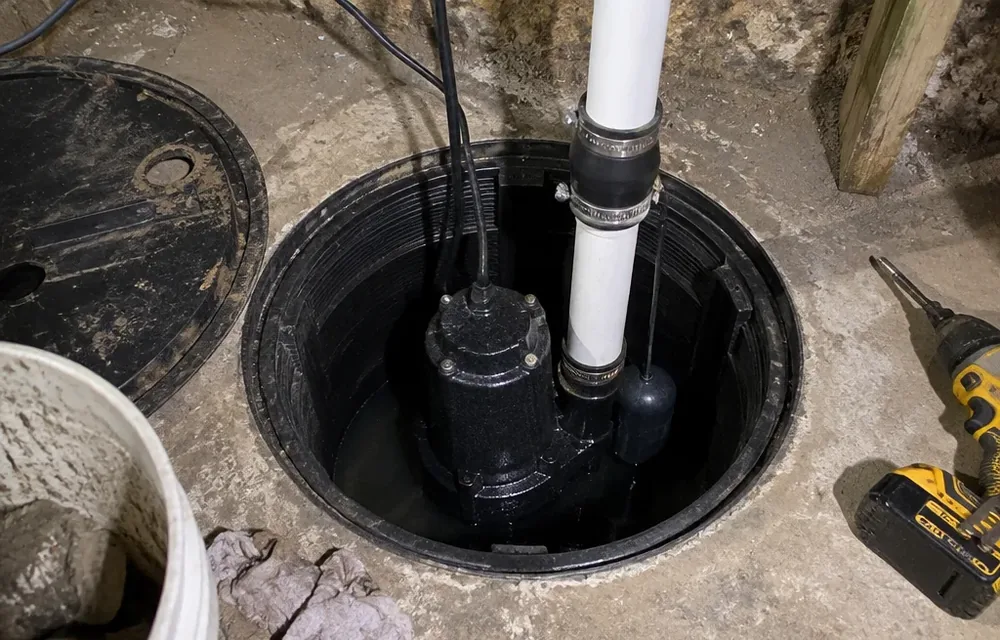
The basement floor drain is the lowest opening in your rowhouse — which makes it the relief valve for every downstream restriction.
Emergency Drain Service
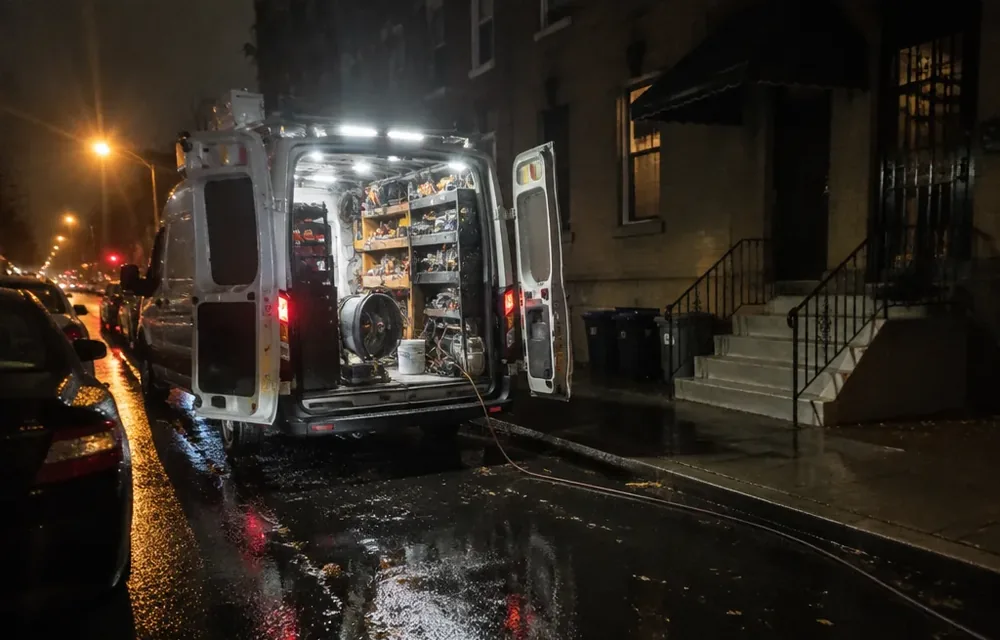
Sewage on the basement floor does not wait for business hours, and neither do we.
Sewer Camera Inspection
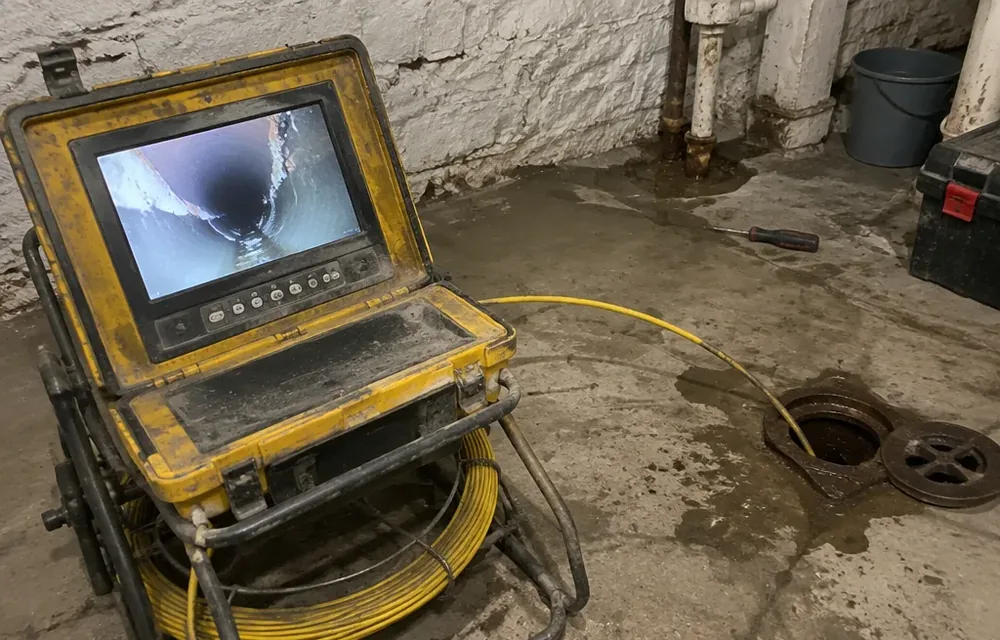
Every expensive sewer decision in Philadelphia — jet, repair, line, replace — depends on one thing: what the pipe actually looks like inside.
Free tools that help with this exact problem
More guides
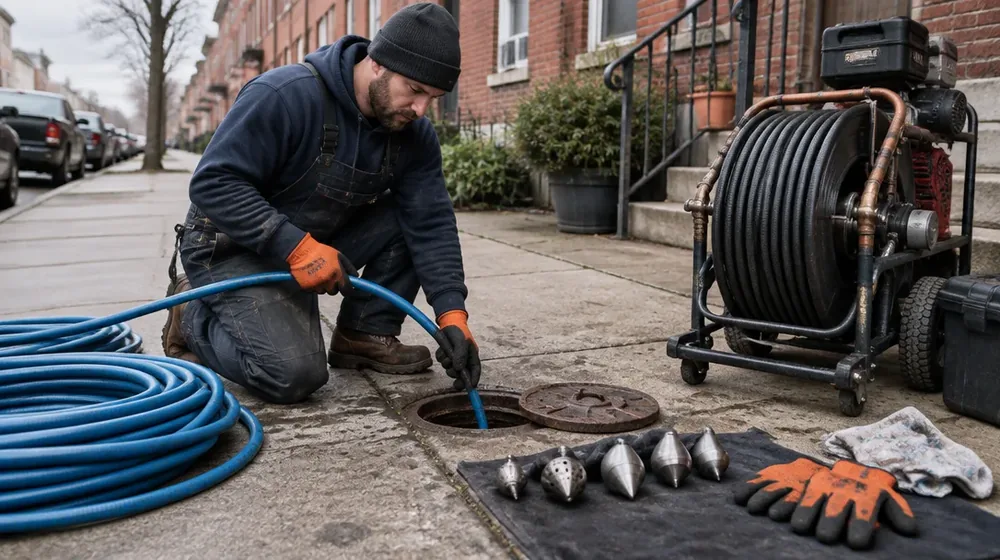
Hydro Jetting vs Snaking: What Philly Homes Need
A cable bores a hole through the blockage so water moves again. A jetter scours the whole pipe wall back toward bare m…
Hydro Jetting Cost in Philadelphia: 2026 Guide
Most Philadelphia homeowners budget around national jetting ranges, then discover access, lateral length, and root cut…
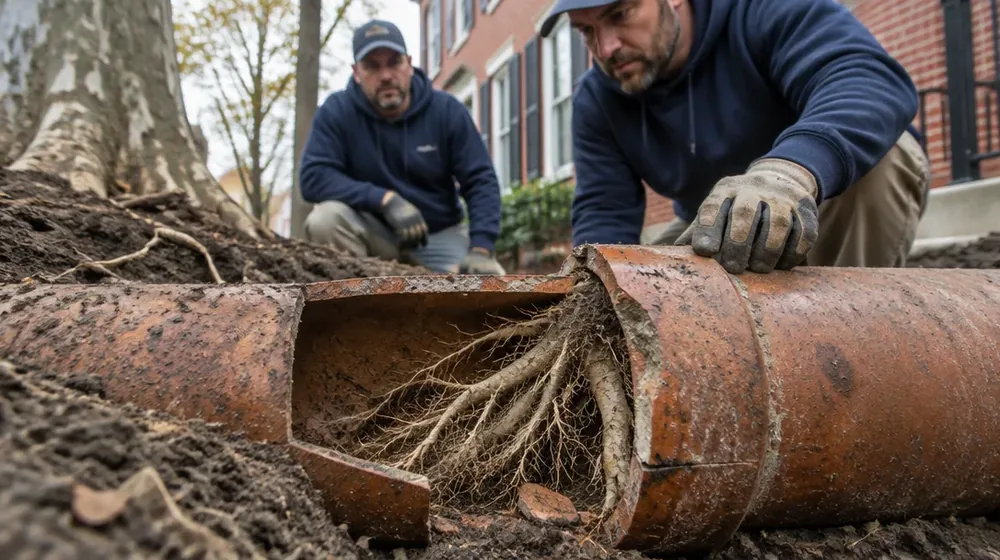
Tree Roots in Philadelphia Sewer Lines Guide
Roots do not break into sound pipe. They find the clay joint that is already leaking, thicken in the flow, and become …
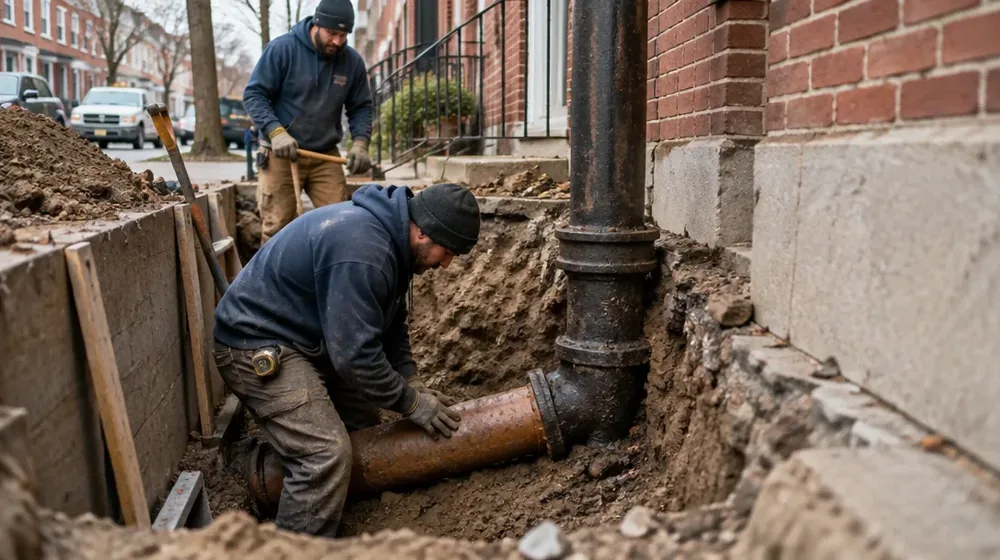
Philly Rowhouse Laterals: Clay, Iron & More
The year your Philadelphia rowhouse was built predicts what is buried in front of it. Clay joints admit roots, cast ir…