Hydro Jetting in Philadelphia, PA — Scour Grease, Scale & Roots From Old Laterals
A cable bores a hole through the clog. A jetter removes the reason the clog formed. In Philadelphia rowhouses — where clay tile laterals, aging cast iron stacks, and combined sewers carrying storm grit all meet — that difference decides whether the same line backs up again next season.
- Philadelphia
- Philadelphia County
- 24/7 dispatch
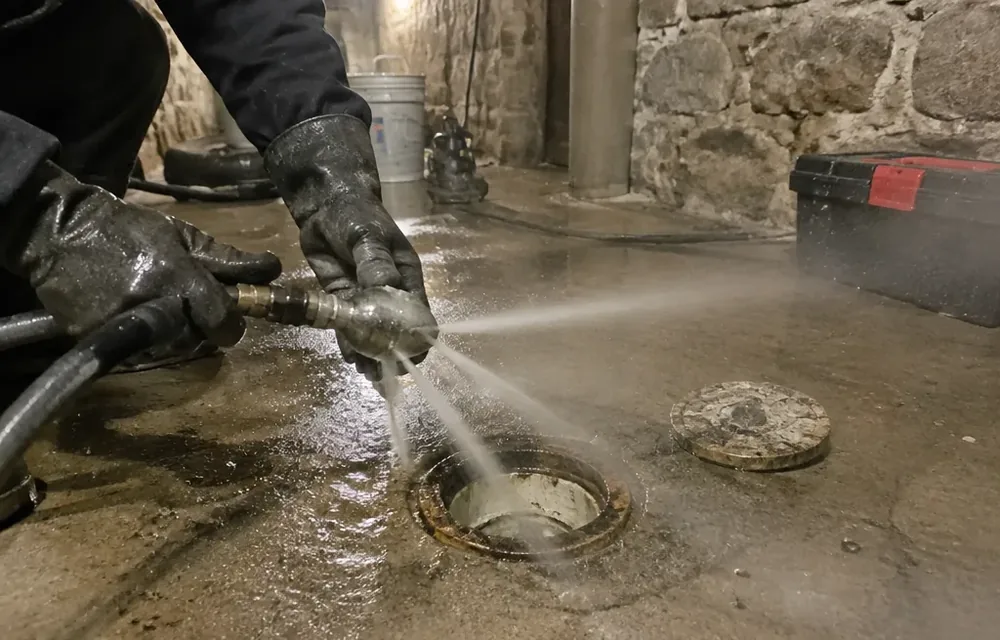
Hydro Jetting in Philadelphia
Why hydro jetting matters in Philadelphia
Philadelphia has the oldest drain infrastructure in the region, and almost every repeat backup in the city traces to the same trio: nineteenth- and early-twentieth-century brick rowhouses on vitrified clay tile with mortared joints, cast iron soil stacks inside that have roughened with age, and combined sewers that carry stormwater and sewage in the same pipe across large parts of South Philadelphia, North Philadelphia, Kensington, and West Philadelphia. Storm grit settles wherever the lateral bellies or flattens, grease coats over it, and each sustained Delaware Valley rain re-packs the restriction tighter.
Roots finish the job. Mature London plane, sycamore, and maple street trees in districts like Passyunk, Germantown, and Mount Airy stand directly over clay joints that weep vapor, and fine hair roots colonize joint after joint. A cable punches a channel through that composite of grease, grit, scale, and root hair; the wall coating stays and the clog rebuilds on schedule. Philadelphia County homes cleared more than once a year are paying for the wrong service — high-pressure water with the right nozzle is what strips the wall back to original pipe material.
What a jetting visit looks like in Philadelphia
Access defines the visit. The typical Philadelphia rowhouse runs its lateral beneath the full footprint out to the street main, so the crew usually works from a basement cleanout or pulls one where the line is reachable. Long narrow rows mean hauling hose through finished basements and tight stairwells, and narrow one-way streets around South Philly, Fishtown, and West Philadelphia decide where the rig can park before a hose is ever uncoiled. The camera goes in first, always: footage confirms the pipe can take pressure and maps the joints, offsets, and scale the nozzles must address.
The jetting itself runs in passes from the far end back, with backward-facing jets dragging the hose up the line while stripping the wall and a forward jet cutting the obstruction. Debris flushes toward the city main in a controlled way, never shoved into a neighboring connection. A second camera pass closes the visit — you see the cleaned wall on screen, which is the proof you paid for cleaning rather than clearing. Where the run crosses into the public right-of-way, the work stays inside the lateral; anything beyond cleaning follows Philadelphia Water Department Chapter 5 requirements.
What affects the price in Philadelphia
Residential jetting in this market typically falls between $375 and $950, and Philadelphia sits across that whole band depending on the house. The dominant driver is lateral length: a deep South Philadelphia rowhouse running sixty-plus feet beneath the building to the street main costs more in time, water, and nozzle passes than a short twin lateral. A present, reachable cleanout holds the figure down; a missing or buried cleanout adds the labor of access before cleaning starts.
Severity and setting move the number next. Heavy grease loading from restaurant corridors along South Street, East Passyunk, and Frankford Avenue, or root-packed clay with intrusions at four or five joints, takes longer and may need a root-cutting head plus a scouring pass. Philadelphia County rowhouses with basement half-baths and laundry sinks add verification time under volume. After-hours dispatch carries a stated premium disclosed before the truck rolls — it never appears as a surprise on the invoice, and follow-on lining or repair is always priced separately.
When jetting is the wrong answer in Philadelphia
Pressure finds weakness, so a camera that shows a structurally failed pipe ends the jetting conversation. The narrow band of 1945–1960 Philadelphia rowhouses carrying Orangeburg fiber pipe is the clearest refusal: softened, blistered, or ovaled fiber can collapse under a jet, converting a service call into an excavation. Badly corroded cast iron channeled thin along the invert, cracked or sheared clay segments already shifted out of alignment, and any belly that ponds water are disqualifying for the same reason — cleaning a broken or sagging pipe does not produce a working pipe.
The honest path in those cases is a camera inspection with footage-marked findings, then a repair plan: sectional repair, full-run lining where the host pipe is sound, or replacement where it is not. A contractor who offers to jet a Philadelphia lateral without looking first is gambling with a century-old clay run and charging for the privilege. If the same line keeps failing, start with the camera — it is cheaper than the next clearing.
Hydro Jetting in Philadelphia: questions
How much does hydro jetting cost in Philadelphia?
Residential work in the city usually lands between $375 and $950. Long rowhouse laterals out to the street main, missing cleanouts, and heavy root or grease loading push toward the high end. A camera inspection always comes first and is part of the job, not an add-on.
Do combined sewers change how jetting works here?
They change what gets jetted. Combined laterals carry storm grit along with sanitary flow, so Philadelphia lines often hold a grease-over-grit composite that cables barely dent. Jetting scours both layers, and the after-footage should show original pipe wall rather than a bored channel.
How often should a Philadelphia restaurant jet its grease line?
Kitchens on the busy food corridors usually land on quarterly or semi-annual service, driven by fryer volume and the length of the run to the combined main. A heavy fried-service kitchen with a long run often needs quarterly work; a low-volume cafe may go a full year between visits.
Will jetting keep tree roots out of my clay lateral?
It removes the root mass thoroughly but cannot close the joint the roots entered through, so regrowth at the same Philadelphia clay hubs is expected. Permanent relief means repairing or lining the joints the camera marks. Anyone promising permanent root removal from pressure alone is overselling.
More hydro jetting pages
- Hydro Jetting in Upper Darby
- Hydro Jetting in Norristown
- Hydro Jetting in Abington
- Hydro Jetting in Media
- Hydro Jetting in King of Prussia
- Hydro Jetting in Cheltenham
- Hydro Jetting in Havertown
- Hydro Jetting in Bensalem
Also in Philadelphia
Related services in Philadelphia
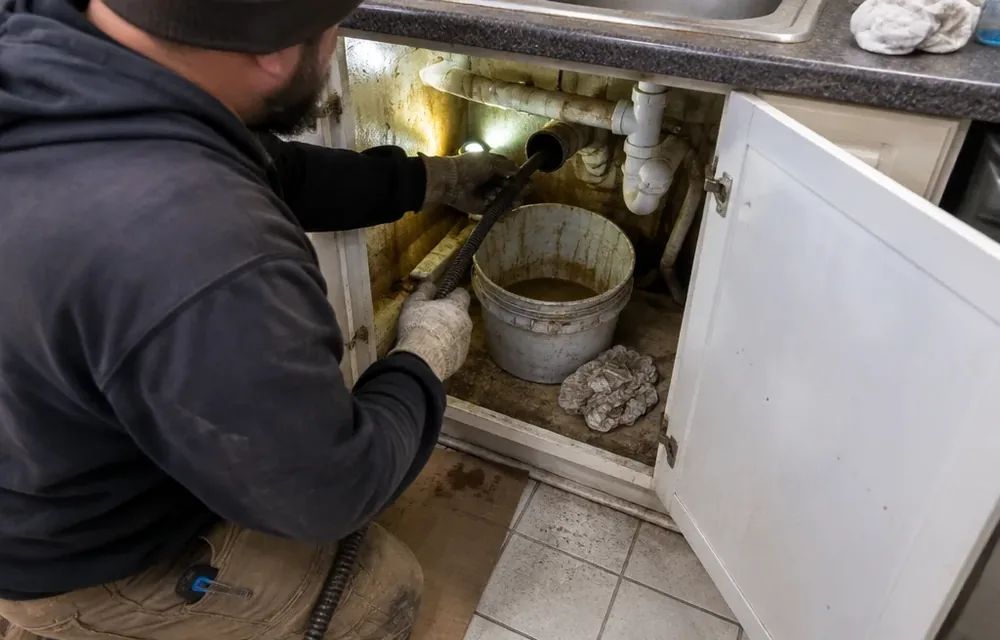
Drain Cleaning
A single slow sink is a nuisance.
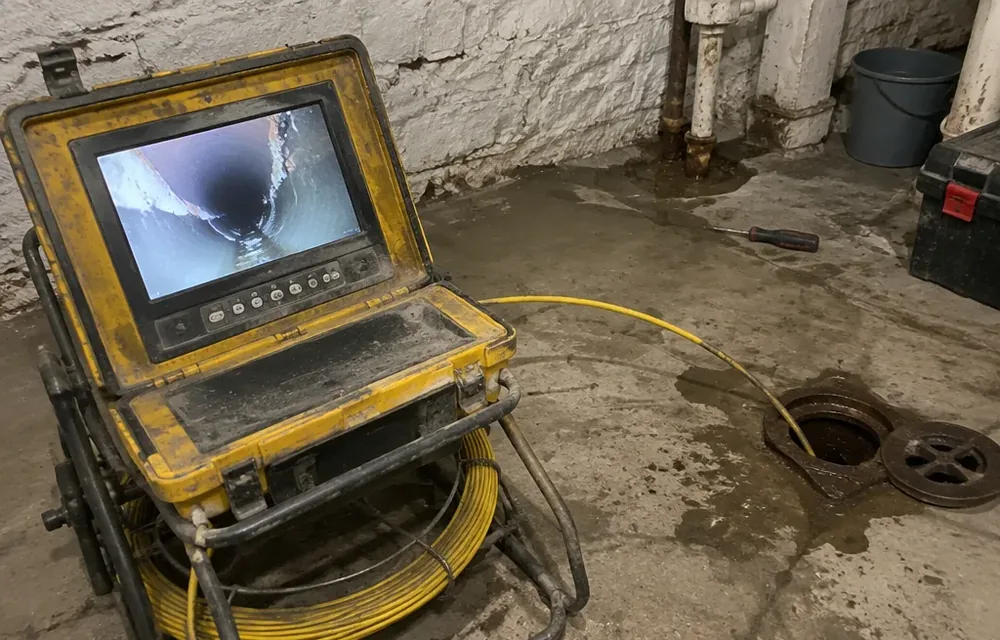
Sewer Camera Inspection
Every expensive sewer decision in Philadelphia — jet, repair, line, replace — depends on one thing: what the pipe actually looks like inside.
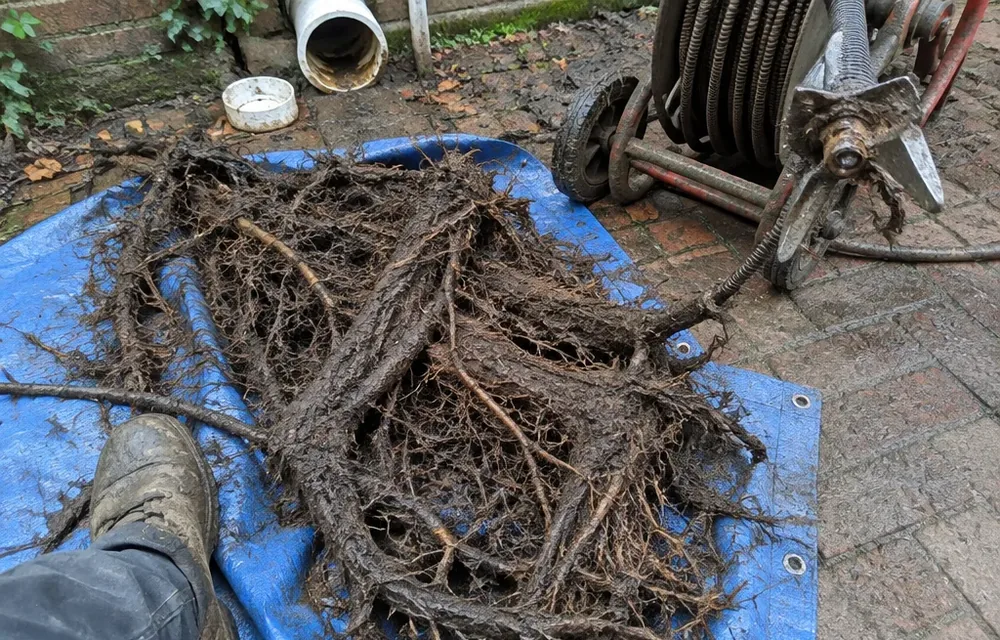
Rooter Service
Roots do not break your pipe to get in.